
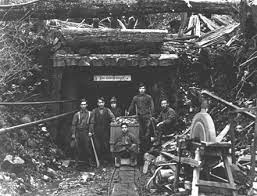
Welcome to my first post about working life in the 1890’s, I found a book I have on the topic and have decided to use it to write a bit about the topic.
Back in the 1890’s working life was hard and insecure, it was a decade of political change and economic uncertainty. Any gains made prior to then disappeared as depression hit and jobs became scarce. Many employers found themselves on the edge of bankruptcy so they cut employee numbers and lowered wages.

It is now believed by historians that about 29% of workers suffered unemployment during the worst years, between 1892 till 1894 before things started to slowly improve in the late 1890’s.
Before European settlement, work for Aboriginals and Torres Strait Islanders was just part of their daily life. Their effective and appropriate use of the land determined their survival and spiritual well being.
Of course the impact of the white mans ways of working had a negative effect on their way of life causing brave but futile resistance. They had their land taken and were forced to work in the white man’s way on pastoral and other properties.
From the start of white settlement in Australia working life for convicts, Aborigines and the majority of free settlers was extremely hard.
The first Governor Arthur Phillip, decreed that convicts should work an eleven-and-a half hours a day from sunrise to sunset in the summer.
As well as working for the Government on public works such as the construction of buildings and road-making, convicts were assigned to free settlers and at first there was little regulation of their working conditions.
Many of the free white settlers also had it hard with their working conditions while working for squatters and well to do employers.
The Master and Servant Act of 1828 attempted to regulate conditions but mainly in favour of the Masters.

 Jo-AnneRamplings