
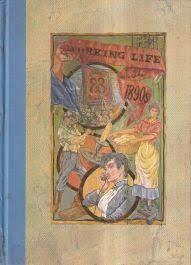
Well here we are at another Thursday and another post about working life in the 1890’s.
The first union to win an eight-hour day in Australia was the Operative Stonemasons Society of New South Wales in September 1855. this isolated victory was not long lasting and did not spread throughout the colony. Sydney plasterers gained an eight-hour day in 1861, but many others in the building trade were not so lucky.
It was around April 1856 members of the Victorian builders trade negotiated an eight-hour working day on the 21 April, however, one contractor who was in charge of the building Parliament House in Victoria refused to comply with the new rule.
Because of this building unionists led by James Galloway and James Stephens, marched through Melbourne to Parliament to lodge their protest and call on other workmen who didn’t have an eight-hour working day to strike.
The craft unionists declared 21 April a holiday for themselves and their families, ending the day at the Common Gardens an amusement park near the city.
So the 1856 victory in Victoria was commemorated for the next 90 years by having the 21 April a public holiday known as eight-hour day. This evolved into Labour Day and over years changed in to the second Monday in March when the autumn weather is better. Western Australia and Tasmania also celebrate the day in March. In New South Wales and South Australia the holiday falls in October and Queensland it is in May.
The winning of the eight-hour day heartened many other workers to join unions. Such victories were hard-won and the majority of workers laboured long hours in their various workplaces.
Around the 1870’s due to the goldrush there was much investment in factories and such in Victoria, this created many jobs but little attention was paid to the working conditions such as lighting and ventilation. There was some large factories and liberal-philanthropic organisations supported the Factory Acts especially to regulate workplaces for women and children.
However, most factory workers a group which included increasing numbers of women, found their major support for better workplaces was in unions.

 Jo-AnneRamplings