If you suspect your child of being autistic, you will need to get them to see a specialist as in a paediatrician, there can be different signs depending on the age of the child. The earliest this is diagnosed the better the outcome for the child.
It their first year they may not be interested in other people, nor will they make eye contact or smile like other babies do.
As toddlers, those with ASD might not respond to their name. They might focus on one or 2 activities repetitively, like lining up toys. They may not be interested in playing with other children. They might develop unusual ways of speaking.
Older children with ASD might have difficulties in social situations, following instructions or making friends.
There are what is regarded as behavioural red flags such as
The child often has marked repetitive movements, such as hand-shaking or flapping, prolonged rocking or spinning of objects
Many children develop an obsessive interest in certain toys or objects while ignoring other things
The child may have extreme resistance to change in routines and/or their environment
The child may be resistant to solid foods or may not accept a variety of foods in their diet
There are often difficulties with toilet training
The child may have sleeping problems
The child may be extremely distressed by certain noises and/or busy public places such as shopping centres
Hello everyone time to step back in time to 1942 and learn a little more about the battle on the Kokoda Track, I thought we were done with it, but I turned the page in my book, and I am back at Kokoda.
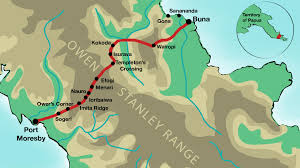
Late August found the Japanese withdrawing from Milne Bay and the Aussie’s withdrawing from Isurava, it was while under heavy fire from the Japanese that the Aussie retreated to Templeton’s Crossing.
By this time the Aussie’s were doing it tough with the appalling conditions and the lack of supplies the health of the men was shocking to say the least. Apart form battle wounds and the problems being able to treat them due to circumstances they were in, the men also had dysentery and malaria which of course was made worse by lack of food which made the men very weak, thus making it hard to fight off any disease.
Of course, in his safe Brisbane GHQ MacArthur still didn’t get how out numbered the allied forces were, he thought there were more allied men then Japanese, he was wrong. In reality there was around 400 Aussie up against 5,000 Japanese. He had the idea that the Aussie’s were inefficient jungle fighters due to the continued retreats.
When asked for more aircraft he refused.
He also relived some of the best commanders of their duties, ironically on the eve of success.
On the Kokoda track the supply lines were indifferent and would be trucked to Ower’s Corner which was at the start of the track. From there it was up to the carriers to transport the supplies on foot and mules.
The Papuan carriers played a vital role in the movement of supplies, when they reached an area called the Ubiri track it wasn’t possible for the pack animals to go any further. So, the local people carried these heavy loads the rest of the way. These amazing locals also carried the wounded down the track for medical treatment.
There was another method of dropping off supplies this was to fly them to Myola a relative flat area near Templeton’s Crossing, however, this was often unsuccessful due to the pilots being inexperienced in the type of flying needed.
A large percentage of supplies were lost in the jungle or damaged in the drop; it didn’t help that many of the supply planes had been damaged at Port Moresby during an air raid.
Good morning, everyone, it’s a cold morning here it should warm up, but we will see. Last week we looked at lions so this week it is tigers, why is it I wonder that I link lions and tigers together.
The tiger is the largest member of the cat family and like lions they are thought of as awesome big cats. Sadly, there are only a few thousand left in the wild, around 4,500, this is due to them being hunted for their amazing fur.
Tigers can be found in the forests of Asia as well as tall grasslands, swamps and marshes. Think places like the hot rainforests of Malaya, the dry thorn woods of India and the cold snowy spruce forests of northern China. You will rarely find them in open spaces just not their thing.
They like to mark their territory with urine or claw marks as well as rubbing their tail against trees or rocks.
Also did you know that they can run really fast for a short distance, and they can leap nearly 9 meters or 30 feet but once it starts to feel tired it gives up and goes have a rest.
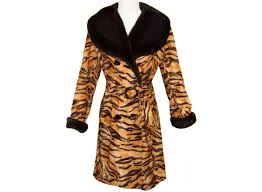
We all know what they look like with their orange or brownish yellow coat and strips and their white chest and belly. Also, most should know their strips allow them to blend into the long grass they like to walk through.
Tigers like to hunt at night and will follow animal tracks along streams and with its good hearing and eyesight as well as their sense of smell will often lay in wait for the right moment to pounce. It will dig its claws in and drag their victim to the ground.
Once they have killed their prey, they will make sure to eat everything except the stomach and bones. Often, they will not chew their food but bite of a chunk and swallow, after a meal they like a long drink and a nap.
They prefer large prey such as deer, antelope, wild oxen and wild pigs. They will even attack elephant calves.
They love the water and are good swimmers also they can climb trees if they feel they really need to.
Good morning this Monday I have a country I have never heard of before, others may know of it.
Suriname is a small country on the northeastern coast of South America. It’s defined by vast swaths of tropical rainforest, Dutch colonial architecture and a melting-pot culture. On its Atlantic coast is the capital, Paramaribo, where palm gardens grow near Fort Zeelandia, a 17th-century trading post. Paramaribo is also home to Saint Peter and Paul Basilica, a towering wood cathedral consecrated in 1885.
The country was once known as Dutch Guiana, is one of South America’s smallest countries. It enjoys a relatively high standard of living but also faces serious political and economic challenges. Since independence from the Netherlands in 1975, Suriname has endured coups and a civil war.
The official language is Dutch the population around 623,000, the currency is the Surinamese Dollar. The Surinamese dollar has been the currency of Suriname since 2004. It is divided into 100 cent. The Surinamese dollar is normally abbreviated with the dollar sign $, or alternatively Sr$ to distinguish it from other dollar-denominated currencies.
The flag of Suriname was legally adopted on 25 November 1975, upon the independence of Suriname from the Netherlands. The flag was designed as a result of a national competition. It was raised for the first time on the Independence Day of the Republic of Suriname.
Suriname’s culture and society strongly reflect the legacy of Dutch colonial rule. It is the only sovereign nation outside Europe where Dutch is the official and prevailing language of government, business, media, and education; an estimated 60% of the population speaks Dutch as a native language.
I had a good night, slept straight through till 4.15am when I needed to pee but went straight back to sleep. I didn’t feel like getting up when the alarm went but did so anyway, it is 13 degrees and my BGL is 4.3At 7am while I was working at the computer, I started to fall asleep, so I moved to my armchair and had a nap for 1.5hrs. After that I felt better and managed to do the grocery shopping.I have had a lazy day other than doing a load of washing, I have done bugga all.Made some hot chips for lunch but after I started eating them, I no longer wanted them. How annoying.Steps: 7,288I had another good night, slept straight till 3.30am when I needed to pee.It is 9 degrees and my BGL was 4.5.The morning was cold but by midday it had warmed enough to remove long sleeve singlet and fluffy socks.By 2pm it was cooling down again and I needed my purple jacket when I went to get Sam.Sue made a caramel slice and sent some to me via Sandra and it is nice.Steps:9,652I had another good night, slept straight till 3.30am when I needed to pee. Then straight back to sleep, oh how good is that, although I have still woken up tired hopefully that will pass once, I get moving and doing stuff.It is 8 degrees and my BGL is 4.8, it is cold enough that I have turned the heater on.Ok I just had to put my stockings on as I am so cold, I will remove them when it warms up.I removed a layer of clothes around midday.Tim will be home later, around 7.30pm.Steps:7,561I had another good night, slept through to the alarm went off at 5am. I need my warm clothes on first thing then around 11am I was able to remove my long sleeve singlet and stockings.We are in for a warm day with the top temperature being 25 degrees now it is 11 degrees and my BGL is 5.5.By midday it was 25 degrees so a nice warm day.It is 11.20pm. I have had roughly 2hrs of sleep and my body is now moving so much I cannot sleep; I will use the powerfit and go back to bed.Steps: 7,5560I had a horrible night from 11.20pm I was unable to settle as my body was moving so much. I used the powerfit and managed 45 minutes in bed before it started to get bad again. I had very little sleep, I finally drifted off around 4am only to get up an hour later.It is 13 degrees and my BGL is 4.5After Sam left for school, I had a nap and after that I felt fine, not as warm as yesterday.Tim came home after his morning run as he had an appointment with the podiatrist.Sandy called in to check on me.It did eventually warm up.I am going to bed at 7pm as I am just so tired.Steps:7,030I had a good night slept till 1am when I got up to pee then straight back to sleep till 5am.It is only 9 degrees and my BGL was 4.9. It has warmed up a bit by midday it was 20 degrees.I have a lot of lower back pain; I am also shaking more than usual today.Tim arrived home at 11am after his doctor’s appointment. He will leave around 1.20pm to go back to work.I went to bed at 9pm but due to the jerky movements I have been unable to settle, I came out at 11.30 to use the powerfit and write this it is now midnight, and I will shortly try to settle again as I am very tired.Steps: 7,668I had a rough night till about 12.30am when I settled and slept till 5am, I am still tired and may go back to bed after breakie.The temp is 11 degrees, no BGL as I am out of test strips.It is cold today and I am starting to feel not good at all, I’m hot then I’m cold and I have a headache.We had pizza for lunch. I had to have a short nap after lunch as I was falling asleep.The day has warmed up.Steps: 4,0158
Ok would you like to know how ASD is diagnosis; well, it has to be diagnosed by a paediatrician or a psychiatrist or a psychologist.
The specialist uses some standard tests to make a diagnosis, but someone must have lasting difficulties in social communication and social interaction in multiple situations to be diagnosed with ASD.
They must also have restricted interests and activities and repetitive patterns of behaviour. These traits must have been present from an early life and must significantly affect their life.
A diagnosis will also include a classification based on the level of support the person needs, there are three levels.
Level 1 People requiring support
Level 2 People requiring substantial support
Level 3 People requiring very substantial support as they are severely affected.
There was a time when it was believed that boys were four times more likely to have autism than girls, this is wrong although ASD is underdiagnosed in females, due to a few different reasons.
Most studies focus on males, so not as much is known about ASD in females. Studies have shown that autistic females have different characteristics compared to males. Females seem to be better at masking or hiding their autistic characteristics to fit in.
Some other factors in females include.
Stronger language and communication skills
Mimicry of others in social situations
Less aggression
Shy and passive behaviour
The ability to contain emotions in public, but prone to outbursts at home
Time for a little more about the battle of Milne Bay in 1942 between the Japanese and the Aussie’s and Yank’s.
At his GHQ in Brisbane General MacArthur who expected a quick victory in the Papuan Campaign and who was never fully aware of the difficult conditions in the war zone, was putting pressure on Clowes for a greater effort.
The Aussie’s thought MacArthur’s demands as unreasonable and that GHQ was like a bloody barometer up and down every two minutes.
It seems that Curtin the Prime Minister of Australia was able to stand up to Churchill demanding Aussie troops return to Australia to fight in the South West Pacific but wasn’t able to do the same with MacArthur. This may have been because he was aware of Australia’s dependence on the USA for equipment it didn’t have. So, he didn’t really support his Australian commanders against MacArthur’s many unreasonable demands. As MacArthur didn’t visit Papua till October 1942 his demands were based who knows what.
The Aussie Coastwatchers continued to be important as they were scattered around islands in the South Est Pacific and radioed vital information to the Allies. Their work would later be praised by Admiral Nimitz, US Navy Supreme Commander of the Pacific Ocean Area.
Some say the Coastwatchers saved Guadalcanal and Guadalcanal saved the pacific.
On 24 August RAAF pilots and Coastwatchers reported seven barges approaching Goodenough Island about 100k’s north of Milne Bay. After the Japanese had disembarked the RAAF destroyed the barges, thus marooning about 350 Japanese away from the main invasion force.
The Japanese landed early on the 26 August and encountered fierce opposition from the RAAF squadrons and land artillery. However, many landed with supplies and heavy equipment such as tanks. This surprised the Aussie’s who thought the swampy terrain would make use of the tanks impossible.
The Aussie’s lacked sufficient armoured vehicles and on the 27 August, this caused them to withdraw after heavy losses defending the village of Gili Gili.
However, due to the continued torrential rain the Japanese tanks became a liability.
As well as the usual artillery and mortar fire the Aussie’s had to contend with jungle snipers. By the end of the month there was a decisive battle around one of the airstrips resulting in heavy loses by the Japanese. Aussie artillery and mortar fire played a large part in turning things into the Allies favour.
The Aussie’s suffered 373 casualties, 161 were listed as either killed or missing. The US forces serving at Milne Bay lost one killed in ground battles and several more killed or wounded in air raids.
On the 3 September the Japanese started to withdraw and the first land victory in the Pacific War was won by Allied Forces, the majority of whom were Australians.
It is time for some more about big cats, the lion is often called the king pf beasts because it is so big and powerful, and it doesn’t have natural predators.
The average weight is 160-180 kilos or 353-397 pounds, however, a large male can weigh as much as 230 kilos or 507 pounds. They are 3 meters or 10 feet in length, the stand at 1-meter or3.2 feet tall.
A lioness is between 110-140kilos or 243-309 pounds they are about a foot shorter than the males.
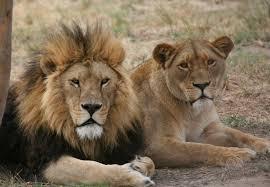
The male has a mane around its neck that gives it a royal look. Its roar is fierce and frightening they are truly majestic and exhibit dominant behaviour. They are the only cat with a mane this collar of long, thick hair covers the head, neck going down to the shoulders and chest. Their mane can also protect them in a fight. It takes five years for the mane to be fully grown.
Loins prefer to roam throughout open lands and are generally found in woodlands, grassy plains and aera with thorny scrub trees. You would find them living near their food supply is, that being deer, antelope, zebra and other hoofed animals. There will also be water nearby.
They are found in eastern and southern Africa, and some can be found in the Gir Forest of India, these are called Asiatic Lions. However, most will be found in national parks and reserves, where they are protected from hunters and there are 100’s in zoos.
Good morning, all hope everyone is doing well and either had a good weekend or are having a good weekend, my weekend was good I did bugga all.
This week we are looking at Norway, another Scandinavian country encompassing mountains, glaciers and deep coastal fjords. Oslo, the capital, is a city of green spaces and museums. Preserved 9th-century Viking ships are displayed at Oslo’s Viking Ship Museum. Bergen, with colourful wooden houses, is the starting point for cruises to the dramatic Sognefjord. Norway is also known for fishing, hiking and skiing, notably at Lillehammer’s Olympic resort.
The capital is Oslo and the population is 5.5 million and currency is the Norwegian Krone and the official language is Norwegian. Most Norwegians have a reasonable level of English. You will find that you can speak English in most shops and restaurants, as well as in public offices and with service providers. If you are not comfortable holding a conversation in English, it is even more important to learn Norwegian.
They are not a member state of the European Union, but they are associated with the Union through its membership in the European Economic Area (EEA).
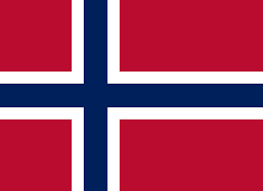
The national flag of Norway is red with a navy-blue Scandinavian cross bordered in white that extends to the edges of the flag; the vertical part of the cross is shifted to the hoist side in the style of the Dannebrog, the flag of Denmark.
It was designed in 1821, and is based on the Danish flag, the Dannebrog, marking the union with the Kingdom of Denmark from 1397 until 1814. The blue cross symbolises the union between Norway and Sweden from 1814 until 1905.
Norway is a parliamentary democracy and constitutional monarchy. The country is governed by a prime minister, a cabinet, and a 169-seat parliament (Storting) that is elected every four years and cannot be dissolved. The current Prime Minister is Jonas Gahr Støre he is the country’s 36th Prime Minister.
The current King is Harald V, he succeeded to the throne on 17 January 1991. Harald was the third child and only son of King Olav V of Norway and Princess Märtha of Sweden.
The country is known for its mind-boggling fjords, lakes, soaring white mountains, emerald-green forests, urban excursions, and more. It is a perfect blend of remote quaint villages and bustling hubs. Known as the “Land of the Midnight Sun”, an experience unique to the country is the Northern Lights.
Norwegians are proud of their traditions of equality and humanitarianism. The country often takes in refugees and people seeking asylum from other countries. The people of Norway have one of the highest standards of living in the world.
They have universal health care, funded primarily by general taxes and by payroll contributions shared by employers and employees.
Anyone registered as a resident in Norway has a right to access the Norwegian state healthcare system. State healthcare in Norway is not completely free. Healthcare costs are covered by both the state and through patient contributions (user fees).
Norwegian citizens do not have to pay tuition at public universities. Also, students who are citizens of the EU/EEA or Switzerland can study for free at Norway public universities. Until 2022, international students from other nationalities could also study for free at Norway public universities.
In Norway’s schools, there are two semesters. The new academic year begins in the middle of August. The first semester begins in August and ends in December. The second semester begins in January and ends in June. The school year of primary and lower secondary education consists of 38 weeks (190 days) for pupils and 39 weeks for teachers and is divided into two terms.











 Jo-AnneRamplings