The national anthem of Kuwait was written by poet Ahmad Meshari Al-Adwani with music composed by Ibrahim Al-Soula and arranged by Ahmad Ali. It was first broadcast on 25 February 1978. Prior to 1978, the “Amiri Salute” was used.
After the proclamation of Kuwait’s independence, the Kuwait national anthem was written by the poet Meshari Al-Adwani and was broadcast for the first time on 25 February 1978. The music was composed by Ibrahim Al-Soula and arranged by Ahmad Ali. The Amiri Salute was composed by Yusuf Adees in 1951 and was used until February 1978.The National Salute consists of the first six bars of the National anthem.
The anthem is played every day at the beginning of the day in most Kuwaiti schools and on TV and radio stations.
The words of Kuwait national anthem are:
Kuwait, My Country, May you be safe and glorious! May you always enjoy good Fortune! You are the cradle of my Ancestors, who put down its memory, With everlasting symmetry, showing all eternity, Those Arabs were Heavenly, Kuwait, My Country, May you be safe and glorious! May you always enjoy good Fortune. Blessed be My Country a homeland for harmony, Warded by true sentry Giving their soils aptly, Building high its history, Kuwait, My Country, We’re for you My Country, Led by faith and loyalty, With its Amir equally, Fencing us all fairly, With warm love and verity, Kuwait, My Country, May you be safe and glorious, May you always enjoy good Fortune
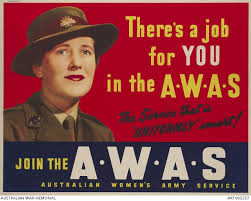
Ok this we are going to look at the brave and strong women who decided to join the military during the second world war. Three of the organisations that put these women into uniforms were The Land Army, The National Emergency Services (NES) and the Australian Women’s Army (AWAS).
The Land Army was voluntary group where women worked on farms, performing tasks like milking cows, harvesting crops, and tending livestock, to maintain food production while men were fighting overseas.
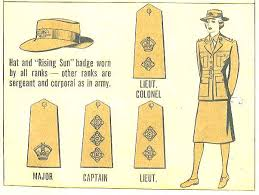
The AWAS was an official military unit within the Australian Army where women could enlist to serve in roles like driving, clerical work, communications, and even some combat support positions.
The Australian Women’s Army Service (AWAS) was formed in August 1941 to release men from some military duties to serve with fighting units. Women worked in traditional roles such as clerks, typists and cooks.
The NES was a general term for civilian volunteer organizations that provide support during emergencies like fire, flood, or medical crises, not specifically related to wartime service
There was a network of searchlights and listening posts that formed part of Newcastle’s defences were largely operated by women. These women were carefully selected for good eyesight and hearing as they would be on high alert lookout for the distant hum of aircraft engines.
They also had to maintain the searchlights in a high state of readiness, constantly polishing the lights and greasing their mechanisms. The searchlights batteries were connected by telephone to headquarters and each battery had a command post with a plotting board to track the positions and courses of aircraft.
Some of the hardships the women had to deal with things like having to bunk down in unlined shed in the bush, they were given hessians bags and a pile of straw to make their mattresses. They also had to shower under a modified kerosene tin full of water. Just because they were women didn’t mean they got an easy ride, they had route marches with full packs and training with live ammunition on .303 rifles, bren and Thompson guns.
The Australian Women’s Army Service served in New Guinea during World War II, making it the only non-medical women’s service to serve overseas during the war.
The Land Army and the AWAS were both disbanded shortly after the end of World War II, between 1945 and 1947.
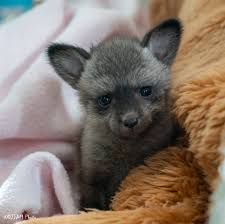
This week we are look at the bat-eared fox, another fox I hadn’t heard of.
The bat-eared fox is a species of fox found on the African savanna. It is the only extant species of the genus Otocyon and a basal species of canid. Fossil records indicate this canid first appeared during the middle Pleistocene.
As the name indicates, this fox has unusually enormous ears in proportion to its head, like those of many bats. Their bodies are generally yellow-brown with a pale throat and under parts. The outsides of the ears, the racoon-like “face-mask,” lower legs, feet, and tail tip are all black.
They can be found living in groups of mating pairs and their young. They are a very social species and spend lots of time grooming each other, as well as playing and sleeping together.
Their hearing is remarkable, but bat-eared foxes are also known for their social nature. They often live in family groups of up to 15 animals. They do not mark or defend territories aggressively against other packs.
They seldom drink water as they obtain most of the moisture they need from their food; 3. Unlike other canids, the male undertakes most parental care duties, while the female forages for food that maintains her milk production
Termites and dung beetles make up about 80 percent of their diets. In addition to termites and dung beetles, they also eat other insects and arthropods, small rodents, lizards, the eggs and chicks of other birds, and plant matter. They obtain much of their water from the body fluid of the insects they consume.
Predators include cheetahs, jackals, spotted hyenas, rock pythons, African wild dogs, and leopards. Bat-eared foxes are named for their large ears, which are also used for thermoregulation. To escape from predators, bat-eared foxes rely on speed and their incredible dodging ability.
They typically live for 6 years in the wild but can be up to 13 years in captivity.
They reach sexual maturity at 8–9 months old, both male and female. They usually leave their family groups at 5–6 months old.
They breed annually, producing litters of 3–6 pups, with a gestation period of 60–75 days.
This week we are looking at Kuwait, a country I have heard of but know bugga all about.
Kuwait, officially the State of Kuwait, is a country in West Asia and the geopolitical region known as the Middle East. It is situated in the northern edge of the Arabian Peninsula at the head of the Persian Gulf, bordering Iraq to the north and Saudi Arabia to the south.
The capital is Kuwait City it’s located on the Persian Gulf, and is the country’s political, cultural, and economic centre. The city has a modern skyline with skyscrapers, mosques, malls, and hotels
The city features a mix of Western-style architecture and traditional Islamic architecture. It is home to Kuwait’s Seif Palace.
The city’s name comes from the Arabic word kūt, which means “fort”, it underwent a transformation after the discovery of oil in the 1930s.
As of January 2024, Kuwait’s population was 4.91 million people. This includes 1.545 million Kuwaiti citizens and 3.36 million expatriates.
The official language is Arabic.
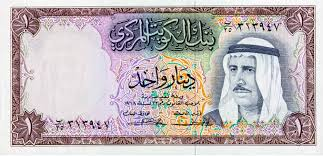
The official currency is the Kuwaiti Dinar.
Their flag was adopted on 7 September 1961, and officially hoisted 24 November 1961. Before 1961, the flag was red and white, like those of other Arabian Gulf states at the time. Now the flag is a tricolour of green, white, and red with a black trapezium on the hoist side. It is the only flag in the world featuring an acute trapezium.
Kuwait is an emirate. The Emir of Kuwait, a hereditary monarch from the Al Sabah ruling family appoints the prime minister (who is always a royal) and other members of government, as well as members of judicial, police and financial institutions.
An emirate is a political territory ruled by an emir, a title used by monarchs or high officeholders in the Muslim world. The term “emirate” is similar to “kingdom” or “principality”.
The Cabinet of Kuwait is the chief executive body of the State of Kuwait. The 46th cabinet in the history of Kuwait was appointed on 12 May 2024. On 15 April 2024, Amir of Kuwait His Highness Sheikh Mishal Al-Ahmad Al-Jaber Al-Sabah assigned His Highness Sheikh Ahmad Abdullah Al-Ahmad as Prime Minister.
There has been some progress in women’s rights but there is still discrimination in many aspects of life. They have access to education, economic and political rights, and can serve in the military, police, and as judges.
Kuwait’s personal status laws discriminate against women in matters of marriage, divorce, and child custody, including by requiring women to have male guardian permission to marry and by stripping them of spousal maintenance from their husband if they refuse to live with their husbands “without justification.”
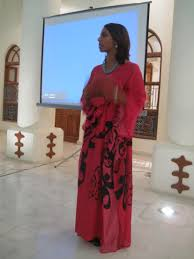
In Kuwait, women should dress modestly and conservatively, covering their arms, shoulders, and legs. Tight-fitting clothing is not recommended.
Traditional dress consists of the abaya, along, black cloak that covers the body except for the hands, feet, and face and the daraa a traditional Kuwaiti dress that is long-sleeved, loose, and floor length.The hijab and the niqab are worn by some women, especially during religious occasions.
There’s an increased risk of terrorism in Kuwait, including threats against military bases. Maintain a high level of security awareness and be aware of your surroundings.
It’s illegal to buy, sell, import, carry and consume alcohol. Penalties range from fines to imprisonment and deportation.
What a night, I haven’t had a lot of sleep, but I am still up and dressed and starting my day. It is a chilly 17C only supposed to reach 21C, my BGL was 5.0
I sent Tim a short clip about Parkinson’s, and he couldn’t be bothered to look at it. This annoyed me, I am trying to help him, and others understand a bit about Parkinson’s.
I have been tired all day often dropping off for a moment while watching TV.
Steps: 5,238
I had a good night, slept straight through till the alarm went at 5am it is a coldish morning with the temp sitting at 15C only supposed to reach 21C again today.
Sam is starting a Tafe course this morning, so no school today, Tasha will drive her there, but she is going to catch a bus home, I hope that works out well.
Sue took me shopping as I wanted some stuff from Woolies and also needed stamps. While out we booked in to have a massage next Monday.
Dawson come over for a visit he was here for a couple of hours, it’s always nice to see him.
Sam arrived home while Dawson was here, she said Tafe went well but it felt like a long morning. There was no problem catching the bus home.
Steps:9,517
I had a good night, slept straight through till the alarm went at 5am it is a coldish morning with the temp sitting at 15C we are looking at a top temp of 26C today.
Sandy has got a rental place in Raymond Terrance,32k’s from me or a 41-minute drive from me. It isn’t somewhere she really wants to live but with only 3 weeks till she will be homeless she is just happy to have a place.
Steps: 7,533
I had a good night, slept straight through till the alarm went at 5am, after Tim left for work, I had a shower. It is currently 16C with a top temp of 26C.
Tasha was in a bit of a state as her ride to Tafe cancelled at 11pm and Sue isn’t answering her phone. She did eventually answer, and she drove Tasha to Tafe.
Sue took me to have my hearing checked and I got a quote on the basic hearing aids, $2,098. I will check with Tim and order them. I have another appointment on the 25 March.
We then went to the chemist to get scripts and webster pack for Sam, I rang on Friday to arrange the webster pack, it wasn’t done.
Steps: 9,760
I had another good night, slept straight through till 4.20am when I had to pee, went straight back to sleep till the alarm went at 5am.
It is currently 20C, we are looking at a top temp of 24C, with showers during the day.
While sitting up the front waiting for Sam’s transport we had so very light rain.
I have vacuumed twice, cleaned the bathroom, done a load of washing and hung it up to dry, I have also done 20-minutes of exercise, and I am exhausted.
It has been raining on and off all day and was raining when I went up to meet Sam at 3pm.
On the 6 March Jessica will have no power for a couple of hours while the neighbour’s meter is change.
Tim was an hour late getting home this afternoon due to a traffic accident.
Steps:9,657
SUMMER’S BIRTHDAY SHE IS 12 TODAY
I slept well, woke once to pee but straight back to sleep.
Had a nice talk with Sandy this morning.
This afternoon I walked up to meet Sam but while I was waiting a white van pulled in and I just knew it would be a delivery for us, so I came back, and it was, and it was heavy so I was glad I could get the delivery man to carry inside for me. I then decided to take the scooter up as my legs were shaking and I felt unsteady.
It is 5.30pm and I am feeling like shit, I have a headache.
I am having a restless night.
Since I am up, I checked my emails and had one from Miller’s about a $5 sale so went into the site ordered 5 things, they had 2 of the 5 but not surprised as they are closing down.
Steps:13,170
After a rough night I still got up at 5am, had a shower and now I am ready to start my day. I have already vacuumed once, went to unpack the dishwasher only to discover I forgot to put it on yesterday.
I put the dishwasher on after breakie, then when it was finished, I unpacked it.
I am just not with it today, however, around 4pm, I managed to write 2 letters.
The National Anthem of the Islamic Republic of Iran was adopted in 1990, replacing the previous anthem used during the rule of Ruhollah Khomeini. It was composed by Hassan Riyahi, and the lyrics were written by Sayed Bagheri. It is the fourth national anthem of Iranian overall.
Due to the death of Supreme Leader Ruhollah Khomeini in 1989, Iran adopted its current anthem after a competition the following year. At the time of its adoption, it was the second shortest anthem in the world; the first being the Japanese national anthem “Kimigayo” with seven lines.
This week we are looking at the corsac fox, also known simply as a corsac, it is a medium-sized fox found in steppes, semi-deserts and deserts in Central Asia, ranging into Mongolia and northern China.
It is slightly smaller than the red fox with larger legs and ears. The coloration is predominantly grey or reddish grey on the upper parts with silver undertones, while the under parts are white with yellow undertones. Their body length is between 45-65cm and their tail is between 19-35cm long.
They like to eat rodents, such as partridges, snow buntings, ducks, pheasants, and geese insects and fruits, as well as large mammal remains.
When hunting thy like to leap into the air and drop down on prey, they like stalking prey and making short-distance attacks.
They live up to 9yrs in the wild and up to 13yrs in captivate.
They are nocturnal animals and, unlike most fox species, Corsac foxes are social animals that form smalls packs. They have excellent hearing, vision and smelling senses which they use to hunt. They are nomadic animals with no fixed territory and like to move from place to place.
They are observant and analytical, with a keen eye for detail. They notice subtle nuances and patterns that others might overlook, which helps them make well-informed decisions. Their versatility and multifaceted talents are also remarkable.They are monogamous and form pair bonds, however, before that males will initially fight for access to females. The breeding season starts in January and ends in March. The female creates a birthing den, which is sometimes shared with other pregnant females, but moves her young to new burrows several times after they are born.Typically, 2-6 kits are born after a gestation period of 52 to 60 days. However, the maximum recorded litter consisted of 11 kits. Newborn kits weigh around 60 g (2.1 oz) and have fluffy, light brown fur that turns yellowish as they age. They are born blind and open their eyes at around 2 weeks of age. Both parents assist in the raising of their young. Kits begin to eat meat at 4 weeks and emerge from the den shortly after. Corsac foxes reach reproductive maturity within 9 to 10 months and reproduce in the second year of life.













 Jo-AnneRamplings