Iran

This week’s country is Iran, officially the Islamic Republic of Iran it was once known as Persia, particularly in the Western world; however, the official name of the country is now Iran and the government requests that people use this term instead of Persia when referring to it formally. 

It was in 1935, that the Iranian government under Reza Shah Pahlavi officially requested that the country be referred to as “Iran” instead of “Persia”. 

The country has a population of 89 million with 15,800,000 living in the capital.

The capital of Iran is Tehran, in the north of the country. Its central Golestan Palace complex, with its ornate rooms and marble throne, was the seat of power of the Qajar dynasty. The National Jewellery Museum holds many of the Qajar monarchs’ jewels, while the National Museum of Iran has artifacts dating back to Paleolithic times. The Milad Tower offers panoramic views over the city.

The official currency is either the rial or the toman when I looked it up I got rial but then I discovered that due to the rial’s low value, the Iranian parliament voted to gradually remonetize the nation’s currency from the rial to the toman between 2020 and 2022, with an exchange rate of 1 toman = 10,000 rials.  

Their flag is a horizontal tricolour of green, white, and red. The flag also has the national emblem in red and the word “Allahu Akbar” written in white. It was adopted in 1980 after the Iranian Revolution.

The colours and symbols have specific meanings: 

  • Green: Represents Islam, growth, happiness, unity, nature, and Iranian languages 
  • White: Represents freedom 
  • Red: Represents martyrdom, bravery, fire, love, and warmth 
  • “Allahu Akbar”: An Islamic battle cry that means “God is great” 
  • Kufic script: The word “Allahu Akbar” is written in Kufic script 11 times on each border of the flag, totalling 22 times 

The colours green, white, and red have been used in early versions of the Iranian flag. The flag was officially enshrined in the Constitution of 1906.

The flag is also known as the Tricolour Flag of Iran, these colours of the flag are symbolic and are also used in the flags of other Muslim countries. 

The official religion of Iran is Twelver Ja’afari Shia Islam. The Iranian constitution defines the country as an Islamic republic, and all laws must be based on Islamic criteria. 

Other religious minorities in Iran face discrimination and persecution. The Iranian government has been criticized for its treatment of religious minorities, including Baha’is, Christians, Sunni Muslims, Zoroastrians, and Jews. 

Iran is home to the second largest Jewish community in the Muslim world and the Middle East. The Baháʼí Faith is the largest non-Muslim religious minority in Iran. 

 The government arrests religious minorities on vague charges.

There are also limits regarding access to higher education for most religious minorities. 

The government screens applicants for public sector employment for their knowledge of Islam. 

The government criminalised proselytizing and insulting “divine religions or Islamic schools of thought”. 

Under Iranian law, apostasy from Islam is punishable by death. Non-religious Iranians are officially unrecognized by the government, and one must declare oneself as a member of one of the four recognized faiths in order to avail oneself of many of the rights of citizenship.

Even most of the time and occasions, all female citizens, including non-Muslims, are required to wear Hijab as Iran is currently an Islamic republic.

Family in Iran is considered holy and being a mother is very important. In Iran everyone has to get married, and it is considered a sin if has a child out of wedlock. Everything in Iran is based on family. All the family members live together until they get married and are ready to begin their own lives.

 According to Sharia, romantic relationships between unmarried individuals are not permitted, and this extends to restrictions on cohabitation.

Iranian women and girls now face prison terms of up to 15 years and possible death sentences for failing to wear a hijab, through a new strict law on religious dress and behaviour.

The “Law on Protecting the Family through the Promotion of the Culture of Chastity and Hijab” came into force on 13 December 2024, according to Iran’s Speaker of Parliament. In a dangerous escalation, the law permits the imposition of the death penalty for peaceful activism against Iran’s discriminatory compulsory veiling laws.

The law, containing 74 articles, also imposes flogging, exorbitant fines, harsh prison sentences, travel bans, and restrictions on education and employment for women and girls who defy compulsory veiling laws. It also penalizes private entities that fail to enforce compulsory veiling, while providing impunity to officials and vigilantes who violently attack women and girls for defying it.

The Government of the Islamic Republic of Iran known simply as Nezam is the ruling state and current political system in Iran, in power since the Iranian revolution.

Iran is a unitary Islamic republic with one legislative house. The country’s 1979 constitution put into place a mixed system of government, in which the executive, parliament, and judiciary are overseen by several bodies dominated by the clergy.

Like many countries it is not a safe place to visit.
Week 7 of 2025

It is another nice cool morning with the temp being 19C, but we are looking at another hot one, just not as hot. My BGL was 5.1

This morning, I changed the sheets and doing so caused me to break out in a sweat, I also washed the ones that came off the bed and hung them over the clothes hoist.

The heat didn’t set in till around 1pm when I turned the air con on.

Steps: 5,824

It is another nice cool morning with the temp being 21C, it is only supposed to reach 24C today.

I sent Sue message at 8am and when she didn’t reply by 9.20am I sent her another text. I rang her at 9.50am as I still hadn’t heard from her and was concerned, she was still asleep, as she had a rough night.

Tim home for a few hours as no work between school runs.

It’s started to rain around midday, so when I went to meet Sam at 2pm I wore my rain poncho just in case but of course it didn’t. Although at 1.30pm it pissed down for about 5 minutes.

Didn’t need the air con on at all today.

Steps: 9,588    

It is another nice cool morning with a temp of only 19C. My BGL was 5.1

Last night I started having terrible pain in my left hip, making standing and walking difficult I am wondering if I have bursitis in the hip again. I made a doctor’s appointment for Monday at 9am if things don’t improve.

I can hear thunder as I sit here but so far, no rain, also some lightening.

By 7am it started to rain, and it is heavy rain, so I had Sam ask his mum to walk up and wait with her this morning.

Tim came home as his sporty was cancelled, due to the lightening.

I had a phone call from Audika they changed my appointment from Thursday till next Wednesday as the tech is still off sick.

Not much in the way of steps as I am resting my hip.

Steps: 1991

It is another nice cool morning with a temp of only 19C. My BGL was 5.1

I slept well enough, had some pain with the hip.

I went to print something, and I was out of ink and when I went to change the ink, I realised I had ordered the wrong of the ink. So, I have had to order more.

Something I ate this morning has made me feel yuck, and I haven’t felt good all day.

I have hang a couple of photos

I walked down to post some letters, and it was exhausting but I did it.

I really don’t feel well so I expect I will be having an early night.

Steps 3,400

It is another nice cool morning with a temp of 21C. My BGL was 5.0.

I am feeling better this morning and the pain in my hip has lessened.

My printer is still printing but only in colour.

By 1pm it was it was 29C and I had to turn the air con on.

I lent Blain $50 he needed money for his lactase and to buy his girlfriend flowers for Valentine’s Day.

Steps:2,094

NATASHA’S BIRTHDAY

It is another nice cool morning with a temp of 21C. My BGL was 5.0 and I have no pain in my hip.

I gave Natasha a pair of earrings that look like her cat as well as a small hanging ornament that also looks like her cat.

It got to 29C and I turned the air con on at 11am.

I still have no pain in my hip.

Steps:6,398                   

Another nice start to the day, I didn’t feel like getting up at 5am but after I had a shower I felt better. It is currently 21C and it is 6am.

Tim and I went to Mount Hutton, Tim to cash in some bottles and me to do some shopping, for the first time in years I wore shoes and after a couple of hours my feet started to hurt, and I was happy to get home and take them off.

I cancelled my doctor’s appointment for Monday as the pain in my hip has gone.

I woke after a couple of hours sleep thrashing about dreaming that I was driving. This caused the pain in my hip to return. I laid in bed for an hour but couldn’t settle again. So I got up for a bit.

Jordan National Anthem

The Royal National Anthem is the national anthem of the Hashemite Kingdom of Jordan. The translated name literally means “Peace be upon the King of Jordan”. As-salamu alaykum is the greeting in Arabic, therefore the name of the anthem can also be regarded as a Royal Salute.

In 1946, the National Anthem was written by the late Abdul Munim Rifai, a renowned Jordanian poet who later served as prime minister. Abdul Qader Tannir composed the music.

The first version of the lyrics was very short, as it only contained the first stanza of the current version. Since then, the anthem has been expanded. The abridged version of the anthem is usually used, while the full version is reserved for special occasions.

The lyrics are below.

Long live the King!
Long live the King,
His rank exalted,
His flags flying high,
In sublimity.
We realised our aspirations,
When you regenerated for us
A renaissance that motivates us,
A renaissance that towers
Above the high, rising stars.
 
O King of the Arabs,
You are greatly honoured
By being a descendent of
The best Prophet,
A great lineage
That all major books spoke of.
 
The glorified youth
Are your devoted soldiers.
Their resolve will never subside
And die away,
Because from you,
They learn perseverance.
 
O King of the Arabs,
You are greatly honoured
By being a descendent of
The best Prophet,
A great lineage
That all major books spoke of.
 
May you always be
A light, a guide
And a master among people,
Delighted and exalted.
And under your flags,
The glory of the Arabs
Rises high.
 
O King of the Arabs,
You are greatly honoured
By being a descendent of
The best Prophet,
A great lineage
That all major books spoke of.

Phossy Jaw

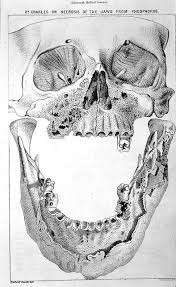
This week we are looking at an old condition, called Phossy jaw, also known as phosphorus necrosis of the jaw, was a fatal occupational disease that affected workers in match factories. It was caused by exposure to white phosphorus fumes.   The disease affected the poor the most.

I heard about this in the book I just read called Factory Girl which was about a young girl working in a match factory in London in 1888.

This condition, clinically known as osteonecrosis of the jaw, vanished until it recently reappeared in the 21st century. More about that later.

Back in the 19th century these were the Symptoms: 

  • Pain, swelling, and debilitation
  • Dental decay
  • Periostitis
  • Osteomyelitis
  • Unbearable abscesses in the mouth
  • Facial disfigurement
  • Brain damage

The condition was so bad that it was an epidemic from 1858 to 1906, with around  11% of those exposed to phosphorus developing the disease.  The average period from first exposure to diagnosis was five years. It was fatal in about 20% of cases.

The prevention and treatment at the time consisted of the following:

  • Regulations were put in place in Germany, Norway, and Sweden to reduce exposure 
  • In the UK, manufacturers were required to inform the Medical Officer of Health of any jaw swelling or necrosis 
  • Antibiotics, oral analgesics, and mouthwashes are often effective treatments 

Other names: phosphorus necrosis of the jaw, an epidemic of osteonecrosis, and a gangrenous condition of the lower jawbone. 

Phossy jaw in the 21st century is now known as bisphosphonate-induced osteonecrosis of the jaw, or “bis-phossy jaw”. It’s a condition that causes jawbone necrosis, similar to the 19th century disease of the same name. 

It’s now caused by exposure to Bisphosphonates which are a class of drugs used to treat osteoporosis and some cancers. Bisphosphonates inhibit bone resorption. Intravenous bisphosphonates are associated with a much higher risk of bis-phossy jaw than oral bisphosphonates.

Symptoms exposed bone in the mouth, pain, purulence, sequestration, and osteomyelitis. 

When it comes to prevention, patients taking bisphosphonates should inform their dental provider before receiving any dental care.

Fort Scratchley Newcastle’s Big Guns WW2

 This week we are looking at Fort Scratchley which is where the big guns of Newcastle are located. It was built in 1882 to defend the city against a possible Russian attack. 

However, its guns were not fired in anger until 8 June 1942, when the Japanese attacked Newcastle. Although they were only part of the defence of Newcastle, which included heavy guns at Fort Wallace and Shepherds Hill along with searchlights, radar stations and observation post.

At the time there were some Novocastrians who had mixed feelings about the guns, although during live firing exercises they would crowd the hill to watch the gunner’s blast away at make-shift targets towed behind tugs or other boats.

Because the vibration of the guns would break windows and shake crockery from the shelves residents were given noticed of exercises so they could put fragile goods in safe places.    

After World War II the fort was home to 13 Medium Coast Battery RAA, a unit of the National Service Scheme, which was renamed 113 Coast Battery RAA in the 1960s. The army left the site in November 1972.

The 6-in guns were relocated to King Edward Park, 1.3 km (0.8 mi) away, as a memorial. However, after extensive lobbying, they were returned to Fort Scratchley in 1978.

In the first decade of the 21st century the site underwent a multimillion-dollar renovation and reopened as a museum.

In 2014, History show TV presenter Sir Tony Robinson visited the Fort to produce a segment for his show Tour of Duty  which was aired in 2015.

In 2015, the Fort’s sole Nordenfelt gun was restored to fully functional condition and is fired on special occasions from its position in the underground casemate

Fort Scratchley is owned by the City of Newcastle (CN) and managed by volunteers from the Fort Scratchley Historical Society.

There is a guide at the gates who can give you a map to explore the Fort.

Visit the Parade and Ceremony Grounds, galleries and museum collections, learn about our historic guns, however, you cannot tour the tunnel.

Guided tunnel tours are led by passionate Fort Scratchley Historical Society volunteers with a wealth of knowledge and provide unique insight into the history of the site.

Individuals, families and groups of less than 12 people can purchase tickets at the Fort Scratchley shop. Schools, clubs or other social groups of 12 or more people should email booking requests through our contact page.


Unfortunately, due to the narrow stairs and hallways, the tour is unsuitable for wheelchairs, walkers, prams and strollers.

 There’s also a shop with ice creams and drinks, souvenirs and gifts.

Crab-eating fox

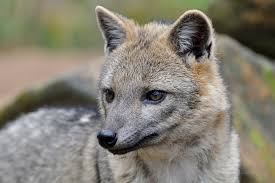
This is week we are looking at the crab-eat fox, also known as the forest dog, wood fox, bushfox or maikong, is an extant species of medium-sized canid endemic to the central part of South America since at least the Pleistocene epoch. Like South American foxes, which are in the genus Lycalopex, it is not closely related to true foxes. 

They can be found in the ranges in savannas; woodlands; subtropical forests; prickly, shrubby thickets; and tropical savannas such as the caatinga, plains, and campo, from Colombia and southern Venezuela in the north to Paraguay, Uruguay and northern Argentina at the southernmost reaches of its range.

They can be solitary but can also form couples or even families of up to disturbed by human activities. The species gets its name because during the wet season it searches for crabs on muddy floodplains.

Crab-eating foxes are omnivorous; their diet includes many fruits, vertebrates, insects, amphibians, crabs and other crustaceans, birds and carrion.

The crab-eating fox is predominantly greyish-brown, with areas of red on the face and legs, and black-tipped ears and tail. It has short, strong legs and its tail is long and bushy. The head and body length averages 64.3 centimetres (25.3 in), and the average tail length is 28.5 centimetres (11.2 in).

They reach sexual maturity within 9–10 months. Adult females give birth to one or two litters per year, depending on the climate and the availability of food. The reproductive period most often begins in November or December, and again in July.

The birth of offspring follows after an approximately 56-day gestation, typically in January, February or sometimes March then again from September to October. If giving birth to one litter, they typically give birth in the early spring. The parents are monogamous and raises the pups together, which are weaned at around three months old and become independent of their parents around 5–8 months old.

Jordan

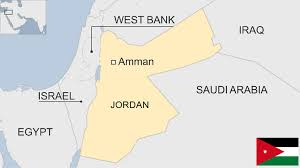
This week we are looking at Jordan an Arab nation on the east bank of the Jordan River, is defined by ancient monuments, nature reserves and seaside resorts. It’s home to the famed archaeological site of Petra, the Nabatean capital dating to around 300 B.C. Set in a narrow valley with tombs, temples and monuments carved into the surrounding pink sandstone cliffs, Petra earns its nickname, the “Rose City.”

The population is around 12 million.

The capital is Amman, which is a modern city with numerous ancient ruins. It is one of the region’s principal commercial and transportation centers as well as one of the Arab world’s major cultural capitals.

The Jordanian dinar has been the currency of Jordan since 1950. The dinar is divided into 100 qirsh or 1000 fulus. It is pegged to the US dollar. The Central Bank of Jordan commenced operations in 1964 and became the sole issuer of Jordanian currency, in place of the Jordan Currency Board.

The country’s official language is Arabic, everyone in the country, including the minority communities, speak Arabic in their day-to-day dealings.

In addition to the Arabic language, English has become a significant component in the school curriculum. While Arabic remains the official language in Jordan, English has been taught in Jordan’s schools and universities since the independence of Transjordan as a Kingdom.

The flag of Jordan is made up of three horizontal bands of black, white, and green, with a red chevron and a white seven-pointed star in the middle of the white band. The flag was adopted on April 16, 1928.

The colours and the star represent the following 

  • Black: Represents the Abbasid Caliphate
  • White: Represents the Umayyad Caliphate
  • Green: Represents the Fatimid Caliphate
  • Red: Represents the Hashemite dynasty and the Arab Revolt
  • Star: The seven points of the star represent the seven verses of the opening chapter of the Quran, the Al-Fatiha. It also represents the unity of the Arab people, faith in one God, humility, national spirit, virtue, social justice, and aspiration.

More than 92% of the population are Muslims and approximately 8% are Christians. Most Christians belong to the Greek Orthodox Church; but there are also Greek Catholics, Roman Catholics, Syrian Orthodox, Coptic Orthodox, Armenian Orthodox, and a few Protestant denominations.

Jordan is a constitutional monarchy with a bicameral National Assembly. The king is the head of state and commander-in-chief of the armed forces. The prime minister is the head of government and is responsible for carrying out the day-to-day tasks of the executive branch. The judicial branch is independent of the other two branches. Which are the executive branch and the legislative branch.

The government operates comprehensive health facilities, including a national health insurance program. The government supervises and coordinates social and charitable organizations. 

The government has the power to block and censor websites. 

Although the constitution provides for the freedom to practise one’s religion in accordance with the customs that are observed in the Kingdom, unless they violate public order or morality.

However, such things as wanting to convert from Islam to another religion isn’t allowed and are not recognised as anything other than Islam and are still considered legally Muslims and face immense societal pressure.

There are many restrictions against religious minorities such as.

  • Jordan’s government may deny recognition to a religion.
  • Baháʼís are not permitted to establish schools, places of worship or cemeteries.
  • Aside from Christians, all other non-Muslim minorities do not have their own courts to adjudicate personal status and family matters.
  • Muslim women may not marry non-Muslim men, such as Christians, unless the men legally convert to Islam.
  • Since Muslims are prohibited from converting to other religions according to the Sharia law, converts from Islam cannot change their religion on governmental records. However, converts to Islam are required to change their religious identification to “Muslim” on governmental records and civil documents.

When it come to women’s rights, they suck, females over the age of 15 need a male guardian’s permission to marry for the first time. A marriage to a non-Muslim is not recognised.

They cannot travel abroad with their children without the consent of a male guardian or having judicial consent. They are subject to restrictions when it comes to employment and general prohibited from night work.

Week 6 of 2025

It is a nice cool start to the day with a temp of 20C but is supposed to reach 27C which is pretty warm.

I found Jessica’s washing hanging on my clothes hoist when I got up, I am guessing her washing machine died.

Tim and I went to Lake Fair to do some shopping, I was exhausted by the time we got home.

Thankfully we turned the air con on before we left, so the house was nice when we got home.

Jess came over just for two eggs, and yeah her washing machine died, she has ordered a new one which should come soon.

Steps:6,581

It is a nice cool start to the day with a temp of 20C but is supposed to reach 28C which is pretty warm.

Sue is driving Sandy and her kids around as her car is still at the mechanics, and Dave’s car has now broken down also.

I have both Syd & Summer here for the day.

By 4pm I started to feel really tired but stuck it out till 8.30pm and now I am off to bed.

Steps: 7,075

Another nice cool start to the day with a temp of 20C but is supposed to reach 30C which is hot. By BGL was 5.5

I waited till Tim left for work to have a shower; I woke up with a shocking headache.

Sandy and Skylar turned up they had walked to the high school to get Landon’s uniform.

It has been a pretty hot day with a top temp of 32C

Steps: 11,229

Another nice cool start to the day with a temp of 20C but is supposed to reach 33C which is hot. My BGL was 5.2

Sue called in and picked up some letters I need posted and will post them for me today.

By midday it was 33C, I turned the air con on in the bedroom as well it was that hot.

Tasha came home early from Tafe due to the heat and having no working air con it the classroom, she said everyone was dripping in sweat and the teacher sent them outside a few times to get out of the extremely hot room but by I think 1.30pm she had enough and sent them home. 

Steps:5,080

First day of school for the year.

A good night when the alarm went off at 5am, I felt like I had only not long been in bed.

It is a cool but muggy start to the day it is currently 21C and we are looking at a top of 28C.

By 1pm it was 27C but no need for the air con today, thankfully.

Denni & Landon called in on their way home from school, Sue and Sandy picked them up from here at around 4pm.

Steps:9,733

It is another nice cool morning at 21C before turning into a damn hot day with a top temp of 29C. My BGL was 5.1

Got a message from Sue, Sandra has Dave’s car back, so she won’t need Sue to drive her around anymore.

By midday it was 29 and I had to turn the air con on. 

Steps:9,487    

It is another nice cool morning with the temp being 19C, but we are looking at another hot one. My BGL was 5.1

Tim is working today and tomorrow.

I have been feeling blah most of the day, just not really feeling like doing much. So I didn’t do much, I did vacuum twice, got the clothes off the hoist, folded and put away, tidy the kitchen feed the birds, wrote a letter and read some blogs but that’s all.  

Steps: 5,060

Israel’s National Anthem

This week’s Hodgepodge is here: https://jamfn.blogspot.com/2025/02/hodgepodge-because-its-thursday.html

This week we are looking at the national anthem of the country Israel.

The anthem is a song called Hatikvah (The Hope, it was written in 1878 by Naftali Herz Imber, a Jewish poet. The theme of the song reflects the 2,000-year-old desire of the Jewish people to return to the Land of Israel which is not the country but refers to the traditional Jewish name for an area of the Southern Levant. As in a biblical reference, to the Land of Canaan, or the Promised Land also known as the Holy Land.

When the State of Israel was established in 1948, “Hatikvah” was unofficially proclaimed the national anthem. It did not officially become the national anthem until November 2004, when an abbreviated and edited version was sanctioned by the Knesset in an amendment to the Flag and Coat-of-Arms Law (now renamed the Flag, Coat-of-Arms, and National Anthem Law).

In its modern rendering, the official text of the anthem incorporates only the first stanza and refrain of the original poem. The predominant theme in the remaining stanzas is the establishment of a sovereign and free nation in the Land of Israel, a hope largely seen as fulfilled with the founding of the State of Israel.

The lyrics are below.

Kol od ba’le’vav p’nima,Nefesh yehudi ho’miyah.

U’lefa-atei mizrach kadimah,

Ayin le’Tziyyon tzofiyah.

Od lo avda tikva-teinu,

Ha’tikvah bat sh’not al-payim

Lih-yot am chofshi b’ar-tzeinu

Eretz Tziyyon v’Yerushalayim.

Translation:

As long as within our hearts

The Jewish soul sings,

As long as forward to the East

To Zion, looks the eye –

Our hope is not yet lost,

It is two thousand years old,

To be a free people in our land

The land of Zion and Jerusalem.