
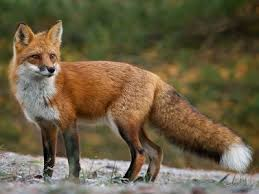
This week we are looking at the Sierra Nevada red fox.
Then we have the Sierra Nevada red fox which is found in the mountainous regions of California’s Sierra Nevada, it is also considered endangered. It is threatened by unpredictable events like wildfire and drought, competition with coyotes, and hybridization with non-native foxes, as well as habitat loss from logging and livestock grazing, disturbance by recreational vehicles, and climate change.
The Sonora Pass population of the Sierra Nevada red fox may be one of the most endangered species in the U.S. When FWS listed this population as endangered in 2021, the agency estimated that as few as 39 individuals may remain in the wild.
They appear to be opportunistic predators and foragers, with a diet primarily composed of small rodents. Their favorite foods are hares and gophers, but they also eat manzanita berries and deer carrion, particularly in winter and spring.
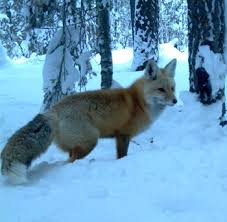
They have a small, slender body and legs; long, pointed ears; an elongated snout; and a long, white-tipped tail. They’re typically smaller than lowland red fox subspecies, with males weighing up to 9.2 pounds and measuring up to 3.4 feet long and females up to 7.7 pounds and 3.2 feet.
The biggest difference between it and the Red Fox is the Sierra Nevada red fox’s specialized adaptations for cold and snow. They have well-furred paws as part of their winter coat, longer hind legs and are slightly smaller.
They mate between December and March, with most mating occurring in January and February. They are believed to be monogamous.
They are sexually mature at 10 months they have a gestation period of 52–54 days, they can give birth to litters of 1–12 kits, with an average of 3–6 kits they are born in early to mid-April the pups move outside the den by June and are dependent on parents for 6 months.
They prepare multiple dens after mating and may share a burrow with another pair.
A conservation strategy is being developed to help recover the Sierra Nevada red fox. The strategy includes translocations and introducing other alpine foxes to support breeding.
The Forest Service, Park Service, and Department of Defence have resource management plans to minimize forest fragmentation.


 Jo-AnneRamplings
We have foxes here on the east coast of NJ. One memorable morning one visited my yard to enjoy the scraps I put out for the birds and squirrels. He must not have liked my offerings because it was a one-time only affair. I did enjoy seeing him though and took some photographs through the window. He certainly wasn’t as pretty as your foxes appear to be.
They are beautiful animals, I have never seen one myself but would like to
I love foxes.
That good, they are amazing and so good looking
🦊🦊 foxes are so cute..we used to get one that would roam the old neighborhood I lived in when I was younger