Well here we are at another Caturday this week we have Luca.
Hi there I am Luca I am a beautiful black and white cat, I live with my human Tasha, her son, his girlfriend and at the moment the girlfriends mother. Oh yeah there are two other cats here but they are visiting as this is my home and I am the top cat here and they better not forget it. This is a photo of me sleeping with my mum, see the pretty drawings on her hand and arm, they are called tattoos and she has lots of them.
This week we are looking at Hobart, which is the capital of Australia’s island state of Tasmania, sits on the River Derwent. It has a population of around 56,000.
Nearby is Battery Point, a historic district with narrow lanes and colonial-era cottages. The city’s backdrop is 1,270m-high Mount Wellington, with sweeping views, plus hiking and cycling trails.
Battery Point is Hobart’s first suburb, and widely regarded as the best-preserved colonial-era suburb in Australia.
The Muwinina people are the traditional owners of Hobart, Tasmania. They are one of the four distinct groups of Tasmanian Aboriginal people who lived in southern Tasmania, along with the Nuenonne, Mellukerdee, and Lyluequonny. The Muwinina were known as the “South East People”. The city of Hobart is situated on land that was once the domain of the Muwinina for thousands of years.
Hobart is Australia’s second-oldest capital city, it was founded in 1804 as a British penal colony, by Lt-Governor Collins. Initially named Hobart Town, it grew from a small settlement to a significant port, driven by industries like whaling and shipbuilding.
Hobart served as a penal colony, with a significant influx of convicts and a growing reliance on industries like whaling and shipbuilding.
In 1811 Governor Macquarie ordered a town plan for Hobart, which was developing rapidly, with hotels, shops, and other establishments.
The 1820s saw increased development with more efficient administrators and a growing number of free settlers and ex-convicts.
The town became a municipality in 1852 and in 1857 it was designated a secular city. It was in 1881 that the “Town” was formally dropped from its name, leaving it as simply “Hobart”.
Today, Hobart is a vibrant city with a thriving cultural scene, including the Museum of Old and New Art (MONA). It also boasts a dynamic food scene and the famous Salamanca Market.
Hobart is one of the best places to visit during Summer, with average temperatures ranging from 11.5 – 21°C (52.7 – 69.8°F). The months of January and February are also the driest, and beaches are warm enough to swim.
Autumn has many calm, sunny days, with average temperatures between 8.9 – 17.3°C (48 – 63.1°F). The city is blanketed in deep red and yellow hues as the trees begin to change.
During Winter the island feels the southerly winds from the Antarctic and experiences some of Australia’s coolest temperatures. Mount Wellington is dotted with snow and average daily temperatures range from 5 – 12.3°C (41 – 54.1°F). Overnight temperatures can drop as low as 3°C (37.4°F).
In Spring, average temperatures range from 7.8 – 16.9°C (46 – 62.4°F). This is the wettest time of year (168.7mm / 6.6 inches), however it should be noted that Hobart is Australia’s second-driest capital city (after Adelaide).
This week we are looking at hippo’s aka hippopotamus they are what some refer to as stout and naked-skinned. They are semiaquatic artiodactyl mammals, possessing three-chambered stomachs and walking on four toes on each foot. While they resemble pigs physiologically, their closest living relatives are the cetaceans. They are sometimes referred to as hippopotamids.
Their hooves are different from other ungulates, as they are more like fingernails. Their feet are webbed, which helps them move about in water.
They are found in the heart of Africa’s wetlands. These semi-aquatic creatures live in and around lakes, rivers, and grassland swamps. There are two species of hippopotamuses, the common river hippopotamus and the smaller pygmy hippopotamus.
Common river hippopotamuses are native to sub-Saharan Africa. They live in waterways like rivers, lakes, swamps, and estuaries. These semi-aquatic mammals can be found in various African countries, with populations in both East and West Africa.
Pygmy hippos, unlike their larger relatives, are found in the tropical rainforests and swamps of four West African countries: Côte d’Ivoire, Guinea, Liberia, and Sierra Leone. Their slightly smaller bodies have adapted to allow them to easily navigate the vegetation in rainforests.
Hippos must keep their skin wet with mud or water for most of the day to stay hydrated. While they don’t have sweat glands, they secrete a red substance called blood sweat. This helps protect their reddish-brown, thick yet sensitive skin from sunburn and keeps it moisturised. Despite their need to spend most of their time in the water, hippos can’t swim. Instead, they run or walk along riverbeds. When they’re rafting—napping while submerged in water—a subconscious reflex keeps them near the water’s surface.
They are formidable creatures and considered the second largest land mammal, smaller only than elephants. The average male hippo can weigh around 3,200 kilos (7,000 pounds, they’re typically around 3.5 metres (11 feet) long and 1.5 metres tall (5 feet).
While adult pygmy hippos stand about 75–100 cm (2.46–3.28 ft) high at the shoulder, are 150–175 cm (4.92–5.74 ft) in length and weigh 180–275 kg (397–606 lb). Their lifespan in captivity ranges from 30 to 55 years, though it is unlikely that they live this long in the wild.
Hippos have bulky, barrel-shaped bodies, short and stout legs, large heads, and enormously powerful jaws. Their jaws can open to 180 degrees and their bite is three times stronger than a lion. They have incredible sharp teeth that can grow up to 50cms long, which are used for eating and defence. The common hippopotamus has four webbed toes adapted to support them on land and in water. On the other hand, pygmy hippos tend to have less webbing and slightly longer legs. A hippo’s eyes and nostrils sit on top of its head, which helps it stay mostly submerged in water while breathing and keeping an eye on its surroundings. Although hippos can’t breathe underwater, they can hold their breath for up to five mins.
Hippos exhibit strong social bonds and typically live in groups of anywhere between 40 to 200, known as bloats, pods, or herds.
They are territorial creatures and use their dung to mark their territory. Male hippos have been known to flick their dung around to assert dominance. This dung is actually important to their aquatic ecosystems, as it transfers vital nutrients from land to water, allowing insects, plants, and other microorganisms to flourish.
They play a crucial role in the ecosystem it inhabits in other ways, too. These herbivores graze on the vegetation surrounding wetlands, helping prevent overgrowth, which can clog water sources, disrupt the natural flow of water, and threaten the biodiversity of aquatic ecosystems.
Healthy wetlands act as effective carbon sinks and remove excess carbon from the atmosphere. By maintaining the balance of these delicate ecosystems, hippos help mitigate the effects of climate change.
Hippos are facing several threats to their survival as a species. Global conservation efforts are critical to ensuring the well-being of the species and the ecosystems it inhabits.
This week we are looking at a few more facts about the country of Dominica.
Their national animal is the Sisserou parrot, also known as the Imperial amazon or Dominican amazon. It is an endangered species, endemic to Dominica, and appears on the national flag and coat of arms.
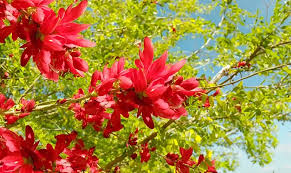
The national flower is the Sabinea carinalis, commonly known as Carib Wood or Bois Caraibe. It’s also referred to as Bwa Kwaib.
They have an official national dish called Callaloo soup. This hearty, thick soup is made with dasheen leaves, coconut milk, and often includes yams, peppers, onions, salted meat or crab, and green bananas. It’s a staple in Dominican cuisine and is often served during special occasions.
The coat of arms was adopted on July 21, 1961. It consists of a shield with two guardian sisserou parrots bracing the shield atop of which is a lion passant. The quarters of the shield depict a canoe, a banana tree, a palm and a frog of the native species known as the mountain chicken.
The country has made strides in protecting women’s rights through legal frameworks and international commitments, but challenges remain, particularly in areas like workplace discrimination and access to reproductive health services. The government has enacted legislation addressing violence, including domestic violence and sexual offenses, and has ratified international conventions like CEDAW. However, gaps exist in areas like employment discrimination and the availability of emergency contraception.
The age of consent for sexual relations is 16. The law prohibits using children for commercial sexual exploitation, including child sex trafficking, and related activity may be prosecuted under laws against prostitution or trafficking.
Dominica has a Westminster-style parliamentary government, and there are three political parties–the Dominica Labour Party (the majority party), the Dominica United Workers Party, and the Dominica Freedom Party. A president and prime minister make up the executive branch.
It is considered one of the safest Caribbean countries for travelers. Whether you’re a solo traveler, a same-sex couple, or a family with children, the island’s progressive laws, including legislation decriminalizing same-sex relations on 22 April 2024, ensure a safe and inclusive atmosphere for all demographics. However, visitors should exercise caution at all times. Regarding outdoor activities, most beaches in Dominica are safe for swimming and snorkelling.
Well, we still have the same Prime Minister, Albo got in for a second term.
The weather app said it wouldn’t rain but it has been raining on and off, both Tim and I went down to Coles to get a few things.
I did a load of washing and hung it out on the clothes hoist to dry.
I set up a new email account for Sue.
Tim cooked tea, crumb chicken and some baked veggies with gravy of course.
This evening when it was time to close the back sliding door Tim was complaining about the clothes hoists being in his way and it was very difficult to reach the door, I asked if he would like me to do, he said my bum is bigger than his so how would I be able to do it. I thought by moving things but said nothing.
Steps:9,353=6.5km’s
BGL:6.9
Here we are at the start of another working week, or school week this week Jess is driving Sam to Tafe. It is a cool start to the day but then I have the back sliding door open, did I have trouble opening it, NO I moved a chair then moved the clothes hoists a bit and had no trouble reaching the door to open it.
It has been a warm day, I took the clothes off the line and put them away, I just had a baby corella walked into the house right up to the hallway when I noticed it, I said what are you doing, and it turned and ran out of the house.
Jessica brought over an early Mother’s Day present a pair of knitted slippers they are very warm which is good as my feet often get cold while I am sitting in my armchair.
Steps: 8,574 = around 5km’s
BGL: 7.1
Had another good night my watch tells me I had 8hrs and 43mins of sleep.
No school for Sam today, she has an appointment with her paediatrician after lunch and as Jess has arranged for Sue to drive them, she said she isn’t going to get her to go to the school the to the hospital for the appointment as they are in two opposite directions. She asked Sue to drive them because whenever Jess has driven them, she cannot get anywhere to park, I never had a problem finding a park and Sue says she doesn’t have a problem either.
I was watching telly and had put my head back and closed my eyes for a bit when the postie arrived, she opened the door said she was sorry to disturb me and handed me my mail. Not all posties would do that.
When Sue came to pick up Jess and Sam, I gave her the present I did for her for Mother’s Day and she loved it, she got emotional and cried a little. Told me I didn’t have to do that which I
Sue messaged me and said when they got to the hospital there was nowhere to park so she dropped them off and parked out on the road but after 5 minutes decided to try again and that time, she found a parking spot no problem, so said Jess is right it is her.
Turned out to be a warm day.
Steps:6,448=5.1kms
BGL:7.0
KELSI’S BIRTHDAY SHE IS 11 TODAY
Had another good night my watch tells me I had 7hrs and 55mins of sleep. After Tim left for work, I had a shower and at the moment I am feel refreshed and good.
Sue and went to the cemetery and the ground had dried out enough for me to be able to walk on.
We then went to Officeworks so I could get postage stamps and have a look around.
We then went to Coles but there was nowhere to park and Sue said screw this, I will go somewhere else, as we are leaving the carpark I realised I forgot to get the stamps, so we then went to the Post Office before coming home.
I was getting my phone out of my bag when I got home and found the two letters I had wanted to send off.
Steps: 8,197=4.16km’s
BGL:7.0
Having a good morning after a good night’s sleep not too cold this morning and it is supposed to only reach 19C today.
Around 11am I went in and out on a pair of pantyhose under my long pants for extra warmth. I am glad I did as Tim keeps leaving the doors opened.
It started to rain around midday, it was raining when I went to meet Sam. She brought home from school 4 books that the library was getting rid of all are about the human body and they are cool. Sam said if I wanted to borrow them to use for blog posts I could, and I will be doing just that.
Steps:8,697=4.29Km’s or 2.4miles
BGL: 6.08
Had a good night sleep, it’s wet outside, I hope it fines up by 8am when I go up with Sam to wait for his transport. My watch tells me I slept for 8hrs and 42mins and I was awake for 44mins during the night.
Just had a phone call from Sue she has blown a tyre and has to cancel her appointment this morning she is going to be off the road till she can do something about the tyre.
While I was watching telly this afternoon it started to rain, I hope it stops by the time I need to get Sam. Well, it stopped raining, but I forgot to take a blanket for my legs and damn it was cold waiting for Sam.
Steps:8,473=4.68kms or 2.08miles
BGL: 6.5
Another good night slept for 7hrs 58mins was awake only 9mins during the night. It is a cold morning.
It has been raining on and off all day, Tim and I went over to Lake Fair so I could do some shopping, and he could cash in some bottles he got $55 this time for the bottles, for those who don’t know you get 10cents for each bottle or can you recycle.
I went looking for a long sleeve black singlet but the ones in my size were $22 and I wasn’t paying that the cheaper ones didn’t have my size. So I looked at long sleeve black tops and found two for only $10 each but when I went to pay they were on special two for $16 so that was good.
Hi all, in case you don’t know my name is Archie Albert Jenkins and my human mum is Sue this photo shows me laying across mums legs a very comfortable place to lay .
This week’s national anthem is of course the anthem of Dominica.
Dominica’s national anthem is the “Isle of Beauty, Isle of Splendour”, which was adopted in 1967 upon the country gaining statehood and again with independence in 1978.
The lyrics were written by Wilfred Oscar Morgan Pond (W.O.M. Pond), and the music was composed by Lemuel McPherson Christian. The anthem is a patriotic song that celebrates Dominica’s natural beauty, prosperity, and the strength of its people.
The lyrics praise Dominica’s natural beauty, such as rivers, valleys, hills, and mountains, and its fertile lands. The anthem also highlights the strength and health of the Dominican people and their Godly reverence. It encourages citizens to strive for honour, do what is right, and work together for the prosperity of the nation.
Isle of beauty, isle of splendour, Isle to all so sweet and fair, All must surely gaze in wonder At thy gifts so rich and rare. Rivers, valleys, hills and mountains, All these gifts we do extol. Healthy land, so like all fountains, Giving cheer that warms the soul.
Dominica, God hath blest thee With a clime benign and bright, Pastures green and flowers of beauty Filling all with pure delight, And a people strong and healthy, Full of godly reverent fear. May we ever seek to praise Thee For these gifts so rich and rare.
Come ye forward, sons and daughters Of this gem beyond compare. Strive for honour, sons and daughters, Do the right, be firm, be fair. Toil with hearts and hands and voices. We must prosper! Sound the call, In which everyone rejoices, “All for Each and Each for All.”
This week we are looking at the town of Adelaide the capital of South Australia, it has a population of around 1.4 million.
It is unique in Australia for being a planned city established as a free settlement, not a penal colony. Founded in 1836, it was named in honour of Adelaide of Saxe-Meiningen, wife of King William IV. The city’s layout, designed by Colonel William Light, features a grid pattern surrounded by parklands, making it a “city within a park”.
It was the first Australian city to be linked by telegraph to London (1872), and the first to allow women to vote (1895).
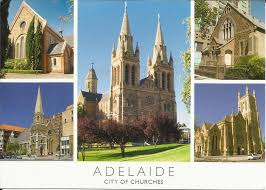
It is also known as the “City of Churches” due to the presence of numerous religious buildings.
The River Torrens, flowing through the city, played a significant role in its development and is a landmark feature. That being its ring of parkland on the River Torrens is home to renowned museums such as the Art Gallery of South Australia, displaying expansive collections including noted Indigenous art, and the South Australian Museum, devoted to natural history. The city’s Adelaide Festival is an annual international arts gathering with spin-offs including fringe and film events.
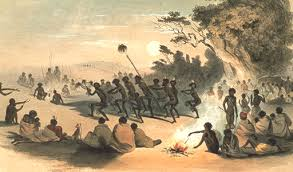
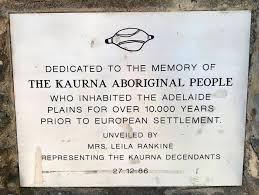
The traditional owners of the Adelaide region, specifically the Adelaide Plains, are the Kaurna people. They are recognized as the custodians of this land, with their traditional lands extending from Port Broughton to Cape Jervis. The City of Adelaide formally acknowledges the Kaurna people as the traditional owners and pays respect to their Elders, past and present.
The traditional Kaurna name for Adelaide is Tarntanya, which translates to “red kangaroo place”. The Kaurna people are the Traditional Owners of the Adelaide Plains, and Adelaide was their central gathering place and area of movement and activity. While the city of Adelaide is now known by its European name, the Kaurna name is increasingly recognized and used, particularly in signage and dual naming efforts.
So, what is the town known for well, its vibrant arts and cultural scene, particularly its extensive festival calendar. It’s also recognized for its high-quality education and beautiful natural landscapes, including beaches and wine regions. Furthermore, Adelaide is a city known for its charming architecture, exceptional coffee, and artisan produce.
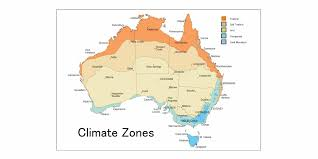
The Adelaide region has a Mediterranean climate, characterised with cold to mild wet winters and warm to hot dry summers. Most of the region’s rainfall occurs from mid-autumn to mid spring (April to October), which coincides with southern Australia’s wet season.
In May 1899, in a break with the common international practice of setting one-hour intervals between adjacent time zones, South Australia advanced Central Standard Time by thirty minutes after lobbying by businesses who wanted to be closer to Melbourne time and cricketers and footballers who wanted more daylight.











 Jo-AnneRamplings