Good afternoon I didn’t get around to writing this earlier.
This will be the last post about Newcastle during the second world war.
The 15 August 1945 was a day of celebration here in Newie as this was VP Day, VP stands for Victory in Pacific this was the day Japan surrendered. Yes, in May Germany had surrendered which of course people were excited about but as Japan was the direct threat to Australia.
The darkest days of the war for most Novocastrians when the Japanese attacked Newcastle. So, when Prime Minister Ben Chifley broadcasted the wonderful news, the city erupted in a joyous and uninhibited celebration. Of course, for most this meant that their loved one would be able to come home.
As soon as the news broke hundreds of sirens, whistles and horns on ships and trains as well as the factories sound, starting a wild chorus that lasted all on and off all day. People poured into the streets, dancing and celebrating with wild spontaneity.
Those in the suburbs poured into the city as well to join in the celebrations and await the afternoon’s formal parade and speeches.
It was almost impossible for people to hear the Prime Minister’s speech due to the noise, everyone knew her was talking and what he was talking about, after his speech a radio station put on dance music and in flash the city streets were filled with people dancing.
On that day no one thought about what would happen after the war,or gave much thought to how the war ended as in with the dropping of atomic bombs in Japan. All that mattered then was that the war was over
This week we are moving onto foxes which still fall under the wild dog banner, there are 12 true fox species and many other that are not considered true foxes. I think this because they have other non-fox genes in them.
Foxes and dogs are both members of the Canidae family, which is also known as the dog family.
Foxes are similar in appearance to dogs and coyotes, and share many other characteristics with other canids, such as their long muzzles, bushy tails, long legs and bone cracking flesh slicing teeth.
They are also similar to cats in some ways, such as being most active at night, having vertical pupils, they use a similar hunting style, and sometimes sleeping in trees.
Foxes are solitary scavengers that eat a variety of foods, including mice, voles, bird eggs, roadkill, wild fruits, vegetables, berries, and nuts. They are nocturnal predators that have evolved to see at night.
While it may be legal to keep a fox as a pet in some places, foxes are wild animals and should not be kept in the home.
I will write more about some of the different breeds of foxes over the next few weeks.
Good morning all it is a much cooler day here in my part of the world, this week we are looking at another African country but this one you should all have heard of it is South Africa.
It is on the southernmost tip of the African continent, it is known for its great diversity in cultures, languages, religious beliefs and ethnic groups.
When we think of the capital most of us would say Cape Town but in fact, South Africa has three capitals as each branch of government has its own capital city. The administrative capital of South Africa is Pretoria, the legislative capital is Cape Town, and the judicial capital is Bloemfontein.
Why is this well in 1910, when the Union of South Africa was formed, there was a great dispute about the location of the new country’s capital city. A compromise was reached to spread a balance of power throughout the country, and this led to the three capitals of South Africa.
The population is around 63 million, with Black South Africans as the majority, with around 80% the rest is made up of coloured South Africans at around 8%, Indian or Asian South Africans at around 2.6% and White South Africans being around 8%.
The country has nine provinces:
The Eastern Cape
The Free State
Gauteng
KwaZulu-Natal
Limpopo
Mpumalanga
The Northern Cape
North West
The Western Cape
Each province has its own government, including a premier, legislature, and executive council. The provinces also have their own distinct landscapes, populations, economies, and climates.
South Africa’s provinces were increased from four to nine in the lead-up to the 1994 general election.
This was done by reintegrating the country’s former homelands, known as Bantustans, into the country.
The flag is a horizontal bicolour of red and blue with a green band in the middle that splits into a “Y” shape. The flag also features a black triangle on the hoist side, with narrow yellow or gold bands separating the triangle from the arms of the “Y”.
The flag was adopted in 1994 after the end of Apartheid to represent the country’s new democracy.
The country has a diverse religious population, with Christianity being the most widely practice with around 85% of the population being Christian. The largest group of Christian churches are the African Independent Churches, which include the Zion Christian Church and the Apostolic Church.
Around 7% of the population practices Indigenous beliefs. Many Indigenous people combine Christian and Indigenous religious practices.
It is believed that about 6% of the population is atheist or agnostic.
There is also Hinduism, Islam, Buddhism, and Judaism practiced in the country.
South Africa is a secular state with a constitution that guarantees freedom of religion. The state’s relationship with religion is more moderate and tolerant, allowing for voluntary religious observances within state institutions.
Like many African countries South Africa isn’t considered a safe country to visit due to crime, civil unrest, and kidnapping. Violent crime is common and includes armed robbery, rape, carjacking, and mugging. There are also “smash-and-grab” attacks on vehicles. It is the 20th worst country in regards of safety and security.
Many would know of Apartheid which was in South Africa from 1948 to 1994 and was the racial segregation under the all-white government of South Africa which dictated that non-white South Africans (a majority of the population) were required to live in separate areas from whites and use separate public facilities and contact between the two groups would be limited. The different racial group were physically separated according to their location, public facilities and social life.
In 1948, after the National Party won that year’s elections, Apartheid became a social project of the government based on a series of laws which made it legal.
There are at least thirty-five languages are spoken in the country with twelve of them being regarded as official languages, they are Ndebele, Pedi, Sotho, Swazi, Tsonga, Tswana, Venda, Afrikaans, Xhosa, Zulu, English and South African Sign Language.
English is the primary language used in parliamentary and state discourse, though all official languages are equal in legal status.
The South African Rand is the currency of South Africa and is issued by the South African Reserve Bank. The South African rand has the symbol R. It is subdivided into 100 cents. The name is derived from the word ‘Witwatersrand’, which means ‘ridge of white waters’.
Another good night, when I woke at 5am and had a shower, I am zoning out a bit this morning, don’t know why my BGL is ok at 5.30 it was 5.1 and it was 22 degrees, it is supposed to be another hot day.
Tim and I went over to Lake Fair so Tim could get new work pants and shorts. I also went to the Reject shop and got a few things. After that we went and picked up the new air con.
It got hot a top temp of 32 degrees.
Sue made a chocolate cake and divided it between herself, Sandy and me, Tim tried it and really liked it, and Tim doesn’t as a rule eat cake. However, he does eat lamingtons which is cake.
Steps: 8,523
Another pretty good night, we are in for another stinking hot day with a temp of around 32 degrees. At the moment it is 19 degrees, I forgot to test my blood before eating so don’t know what that was.
I am feeling with it this morning and I am getting things done, little things around the house like vacuuming and hanging a few more Christmas decorations, cleaning the kitchen bench off and going online and modifying my grocery order for tomorrow. All in all, I am feeling good this morning.
I started to feel drained and worn out by lunch time, maybe I should have tried to have nap, but I didn’t.
When I went to meet Sam at 2pm it was 33 degrees.
I turned the air con off at 5.30pm but left the fans going as it wasn’t as hot.
Steps:10,122
Had a so-so night, took me a while to settle but once I did, I slept well, till the alarm went off. At the moment it is nice with the temp of 22 degrees my BGL was 5.1
By lunch time it was 31 degrees.
When I went to meet Sam, I saw Denni & Landon walking home from the high school, it was their orientation day. It was great seeing them.
While I was waiting it wasn’t that hot, it was very warm but not hot.
I was able to turn the air con off at 5.30 and open the doors and turn the ceiling fan on instead.
Steps: 4,696
Had a good night slept straight through, however, I woke with a headache which isn’t good.
It is a pleasant 22 degrees this morning my BGL was 5.5.
When I went up to the top of the driveway with Sam it was really windy, and the wind was on the cold side.
I turned the air con on at 12.30 only needed it on till 3pm.
It is 10.40pm and I woke up after about an hour or so sleep very restless, so I am using the powerfit before returning to bed.
Steps:7,782
After using the powerfit and returning to bed I slept well.
When I tried to ring Sam there was no answer, so I ended up ringing Jess who said that Sam wasn’t going to school as there was either the swimming carnival or sports carnival. I then sent Joel a text to make sure he knew Sam wasn’t going to school.
Sue drove me to the doctors and went to the post office for me and I went and got fresh bread.
Seems Sue told Tasha about a lady at Baker’s Delight that she felt had an issue with serving me, Sue said she gave me a dirty look and seemed annoyed that it took me so long to find the money for my purchase. I might add I didn’t notice anything, but I was focused on what I was doing and not falling over.
So, Tasha rang Baker’s Delight and lodged a complaint about the woman, as way of saying sorry I get a free loaf of bread and a Danish on my next visit. I don’t know how I feel about it all.
Steps:6,045
After another good night, I woke only when the alarm went off, Tim gets to sleep in as he doesn’t have to be up till 7am.
It is a lovely 21 degrees and my BGL is 4.8
I went with Sue so she could adopt a kitten, an 8-week-old male called Arti, she adopted it from a shelter in Maitland it was a 45-minute drive. There was a lot of paperwork to fill out, in fact she had to write her name, address, phone number and email address 8 times.
It has been a stinking hot with a top temp of 33 degrees.
Steps:2,000 (steps are low due to unstable knee and the heat)
I was unsettled last night till around midnight, so when the alarm went off, I got up and took my tablets and went back to bed. I hoped to stay there till around 6am, as Tim said he would drive me down to have blood taken at 7am and as it is a fasting test I can’t have anything to eat till after it is done.
Went and had blood taken there was 7 people in front of me, but it didn’t take to long.
Another sticky, muggy day, need the air con on early to suck the moisture out of the air.
Tim took Jess’s car for rego check which it passed, so she is happy about that.
This is the first post about a country’s national anthem and of course the country is Australia, our national anthem is Advance Australia Fair it was written and composed by Peter Dodds McCormick in 1878.
It has been our national anthem since 19 April 1984.
Before then it was God Save the Queen.
Advance Australia Fair” was chosen as Australia’s national anthem after a series of polls and a plebiscite:
In 1974, The Australian Bureau of Statistics conducted a poll of 60,000 people, with 51.4% of respondents choosing “Advance Australia Fair” as their preferred anthem. So, it was adopted as the Australian National Anthem, but in 1976 ‘God Save The Queen’ was reinstated.
Then in 1977, The Australian Electoral Office conducted a poll as part of a referendum on various issues. Over 7 million people voted, with 43.29% choosing “Advance Australia Fair”, over three other contenders, including “Waltzing Matilda.”
In 1984 The Governor-General proclaimed “Advance Australia Fair” as the national anthem, along with the verses written by the National Australia Day Council.
Some of the original words, however, have been altered for the official version—including the first line, changed from “Australia’s sons, let us rejoice”, to “Australians all let us rejoice.”
In 2021 the second line was changed from “For we are young and free” to “For we are one and free” to acknowledge Aboriginal and Torres Strait Islanders and their history.
The song is about Australia’s strength and beauty and references the migration of European settlers. The word “fair” has been the subject of controversy, with some arguing it means beautiful, while others suggest it has links to being white.
The song originally had four verses but only the first two are used in the anthem.
Australians all let us rejoice, For we are one and free; We’ve golden soil and wealth for toil, Our home is girt by sea. Our land abounds in Nature’s gifts Of beauty rich and rare; In history’s page, let every stage Advance Australia fair. In joyful strains then let us sing, “Advance Australia Fair.”
Beneath our radiant Southern Cross We’ll toil with hearts and hands; To make this Commonwealth of ours Renowned of all the lands; For those who’ve come across the seas We’ve boundless plains to share; With courage let us all combine To Advance Australia fair. In joyful strains then let us sing, “Advance Australia Fair.”
This week we are looking at diabetes, I thought I had written about it before but couldn’t find one, so here is one.
Diabetes is a chronic disease that occurs when the body doesn’t produce enough insulin or doesn’t use insulin properly, resulting in high blood sugar levels.
There are two main types of diabetes type one and type two but there is also Gestational diabetes which is diagnosed during pregnancy with a blood sugar test, however after giving birth this type often goes away. However, having it increases your chances of developing type two later on.
Type one is often diagnosed in childhood, but it can develop at any age. It’s less common than type 2 diabetes, affecting about 5–10% of people with diabetes. The exact cause is unknown, but it’s likely caused by a combination of genetic and environmental factors. No, you are not born with it as I have heard some people say.
Then there is type two with this one there isn’t a clear pattern of inheritance, but the risk increases with the number of affected family members. This is likely due to shared genetic factors and lifestyle influences, such as diet and exercise habits. Other risk factors include being overweight, having high blood pressure, and being older.
In both types of diabetes, sugar builds up in the bloodstream because the pancreas doesn’t produce enough insulin.
Symptoms of type 1 diabetes include:
Urination: Frequent urination, including bedwetting in children
Thirst: Excessive thirst
Weight loss: Unintentional weight loss
Hunger: Excessive hunger
Vision: Blurred vision
Fatigue: Feeling very tired
Skin: Very dry skin
Healing: Sores that heal slowly
Infections: More infections than usual
Nausea: Nausea, vomiting, or stomach pains
Mood: Feeling irritable or having other mood changes
Symptoms of type 1 diabetes can develop over a few weeks or months and can be severe. They typically start mild and get progressively worse.
Type 1 diabetes can be managed with lifestyle changes, blood glucose monitoring, and medications, such as insulin.
Symptoms of type 2 diabetes can include:
Thirst: Feeling very thirsty
Urination: Urinating more often than usual, particularly at night
Vision: Blurred vision
Fatigue: Feeling tired and lethargic
Weight: Unintentional weight loss or loss of muscle bulk
Healing: Slow-healing cuts, ulcers, sores, or other infections
Hunger: Increased hunger
Symptoms can be mild and may take many years to be noticed. Some people with type 2 diabetes may not have any symptoms at first.
As I don’t like doing really long posts I will split into two or three parts, so will end this here.
Time for part two of the torpedoing of the SS Allara.
Straight after the attack the wireless operator sent out 40 distress calls, but the ships aerials had been blown away. After the crew reboarded the ship, the wireless operator rigged a replacement and sent an SOS.
Surviving crew of SS Allara
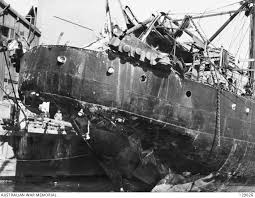
The crew worked the pumps full-time to keep the vessel afloat while two navy tugs made their way to rescue the crew, they arrived alongside at 9.45am.
Later that day the tug Heroic from Newcastle took over the tow, when they arrived at the port people were shocked at how badly damaged the stern was and that it was still afloat.
The seaman lined the rails while the dead were carried ashore, then the walking wounded including a seaman named Paddy who hobbled down the gangway with an injured foot and permanent grin to his crewmates yelling “we’ll be seeing you” with Paddy replying that he would be back.
In the waterfront hotel the men were drinking rum and milk, 16yr old Frank Grant a deckhand was blushing not because he was drinking lemonade but because his shipmates were making a big deal of how he had been blown right out of his bunk then jumped to his feet and dragged a wounded mate up on deck.
The Allara was towed to Sydney for repairs and was back in service by April 1943. The ship remained in service till the 1950’s.
The Japanese Submarine I-75
The Japanese vessel I-75 continued on its destructive path sinking two merchant ships and damaging two more before leaving Australian waters. In 1943 it was sunk by an American aircraft carrier the USS Liscome Bay which later that same year was itself lost with all hands.
This week are looking at the New Guinea Singing Dog, not an animal I have heard of before, how about of you?
The New Guinea singing dog or New Guinea Highland dog is an ancient lineage of dog found in the New Guinea Highlands, on the island of New Guinea. Once considered to be a separate species in its own right, under the name Canis hallstromi, it is closely related to the Australian dingo.
They are thought to be one of the oldest breeds of canine, with some evidence suggesting that they may have been present on the island of New Guinea for over 5,000 years. It was thought that they went extinct in the wild in the 1970s, but in 2018, DNA evidence confirmed the presence of a wild group in New Guinea.
Does it really sing? Well, when it comes to sounds, they really have their own voice! Most of the singing dog’s vocalizations are like that of the wolf, dingo, and domestic dog, but their howl is incredibly unique. By using Sonograms, it is believed that their howl is like the song of the humpback whale.
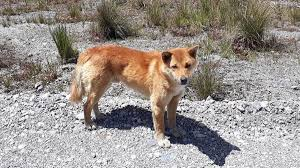
They are a small to medium size dog species. They have a wedge-shaped head and triangular, upright ears. These dogs have a soft, thick coat and a bushy tail. The eyes of the singing dog are reflective and glow bright green in low light conditions.
They have a distinctive appearance, which includes a dense, long coat that ranges in colour from red to black and brown. These dogs have a small, compact body and a wedge-shaped head with pointed ears. They have a high metabolism and require a diet rich in protein to maintain their energy levels. Their legs, joints, and spine are highly flexible making them skilled climbers.
They are known to live up to 15 years in captivity, but it is unknown how long they live in the wild.
They prey on small mammals, small reptiles, and birds; they even try to hunt 3.5-foot-tall (1-meter-tall) dwarf cassowaries! New Guinea singing dogs have a strong hunting drive and fearless nature, and they are highly curious.
They are not pack animals but are solitary animals but may forage in pairs. They are known to be shy and elusive and live in mountains and thick forests of New Guinea and Indonesia. They are also excellent climbers and can jump high like cats.
You can have a New Guinea Singing Dog as a pet, but they can be challenging to fully domesticate and may not be the best fit for most families.
They are intelligent, lively, and affectionate, but they can be difficult to housetrain and are not very socially active. They can also be fearful and unreliable off-leash. They do best with experienced pet parents who are familiar with the breed.
It is estimated that only 200-300 of these animals are in existence today.
Ok let’s move onto central and southern Africa and area that includes Burundi, Chad, Central African Republic, South Africa, the Republic of Congo, Rwanda, Zimbabwe and Namibia.
Let’s start with Burundi, officially the Republic of Burundi, it is a landlocked country in the Great Rift Valley at the junction between the African Great Lakes region and Southeast Africa, with population of over 14 million people.
It is considered by some to be the poorest country in the world and is one of the least developed countries. Over 1 million of its people are facing crisis levels of hunger today. This is due to poverty, climate shocks, soaring inflation and fuel shortages.
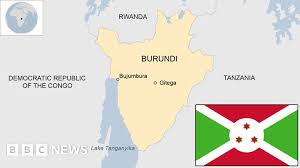
The town of Gitega, located in the central part of Burundi as the Political Capital, while Bujumbura, which is in the southwestern of the country, adjacent to the Lake Tanganyika is the Economic Capital.
Prior to 2019 Bujumbura served as Burundi’s national capital, but legislation passed that year designated Gitega as the country’s political capital and Bujumbura as the economic capital. The transfer of government functions to Gitega proceeded in the following years.
The original flag was adopted after the country’s independence from Belgium on 1 July 1962. It went through several revisions and now consists of a white saltire which divides the field into alternating red and green areas. The centre of the saltire merges into a white disk, on which there are three red solid six-pointed stars outlined in green. The current ratio is 3:5, which was changed from 2:3 on 27 September 1982.
The franc is the currency of Burundi. It is nominally subdivided into 100 centimes, although coins have never been issued in centimes since Burundi began issuing its own currency.
Burundi’s political system is that of a presidential representative democratic republic based upon a multi-party state. The president of Burundi is the head of state and head of government. The president is elected by absolute majority vote through a two round system. The supreme court is the highest court of the land. Judges are nominated by the judicial service commission and then appointed by the president with the approval of the senate.
Burundi has a diverse religious population, with the majority identifying as Christian and a minority identifying as Muslim:
Christianity is the most common religion in Burundi, with about three-fifths of the population identifying as Roman Catholic and more than one-eighth identifying as Protestant.
Islam is a minority religion in Burundi, with Muslims making up less than one-twentieth of the population. The majority of Muslims in Burundi are Sunni, but there are also Shia and Ismaili communities.
A large minority of the population, including some Roman Catholics, practice traditional religions.
The government of Burundi has granted tax waivers to religious groups for the purchase of materials for development projects and for imported religious items. The government has also provided opportunities for religious leaders to preach about scriptures and moral issues.
This is another country that is not considered a safe destination for tourists due to a number of risks, such as a threat of terrorism, political violence, violent crime, including mugging, purse snatching, pickpocketing, assault, carjacking, home invasion, grenade attacks, and armed robbery and there is a risk of kidnapping for ransom, and criminals have targeted foreigners in the past.








 Jo-AnneRamplings