Insomnia

This week I thought we would take a look at something I am thankfully I don’t suffer from, although there have been times when I felt like I do suffer from it. The condition is insomnia.

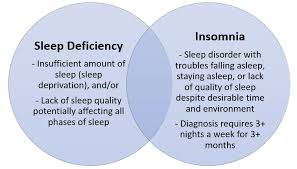
Insomnia is a sleep disorder that makes it hard to fall asleep or stay asleep, even when you have the time and environment to sleep well. It can cause you to wake up too early or not feel refreshed when you wake up. Insomnia can affect your mood, energy levels, and daily activities. 

Insomnia can be caused by stress, physical ailments, mental health problems, or poor sleep habits. 

It can affect people of all ages, but teens may be especially susceptible.

In most cases it is related to poor sleeping habits, depression, anxiety, lack of exercise, chronic illness or certain medication.

Symptoms may include difficulty falling or staying asleep and not feeling well-rested.

Treatment for insomnia consists of improving sleep habits, behaviour therapy and identifying and treating underlying causes. Sleeping pills may also be used but should be monitored for side effects.

It seems that more women than men have insomnia in the United States, more than one in four women experience insomnia, compared with fewer than one in five men. 

Also, a study found that women of all ages reported worse sleep quality than men. 

Women are twice as likely to have insomnia than men. 
This may be due to hormonal changes that women have during menstruation, pregnancy, breastfeeding, and menopause can cause or contribute to sleep difficulties. There are also physical symptoms that many women deal with during these times such as cramps or night sweats, that disrupt sleep. 

Caffeine can cause insomnia, especially if consumed in large amounts or close to bedtime, a study found that 400 mg of caffeine taken up to 6 hours before bed can significantly disrupt sleep, reducing it by more than an hour. 

Caffeine can disrupt your natural sleep-wake cycle, making it harder to get quality sleep. 

People with chronic insomnia may use caffeine to cope with daytime sleep deprivation, which can worsen insomnia at night. 

The exact effects of caffeine depend on the dose and an individual’s sensitivity. 

To minimize the risk of insomnia, it’s generally recommended to avoid caffeine in the hours before bed. People who regularly drink caffeine may be able to tolerate it better than those who don’t. 

Next week I will post the list of things that so called experts suggest to help with insomnia.

Supermarket’s history

 First you can find a new hodgepodge post over here:

http://jamfn.blogspot.com/2024/11/not-taking-hodgepodge-for-granted.html

Next you have this:

Have you ever thought about supermarkets, most of us shop in one but what was the first one in your country or state, do you know?

It isn’t something I had given any thought to till this morning sitting here thinking about blog posts, so I decided to do some research, and this is what I discovered.

Prior to 1938 there were many grocery chains, but none called themselves a supermarket. Many stores also offered self-service.

Possibly the first Australian business to experiment with self-service was the department store, Grace Brothers, which installed an “experimental” self-service food hall in their basement in 1921

Starting n 1923, here in Newie (Newcastle)a fella by the name of Farr started Farr’s Markets, he soon had stored throughout northern NSW, he opened a store in Bondi Junction.

It was in 1938 that Farr’s markets first advertised themselves as a “super market” and was the first ones to use the term.

Like today’s supermarkets, Farr’s had many different departments including fresh produce. They also pioneered the idea of ready-cooked meals – in 1931 their Goulburn store included a “provision department” supplying cooked food.

Like many developments in retailing, it began in America when, in 1916, Clarence Saunders opened his first Piggly Wiggly store in Memphis, Tennessee.

Now some may be thinking what about Coles and Woolworths, well on the 9 April 1914 a man named George Coles opened the Coles Variety Store on Smith Street in the Melbourne suburb of Collingwood. Further expansion occurred and Coles’ interest in food retailing was spurred in 1958 when it acquired 54 John Connell Dickins grocery stores.

On 5 December 1924 in Pitt Street of Sydney’s Imperial Arcade, called “Woolworths Stupendous Bargain Basement”.

I might do another post about modern day supermarkets

Not Dad’s Army but Newie’s NES 1939

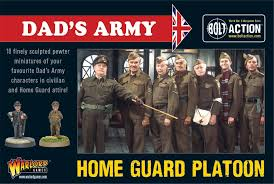
 Anyone know the British show Dad’s Army?

A really funny show but not what this post is about.

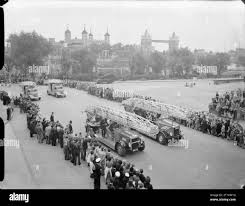
New South Wales real civil defence during the second World War was the National Emergency Services (NES).

In 1939, the National Emergency Services (NES) was established in New South Wales (NSW) to provide aid, education, and protection on the home front during World War II. The NES helped to: Install air raid sirens, Construct trench shelters, Build covered trenches, and Construct pillbox air raid shelters. 

Newcastle’s NES volunteers organised many kinds of exercises in order to be prepared if the enemy did attack. When the blackouts came into force it was the NES who had to make sure people took it seriously.

Many of the NES volunteers were women.

By the end of the war, 115,418 people had volunteered with the NES, with nearly half of them serving as wardens. 

The NES was disbanded six months after the war ended. 

This week’s wild dog the Dhole

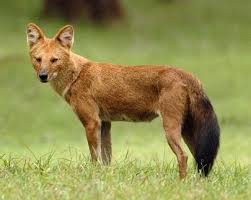
This week we are looking at the dhole, it is a canid native to South, East and Southeast Asia. It is anatomically distinguished from members of the genus Canis in several aspects: its skull is convex rather than concave in profile, it lacks a third lower molar, and the upper molars possess only a single cusp as opposed to between two and four.

It is a highly social animal, living in large clans without rigid dominance hierarchies and containing multiple breeding females.

This highly elusive and skilled jumper is classified with wolves, coyotes, jackals, and foxes in the taxonomic family Canidae. Dholes are unusual dogs for a few reasons. They don’t fit neatly into any of the dog subfamilies (wolf and fox, for instance).

They are very social animals that live in packs of 5–12 members, but packs can be as large as 25 members. They can also be cooperative with a few splitting off from the pack to hunt together. They are apex predators that are highly skilled hunters, they are agile, strong, and can leap up to seven feet vertically and are also excellent swimmers and have high endurance. 

It is believed that they are one of the most talkative canid species, using a variety of vocalizations to communicate, including whistles, clucks, screams, growls, yaps, and squeaks. 

Since their territory is often shared with larger predators like tigers and leopards, the pack must be alert at all times.

They are a medium-sized wild dogs about the size of a border collie. They have a rusty red coat; they are born with a brownish colour which turns more reddish when around three months old. They can also have dark, almost black bushy tails.

They are not generally dangerous to humans and are usually docile and skittish and will typically retreat when they see a person. However, dholes can attack livestock, and humans may retaliate by poisoning the carcasses. This can lead to the deaths of entire packs of dholes, as well as other carnivores and scavengers. 

Sudan

Well let’s move from Egypt to Sudan, officially the Republic of the Sudan, it’s a country in Northeast Africa. It borders the Central African Republic to the southwest, Chad to the west, Libya to the northwest, Egypt to the north, the Red Sea to the east, Eritrea and Ethiopia to the southeast, and South Sudan to the south.

Sudan is both an African and Arab country, with Arabic being the most widely spoken language. Over 97% of the population are Sunni Muslims with a small Christian minority.

The Sudanese pound is the currency of the Republic of the Sudan. The pound is divided into 100 piastres. It is issued by the Central Bank of Sudan.

Khartoum or Khartum is the capital of Sudan. With a population of 6,344,348, the metropolitan area is the largest in Sudan. It is located in the centre of the country, at the point where the Blue Nile and White Nile rivers meet.

The population of Sudan is estimated to be 50,467,278 in 2024, with a population density of 21.3 people per square kilometre.

The flag of Sudan was adopted on 20 May 1970 and consists of a horizontal red-white-black tricolour with a green triangle at the hoist

The national flower of Sudan is the hibiscus. The hibiscus flower is also known as the Sudan rose or Hibiscus sabdariffa. The flower’s dried petals are steeped in water to make an herbal tea called karkade, which is popular in Sudan, South Sudan, and Egypt. 

I searched for Sudan’s coat of arms what I found was their national symbol which follows the rules of heraldry (whatever that is) it could be considered a national coat of arms instead of a national emblem.

It shows a secretary bird bearing a shield from the time of Muhammad Almad, the self-proclaimed Mahdi who briefly ruled Sudan in the 19th century.

Two scrolls are placed on the arms; the upper one displays the national motto, the English translation is “Victory is ours”, and the lower one displays the title of the state, which is Republic of the Sudan.

The coat of arms is also the Presidential seal.

It is not a safe country to visit due to A civil war between two major rival factions of the military government of Sudan, the Sudanese Armed Forces under Abdel Fattah al-Burhan and the paramilitary Rapid Support Forces and its allies under the Janjaweed leader Hemedti, began during Ramadan on 15 April 2023. 

Week 44 of 2024

Had a good night work twice but settled back down pretty quick it is 12 degrees at 5am and my BGL is 4.9.

Tim working today and he will not get home till around 11pm so a long day for him.

It got to 25 degrees, I had to turn the ceiling fan on.

Didn’t exercise much today, just did 20 minutes in the morning.

Steps:5,696

SUE’S BIRTHDAY SHE IS 55 TODAY

Had a good night didn’t wake at all, it is 14 degrees and my BGL is 5.0

It’s a really hot day, Tim home from 9.30 to 1.30. Tim turned the ceiling fan on, but I think it is making the room hotter. 

Around 2.30pm it started to rain and that cooled things down a lot. It didn’t rain for very long.

Got a text from Dawson with photos of mum & dad’s old house and how it looks now inside and out as it is up for rent and the photos are with the rental listing. It does look very different.

Slept all night waking at 4.30 to pee and back to be till 5am, up showered and dressed for the day.

It isn’t supposed to be as hot as yesterday at the moment it is 16 degrees with a top of only 20 degrees expected. My BGL was 5.0

A cool morning and a warm afternoon.

I am very dyskinetic this afternoon.

I am having trouble sleeping, got up at 11.20pm used the Powerfit for 10 minutes, then just sat for 10 minute now I am going back to bed.

Steps:8,120

Slept alright after going back to bed at 11.40pm, I was woken by the alarm. It is supposed to be a hot day at the moment it is 15 degrees and by BGL was 5.1.

Finaly order the calendars for next year only took me two days to do them. By using a Groupon voucher, I got 5 A3 calendars for only $45 and not the full price of $176.

I haven’t done much today just no motivation but that’s ok I can have such days.

Steps:3,905

DAVID’S BIRTHDAY HE IS 46 TODAY

Slept well didn’t wake at all it is a pleasant 15 degrees, my BGL is 4.0, I am hoping it doesn’t get too hot, but we will see.

Yes, it got hot, I turned the air con on for a bit but got cold so turned it off after 30 minutes, opened the doors and closed the curtains to block out the heat.

Tim had an early start and had to get up at 3am, he will be home at the normal time which around 5.30pm.

I went to at 8.30pm as I was so very tired, I woke at 10.10pm sweating and with jerky movements, so I got a read some blogs the jerking has got worse will use the powerfit and go back to bed as I am still very tired

Steps:7,173

After returning to bed last night, I slept through to the alarm went this morning.

It is 16 degrees and my BGL was 4.4

When I walked up with Sam it started to rain and of course I forgot to wear my raincoat.

It didn’t rain for long and turned out to be a nice day, not to hot just warm.

I slept for 90 minutes then had to pee, went back to bed and slept for 60 minutes woke up with uncontrollable moving so got up and used the powerfit for 20 minutes then decided to update this before going back to bed.  

Steps:9,261

After returning to bed last night, I slept through to the alarm went this morning. I didn’t get back to bed till 2am and was at 5am, I had to have a short nap around 8am. Why was I up so later Jess came over after she got home from work and sat talking with her dad and me. I left them talking when I went to bed.

Tim has gone to help Tasha return her TV which is playing up but covered by warranty, it will not fit in her car.

I asked if he could get a few things for me, he forgot somethings even though he had a note and what he did get wasn’t right. He doesn’t read I do not and have never liked coffee, so no I will not drink caramel coffee.

Steps: 4,808

Dystonia or Dyskinesia

There are two conditions that are associated with Parkinson’s Dyskinesia and Dystonia, I am not sure which of the I suffer from.

Dyskinesia is the involuntary movement of a body part or the entire body that you can’t control.

Dystonia is the involuntary stiffening or contraction of a muscle.

It can sometimes be difficult to tell the difference between the two, but dyskinesia more often looks like jerky movements of an arm, leg, or face.

The symptoms of dystonia are as follows:

Involuntary and rapid blinking that you can’t stop.

A sudden tightening or turning of the neck to one side, particularly when you’re feeling fatigued or stressed.

Difficulty speaking.

A tremor in your voice.

Symptoms that worsen with tiredness, stress, or lots of physical activity.

Dyskinesia can involve one body part, such as an arm or leg, or the entire body. The symptoms are as follows:

Fidgeting, writhing or wriggling

Head bobbing or body swaying.

It tends to occur most often during times when other Parkinson’s symptoms, such as tremor, slowness and stiffness, are well controlled.

Both conditions are made worse with stress, so when the uncontrollable movements start I try to take my mind off it by focusing on something, also I find using the powerfit helps why it helps I do not know but it does.

Newcastle War Years

 Today we are going to have a look at Newcastle, New South Wales in 1939 when World War 11 started.

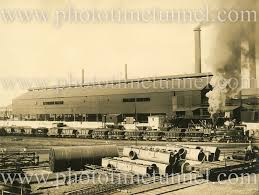
It was considered by some that the part Newcastle was to play in the national war effort was inevitably this was due to the city’s heavy industries represented the vital heart of the country’s ability to fight fire with fire.

It wasn’t long before BHP, its subsidiaries and a surprising wide array of smaller industrial plants were flat out making shells, gun barrels, bombs and parts for everything from tanks to aircraft.

As the war progressed the NSW government pressed Newcastle back into shipbuilding and repair business.

BHP chief Essington Lewis had anticipated Japan’s entry into the war and the cities industries were ready to accelerate production after the attack on Pearl Harbour in 1941.

War activity reached hectic levels in 1942 when Japanese submarines prowled of the east coast sinking ships and attacking Newcastle and Sydney.

It was during this time that the RAAF established a base at Williamstown in order to defend the oh so important industries in Newcastle. A seaplane base was also established at Rathmines which is part of Lake Macquarie and the US-built Catalina aircraft did long-range patrols and anti-submarine work.

During the war years military and civil defence infrastructure appeared all over the Hunter, also air raid shelters popped up in streets and tank traps were established on beaches and slit trenches were dung in schools and parks.

Blackouts were enforced and many households dug their own shelters.

Of course, many men signed up to serve their country, going overseas to fight, while U S troops arrived in the city.

Women also went off to war with many joining the Land Army as well as other military forces, operating searchlights and working in radar and communications installations. While others filled the caps left by the men gone off to fight, this was radical change that continued well into the postwar years.

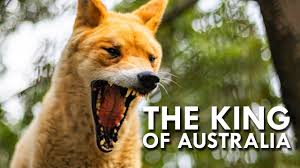
Dingo

Well, here we are at another Monday and time to look at another wild dog, this week it is the Australian Dingo.

Dingoes have a lifespan from as few as 3yrs to usually around 16yrs but some have been known to live for 20yrs.

The dingo is an ancient lineage of dog found in Australia, however, compared with the skull of the dog, the dingo possesses a longer muzzle, longer carnassial teeth, longer and more slender canine teeth, larger auditory bullae, a flatter cranium with a larger sagittal crest, and larger nuchal lines.

The dingo’s three main coat colourations are light ginger or tan, black and tan, or creamy white. The skull is wedge-shaped and appears large in proportion to the body.

The dingo is closely related to the New Guinea singing dog. The oldest remains of dingoes in Australia are around 3,500 years old.

A dingo pack usually consists of a mated pair, their offspring from the current year, and sometimes offspring from the previous year.

Dingoes do not bark like a dog but howl, chortle, yelp, whine, growl, chatter, snort, cough and purr.

Dingoes are largely terrestrial carnivores they have a broad diet including fresh meat, fish, eggs and carrion they occasionally eat plants and fruits. They’re opportunistic hunters but will also scavenge food. The bulk of their diet is made up of meat: they eat kangaroos, wallabies, feral pigs, wombats, small mammals (rabbits, rodents), birds and lizards.

Their strong jaw and large canines permit the dingo to procure and machinate rather tough prey, allowing them to tear meat from carcasses and crush bones to obtain calcium and fat.

Dingoes have a strict social hierarchy and regularly mate for life. Female dingoes have one annual breeding cycle, March to June. The dingo pack helps with the rearing of pups which are weaned at about 2 months, at which time the pups may be abandoned or can stay with the parents for up to a year. Dingo pups are fully grown by 7 months.

They are primarily killed by humans, crocodiles, and sometimes by other canid species, such as jackals and domestic dogs. They are also killed by Dingoes from other packs. Pups may be taken by large birds of prey.

They are highly intelligent and intuitive animals that have a high capacity to solve problems and plan.

With this high intelligence and foresight comes a strong sense of self-awareness and independence.