Mount Gambier

This week we are looking at the second largest city/town in South Australia, which is Mount Gambier, with a population of over 26,000. It is located on the Limestone Coast. It is in the southeastern corner of South Australia.

The town was founded by Hastings Cunningham and was first called “Gambierton” in 1854 by subdividing a block of 77 acres (31 ha). From 1861 to 1878, the Post Office was known by this name before reverting to Mount Gambier.

It’s known for its limestone, volcanic landscape and crater lakes. One of these, Blue Lake, turns cobalt blue in summer. Nearby, the Centenary Tower offers panoramic views of the area. The Umpherston Sinkhole contains a lush sunken garden. The Lady Nelson Visitor Centre houses a full-size replica of a late-18th-century ship.

Mount Gambier’s history is marked by its volcanic origins, early European exploration, and development as a significant regional centre in South Australia. The extinct volcano, Mount Gambier, was first sighted by Lieutenant James Grant in 1800 and named after Admiral James Gambier. European settlement began in the 1840s, with the area becoming a major agricultural and timber centre.

The traditional owners of the Mount Gambier area are the Boandik people, also known as the Bungandidj. They are the First Nations people of the region, and their language and culture are deeply connected to the land and waterways. The name “Bungandidj” is said to mean “people of the reeds”. 

Organizations like the City of Mount Gambier and headspace Mount Gambier formally acknowledge the Boandik people as the traditional custodians. 

There’s a growing movement to recognize the Boandik presence and connection to the land through dual naming of significant sites, alongside their European names. 

The Bungandidj language is being revitalized, and efforts are underway to reintroduce it into the community. 

The Boandik people have a long and rich history in the region, and their stories and cultural knowledge are important to the area’s identity. 

Mount Gambier is generally considered a safe place, but like any location, it has areas where caution is advised, especially at night or in more remote areas. While some crime statistics show increases in thefts and break-ins, these are not indicative of the overall safety of the city for residents and visitors. 

American Black Bear

This week we are looking at the American black bear, or simply black bear, it is a species of medium-sized bear which is endemic to North America. It is the continent’s smallest and most widely

They vary in size, with males typically weighing between 56 to 226 kilos (125 to 500) pounds and females between 40 to 136kilos (90 to 300) pounds. They generally measure 1.5 to 2.1 metres (5 to 7 feet) in length and stand less than1 metre (2 to 3 feet) tall at the shoulder on all fours. When standing upright, they can reach a height of 5 to 6 feet

Most of their diet consists of berries, fruit, sedges, and insects. They will also occasionally consume fish, honeycomb, and human food and garbage, so it is important to make sure to keep your items locked up with bear-proof equipment! In the spring, black bears may prey on young elk and deer.

They are typically shy and secretive towards humans, generally avoiding encounters. They are known for their intelligence and curiosity, exhibiting problem-solving skills and a tendency to explore. While they can be active at any time of day, they are often crepuscular, meaning they are most active during dawn and dusk. Black bears are also solitary animals for most of the year, except during mating season and when females are raising cubs. 

They inhabit a wide range of environments across North America, primarily favouring forested areas. They are commonly found in mountainous regions, woodlands, and swamps, often seeking out areas with ample food, water, and shelter. 

They may become prey to mountain lions, wolves, coyotes, bobcats, grizzly bears, humans, or other black bears. Cubs are especially vulnerable to predation by these other animals.

While they are generally not known to be aggressive towards humans and often try to avoid encounters, they can be dangerous in certain situations. They may act defensively if they feel threatened or cornered, or if they are protecting food or their young. However, fatal black bear attacks are rare, with only a small number occurring each year in North America. 

Black bear cubs are typically born in January or February, weighing less than a pound and hairless, inside their mother’s den. They are usually born in litters of one to three, and emerge from the den with their mother in the spring, weighing around five pounds. Cubs stay with their mother for about 18 months, learning essential survival skills

Ecuador

This week we are back in South America at the country of Ecuador which lies along the Equator which is why it is called Ecuador and is on the northwestern coast of South America.

The country has a diverse landscape which encompasses Amazon jungle, Andean highlands and the wildlife-rich Galápagos Islands.

The country’s capital is Quito which sits high in the Andean foothills at an altitude of 2,850m. It is constructed on the foundations of an ancient Incan city, it’s known for its well-preserved colonial centre, rich with 16th- and 17th-century churches and other structures blending European, Moorish and indigenous styles. These include the cathedral, in the Plaza Grande square, and ultra-ornate Compañia de Jesús Jesuit church.

Quito is the oldest of all South American capitals and was designated a UNESCO World Heritage site in 1978 due to its well-preserved old town.

Founded by Spanish conquistador Sebastián de Belalcázar in 1534, Quito remained the focal point of national affairs until the early 20th century when economic dominance shifted to Guayaquil . Today, Quito remains the country’s political and cultural centre, maintaining much of its colonial atmosphere with historic churches, peaceful squares, and narrow streets.

 The country has a population of around 18 million, the official language is Spanish, but Quichua, the lingua franca of the Inca Empire, is spoken by many of the indigenous people. Nine additional indigenous languages are also spoken in Ecuador. English is spoken in major visitor centers.

The official currency of Ecuador is the US dollar. While US dollar bills are used in Ecuador, the country issues its own centavo coins. US dollars have been used in Ecuador since 2000 and replaced the former currency, the Ecuadorian sucre.

The Ecuadorian flag is a horizontal tricolour with three bands of yellow, blue, and red. The yellow band is at the top and is twice the width of the blue and red bands. The flag also includes the Ecuadorian coat of arms in the centre. The colours represent the sun (yellow), the sea and sky (blue), and the blood shed for independence (red).

The flag was first adopted in 1860, with the coat of arms being added in 1900. 

It is similar to the flag of Colombia, but the Ecuadorian flag is longer and includes the coat of arms. 

When it comes to religion, Christianity is the primary religion. Catholicism is the main Christian denomination in the country. There are also small minorities of other religions.

Ecuador is also considered a constitutional republic. The Constitution of Ecuador provides for a four-year term of office for the President, Vice-President, and members of the National Assembly with concurrent elections. Presidents and legislators may be re-elected immediately.

Week 25 of 2025

I slept straight through the night again 7hrs and 24mins and I was awake for 8mins.

Been a good day, turned out warm and Tim did a lot more work in the back yard and it is starting to look good.

Me well other than getting the clothes of the line, folding and putting them away, I ironed the work shirts and that was a bitch of a job because we soaked them overnight in wash booster stuff, they were extremely wrinkled, and I hadn’t put them in the dryer just hung them out to dry. I won’t make that mistake again. I also vacuumed but that’s all the housework I did.

I spent the rest of the day watching YouTube and reading blogs.

BGL:5.8

Steps: 6,946=3.60

I had a rough start to the night it was around 11pm when I finally settled so only had 4hrs and 54mins of sleep.

Sue drove Sam to Tafe and I went with them as I had a 8.36am doctor’s appointment, I was home by 9.30am.

What an afternoon, at 1.40 I tripped on the mat under my computer chair and fell flat on my face, splitting above my left eye open. I managed to call Tasha who thankfully was home, and she was here in less then a minute. She helped me up and onto the lounge, she cleaned the wound and rang people.

Sue took me at first to my GP then to Belmont Hospital where I was for 4.5hrs. I did not want to go to the hospital, then did a ct scan which was normal. I had a mild concussion and wasn’t with it for around 2.5hrs, by the time I was called into be seen by a doctor I wasn’t doing good as I hadn’t taken my afternoon meds and had an internal tremor as well as an external tremor.

The doctor wanted me to have blood tests and an ECG but I said no there is nothing wrong with my heart and my bloody pressure was normal and I just wanted to come home. Sue got very firm with them telling them we would be leaving and if she had to sign something she would but that wasn’t needed, and we left can came home at 6.45pm.

When I got home, I took my meds and within 15mins I was feeling much better.

BGL:4.6

Steps: 5,194

I was asleep pretty much as soon as I went to bed, I slept for 8hrs 54mins and didn’t wake at all.

This morning, I didn’t want to get up, but I knew I had to in order to get Sam up and see her off to school.

By 7am I was awake and feeling ok and yeah, I have two black eyes and a sore head but I’m doing ok.

Had an okay day didn’t do as much as I would normally do with blogging and housework and by 5pm I am completely exhausted and fighting to stay awake I will be in bed by 6.30pm.

BGL: 4.9

Steps: 4,519=2.31klm

I was asleep pretty much as soon as I went to bed, I slept for 8hrs 56mins and didn’t wake at all. I am feeling ok this morning.

Tim rang to let me know that it will be around 8.30pm by the time he gets home.

I had a good day but another early night for me as it is 6pm and my eyes are stinging.

BGL:5.2

Steps: 4,633=2.36klm

I was asleep pretty much as soon as I went to bed, I slept for 9hrs 13mins and didn’t wake at all. I am feeling good enough to have a shower this morning.

I’m feeling more like myself today and even vacuumed and washed the towels as well as folding up the clothes and put them away. I cleaned the kitchen twice and ran the dishwasher.

My eye area can be touched without me wincing in pain.

BGL: 5.4

Steps: 5,487=2.83klms

I had another good night remember waking once to pee, my watch says I slept for 7hrs 19mins and was awake for 15mins.

Another cold morning temp is 2C or 35.6F

Tim felt so sick this morning he considered calling in sick but ended up going to work anyway.

Sam rang and told me she felt too sick to go to school, so I went up and told Joel when he arrived.

This afternoon Sam was so sick she was vomiting and so unwell that she has come down here for the night, as Jess doesn’t want her home alone tonight.

I am also not feeling well this afternoon. 

I had to have a nap as I was so tired.

BGL:5.4

Steps: 5,551=2.90klms

I slept for 10hrs and 22mins and I was awake for 21mins, at 5am when my alarm went off, I got up went to the loo, took my medication and went back to bed for an hour.

Another cold morning temp is 2C or 35.6F.

Jessica came over to check on Sam when she got home from work at 6.10am, Sam was sleeping and didn’t wake up when Jess checked her temperature and covered her with a quilt.

I ordered pizza for lunch, when Sam woke up, she came out looking for food and decided to make herself scrambled eggs.

It has been a warmish day.

BGL: 5.2

Steps: 5402=2.93klms

Vatican City National Anthem

This week we have the National Anthem of the Vatican City.

 It is called the “Inno e Marcia Pontificale”, which translates to “Pontifical Hymn and March” or “Papal Anthem”. This anthem is played on all major occasions within the Vatican City and also serves as a symbol of the Holy See and the Vatican City State according to the Vatican State website. 

It’s played to mark the presence of the Pope or his representatives, and on other solemn occasions within Vatican City. 

The anthem was officially adopted by Pope Pius XII in 1949.

The anthem is not meant to be understood as a national anthem in the traditional sense. Instead, it’s a piece of music that resonates with those who see Rome as the See of Peter according to the Vatican State website. 

Initially a purely instrumental piece composed by Charles Gounod in 1869, it became the official papal anthem in 1949, replacing an older anthem. Italian lyrics were added later that same year by Antonio Allegra, and Latin lyrics were added in 1991 by Raffaello Lavagna. 

A summer hodgepodge in winter

Here I am doing another hodgepodge which is brought to you by Joyce over at http://www.fromthissideofthepond.com/

Here are this week’s questions.

Summer officially begins this week (in the northern hemisphere)what was your favourite thing to do in the summer when you were a kid? What do you like most about summer now?

Well, it is winter here but in summer as a child I would spend most of the day outside playing. Now days my summer days are the same as my winter days. 

Something you’ll celebrate this summer.

During Summer we have four birthdays we celebrate 

Summer tastes like. Smells like? Sounds like? 

Summer tastes like water ice blocks; it smells like BBQ’s and sounds like laughter and music.

June 18th is National Splurge Day, what’s the last thing you splurged on? What might you splurge on today?

I don’t splurge on anything as a rule. 

Share a favourite summer quote, saying, song lyric, or meme. 

Can’t think of a damn thing at the moment.

Insert your own random thought here. 

Remember not to take your life for granted, wake up every day and show deep gratitude for your life. Try your best to be kind and understanding to the people around you.
Appreciate the small moments that you often overlook.

Geelong

This week we are having a look at the second largest city in the state of Victoria, which is Geelong, located on Corio Bay, part of Port Phillip, and is about an hour’s drive southwest of Melbourne. 

It is a vibrant city with a rich history, particularly in wool production and design. It’s known for its beautiful waterfront, proximity to the Great Ocean Road, and as a major regional centre with a growing population and economy. 

It’s the second most populated area in Victoria, with the City of Greater Geelong having an estimated population of over 289,565. 

The town has a strong connection to the wool industry and was once a major wool port. It was also once known for its automotive manufacturing but is now has a growing tourism sector. 

Geelong was recognized as a UNESCO City of Design for its commitment to using design and creativity for urban development and sustainability. 

The city’s name is derived from an Aboriginal word, and it acknowledges the traditional owners, the Wadawurrung people. 

Geelong is home to Deakin University and other educational institutions, contributing to its role as a centre for research and innovation. 

Geelong is a popular starting point for exploring the scenic Great Ocean Road and the Bellarine Peninsula. 

The city’s waterfront has been revitalized with developments, creating a vibrant area for leisure and recreation. 

Geelong hosts various major events and festivals, further enhancing its appeal. 

Brown Bears

The brown bear is a large bear native to Eurasia and North America. Of the land carnivorans, it is rivalled in size only by its closest relative, the polar bear, which is much less variable in size and slightly bigger on average.

Grizzly bears and brown bears are the same species, although currently grizzly bears are considered to be a separate subspecies.

Brown bears are omnivorous, eating a mixed diet of plants, berries, fish, and small mammals, with almost 80 percent of their diet being tree bark, leaves, roots, mushrooms, nuts, fruit and berries. They are not averse to meat and will eat small rodents, birds, frogs or snakes, fish and carrion.

Unlike black bears, brown bears have long, strong claws that they use to dig for food, pick fruits, and catch prey.

The average life span for a wild brown bear is about 20 years, although many bears typically live longer than this. The oldest wild brown bears known lived for about 35 years.

Bear cubs are born after a gestation period of around 180-270 days. The newborn bears are naked, blind and toothless and are completely dependent on the mother. A litter usually consists of one to three cubs that weigh only 300 to 400 grammes at birth and are around 30 centimetres long.

The cubs typically stay with their mother for 2 to 3 years, learning essential survival skills. This period allows them to grow strong, learn to find food, and navigate their environment under their mother’s guidance. In some regions, like Katmai, cubs might stay with their mothers for around 2.5 years. 

Cubs are born in dens and rely on their mother’s milk for nourishment and protection. 

During their time with their mother, cubs learn crucial skills like foraging for food, recognizing and avoiding predators, and navigating different terrains. 

While some cubs might become more independent in their second year, they often continue to den with their mother for at least one more winter. 

Mothers are very protective of their cubs and may chase away or threaten other bears, including males, to keep their young safe. 

By the time they are around 2 to 3 years old, cubs are generally ready to venture out on their own and start their independent lives. 

They can climb trees, although their ability to do so diminishes as they grow older and larger. While young brown bears are excellent climbers, their size and weight can make it more challenging as they mature. However, they are still capable of climbing trees, even as adults. 

Why do they climb trees, well for various reasons, including escaping predators, accessing food (like fruit), or even just for fun or exploration.

They have an exceptionally acute sense of smell, exceeding that of dogs. Contrary to popular belief, bears are not nearsighted. Their eyesight and hearing are comparable to humans. They can run in short bursts up to 40 mph (64 kph) and are excellent swimmers

They use rocks as a tool to scratch an itchy spot and they know when they are being hunted.

Brown bear attacks on humans are relatively rare, with an average of about 40 attacks per year globally. While most encounters with bears do not result in attacks, and the vast majority of bears are not interested in attacking humans, defensive reactions can occur if a bear feels threatened or surprised, especially if it has cubs.

Vatican City

I thought after writing about Russia the largest country in the world, I would write about the smallest country.

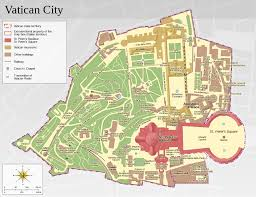
The smallest country in the world by both area and population is Vatican City. It is an independent city-state located within Rome, Italy, and serves as the spiritual and administrative centre of the Roman Catholic Church. Its area is just 0.44 square kilometres (0.17 square miles). 

Vatican City, a city-state surrounded by Rome, Italy, is the headquarters of the Roman Catholic Church. It’s home to the Pope and a trove of iconic art and architecture. Its Vatican Museums house ancient Roman sculptures such as the famed “Laocoön and His Sons” as well as Renaissance frescoes in the Raphael Rooms and the Sistine Chapel, famous for Michelangelo’s ceiling.

The entire population of Vatican City is only around 800 people. Every citizen who resides in the city is Roman Catholic and is considered to be influential or significant in some way within Catholicism.

The flag of Vatican City is a vertical bicolour of yellow and white, with the emblem of the Holy See (a papal tiara and crossed keys of Saint Peter) centred on the white half. The yellow symbolizes spiritual power, while the white represents temporal power. The keys represent the Pope’s authority, and the tiara symbolizes the Pope’s threefold power. 

It was adopted in 1929; the year Pope Pius XI signed the Lateran Treaty with Italy creating the new independent state of Vatican City.

The Vatican City passport is a passport issued by the Holy See (the governing body of the Vatican) or by the Vatican City State. It’s ranked among the most powerful passports globally, granting holders visa-free or visa-on-arrival access to a large number of countries. The Vatican issues both diplomatic and service passports, while the Vatican City State issues ordinary passports for its citizens.

The euro is the official currency of the Vatican City, although Vatican City is not a member of the Eurozone or the European Union. The euro has been the official currency of Vatican City since 2002.

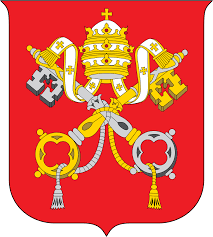
The coat of arms of Vatican City is the coat of arms used by Vatican City, which was originally adopted by the Fundamental Law of Vatican City State on 7 June 1929. This coat of arms is defined by law as having the silver key in bend and the gold key in bend sinister.