A bit about diabetes

This week we are looking at diabetes, I thought I had written about it before but couldn’t find one, so here is one.

Diabetes is a chronic disease that occurs when the body doesn’t produce enough insulin or doesn’t use insulin properly, resulting in high blood sugar levels.

There are two main types of diabetes type one and type two but there is also Gestational diabetes which is diagnosed during pregnancy with a blood sugar test, however after giving birth this type often goes away. However, having it increases your chances of developing type two later on.

Type one is often diagnosed in childhood, but it can develop at any age. It’s less common than type 2 diabetes, affecting about 5–10% of people with diabetes. The exact cause is unknown, but it’s likely caused by a combination of genetic and environmental factors. No, you are not born with it as I have heard some people say.

Then there is type two with this one there isn’t a clear pattern of inheritance, but the risk increases with the number of affected family members. This is likely due to shared genetic factors and lifestyle influences, such as diet and exercise habits. Other risk factors include being overweight, having high blood pressure, and being older. 

In both types of diabetes, sugar builds up in the bloodstream because the pancreas doesn’t produce enough insulin. 

Symptoms of type 1 diabetes include:

  • Urination: Frequent urination, including bedwetting in children
  • Thirst: Excessive thirst
  • Weight loss: Unintentional weight loss
  • Hunger: Excessive hunger
  • Vision: Blurred vision
  • Fatigue: Feeling very tired
  • Skin: Very dry skin
  • Healing: Sores that heal slowly
  • Infections: More infections than usual
  • Nausea: Nausea, vomiting, or stomach pains
  • Mood: Feeling irritable or having other mood changes 

Symptoms of type 1 diabetes can develop over a few weeks or months and can be severe. They typically start mild and get progressively worse. 

Type 1 diabetes can be managed with lifestyle changes, blood glucose monitoring, and medications, such as insulin. 

Symptoms of type 2 diabetes can include:

  • Thirst: Feeling very thirsty 
  • Urination: Urinating more often than usual, particularly at night 
  • Vision: Blurred vision 
  • Fatigue: Feeling tired and lethargic 
  • Weight: Unintentional weight loss or loss of muscle bulk 
  • Healing: Slow-healing cuts, ulcers, sores, or other infections 
  • Hunger: Increased hunger

Symptoms can be mild and may take many years to be noticed. Some people with type 2 diabetes may not have any symptoms at first.

As I don’t like doing really long posts I will split into two or three parts, so will end this here.

SS Allara Part 2

Time for part two of the torpedoing of the SS Allara.

Straight after the attack the wireless operator sent out 40 distress calls, but the ships aerials had been blown away. After the crew reboarded the ship, the wireless operator rigged a replacement and sent an SOS.

                    Surviving crew of SS Allara

The crew worked the pumps full-time to keep the vessel afloat while two navy tugs made their way to rescue the crew, they arrived alongside at 9.45am.

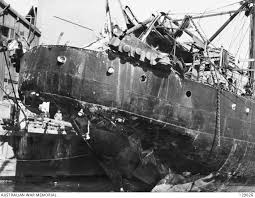
Later that day the tug Heroic from Newcastle took over the tow, when they arrived at the port people were shocked at how badly damaged the stern was and that it was still afloat.

The seaman lined the rails while the dead were carried ashore, then the walking wounded including a seaman named Paddy who hobbled down the gangway with an injured foot and permanent grin to his crewmates yelling “we’ll be seeing you” with Paddy replying that he would be back.

In the waterfront hotel the men were drinking rum and milk, 16yr old Frank Grant a deckhand was blushing not because he was drinking lemonade but because his shipmates were making a big deal of how he had been blown right out of his bunk then jumped to his feet and dragged a wounded mate up on deck.

The Allara was towed to Sydney for repairs and was back in service by April 1943. The ship remained in service till the 1950’s.

                    The Japanese Submarine I-75

The Japanese vessel I-75 continued on its destructive path sinking two merchant ships and damaging two more before leaving Australian waters. In 1943 it was sunk by an American aircraft carrier the USS Liscome Bay which later that same year was itself lost with all hands.

New Guinea Singing Dog

This week are looking at the New Guinea Singing Dog, not an animal I have heard of before, how about of you?

The New Guinea singing dog or New Guinea Highland dog is an ancient lineage of dog found in the New Guinea Highlands, on the island of New Guinea. Once considered to be a separate species in its own right, under the name Canis hallstromi, it is closely related to the Australian dingo.

They are thought to be one of the oldest breeds of canine, with some evidence suggesting that they may have been present on the island of New Guinea for over 5,000 years. It was thought that they went extinct in the wild in the 1970s, but in 2018, DNA evidence confirmed the presence of a wild group in New Guinea.

Does it really sing? Well, when it comes to sounds, they really have their own voice! Most of the singing dog’s vocalizations are like that of the wolf, dingo, and domestic dog, but their howl is incredibly unique. By using Sonograms, it is believed that their howl is like the song of the humpback whale.

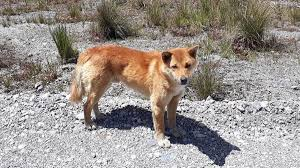
They are a small to medium size dog species. They have a wedge-shaped head and triangular, upright ears. These dogs have a soft, thick coat and a bushy tail. The eyes of the singing dog are reflective and glow bright green in low light conditions.

They have a distinctive appearance, which includes a dense, long coat that ranges in colour from red to black and brown. These dogs have a small, compact body and a wedge-shaped head with pointed ears. They have a high metabolism and require a diet rich in protein to maintain their energy levels. Their legs, joints, and spine are highly flexible making them skilled climbers.

They are known to live up to 15 years in captivity, but it is unknown how long they live in the wild.

They prey on small mammals, small reptiles, and birds; they even try to hunt 3.5-foot-tall (1-meter-tall) dwarf cassowaries! New Guinea singing dogs have a strong hunting drive and fearless nature, and they are highly curious.

They are not pack animals but are solitary animals but may forage in pairs. They are known to be shy and elusive and live in mountains and thick forests of New Guinea and Indonesia. They are also excellent climbers and can jump high like cats.

You can have a New Guinea Singing Dog as a pet, but they can be challenging to fully domesticate and may not be the best fit for most families.

They are intelligent, lively, and affectionate, but they can be difficult to housetrain and are not very socially active. They can also be fearful and unreliable off-leash. They do best with experienced pet parents who are familiar with the breed. 

It is estimated that only 200-300 of these animals are in existence today. 

Burundi

Ok let’s move onto central and southern Africa and area that includes Burundi, Chad, Central African Republic, South Africa, the Republic of Congo, Rwanda, Zimbabwe and Namibia.

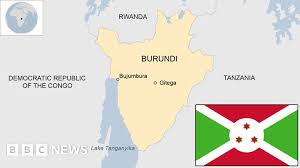
Let’s start with Burundi, officially the Republic of Burundi, it is a landlocked country in the Great Rift Valley at the junction between the African Great Lakes region and Southeast Africa, with population of over 14 million people.

It is considered by some to be the poorest country in the world and is one of the least developed countries. Over 1 million of its people are facing crisis levels of hunger today. This is due to poverty, climate shocks, soaring inflation and fuel shortages.

The town of Gitega, located in the central part of Burundi as the Political Capital, while Bujumbura, which is in the southwestern of the country, adjacent to the Lake Tanganyika is the Economic Capital.

Prior to 2019 Bujumbura served as Burundi’s national capital, but legislation passed that year designated Gitega as the country’s political capital and Bujumbura as the economic capital. The transfer of government functions to Gitega proceeded in the following years.

The original flag was adopted after the country’s independence from Belgium on 1 July 1962. It went through several revisions and now consists of a white saltire which divides the field into alternating red and green areas. The centre of the saltire merges into a white disk, on which there are three red solid six-pointed stars outlined in green. The current ratio is 3:5, which was changed from 2:3 on 27 September 1982.

The franc is the currency of Burundi. It is nominally subdivided into 100 centimes, although coins have never been issued in centimes since Burundi began issuing its own currency.

Burundi’s political system is that of a presidential representative democratic republic based upon a multi-party state. The president of Burundi is the head of state and head of government. The president is elected by absolute majority vote through a two round system. The supreme court is the highest court of the land. Judges are nominated by the judicial service commission and then appointed by the president with the approval of the senate.

Burundi has a diverse religious population, with the majority identifying as Christian and a minority identifying as Muslim: 

Christianity is the most common religion in Burundi, with about three-fifths of the population identifying as Roman Catholic and more than one-eighth identifying as Protestant. 

Islam is a minority religion in Burundi, with Muslims making up less than one-twentieth of the population. The majority of Muslims in Burundi are Sunni, but there are also Shia and Ismaili communities. 

A large minority of the population, including some Roman Catholics, practice traditional religions. 

The government of Burundi has granted tax waivers to religious groups for the purchase of materials for development projects and for imported religious items. The government has also provided opportunities for religious leaders to preach about scriptures and moral issues. 

This is another country that is not considered a safe destination for tourists due to a number of risks, such as a threat of terrorism, political violence, violent crime, including mugging, purse snatching, pickpocketing, assault, carjacking, home invasion, grenade attacks, and armed robbery and there is a risk of kidnapping for ransom, and criminals have targeted foreigners in the past.

Not somewhere I would go.

Week 48 of 2024

 I had a great night, slept straight through, got up and had my shower and got dressed for the day.

Another hot day here had to turn the air con on around 2pm.

Kathy came over for a visit she was on her own, I asked her to change the sheets on my bed before she left which was much quicker than if I did it on my own.

I am not in a very happy mood today, don’t know why.

It is 11.20pm, I went to bed at 8.30 pretty much straight to sleep for an hour, when I had to pee, back to bed a back to sleep till 10.25 when I had to pee again had trouble get back to sleep then at 11.10, I had to pee again when I went back to bed the uncontrollable moving start so after 10 minutes I got up to use the powerfit and will sit up for half an hour before returning to bed and hopefully to sleep.

Steps: 10,209

I had a not so good night; I am starting this at 12.10am.

After returning to bed, I settled down and slept for 2hrs before needing to pee again, then back to sleep for another 1.5hrs till the alarm went off.

It is 18 degrees and my BGL is 5.0

I turned the air con on at 11.15am, when the temp reached 27 degrees.

I am so exhausted this afternoon; I am also drenched in sweat.

Steps: 8,488

A good night sleep went to bed at 8.30 and slept through till the alarm went off.

It is 18 degrees and my BGL is 5.0

Another very hot day with a top temp of 32 degrees.

Tasha was supposed to go to the shops for me but she didn’t so I asked Sue if she could take me down the road tomorrow, she said she would.

Tim is stressing out over how his diabetes is going to affect his driving authority. I told him worrying about it will not achieve anything and may make things worse.

Steps: 8,254

I slept well, Tim was already up when I got up, he said he had been up since unable to sleep.

Around 6am we had no water, it returned around 7.30am. it was 21 degrees at 6am and my BGL was 5.1.

Sue arrived just after 8am to take me to the shops, she said that Tasha rang her at 6.30 asking if she could go to Sue’s place for a shower before Sue drove4 her into the Tafe. Sue said she could.

By the time we had finished shopping and went back to the car it was stinking hot, we had been at the shops about an hour. I realised after I got home that I forgot to go to the post office, oh well I will do it later.

My walker isn’t the best with one wonky wheel that makes me worry it will come off and I will end up either falling over or becoming stuck while walking to and from the post box to post my letters off. So Tim suggested I swap to the old one that is out the back after some thought I agreed so Tim went and got it and it needed hosing off and there was a red back spider in the compartment under the seat. I suggested we swap the seat and the compartment under it around which is what we did. So, I will see how things go.

Steps: 7,156

Slept straight through the night again, woke up feeling heavy headed but that will pass, it is currently 22degrees and my BGL was 4.9

It was raining when I went up with Sam to meet the transport, but I had my red rain poncho on so all ok. It is very humid, and I had to turn the air con on as I was dripping in sweat while hanging the washing on the clothes hoists to dry. It is now 9.30am and 27 degrees.

By around 10.30 I was able to turn the air con off, but I left the doors closed and curtain drawn which kept the house cool enough.

This afternoon I was cleaning the sliding glass doors so I can put my Christmas decorations on them and slipped my thongs on to walk outside. However, as I have a habit of not always picking my feet up when I walk, I stumbled twice in them and once due to my feet being so sweaty so three times in all. So, when I went to meet Sam, I put on some thin stocking socks and walked up shoeless, thus being much more stable.

Steps: 6,761

Slept straight through the night again, woke up feeling heavy headed but that will pass, it is currently 22degrees and my BGL was 4.9

It is a lovely cool morning, I, slept all, I got up once to pee but straight back to sleep.

At 5.30am it was 20 degrees and my BGL was 4.8.

The top temp was only 24 degrees, but it has been a very humid day.

I had just ironed Tim’s work shirts and was just sitting at the computer when I started to feel off, I tested my blood it was 3.2. So, I got up and walked into the kitchen for food, I hadn’t had lunch yet. I quickly realised I was not right; I don’t know how long I stood in the kitchen just not with it. I walked back into the lounge room and picked up the phone and just looked at it for a bit before I rang Tasha. She came straight down and dished up my fruit I was having for lunch, topped up my drink watched me eat a bit. When I started to look better, she left. I was fine after I ate.

I even managed to put Christmas decorations on the sliding

doors.

Steps:8,246

National Anthems

National Anthems    

I have decided to do a new Friday series on national anthems of different countries, but first we will start with this.

The Netherlands has the oldest national anthem in use today, Wilhelmus van Nassouwe, also known as Wilhelmus. It was written between 1568 and 1572 during the Dutch Revolt, but it wasn’t officially adopted until 1932. 

Anthems were originally devotional verses sung during religious services. One of the first songs to be called a “national anthem” was Great Britain’s “God Save the King”. 

Here are some other facts about national anthems:

  • Most national anthems are either hymns or marches.
  • Anthems are usually in the country’s national or most common language.
  • Some countries have multiple versions of their anthem if they have more than one national language. For example, Switzerland’s national anthem, the Swiss Psalm, has different lyrics for each of the country’s four official languages.
  • Some national anthems were written by famous composers. For example, Germany’s Das Lied der Deutschen uses a melody written by Joseph Haydn. 

I will start with the first country next week.

ADHD

Today we are having a look at ADHD a condition my grandchild Sam has, I also have a niece with it.

Attention deficit hyperactivity disorder (ADHD) is a neurodevelopmental disorder that affects a person’s behaviour and learning. It’s characterized by symptoms like:

  • Inattention, or difficulty focusing
  • Hyperactivity, or excess movement
  • Impulsivity, or acting without thinking 

It is often first diagnosed in childhood, but some people don’t discover they have it until they’re older. The exact cause of ADHD is unknown, but it’s thought to be caused by differences in the brain that impact attention and behaviour. 

It can impact a person’s life at home, school, and with friends. Treatments include:

  • Behavioural therapies, like psychotherapy or talk therapy
  • Medication, which can help manage impulses and actions

Sam was diagnosed when he was in kindergarten and had to be medicated before he was allowed to attend a full day at school later, she moved on to a full week. When Sam first started school, she was only going two half days a week.

It is one of the most common mental disorders affecting children. Symptoms include the following:

inattention

hyperactivity

impulsivity

finding it hard to sit still

constantly fidgeting.

being unable to concentrate on tasks.

excessive physical movement.

excessive talking.

being unable to wait their turn.

acting without thinking.

interrupting conversations.

Yes, Sam has all these symptoms.

Usually, the most difficult times for persons with ADHD are their school years these are the years when children are faced with the widest range of tasks to do and the least opportunity to escape from the tasks that they struggle with or find to be boring.

You cannot outgrow the condition but as you age you learn how to control it or yourself and your symptoms, it is likely you may need some form of medication even as an adult. My niece is in her 30’s and was only diagnosed this year and is now on medication and coping much better than she was.

It tends to run in families, and, in most cases, it’s thought the genes you inherit from your parents are a significant factor in developing the condition. Research shows that parents and siblings of someone with ADHD are more likely to have ADHD themselves.

Sam’s father has ADHD

SS Allara

Now for a bit more about Newie during the second world war, about six weeks after the Japanese shelled Newcastle the city experienced another example of the realities of war, however, only those who were connected to the waterfront were permitted to know about it.

The Japanese hoped to isolate Australia and New Zealand from their allies, to do this they tried using subs against merchant shipping. Of course, the Aussies used anti-sub patrols and a convoy system for shipping, didn’t stop the Japanese from sinking some ships using torpedoes and mines.

The powers that be decided that people didn’t need to know this, and many things were not allowed to appear in papers. One such thing was the torpedoing of the SS Allara a freighter owned by the Adelaide Steamship Company.

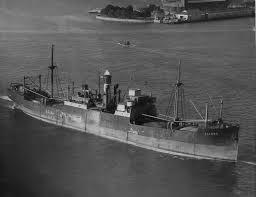
On a run from Cains to Sydney with a cargo of sugar on the SS Allara on the 23 July 1942 when at 5.15am it was unlucky to encounter the Japanese sub I-175 about 25 nautical miles of the coast of Newcastle. The sub fired two torpedoes one hitting the ships stern blowing off the propeller, rudder and wireless antenna. This was directly under where 22 men were sleeping it killed four men outright and injuring three others, with one of them dying later.

The crew struggled to the deck with their injured mates while the sub surfaced and the Japanese fired a shell from a deck gun across the Allara’s bows, signalling the Ausie’s to abandon ship. The Japanese thought the ship would sink so dived and left the area, however, after an hour in lifeboats the ships crew realised that the Allara wasn’t going to sink, so they returned to the ship.

More about this next weeka    

Coyote

This week we are looking at the coyote, also known as the American jackal, prairie wolf, or brush wolf, is a species of canine native to North America. It is smaller than its close relative, the gray wolf, and slightly smaller than the closely related eastern wolf and red wolf.

An animal that many of my American friends would be familiar with.

Some people think that they are wolfs and in places where their range overlaps, it may be hard to tell the difference between a coyote and a wolf because of their somewhat similar appearances. But while they do look similar and are closely related, there are several ways to tell them apart. For starters, their size. Wolves are much bigger than coyotes.

In captivity, coyotes can live 13 to 15 years but in the wild, most die before they reach three years of age. The oldest confirmed wild coyote so far in this research was an eleven-year-old alpha female, Coyote.

Although coyotes have been known to attack humans (and pets) and as such are a potential danger to people, especially children, risks are minimal, and we feel that the majority of attack incidents could be reduced or prevented through modification of human behaviour.

Great horned owls, bald and golden eagles, wolves, and bears all have been known to prey on coyotes. Coyotes are quick to respond to increases or decreases in prey.

Coyotes are social animals that often live in family groups called packs. A pack is usually led by an alpha male and female pair and includes other coyotes such as young from the previous year, or coyotes that have been accepted into the pack. A pack usually consist of between 3 and 7 coyotes.

Coyotes are very vocal and use a variety of calls to communicate, including howls, barks, yips, growls, whines, and whimpers.

They have fewer pups when food is scarce, or they can have large litters when hares are abundant.

However, coyotes can also live alone or in loose pairs. Solitary coyotes are usually young coyotes (six months to two years old) or older individuals who have left packs. Coyotes also sometimes hunt cooperatively with other species, such as badgers or crows.

Libya

Good morning, everyone, this Monday we are looking at Libya another country in Northern Africa. It borders the Mediterranean Sea to the north, Egypt to the east, Sudan to the southeast, Chad to the south, Algeria to the West and Tunisia.

It is a country blessed with oil but not with water, it has a population of 6.8 million most of who live in the two major cities of Tripoli which is the capital and Banghazi.

It’s man-made river project it the biggest of its kind in the world. Generally known as The Great Man-Made River is a network of pipes that supplies fresh water obtained from the Nubian Sandstone Aquifer System fossil aquifer across Libya.

The flag consists of a triband red-black-green design, the central black band being twice the width of the outer bands. A white star and crescent is located in the center of the flag. The flag was designed by Omar Faiek Shennib and adopted in 1951 after Libya’s independence. It was abolished in 1969 after the monarchy was overthrown by Col. Muammar al-Qaddafi. Qaddafi implemented several different flags, including a plain green flag in 1977 to symbolize the “Green Revolution”. The flag was reinstated in 2011 after the fall of Qaddafi. 

The currency is The dinar it divided into 1,000 dirhams

Libya’s climate is influenced by the Mediterranean Sea to the north and the Sahara Desert to the south and, as a result, abrupt transitions of weather conditions are experienced across the country. The Mediterranean coastal strip experiences dry summers and relatively wet winters.

The Government of National Unity is a provisional government for Libya formed on 10 March 2021 to unify the rival Government of National Accord based in based in Tobruk. Abdul Hamid Dbeibeh is Prime Minister of the unity government and was selected in the Libyan Political Dialogue Forum on 5 February 2021. This is a de facto backed by the governments of Turkey, Qatar, Algeria and Pakistan.

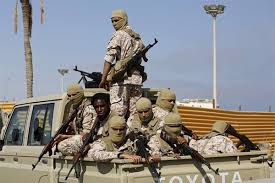
Wondering if you should visit Libya well the advice online is, do not travel to Libya due to crime, terrorism, unexploded landmines, civil unrest, kidnapping, and armed conflict. Country Summary: Crime levels in Libya remain high, including the threat of kidnapping for ransom.

It is not on my list of places to visit.

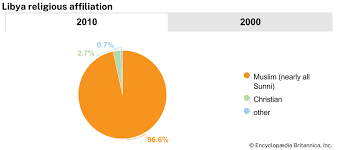
The majority of Libyans are of Arab or mixed Arab-Berber descent. The Sunni branch of Islam is the official and nationally dominant political, cultural and legal force. Imazighen, who retain the Tamazight language and customs, are indigenous to North Africa and constitute the largest non-Arab minority.

Islam is the main religion in Libya, with the majority of the population identifying as Sunni Muslim. Libya’s religious freedom is limited, and there are restrictions on the ability to practice other religions: 

There is no law that allows people to choose or change their religion 

The criminal code prohibits proselytization and missionary activities 

The criminal code prohibits insulting Islam or the Prophet Muhammad, and can result in the death penalty 

Authorities have restricted the liberties of religious minorities 

Libya’s ancient Jewish population has been gone since 2002, when the last community member died.