Polar Bear

This week we are looking at the polar bear, the polar bear is a large bear native to the Arctic and nearby areas. It is closely related to the brown bear, and the two species can interbreed. The polar bear is the largest extant species of bear and land carnivore, with adult males weighing 300–800 kg.

They are a powerful symbol of the strength and endurance of the Arctic. The polar bear’s Latin name, Ursus maritimus, means “sea bear.” It’s an apt name for this majestic species, which spends much of its life in, around, or on the ocean–predominantly on the sea ice. In the United States, Alaska is home to two polar bear subpopulations.

They are good swimmers and can sustain a pace of six miles per hour by paddling with their front paws and holding their hind legs flat like a rudder. They have a thick layer of body fat and a water-repellent coat that insulates them from the cold air and water.

These bears spend over 50% of their time hunting for food. A polar bear might catch only one or two out of 10 seals it hunts, depending on the time of year as well as other things. Their diet mainly consists of ringed and bearded seals because they need large amounts of fat to survive.

They rely heavily on sea ice for traveling, hunting, resting, mating and, in some areas, maternal dens. But because of ongoing and potential loss of their sea ice habitat resulting from climate change–the primary threat to polar bears Arctic-wide–polar bears were listed as a threatened species in the US under the Endangered Species Act in May 2008. As their sea ice habitat recedes earlier in the spring and forms later in the fall, polar bears are increasingly spending longer periods on land, where they are often attracted to areas where humans live.

 They can run as fast as 40 kilometres per hour—but only for short distances. Younger, leaner bears are the best runners and are able to cover two kilometres’ without stopping. Older and larger bears, on the other hand, quickly overheat. However, they can only swim up to 10 kilometres per hour.

They have 42 razor sharp teeth: With jagged back teeth and canines larger than grizzly teeth, that would be quite the bite. Their paws are 30 cm wide which is big which act as a natural snowshoe that helps the bear trek across treacherous ice and deep snow. They also have 3 eyelids: The third helps protect the bear’s eyes from the elements and they have 4 inches of fat under their skin to keep it warm. Their skin is black, and their fur is transparent, and they have a blue tongue.

During autumn pregnant polar bears make dens in earth and snowbanks, where they’ll stay through the winter and give birth to one to three cubs. In spring the mother emerges from her den followed by her cubs. During that time, she will protect them and teach them how to hunt. They have a gestation period of between 195 and 265 days. They can live 20 to 30 years, but only a small percentage live past 15 to 18 years.

The oldest known polar bear in the Arctic lived 32 years. The oldest known polar bear in a zoological park lived 45 years.

When it comes to predator’s adult polar bears have no natural predators except other polar bears. Cubs less than one year old sometimes are prey to wolves and other carnivores.

Newborn cubs may be cannibalized by malnourished mothers or adult male polar bears.

Ecuador Part Two

This week I am sharing a little more about Ecuador.

Encebollado is widely recognized as the national dish of Ecuador. It’s a hearty fish stew, often made with tuna, and features a prominent onion flavour, along with cassava, tomatoes, and cilantro. While other dishes like ceviche and bolon de verde are also popular and sometimes cited as national dishes, encebollado is generally considered the most representative of Ecuadorian cuisine.

Their national animal is the Andean condor. It is also the national bird of several other South American countries, including Bolivia, Chile, and Colombia. The Andean condor is a large bird of prey and holds significance in Andean folklore and mythology. 

They have a national flower it is the Chuquiragua (Chuquiraga jussieui). It’s also known as the “Flower of the Andes”. While red roses are a popular and important flower cultivated in Ecuador, the Chuquiragua holds the official designation.

It’s not surprising that the national sport is Football (soccer). Amateur weekend games are played in parks, plazas, and vacant lots around the country. The national team has enjoyed success in regional competitions and in the World Cup.

Ecuador is known for its low cost of living, particularly when compared to countries like Australia or the US. A couple can live comfortably on less than $23,000 per year, enjoying things like nice apartments, frequent dining out, and even a house cleaning service. Housing costs are significantly lower, with rentals ranging from $300-$1300 per month depending on location and amenities. 

Some Sunday Q and A

Came across these questions over here: https://lemonscottage.blogspot.com/

So decided to post them here with my answers.

What is something you should throw away, but just can’t bring yourself to part with?

My collection of Trixie Beldon books got my first one when I was 9yrs old and just can’t part with them.

When you make yourself a sandwich, do you cut it on the diagonal, straight up the middle, or not at all?

Depends on the bread some I cut diagonal usually twice, so I have four small triangles other bread I cut into four small squares.

What song or sound brings back memories of childhood?

Can’t think of any one song, there are many different songs that when I hear them take me back to my childhood.

Who is the first person you call when you have good news?

For many years it would have been my mum, but the last couple of years it has been my sister Sue.

Have you ever set out on a walk in the rain?

Yep I have done way back when.

Week 26 of 2025

I slept for 8hrs and 54mins and I was awake for 36mins, and woke feeling good, although it took me a while to get moving when the alarm went off.

I have had a productive morning did two loads of washing, tossed the sheets into the dryer but hung the clothes on the clothes hoists and took them outside to dry.  Also put the work shirts in the dryer so they shouldn’t be too difficult to iron.

BGL:5.2

Steps:5,758=3.00klms

My watch says I slept for 5hrs and 3mins and I was awake for 8mins, maybe that’s why I don’t feel fully with it. I will have a shower after Tim leaves for work as I am going to the doctors and my hair feels yuck. I also am going to have my blood taken for my six-monthly blood work check.

After the blood was taken, we drove Sam to Tafe and then I went to the doctors for a new referral to see the neurologist that appointment is on the 14 July and is a telehealth appointment. He also said my eye has healed nicely after the fall.

Sue made my appointment with the optometrist that this Saturday at 11am.

Also went and picked up scripts from the chemist.

Tim rang to let me know he will not be home till around 10pm, he is doing emergency rail.

7,351=3.68klms

My watch says I slept for 7hrs and 43mins and I was awake for 7mins, I do feel ok at the moment as in awake and functioning.

No school for Sam today she has an 11am appointment with the hairdresser and Jess can’t see the point of sending her for only a couple of hours.

It is a cold day, and we have had rain around 11am. Around 2pm someone came and repaired the roof so hopefully no more leak.  

Sam haircut looks good.

BGL: 5.2

Steps: 4,688 which equals around 2.35klms

My watch says I slept for 8hrs and 20mins and I was awake for 48mins, I am feeling good this morning, have already vacuumed out and tidied the kitchen.

After Sam left for school, I decided to mop the bathroom and kitchen floors, while doing the bathroom my right knee felt like it started to dislocate but then it didn’t, and the knee has been very sore and unstable since.

When I go to meet Sam this afternoon, I am going to use the scooter as it feels like it may give way at any moment.

Just had plumbers arrive to look at the roof, I told them someone was here yesterday he said he would check it out anyway. I was waiting for him to come and tell me if all was good but nope, he just left.

BGL: 5.1

Steps:6,015= 3.11klms

My watch says I slept for 8hrs and 56mins and I was awake for 14mins, I had a shower and let the hot water run over my knee and it has helped with the pain and movement.

Sue and I went to Charlestown Square to meet up with Sandy and she had Denni with her and our niece Samantha was there and her eldest Hayley and our nephew Dawson was also there it was really great seeing everyone. Sue did her grocery shopping and then we left, by the time I got home I was barely able to move.

I put a heat pack on my right knee and sat and rested for a while after an hour or, so I was doing much better and able to walk and move without too much pain.

I still took the scooter up to meet Sam by Monday I am hoping I will be ok.

BGL: 5.2

Steps:5,111=2.56klms

My watch says I slept for 9hrs and 57mins and I was awake for 55mins, my knees yes both of them are painful this morning.

I did a load of washing and hung it up to dry and by the time I was done I was exhausted, and my back ached something shocking. I had to have a rest before doing anything else. I didn’t take the washing outside as it felt like it could rain, and it did end up raining around 1pm.

Thankfully it wasn’t raining when I went to meet Sam.

I am extremely tired this arvo and even though it’s only 6.30pm I am off to bed as I am falling asleep sitting here.

BGL:5.8

Steps: 4,506=2.30klm

My watch says I slept for 10hrs and 41mins and I didn’t wake at all during the night. I am feeling fine this morning and have already vacuumed once and cleaned the kitchen.

Sue took me to have my eyes checked and all is good with them.

It has been a cold day; Tim has been saying he is bored as the yard is too soggy to work on. After a while he found something to do but once he did that he was bored again.

Steps:5,129=2.62klm’s

Caturday

Hello everyone it is my time to feature on Caturday,, this is me Archie when I was a tiny kitten this  was taken just after my mum adopted me, wasn’t I oh so cute , I am sitting on mum’s lap.

Sacred Band of Thebes

Today I am writing a post suggested by and for my transgender granddaughter Sam, who is mentioned often in my diary posts, she has learnt a bit about these soldiers, I think at school, abut I am not 100% sure about that.

Anyway, the subject is The Sacred Band of Thebes.

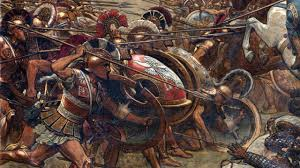
The Sacred Band of Thebes was an elite heavy infantry of select soldiers, allegedly consisting of 150 pairs of male couples which formed the elite force of the Theban army in the 4th century BC, ending Spartan domination. Its predominance began with its crucial role in the Battle of Leuctra in 371 BC.

They were formed under the leadership of Gorgidas but first ac

hieved fame under the general Pelopidas. They remained invincible from 378-338 BCE when the entire troop fell together at the Battle of Chaeronea.

The military unit is first mentioned in 324 BCE in a speech, but their full story wasn’t known to much later.

The Sacred Band were deployed early in the Boeotian War in 378 BCE under Gorgidas but became famous for their participation in the Battle of Leuctra in 371 BCE. They remained undefeated until the decisive battle of Chaeronea in 338 BCE when the Macedonians under Philip II and his son Alexander the Great crushed the combined forces of Thebes and Athens.

The Sacred Band fell together as a single unit and, according to Plutarch, were mourned by Philip II of Macedon himself as valiant warriors. They would later became legendary figures exemplifying courage and military strength.

The city of Thebes, where this band had been founded in 378 BCE was particularly unique in how it regarded the love, between men. A young Plato is thought to have said “the rule has been laid down straightforwardly that it is right to gratify (male) lovers, and no one, young or old, would say that it is wrong.”

Of course, it was not uncommon for male-male encounters to be pursued by ancient Greek soldiers, demonstrated through the institutionalised practices of homoeroticism in Spartan militia and the cities of Crete.

The very act of homoeroticism was thoroughly incorporated into the educational systems of the Greek world. It was a means to lead a boy into adulthood, and by the Classical period, it extended into higher culture: “from the military to athletic games, from philosophy to historiography.”  

But why would Thebes want to specifically create an elite unit of bonded male lovers, if homoeroticism was already part-and-parcel of ancient Greece’s cultural fabric?

According to Plato’s philosophical thought, lover-soldiers would inspire the courage and bravery needed on the battlefield. Plato tells us that:

The last person a lover could bear to be seen by, when leaving his place in the battleline or abandoning his weapons, is his boyfriend; instead, he’d prefer to die many times. As for abandoning his boyfriend or failing to help him in danger – no one is such a coward that he could not be inspired into courage by love and made the equal of someone who’s naturally very brave. — The Symposium, 179a’

It is said that such was the powerful display of love that it brought the great king to tears. So, to mark the burial site, a marble lion was erected in honour of the fallen, acting as a “symbol of their courage.”

The Lion of Chaeronea is still standing. It’s a funerary monument erected in honour of the Theban Sacred Band, who died in the Battle of Chaeronea in 338 BC. The monument was rediscovered in 1818 and later restored, and it remains a prominent landmark near the battle site. 

This once-famous troop of heroes is often passed over in discussions of Greek history possibly because they were gay and the concept of a victorious unit of gay warriors is at odds with the prevalent homophobia of the present day.

As LGBTQ+ activism makes more progress in educating people, however, the Sacred Band of Thebes is again receiving the kind of recognition they deserve.

Mount Gambier

This week we are looking at the second largest city/town in South Australia, which is Mount Gambier, with a population of over 26,000. It is located on the Limestone Coast. It is in the southeastern corner of South Australia.

The town was founded by Hastings Cunningham and was first called “Gambierton” in 1854 by subdividing a block of 77 acres (31 ha). From 1861 to 1878, the Post Office was known by this name before reverting to Mount Gambier.

It’s known for its limestone, volcanic landscape and crater lakes. One of these, Blue Lake, turns cobalt blue in summer. Nearby, the Centenary Tower offers panoramic views of the area. The Umpherston Sinkhole contains a lush sunken garden. The Lady Nelson Visitor Centre houses a full-size replica of a late-18th-century ship.

Mount Gambier’s history is marked by its volcanic origins, early European exploration, and development as a significant regional centre in South Australia. The extinct volcano, Mount Gambier, was first sighted by Lieutenant James Grant in 1800 and named after Admiral James Gambier. European settlement began in the 1840s, with the area becoming a major agricultural and timber centre.

The traditional owners of the Mount Gambier area are the Boandik people, also known as the Bungandidj. They are the First Nations people of the region, and their language and culture are deeply connected to the land and waterways. The name “Bungandidj” is said to mean “people of the reeds”. 

Organizations like the City of Mount Gambier and headspace Mount Gambier formally acknowledge the Boandik people as the traditional custodians. 

There’s a growing movement to recognize the Boandik presence and connection to the land through dual naming of significant sites, alongside their European names. 

The Bungandidj language is being revitalized, and efforts are underway to reintroduce it into the community. 

The Boandik people have a long and rich history in the region, and their stories and cultural knowledge are important to the area’s identity. 

Mount Gambier is generally considered a safe place, but like any location, it has areas where caution is advised, especially at night or in more remote areas. While some crime statistics show increases in thefts and break-ins, these are not indicative of the overall safety of the city for residents and visitors. 

American Black Bear

This week we are looking at the American black bear, or simply black bear, it is a species of medium-sized bear which is endemic to North America. It is the continent’s smallest and most widely

They vary in size, with males typically weighing between 56 to 226 kilos (125 to 500) pounds and females between 40 to 136kilos (90 to 300) pounds. They generally measure 1.5 to 2.1 metres (5 to 7 feet) in length and stand less than1 metre (2 to 3 feet) tall at the shoulder on all fours. When standing upright, they can reach a height of 5 to 6 feet

Most of their diet consists of berries, fruit, sedges, and insects. They will also occasionally consume fish, honeycomb, and human food and garbage, so it is important to make sure to keep your items locked up with bear-proof equipment! In the spring, black bears may prey on young elk and deer.

They are typically shy and secretive towards humans, generally avoiding encounters. They are known for their intelligence and curiosity, exhibiting problem-solving skills and a tendency to explore. While they can be active at any time of day, they are often crepuscular, meaning they are most active during dawn and dusk. Black bears are also solitary animals for most of the year, except during mating season and when females are raising cubs. 

They inhabit a wide range of environments across North America, primarily favouring forested areas. They are commonly found in mountainous regions, woodlands, and swamps, often seeking out areas with ample food, water, and shelter. 

They may become prey to mountain lions, wolves, coyotes, bobcats, grizzly bears, humans, or other black bears. Cubs are especially vulnerable to predation by these other animals.

While they are generally not known to be aggressive towards humans and often try to avoid encounters, they can be dangerous in certain situations. They may act defensively if they feel threatened or cornered, or if they are protecting food or their young. However, fatal black bear attacks are rare, with only a small number occurring each year in North America. 

Black bear cubs are typically born in January or February, weighing less than a pound and hairless, inside their mother’s den. They are usually born in litters of one to three, and emerge from the den with their mother in the spring, weighing around five pounds. Cubs stay with their mother for about 18 months, learning essential survival skills

Ecuador

This week we are back in South America at the country of Ecuador which lies along the Equator which is why it is called Ecuador and is on the northwestern coast of South America.

The country has a diverse landscape which encompasses Amazon jungle, Andean highlands and the wildlife-rich Galápagos Islands.

The country’s capital is Quito which sits high in the Andean foothills at an altitude of 2,850m. It is constructed on the foundations of an ancient Incan city, it’s known for its well-preserved colonial centre, rich with 16th- and 17th-century churches and other structures blending European, Moorish and indigenous styles. These include the cathedral, in the Plaza Grande square, and ultra-ornate Compañia de Jesús Jesuit church.

Quito is the oldest of all South American capitals and was designated a UNESCO World Heritage site in 1978 due to its well-preserved old town.

Founded by Spanish conquistador Sebastián de Belalcázar in 1534, Quito remained the focal point of national affairs until the early 20th century when economic dominance shifted to Guayaquil . Today, Quito remains the country’s political and cultural centre, maintaining much of its colonial atmosphere with historic churches, peaceful squares, and narrow streets.

 The country has a population of around 18 million, the official language is Spanish, but Quichua, the lingua franca of the Inca Empire, is spoken by many of the indigenous people. Nine additional indigenous languages are also spoken in Ecuador. English is spoken in major visitor centers.

The official currency of Ecuador is the US dollar. While US dollar bills are used in Ecuador, the country issues its own centavo coins. US dollars have been used in Ecuador since 2000 and replaced the former currency, the Ecuadorian sucre.

The Ecuadorian flag is a horizontal tricolour with three bands of yellow, blue, and red. The yellow band is at the top and is twice the width of the blue and red bands. The flag also includes the Ecuadorian coat of arms in the centre. The colours represent the sun (yellow), the sea and sky (blue), and the blood shed for independence (red).

The flag was first adopted in 1860, with the coat of arms being added in 1900. 

It is similar to the flag of Colombia, but the Ecuadorian flag is longer and includes the coat of arms. 

When it comes to religion, Christianity is the primary religion. Catholicism is the main Christian denomination in the country. There are also small minorities of other religions.

Ecuador is also considered a constitutional republic. The Constitution of Ecuador provides for a four-year term of office for the President, Vice-President, and members of the National Assembly with concurrent elections. Presidents and legislators may be re-elected immediately.