The Story behind Hanukkah

About 200 BC Israel was a state in the Seleucid Empire (an empire ruled under Greek law) and under the overall charge of the King of Syria. However, they could follow their own religion and its practises. In 171 BC, There was a new King called Antiochus IV, who also called himself Antiochus Epiphanes which means ‘Antiochus the visible god’. Antiochus wanted all the empire to follow Greek ways of life and the Greek religion with all its gods. Some of the Jews wanted to be more Greek, but most wanted to stay Jewish.

The brother of the Jewish high priest wanted to be more Greek, so he bribed Antiochus so he would be come the new High Priest instead of his brother and then he had his brother killed! Three years later another man bribed Antiochus even more to let him become the High Priest! To pay his bribe he stole some of the objects made of gold that were used in the Jewish Temple.

On his way home from having to retreat from a battle, Antiochus stopped in Jerusalem and he let out all his anger on the city and the Jewish people. He ordered houses to be burned down and tens of thousands of Jews were killed or put into slavery. Antiochus then went to attack the Jewish Temple, the most important building in Israel to Jews. The Syrian soldiers took all the treasures out of the temple and on 15 Kislev 168 BC Antiochus put up a status of the Greek god Zeus in the centre of the Jewish Temple (but it had the face of Antiochus!). Then on 25 Kislev he desecrated the most holy place in the temple and destroyed the Jewish holy scrolls.

Antiochus then banned practising the Jewish faith & religion (if you were found out you and all your family were killed) and made the Temple into a shrine to Zeus. There were many Jews killed for their faith. Soon afterwards a Jewish rebellion started.

It began when a ‘former’ Jewish Priest, called Mattathias, was forced to make an offering to Zeus in his village. He refused to do so and killed a Syrian Soldier! Mattathias’s sons joined him and killed the other soldiers in the village. Mattathias was an old man and died soon after this, but his son Judah then took charge of the freedom fighters. Judah’s nickname was ‘Maccabee’ which come from the Hebrew word for hammer. He and his troops lived in caves and fought an undercover war for three years. They then met the Syrians in open battle and defeated them.

When they got back to Jerusalem, the Temple was in ruins and the statue of Zeus/Antiochus was still standing. They cleaned the Temple. They rebuilt the Jewish altar and on 25 Kislev 165 BC, exactly three years after the statue was put up, the altar and Temple was rededicated to God.

There are several theories about why Hanukkah is celebrated over eight nights. One legend says that when Judah and his followers went into the Temple there was only enough oil to burn for one night, but that it burned for eight nights. Another story says that they found eight iron spears and put candles of them and used them for lighting in the Temple.

Hanukkah – The Jewish Festival of Lights

A Hanukkah Menorah/Hanukkiyah and DreidelsHanukkah is the Jewish Festival of Lights and it remembers the rededication of the second Jewish Temple in Jerusalem. This happened in the 160s BC (before Jesus was born). (Hanukkah is the Jewish word for ‘dedication’.) Hanukkah last for eight days and starts on the 25th of Kislev, the month in the Jewish calendar that occurs at about the same time as December. Because the Jewish calendar is lunar (it uses the moon for its dates), Kislev can happen from late November to late December.

In 2014, Hanukkah is from in the evening of Tuesday, 16th December until the evening of Wednesday, 24th December.

In 2015, Hanukkah is from in the evening of Sunday, 6th December until the evening of Monday, 14th December.

During Hanukkah, on each of the eight nights, a candle is lit in a special menorah (candelabra) called a ‘hanukkiyah’. There is a special ninth candle called the ‘shammash’ or servant candle which is used to light the other candles. The shammash is often in the centre of the other candles and has a higher position. On the first night one candle is lit, on the second night, two are lit until all are lit on the eighth and final night of the festival. Traditionally they are lit from left to right. A special blessing, thanking God, is said before or after lighting the candles and a special Jewish hymn is often sung. The menorah is put in the front window of houses so people passing can see the lights and remember the story of Hanukkah. Most Jewish family and households have a special menorah and celebrate Hanukkah.

Hanukkah is also a time for giving and receiving presents and gifts are often given on each night. Lots of games are played during the time of Hanukkah. The most popular is ‘dreidel’ (Yiddish) or ‘sivivon’ (Hebrew). It’s a four sided top with a Hebrew letter on each side. The four letter are the first letter of the phrase ‘Nes Gadol Hayah Sham’ which means ‘A great miracle happened there’ (in Israel, ‘there’ is changed to ‘here’ so it’s ‘Nes Gadol Hayah Po’). Player put a coin, nut or chocolate coin in a pot and the top is spun. In the letter ‘nun’ (נ) come up nothing happens, if it’s ‘gimel’ (ג) the player wins the pot, if it’s ‘hay’ (ה) you win half the pot and if it’s ‘shin’ (for ‘there’ ש) or ‘pe’ (for ‘here’ פ) you have to put another item into the pot and the next person has a spin!

The Boxing Day in Australia

christian-christmas-poems

Boxing day is a Great Australian tradition at Christmas time. Boxing Day is the day after Christmas day. It’s a commemoration day that we inherited from the British for a reason we have forgotten about and never cared about anyway. It’s a big day out. It’s always a public holiday and always much cherished. It is a sports day, but we don’t fight.

Two great Australian sporting traditions always capture us on Boxing day. The Cricket and the spectacular Sydney to Hobart yacht race. Many families hang around at home on boxing day and snooze whilst they watch these events on the TV, whilst the kids play cricket in the backyard. Others pack up for a picnic or a trip to the beach. There is always boating and fishing, also great family outings.

An extract from a poem, “Tangmalangmaloo” by John O’Brien, perhaps captures the way many Australians feel about Boxing day. The poem describes the day the bishop called in at an outback school and questioned the class about religion.

“And oh, how pleased his lordship was, and how he smiled to say,
‘That’s good, my boy. Come tell me now; and what is Christmas Day?’
The ready answer bared a fact no bishop ever knew –
‘It’s the day before the races out at Tangmalangmaloo.’ “

My Christmas Day

10812

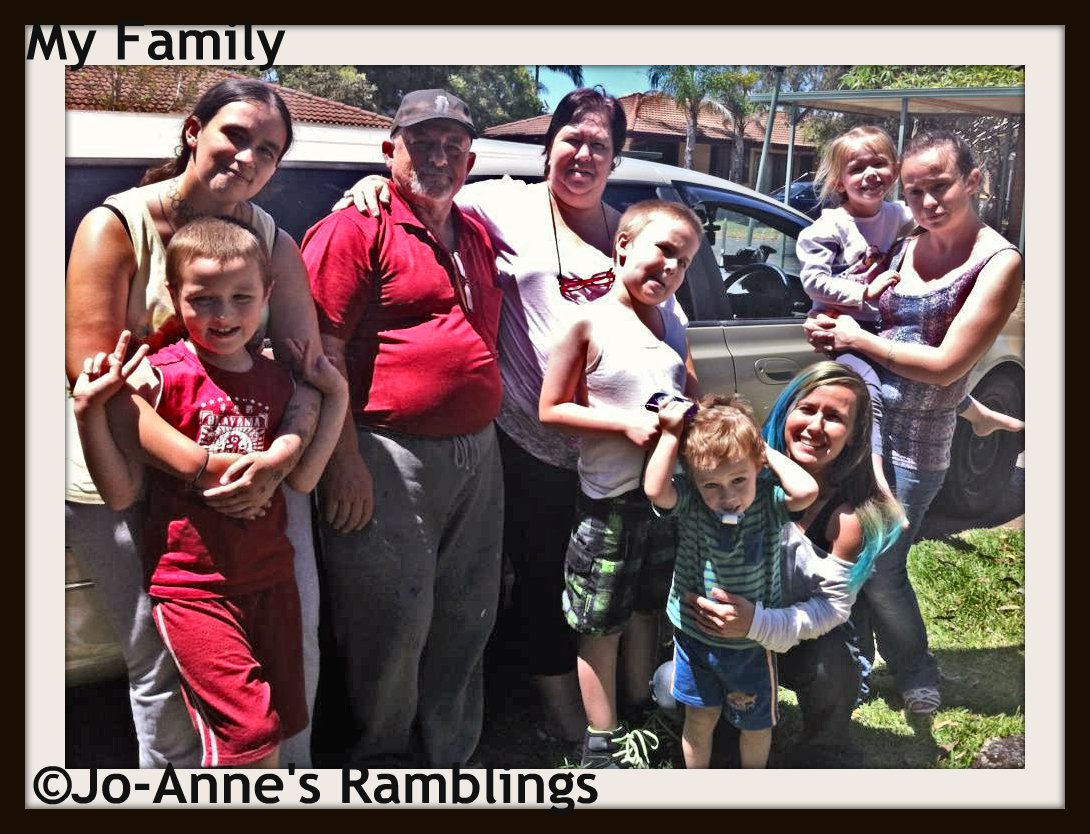
Merry Christmas everyone, yes I know most of my posts lately have been about Christmas traditions but since it is Christmas Day I thought I would end the day by telling you a bit about how I spent the day. Well I was woken up around 7am by Blain, no he didn’t spend last night here but he and Tasha turned up early to give us their presents and to receive our presents to them. Blain went in and woke up Leo and Jessica and Papa as well, so there was a big exchange of gifts here, yes Jessica and Leo spent last night here so Leo was super excited to see that his Christmas bag had been filled by Santa. It was great to see Leo get so excited by all his gifts although Blain was in a mood going one about Leo’s presents and when his mum told him to stop he got all moo dy.

Blain has never been one to get excited about Christmas presents or about birthday presents he is just like his mum in that regard but let’s move onto something more important, how I spent the rest of the day.

Well I sliced the tomatoes ok more to the point I made a mess of them my slicer first sliced them too thin so I swapped slicers and the second on just tore them apart and I also sliced the cucumber which turned out well.

By 9.30am Tim and I headed over to my parents place where we had another exchange of gifts between family members. Then it was time to start cooking the roast potatoes we only do the frozen ones in the air fryer, I had cooked the potato bake last night and had it warming in the oven since I arrived.

After lunch we pack up the car and head home again, mum & dad love having all the family around Christmas morning but by 2pm they are glad to see the back of us as everyone leaves and they have a quiet afternoon.

Being Christmas Day I have had a number of drinks, ok I am a bit tipsy but what the hell it isn’t like I drink a lot. I will write more about my gifts over the next few days.

I hope everyone of my blogging friends as well as my family have had a bloody wonderful Christmas or in some cases have a wonderful Christmas as I know not all my friends are in the same timeline as me.

Australian Christmas Traditions – History of Christmas

Aus Card

Christmas is always the most exciting time of the year. School children get six weeks holiday, and many professionals close their office from Christmas eve to the Australia Day Public Holiday on 26th January, so many families are in a holiday season over this period.

Christmas in Australia

Businesses and shops close on Christmas day and Boxing Day, however the major retail centres open after Christmas for clearance sales on all Christmas stock that did not sell. This has become an important part of Christmas for many bargain shoppers. Some people now wait to buy their gifts after Christmas at the sales. Those families that can afford it head for coastal resorts and beachside caravan parks for the holiday period.

December is one of the hottest months in Australia so outdoors sports like swimming, surfing and fishing are common and easy cold meat & salad dominates most meals.

Most Australian Christmas traditions have derived from our British beginnings, European influences and later the American commercial influences

The countdown continues with Carols by Candlelight in a park nearby from mid December. (see below)
On Christmas eve, children leaving out the Christmas stocking, or pillow case (because you can’t fit much into a stocking in this commercial world).


Church services, both on Christmas eve and Christmas Day, although this has developed into midnight services on Christmas eve which covers both in recent years.
Santa still comes silently down the chimney and eats a piece of cake and takes a drink left out for him before he goes.

Santa rides ‘a miniature sleigh’, with eight tiny rein-deer”. (although in the Australian outback it is too hot for the reindeer and Santa is pulled by Six White Boomers.

The small children are brimming with so much excitement that they can’t get to sleep on Christmas eve, and then wake you Christmas morning, when you have hardly closed your eyes, with excitement and wonder as they rip the wrappings to pieces.


Then comes a formal gathering around the Christmas tree as the presents from each other are handed out by the patriarch of the family, wearing a Santa suit or at least a Santa cap and a “tinnie”.

Christmas dinner, served at lunchtime on Christmas day, is at Grandma’s home, (while she is still able bodied).

The dinner table has a special Christmas tablecloth, Christmas napkins and napkin rings that you didn’t know she had. Also bonbons or Christmas crackers, streamers and balloons are added to the dining room and lollies and soft drinks are already on the table. Often the kids are on a separate table on the verandah.

The traditional Australian Christmas dinner had been the English style roast Beef or lamb sometimes also a turkey, with Gravy and baked potatoes & pumpkin followed by plum pudding and custard, which grandma used to fill with little silver thripences or sixpences.

In recent years more and more busy mothers are not subjecting themselves, and the family, to the heavy baked dinner on hot days and go for the cold meat and salads. Cold turkey with cranberry sauce and ham with apple sauce are now the leading Australian meat dishes for Christmas. But the steaming Christmas pudding with hot custard is still common and much, much, beer is consumed in the delirious heat.

Christmas Eve Traditions and Customs

Christmas Eve has many of its own customs and traditions. The most widely practiced one that still exists today is going to a Midnight Mass Church Service. In many countries, especially Catholic ones such as Spain, Mexico, Poland and Italy this is the most important Church service of the Christmas season. People might fast during Christmas Eve (not eat any meat or fish usually) and then the main Christmas meal is often eaten after the Midnight Mass Service in these countries. In some other countries, such as Belgium ,Finland,Lithuania and Denmark the meal is eaten in the evening and you might go to a Midnight Service afterwards!

The Midnight Mass Communion Service (or ‘Christ-Mas’) was a very special one as it was the only one that was allowed to start after sunset (and before sunrise the next day), so it was held at Midnight!

Christmas Eve is also the day when people in some countries, like Germany, Sweden and Portugal exchange their presents. I think Santa must have those countries on his extra early list! Christmas Eve is also Santa’s busiest day of the year when he has to travel over 220 million miles (355 million km) to get to every house on earth!

In many European countries including Germany, Serbia and Slovakia, Christmas Eve is the day when the Christmas Tree is brought into the house and decorated.

It was also traditional to bring the Yule Log into the house and light it on Christmas Eve. It was lit using a piece of the previous years log and then would burnt non-stop until Twelfth Night (6th January). Tradition also said that any greenery such as Holly Ivy and Mistletoe should only be taken into the house on Christmas Eve.

It’s also the time that the wonderful book ‘A Christmas Carol’ by Charles Dickens is set and that going out Carol singing was and still is very popular. In the past, if you weren’t carol singing, in parts of the UK, you might go out wassailing or mumming.

There were lots of superstitions in the UK that said girls could find out the initials, or even have visions, of the person they would marry on Christmas Eve! This was often done by cooking a special cake called a ‘dumb cake’. You were supposed to make the cake in silence and prick your initials into the top. When you went to bed, you left the cake by the fire hearth and your true love was supposed to coming in at midnight and prick his initials next to yours!

Other Christmas Eve superstitions included that farm and wild animals would kneel at midnight in honour of Jesus being born or that they could even talk!

Santa Claus and Coca-Cola

Santa by Thomas Nast in 1863St. Nicholas in Harper’s Weekly: January 1863

There’s a Christmas Urban Legend that says that Santa’s red suit was designed by Coca-Cola and that they might even ‘own’ Santa!

This is definitely NOT TRUE!

Long before coke had been invented, St Nicholas had worn his Bishop’s red robes. During Victorian times, he wore a range of colours (red, green, blue and brown fur) but red was always his favourite!

In January 1863, the magazine Harper’s Weekly published the first illustration of St Nicholas/St Nick by Thomas Nast. In this he was wearing a ‘Stars and Stripes’ outfit! Over the next 20 years Thomas Nast continued to draw Santa every Christmas and his works were very popular indeed (he must have been very good friends with Santa to get such good access!).

This is when Santa really started to develop his big tummy and the style of red and white outfit he wears today. Nast designed Santa’s look on some historical information about Santa and the poem ‘A Visit from St. Nicholas’.

Santa by Thomas Nast in 1881St. Nicholas in Harper’s Weekly: January 1881

On January 1st 1881, Harper’s Weekly published Nast’s most famous image of Santa, complete with a big red belly, an arm full of toys and smoking a pipe!

This image of Santa became very popular, with more artists drawing Santa in his red and white costume from 1900 to 1930.

By 1931, when Coke first used Santa in their advertising, his image was well established. The first ‘Coke Santa’ was drawn by artist Haddon Sundblom. He took the idea of Nast’s Santa but made him even more larger than life and jolly, replaced the pipe with a bottle of Coke and created the famous Coke holding Santa!

Coca-Cola also agree that the red suit was made popular by Thomas Nast not them!

Christmas or Xmas?

Christmas is also sometimes known as Xmas. Some people don’t think it’s correct to call Christmas ‘Xmas’ as that takes the ‘Christ’ (Jesus) out of Christmas. (As Christmas comes from Christ-Mass, the Church service that celebrated the birth of Jesus.)

But that is not quite right! In the Greek language and alphabet, the letter that looks like an X is the Greek letter chi / Χ (pronounced ‘kye’ – it rhymes with ‘eye’) which is the first letter of the Greek word for Christ, Christos.

The early church used the first two letters of Christos in the Greek alphabet ‘chi’ and ‘rho’ to create a monogram (symbol) to represent the name of Jesus. This looks like an X with a small p on the top: ☧

The symbol of a fish is sometimes used by Christians (you might see a fish sticker on a car or someone wearing a little fish badge). This comes from the time when the first Christians had to meet in secret, as the Romans wanted to kill them (before Emperor Constantine became a Christian). Jesus had said that he wanted to make his followers ‘Fishers of Men’, so people started to use that symbol.

When two Christians met, one person drew half a basic fish shape (often using their foot in the dust on the ground) and the other person drew the other half of the fish. The Greek word for fish is ‘Ikthus’ or ‘Ichthys’. There are five Greek letters in the word. It can also make up a sentence of Christian beliefs ‘Ie-sous Christos Theou Huios So-te-r’ which in English means “Jesus Christ, Son of God, Saviour”. The second letter of these five letter is X or Christos!

So Xmas can also mean Christmas; but it should also be pronounced ‘Christmas’ rather than ‘ex-mas’!

Is Rudolph a girl

Did you know that Rudolph might actually be a girl!? Only female reindeer keep their antlers throughout winter. By Christmas time most males have discarded their antlers and are saving their energy ready to grow a new pair in the spring.

The UK Father Christmas and the American Santa Claus became more and more alike over the years and are now one and the same.

Some people say that Santa lives at the North Pole. In Finland, they say that he lives in the north part of their country called Lapland.

But everyone agrees that he travels through the sky on a sledge that is pulled by reindeer, that he comes into houses down the chimney at night and places presents for the children in socks or bags by their beds, in front of the family Christmas tree, or by the fire place.

A fireplace with a hanging stockings

Most children receive their presents on Christmas Eve night or early Christmas morning, but in some countries they get their presents on St. Nicholas’ Day, December 6th.

St. Nicholas putting the bag of gold into a stocking is probably where the custom of having a tangerine or satsuma at the bottom of your Christmas stocking came from. If people couldn’t afford gold, some golden fruit was a good replacement – and until the last 50 years these were quite unusual fruits and so still special!

The biggest Christmas stocking was 51m 35cm (168ft 5.65in) long and 21m 63cm (70ft 11.57in) wide (from the heel to the toe). It was made by the volunteer emergency services organisation Pubblica Assistenza Carrara e Sezioni (Italy) in Carrara, Tuscany, Italy, on 5th January 2011. Just think how many presents you could fit in that!

How St. Nicholas Became Santa Claus

Santa in different colour outfitsIn the 16th Century in Europe, the stories and traditions about St. Nicholas had become very unpopular.

But someone had to deliver presents to children at Christmas, so in the UK, he became ‘Father Christmas’, a character from old children’s stories; in France, he was then known as ‘Père Nöel’; in Germany, the ‘Christ Kind’. In the early USA his name was ‘Kris Kringle’. Later, Dutch settlers in the USA took the old stories of St. Nicholas with them and Kris Kringle became ‘Sinterklaas’ or as we now say ‘Santa Claus’!

Many countries, especially ones in Europe, celebrate St. Nicholas’ Day on 6th December. In Holland and some other European Countries, children leave clogs or shoes out to be filled with presents. They also believe that if they leave some hay and carrots in their shoes for Sinterklaas’s horse, they will be left some sweets.

St. Nicholas became popular again in the Victorian era when writers, poets and artists rediscovered the old stories.

In 1823 the famous poem ‘A Visit from St. Nicholas’ or ‘T’was the Night before Christmas’, was published. Dr Clement Clarke Moore later claimed that he had written it for his children. However, some scholars now believe that it was actually written by Henry Livingston, Jr., who was a distant relative of Dr Moore’s wife. The poem describes eight reindeer and gives them their names. They became really well known in the song ‘Rudolph the Red nosed Reindeer’, written in 1949. Do you know all eight names?