Well, here we are at Thursday and Thursday are an easy day for me when it comes to blogging just posting links to new posts over at Random Stuff and photo or video will be the norm for Thursdays for a while.
This week we are having a look at Canberra the capital of Australia located in the Australian Capital Territory or ACT.
Canberra’s history begins with Aboriginal Australians, followed by European settlement in the 19th century, and its designation as Australia’s capital in 1908, with construction beginning in 1911 and the capital moving from Melbourne in 1927.
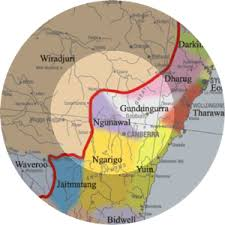
The area was inhabited by Aboriginal Australians, including the Ngunnawal and Ngambri peoples, for thousands of years, possibly as long as 21,000 years.
The Ngunnawal and Ngambri people, continue to live and travel through the area, preserving their culture through land connections and artistic expression, although there have been ongoing disputes and court cases regarding their recognition.
European settlement began in the first half of the 19th century, with landmarks like St John’s Anglican Church and Blundells Cottage remaining from this period.
In 1908, the Australian government decided to establish a new capital, choosing the Canberra-Yass district as the location, which was about 100 miles from Sydney.
Construction of the city began in 1911, and the first Parliament House was completed in 1927, marking the official move of the capital from Melbourne.
The name “Canberra” is believed to have come from the Aboriginal word “Canberry” or “Canbury”, meaning “a place of meeting”.
Canberra has three sister cities: Nara in Japan, Beijing in China, and Wellington in New Zealand.
As of the end of June 2024, Canberra’s estimated resident population was 474,132.
Canberra’s police are the AFP they have a community policing arm called ACT Policing, which responds to incidents in the Australian Capital Territory.
The territory measures 85 kilometers or 53 miles north to south and 53 kilometers or 33 miles east to west. It covers an area of 2,358 square kilometers, or 910 square miles.
Several rivers flow through the Australian Capital Territory.
Its most famous lake is Lake Burley Griffin which is an artificial lake in the centre of Canberra. It was created in 1963 by the damming of the Molonglo River, which formerly ran between the city centre and Parliamentary Triangle.
So, I got out the great book of knowledge to see animals I could write about now and I came across hooved animals but when I went to Google for more information, it asked me if I meant hoofed or hooved animals. A little more checking and yeah, they are the same thing, I have never used the term hoofed. They can also be referred as ungulates another term I am not familiar with.
My next question was how many different hooved animals are there?
There are around 200 different species and over the next few weeks I will post a few of them, K am not sure how many but have made not of 20 of them.
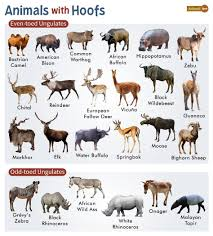
There are two major groups of living hoofed or hooved mammals they are the Artiodactyl, or cloven-hooved ones and the Perissodactyl, or odd-toed ones, with the former being by far larger of the two groups, with over a hundred living species, including such familiar animals as sheep, goats, camels, pigs, cows, deer, and antelopes.
The term cloven-hoofed describes the type of foot structure where the hoof is divided into two or more toes, such as those in the Bovidae family which includes cattle, bison, buffalo, antelopes, sheep, and goats, are all examples of cloven-hoofed animals.
The other type has hard, keratinous coverings on their toes these include species like deer, pigs, camels, and horses. keratin, the same material as fingernails and hair.
Also, these animals walk on the tips of their toes, and have a hard, flexible covering that protects those toes – these are the hooves.
Hooves are an adaptation that allows animals to move efficiently on various terrains, including running and walking on rocky areas.
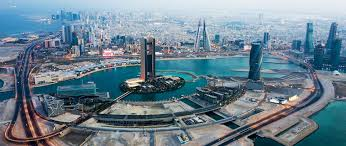
This week we are looking at Bahrain, officially the Kingdom of Bahrain, which is an island country of the Middle East, in West Asia. It is situated on the Persian Gulf, and comprises a small archipelago made up of 50 natural islands and an additional 33 artificial islands, centred on Bahrain Island which makes up around 83 percent of the country’s landmass.
The country has a population of only 1.6 million
The modern capital of the gulf island nation of Bahrain, is Manama it has been at the centre of major trade routes since antiquity. Its acclaimed Bahrain National Museum showcases artifacts from the ancient Dilmun civilization that flourished in the region for millennia.
The city’s thriving Bab el-Bahrain Souq offers wares from colourful handwoven fabrics and spices to pearls.
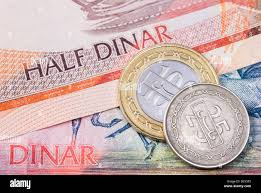
Their currency is the Bahraini dinar, the name is derived from the Roman denarius.
The Bahraini dinar was introduced in 1965, replacing the Gulf Rupee.
Arabic is the official language of Bahrain, although English is widely used.
Their flag consists of a white band on the left, separated from a red area on the right by five triangles that serve as a serrated line.
Alcohol is legal in Bahrain. However, drunken public behaviour is against the law. You could be fined, imprisoned or deported. Security officers and airline staff will not tolerate passengers believed to be drunk at the airport, including those who are in transit. The legal drinking age is 21.
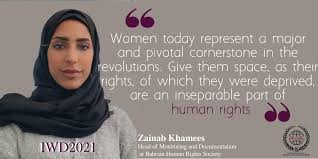
The country recognises women’s equality in political, social, cultural, and economic spheres, granting them the right to vote and stand for office, and has taken steps to protect their rights through legislation and initiatives.
The Bahraini Constitution ensures women are afforded public rights and freedoms, including the right to participate in public affairs, vote, and stand for office.
Bahrain is a member of the Convention on the Elimination of All Forms of Discrimination against Women (CEDAW).
In 2017, Bahrain adopted the unified Personal Status Law (PSL), a step towards protecting both Sunni and Shi’ite women under an inclusive legal framework.
The Kingdom of Bahrain emphasizes that its legislation does not include discriminatory provisions against women.
Achieving gender balance and prohibiting gender discrimination in all areas of life are fundamental principles enshrined in the Constitution of the Kingdom of Bahrain for both men and women.
Women have the right to vote and stand in national elections, a right granted in 2002.
Women are represented in the Legislative Authority, with 19% of participation in 2020, including 15% elected to the parliament and 23% appointed to the Shura Council.
Women also participate in the Municipal Council, with 23% representation.
While there’s no strict dress code, it’s generally recommended that women dress modestly in public, covering shoulders and wearing skirts or trousers that fall below the knee.
Very tight or transparent clothing is considered inappropriate for both genders.
While there is a majority of people that remain narrow-minded, there’s a larger number of people who accept that people are allowed to be different from each other.
The youth of Bahrain and their parents are allowing room for more diversity.
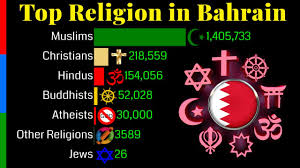
Bahrain’s official religion is Islam, with Sharia serving as a principal source for legislation, and the majority of Bahraini citizens are Muslims, including both Sunni and Shia sects, with the latter being in the majority.
Besides Islam, Bahrain also has a small population of other religions, including Christians, Jews, Hindus, Baha’is, Buddhists, and Sikhs, among others.
The country has an association that promotes religious coexistence and tolerance, aiming to foster respect for different faiths and advocate for peaceful coexistence.
I had a damn good night slept straight through; it is warm at 6am so yeah, it’s going to be hot again.
I had to turn the air con on, I had a headache from the heat.
I decided to order pizza and get it delivered, haven’t done that in years but I walked in the kitchen couldn’t find anything for lunch, we have no bread, so decided on pizza.
It has been stinking hot all day out the back in the sunlight it was 48C at 1pm. It has finally sunk into Tim that often the temperature stated on apps and telly isn’t taken in the sunlight but in shade and there is often a big difference.
I had a damn good night slept straight through; it is much cooler this morning and there is a strong wind.
Tim had to come home from work he failed the breathalyser, he was just over, so he is now off for the day. I wasn’t surprised as he did drink a lot yesterday and he didn’t eat much all day.
This afternoon Tim booked our next cruise it will be next April as in April 2026. It is an Australian cruise going to Tassie. Jess and Tasha are coming with us. I wish Sue could come with us.
I am really tied and feel sad this afternoon.
I had another good night slept straight through again. A cool day and a productive morning doing housework.
It warmed up during the day but wasn’t hot.
After I had my wash, I did my makeup in the bedroom as Tim wanted to use the bathroom. I have decided I will do that in future as it will be easier than having to rush.
When I was getting the clothes out of the washing machine, I found one of Sam’s rings that was missing.
This afternoon I have felt tired and sad why I am sad I do not know.
I had to make a Dr’s appointment as I need a script, it’s Friday morning at 8.48am.
Steps: 7,949
I had another good night slept straight through again. A cool day but it is supposed to warm up.
Sue came over to ask for a roll of toilet paper, I gave her two rolls, also gave her the last couple of bottles of vodka cruisers. She drove me down to get a loaf of bread.
While waiting for Sam this arvo I started to feel like shit, extremely tired, slight headache and nauseas.
I felt unwell I went to bed at 7.15pm but woke at 9.30 and was unable to settle again, so 10pm I got and used the powerfit for 20minutes, after I finish this, I’m going back to bed.
Steps:10,399
I am feeling much better this morning and after I went back to bed I slept through the night. Tim only has his school runs today so will be home between 10am and 1.30pm.
It is 19C this morning but should reach 29C by 1pm, my BGL was 5.5
At around 11.15am I started to feel really tired again.
I turned the air con at 1.30pm.
I have zero motivation this afternoon but at least I don’t feel sick.
Steps:5,226
I had a good night; I am waiting for Tim to leave before I have a shower and get ready for the day.
It is currently 18C and we are looking at a top of 28C.
Sue drove me to the doctors all I needed was a script, I also went to Woolies for a couple of things.
It started to rain around 11am but thankfully stopped when I went up to wait for Sam.
Tasha came down looking for bolts in Tim’s shed she couldn’t find what she needed so she will be off to Bunnings tomorrow. Tim said he also needs to go to Bunnings.
Steps: 2,652
I had a good night; I sleeping straight through till the alarm went off.
I have a lot of lower back pain this morning and feel very tired, I started to fall asleep while waiting for Kathy to all and she rang at 10am.
After a slow start I picked up and managed to write a couple of letters and write up Monday’s and Tuesday’s blog posts.
Tim bought Macca’s for lunch what I wanted was right, but he wanted a Big Mac and that’s not what he got. He said he was going to ring and abuse them, I told him to ring and calmly say he got the wrong order, he did as I suggested and as we live close by, he went back, and they replaced the order without issue.
Tim also finally helped Tasha put a cupboard on her bedroom wall.
The national anthem of Ireland is “Amhrán na bhFiann“or in English “The Soldier’s Song“,.
It was written in English by Peadar Kearney and composed by Patrick Heeney between 1909 and 1910, later translated into Irish by Liam Ó Rinn and officially adopted in 1926.
Peadar Kearney, a poet and nationalist, wrote the lyrics, while his childhood friend and neighbour Patrick Heeney composed the music, using a melodeon.
The English version, “The Soldier’s Song,” was first published in Bulmer Hobson’s Irish Freedom newspaper in 1912.
The song gained popularity during the Easter Rising of 1916, when it was sung at the GPO by the rebels.
Liam Ó Rinn translated the song into Irish in late 1916, and the Irish version, “Amhrán na bhFiann,” was officially adopted as the national anthem by the Irish Free State in 1926.
The anthem became a symbol of Irish nationalism and the struggle for independence, embodying the spirit of the 1916 Easter Rising.
In 1934, Ireland acquired the copyright of the song for £1,200.
While “Amhrán na bhFiann” is the official national anthem, in some contexts, particularly at rugby matches, “Ireland’s Call” is also played, especially outside the Republic of Ireland.
Kearney wrote much of the text in the Swiss Café at the corner of O’Connell Street and North Earl Street.
Soldiers are we, whose lives are pledged to Ireland,
This week we are talking about mine disasters in my area, that being Newcastle in New South Wales.
My paternal grandfather was a coal miner as was his father both worked at the Standford Merthyr collier, I believe my great-grandfather was killed while working he was crushed between two mine train cars also known as minecarts or mine wagons, are specialized rail vehicles used to transport ore, rock, or other materials within mines.
There is a miner’s memorial in the town of Kurri Kurri which has a plaque with all the names of miners who passed while working in the local mines and his name is on it.
I know my grandfather was working at the mine at the age of 14.
One of the first disaster was on Monday 21st March 1898 at the Dudley pit around 9.20 am a huge explosion was heard as far away as Belmont and a rumbling underground as far away as Newcastle.
Coal dust filled the air for more than 15 minutes, when it had cleared it was realised the pithead roof had been partially blown off, the shaft cage had been propelled from the bottom of the shaft 30 feet into the air, lots of other destruction and trapped men inside. The local town folk ran to the pithead hoping for survivors, but the loss of life was inevitable given the extensive underground damage, smoke and poisonous gases.
There was little hope of survivors, but the rescue team worked late into the night. Over the next 2 weeks the rescue team managed to recover 10 out of the 15 bodies.
The mine was flooded and there were still fires burning underground. The decision to close the pit was made and it was not re-opened until 17th June. Newspapers at the time reported on the dangers of the mining industry and this explosion was one of many world-wide.
The official inquiries and inquests found there to be an accumulation of a huge volume of gas in the pit to be the major cause of the disaster. The only comfort for the townsfolk at this time was that there were not more men killed as only the shift men and some officials were underground.
Normally there could be up to 200 working on-site.
Moving on in April 1946 rain caused subsidence at Cessnock No 2 colliery, this led to heat build up and the fires that followed made national news. Some thought the fire should be blasted with artillery or bombed from the air to get the fires under control. Of course, local residents thought those were stupid and dangerous ideas, thus the idea was scrapped.
Some thought that the 10m coal seam should have been mined using open cut mining, but during WW11 it seems the government pushed for underground mining.
At Easter 1946 previous predictions of a possible collapse, heating and fires if the rich seams were worked underground were proved right.
The fire underground was so fierce that at times flames burst to the surface shooting up to 10m into the air. Great sinkholes also appeared in the ground around the area and there were awful smelling fumes around causing distress to local residents.
Explosives were used to blow in the sides of the craters and soil was dumped in.
Miners from all over the district joined in to help control the huge blaze.
There have been many other disasters it isn’t the safest of industries to work in.
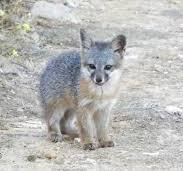
This will be the last post about foxes we are ending with the Island Fox.
The Island fox is native to six of the eight Channel Islands in California it is considered critically endangered by the IUCN, it is threaten by golden eagles, disease, and habitat destruction.
The Catalina Island Conservancy and Institute for Wildlife Studies have established a fox recovery program for the island fox. This program includes vaccination, relocation, and captive breeding.
The island fox is a small fox species that is endemic to six of the eight Channel Islands of California. There are six subspecies, each unique to the island it lives on, reflecting its evolutionary history. They are generally docile, show little fear of humans, and are easily tamed.
The island fox has similar markings to the gray fox. They have gray colouring on the back, rust colouring on the sides, and white underneath. The face has a distinctive black, white, and rufous-coloured patterns.
In March 2004, four subspecies of the island fox were classified as a federally protected endangered species: the Santa Cruz Island fox, Santa Rosa Island fox, San Miguel Island fox and the Santa Catalina Island fox.
Island foxes reach sexual maturity at 10 months, and females usually breed within the first year. These foxes can live for up to 10 years in the wild, but four to six years is more typical.
They are generally docile, show little fear of humans, and are easily tamed. Island foxes played an important role in the spiritual lives of native Channel Islanders. They have been likely semi-domesticated as pets, used as pelts, or for other functions, like pest control.
They are omnivorous, eating both plants and other animals. They eat a large amount of insects, some island deer mice, reptiles, and fruit from native plants. New evidence is showing marine resources may be important for island foxes. Their diet also changes with the seasons.
The primary threat to the island fox is predation by invasive golden eagles. The species is also very vulnerable to canine distemper transmitted by domestic dogs, habitat fragmentation due to development, and habitat loss to introduced livestock and game species.
I was going to write about another middle east country but since today is St. Patrick’s Day I changed my mind and now writing about Ireland.
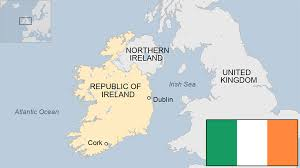
The Republic of Ireland occupies most of the island of Ireland, off the coast of England and Wales. Its capital, Dublin, is the birthplace of writers like Oscar Wilde, and home of Guinness beer. The 9th-century Book of Kells and other illustrated manuscripts are on show in Dublin’s Trinity College Library. Dubbed the “Emerald Isle” for its lush landscape, the country is dotted with castles like medieval Cahir Castle.
The island of Ireland comprises the Republic of Ireland, which is a sovereign country, and Northern Ireland, which is part of the United Kingdom. I will write about Northern Ireland at a later date.
The population is around 5.4 million, there are two official languages, English and Irish.
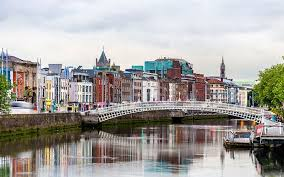
Dublin, capital of the Republic of Ireland, is on Ireland’s east coast at the mouth of the River Liffey. Its historic buildings include Dublin Castle, dating to the 13th century, and imposing St Patrick’s Cathedral, founded in 1191. City parks include landscaped St Stephen’s Green and huge Phoenix Park, containing Dublin Zoo. The National Museum of Ireland explores Irish heritage and culture.
The city expanded rapidly from the 17th century and was briefly the second largest in the British Empire and sixth largest in Western Europe after the Acts of Union in 1800. Following independence in 1922, Dublin became the capital of the Irish Free State, renamed Ireland in 1937.
The national flag of Ireland, often called “the tricolour,” is a vertical tricolour of green, white, and orange, with green at the hoist (pole side).
Green: Represents Irish nationalism and the Gaelic tradition.
White: Symbolizes peace and a lasting truce between different groups.
Orange: Represents the supporters of William of Orange.
This flag was first introduced by Thomas Francis Meagher in 1848 and became the national flag after the Easter Rising of 1916.
The flag was given constitutional status in 1937.
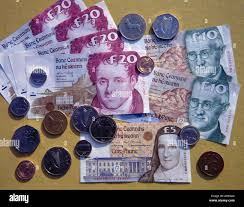
Their currency is the Euro since 1999 before that it was the Irish Pound
When it comes to religion, Christianity, particularly Catholicism, holds a significant place. The Catholic Church has a long history and cultural influence in Ireland, and many Irish people identify with the Catholic faith.
While Catholicism is the largest religion, other Christian denominations, such as the Church of Ireland (Anglican), and other religions like Islam and Eastern Orthodoxy, are also present.
A significant portion of the population, 14.5%, identified as having no religion in the 2022 census.
The Irish Constitution guarantees freedom of religion and does not endorse any particular religion.
There has been a decline in the number of people who identify as Catholic, as well as a rise in the number of people who identify as having no religion.
In Ireland, significant strides have been made in advancing women’s rights, including equal voting rights, legal protections against discrimination, and a focus on eliminating violence against women, but challenges remain, particularly in achieving true gender equality and addressing data gaps.
The 1937 Constitution of Ireland guaranteed women the right to vote and to nationality and citizenship on an equal basis with men.
Ireland is generally considered a safe and welcoming place to travel, with low crime rates and a friendly population. However, like any destination, it’s important to be aware of potential risks and take necessary precautions, especially in larger cities.
Ireland has a relatively low crime rate compared to many other European countries
The Irish people are known for their hospitality and welcoming nature.
Ireland is considered a great destination for solo travellers, both male and female.












 Jo-AnneRamplings