The National Anthem of the Islamic Republic of Iran was adopted in 1990, replacing the previous anthem used during the rule of Ruhollah Khomeini. It was composed by Hassan Riyahi, and the lyrics were written by Sayed Bagheri. It is the fourth national anthem of Iranian overall.
Due to the death of Supreme Leader Ruhollah Khomeini in 1989, Iran adopted its current anthem after a competition the following year. At the time of its adoption, it was the second shortest anthem in the world; the first being the Japanese national anthem “Kimigayo” with seven lines.
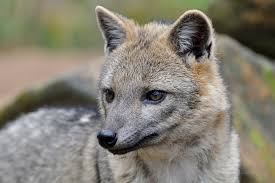
This week we are looking at the corsac fox, also known simply as a corsac, it is a medium-sized fox found in steppes, semi-deserts and deserts in Central Asia, ranging into Mongolia and northern China.
It is slightly smaller than the red fox with larger legs and ears. The coloration is predominantly grey or reddish grey on the upper parts with silver undertones, while the under parts are white with yellow undertones. Their body length is between 45-65cm and their tail is between 19-35cm long.
They like to eat rodents, such as partridges, snow buntings, ducks, pheasants, and geese insects and fruits, as well as large mammal remains.
When hunting thy like to leap into the air and drop down on prey, they like stalking prey and making short-distance attacks.
They live up to 9yrs in the wild and up to 13yrs in captivate.
They are nocturnal animals and, unlike most fox species, Corsac foxes are social animals that form smalls packs. They have excellent hearing, vision and smelling senses which they use to hunt. They are nomadic animals with no fixed territory and like to move from place to place.
They are observant and analytical, with a keen eye for detail. They notice subtle nuances and patterns that others might overlook, which helps them make well-informed decisions. Their versatility and multifaceted talents are also remarkable.They are monogamous and form pair bonds, however, before that males will initially fight for access to females. The breeding season starts in January and ends in March. The female creates a birthing den, which is sometimes shared with other pregnant females, but moves her young to new burrows several times after they are born.Typically, 2-6 kits are born after a gestation period of 52 to 60 days. However, the maximum recorded litter consisted of 11 kits. Newborn kits weigh around 60 g (2.1 oz) and have fluffy, light brown fur that turns yellowish as they age. They are born blind and open their eyes at around 2 weeks of age. Both parents assist in the raising of their young. Kits begin to eat meat at 4 weeks and emerge from the den shortly after. Corsac foxes reach reproductive maturity within 9 to 10 months and reproduce in the second year of life.
This week’s country is Iran, officially the Islamic Republic of Iran it was once known as Persia, particularly in the Western world; however, the official name of the country is now Iran and the government requests that people use this term instead of Persia when referring to it formally.
It was in 1935, that the Iranian government under Reza Shah Pahlavi officially requested that the country be referred to as “Iran” instead of “Persia”.
The country has a population of 89 million with 15,800,000 living in the capital.
The capital of Iran is Tehran, in the north of the country. Its central Golestan Palace complex, with its ornate rooms and marble throne, was the seat of power of the Qajar dynasty. The National Jewellery Museum holds many of the Qajar monarchs’ jewels, while the National Museum of Iran has artifacts dating back to Paleolithic times. The Milad Tower offers panoramic views over the city.
The official currency is either the rial or the toman when I looked it up I got rial but then I discovered that due to the rial’s low value, the Iranian parliament voted to gradually remonetize the nation’s currency from the rial to the toman between 2020 and 2022, with an exchange rate of 1 toman = 10,000 rials.
Their flag is a horizontal tricolour of green, white, and red. The flag also has the national emblem in red and the word “Allahu Akbar” written in white. It was adopted in 1980 after the Iranian Revolution.
The colours and symbols have specific meanings:
Green: Represents Islam, growth, happiness, unity, nature, and Iranian languages
White: Represents freedom
Red: Represents martyrdom, bravery, fire, love, and warmth
“Allahu Akbar”: An Islamic battle cry that means “God is great”
Kufic script: The word “Allahu Akbar” is written in Kufic script 11 times on each border of the flag, totalling 22 times
The colours green, white, and red have been used in early versions of the Iranian flag. The flag was officially enshrined in the Constitution of 1906.
The flag is also known as the Tricolour Flag of Iran, these colours of the flag are symbolic and are also used in the flags of other Muslim countries.
The official religion of Iran is Twelver Ja’afari Shia Islam. The Iranian constitution defines the country as an Islamic republic, and all laws must be based on Islamic criteria.
Other religious minorities in Iran face discrimination and persecution. The Iranian government has been criticized for its treatment of religious minorities, including Baha’is, Christians, Sunni Muslims, Zoroastrians, and Jews.
Iran is home to the second largest Jewish community in the Muslim world and the Middle East. The Baháʼí Faith is the largest non-Muslim religious minority in Iran.
The government arrests religious minorities on vague charges.
There are also limits regarding access to higher education for most religious minorities.
The government screens applicants for public sector employment for their knowledge of Islam.
The government criminalised proselytizing and insulting “divine religions or Islamic schools of thought”.
Under Iranian law, apostasy from Islam is punishable by death. Non-religious Iranians are officially unrecognized by the government, and one must declare oneself as a member of one of the four recognized faiths in order to avail oneself of many of the rights of citizenship.
Even most of the time and occasions, all female citizens, including non-Muslims, are required to wear Hijab as Iran is currently an Islamic republic.
Family in Iran is considered holy and being a mother is very important. In Iran everyone has to get married, and it is considered a sin if has a child out of wedlock. Everything in Iran is based on family. All the family members live together until they get married and are ready to begin their own lives.
According to Sharia, romantic relationships between unmarried individuals are not permitted, and this extends to restrictions on cohabitation.
Iranian women and girls now face prison terms of up to 15 years and possible death sentences for failing to wear a hijab, through a new strict law on religious dress and behaviour.
The “Law on Protecting the Family through the Promotion of the Culture of Chastity and Hijab” came into force on 13 December 2024, according to Iran’s Speaker of Parliament. In a dangerous escalation, the law permits the imposition of the death penalty for peaceful activism against Iran’s discriminatory compulsory veiling laws.
The law, containing 74 articles, also imposes flogging, exorbitant fines, harsh prison sentences, travel bans, and restrictions on education and employment for women and girls who defy compulsory veiling laws. It also penalizes private entities that fail to enforce compulsory veiling, while providing impunity to officials and vigilantes who violently attack women and girls for defying it.
The Government of the Islamic Republic of Iran known simply as Nezam is the ruling state and current political system in Iran, in power since the Iranian revolution.
Iran is a unitary Islamic republic with one legislative house. The country’s 1979 constitution put into place a mixed system of government, in which the executive, parliament, and judiciary are overseen by several bodies dominated by the clergy.
Like many countries it is not a safe place to visit.
It is another nice cool morning with the temp being 19C, but we are looking at another hot one, just not as hot. My BGL was 5.1
This morning, I changed the sheets and doing so caused me to break out in a sweat, I also washed the ones that came off the bed and hung them over the clothes hoist.
The heat didn’t set in till around 1pm when I turned the air con on.
Steps: 5,824
It is another nice cool morning with the temp being 21C, it is only supposed to reach 24C today.
I sent Sue message at 8am and when she didn’t reply by 9.20am I sent her another text. I rang her at 9.50am as I still hadn’t heard from her and was concerned, she was still asleep, as she had a rough night.
Tim home for a few hours as no work between school runs.
It’s started to rain around midday, so when I went to meet Sam at 2pm I wore my rain poncho just in case but of course it didn’t. Although at 1.30pm it pissed down for about 5 minutes.
Didn’t need the air con on at all today.
Steps: 9,588
It is another nice cool morning with a temp of only 19C. My BGL was 5.1
Last night I started having terrible pain in my left hip, making standing and walking difficult I am wondering if I have bursitis in the hip again. I made a doctor’s appointment for Monday at 9am if things don’t improve.
I can hear thunder as I sit here but so far, no rain, also some lightening.
By 7am it started to rain, and it is heavy rain, so I had Sam ask his mum to walk up and wait with her this morning.
Tim came home as his sporty was cancelled, due to the lightening.
I had a phone call from Audika they changed my appointment from Thursday till next Wednesday as the tech is still off sick.
Not much in the way of steps as I am resting my hip.
Steps: 1991
It is another nice cool morning with a temp of only 19C. My BGL was 5.1
I slept well enough, had some pain with the hip.
I went to print something, and I was out of ink and when I went to change the ink, I realised I had ordered the wrong of the ink. So, I have had to order more.
Something I ate this morning has made me feel yuck, and I haven’t felt good all day.
I have hang a couple of photos
I walked down to post some letters, and it was exhausting but I did it.
I really don’t feel well so I expect I will be having an early night.
Steps 3,400
It is another nice cool morning with a temp of 21C. My BGL was 5.0.
I am feeling better this morning and the pain in my hip has lessened.
My printer is still printing but only in colour.
By 1pm it was it was 29C and I had to turn the air con on.
I lent Blain $50 he needed money for his lactase and to buy his girlfriend flowers for Valentine’s Day.
Steps:2,094
NATASHA’S BIRTHDAY
It is another nice cool morning with a temp of 21C. My BGL was 5.0 and I have no pain in my hip.
I gave Natasha a pair of earrings that look like her cat as well as a small hanging ornament that also looks like her cat.
It got to 29C and I turned the air con on at 11am.
I still have no pain in my hip.
Steps:6,398
Another nice start to the day, I didn’t feel like getting up at 5am but after I had a shower I felt better. It is currently 21C and it is 6am.
Tim and I went to Mount Hutton, Tim to cash in some bottles and me to do some shopping, for the first time in years I wore shoes and after a couple of hours my feet started to hurt, and I was happy to get home and take them off.
I cancelled my doctor’s appointment for Monday as the pain in my hip has gone.
I woke after a couple of hours sleep thrashing about dreaming that I was driving. This caused the pain in my hip to return. I laid in bed for an hour but couldn’t settle again. So I got up for a bit.
The Royal National Anthem is the national anthem of the Hashemite Kingdom of Jordan. The translated name literally means “Peace be upon the King of Jordan”. As-salamu alaykum is the greeting in Arabic, therefore the name of the anthem can also be regarded as a Royal Salute.
In 1946, the National Anthem was written by the late Abdul Munim Rifai, a renowned Jordanian poet who later served as prime minister. Abdul Qader Tannir composed the music.
The first version of the lyrics was very short, as it only contained the first stanza of the current version. Since then, the anthem has been expanded. The abridged version of the anthem is usually used, while the full version is reserved for special occasions.
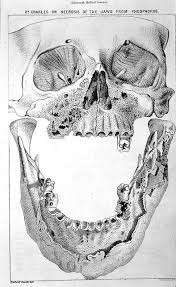
This week we are looking at an old condition, called Phossy jaw, also known as phosphorus necrosis of the jaw, was a fatal occupational disease that affected workers in match factories. It was caused by exposure to white phosphorus fumes. The disease affected the poor the most.
I heard about this in the book I just read called Factory Girl which was about a young girl working in a match factory in London in 1888.
This condition, clinically known as osteonecrosis of the jaw, vanished until it recently reappeared in the 21st century. More about that later.
Back in the 19th century these were the Symptoms:
Pain, swelling, and debilitation
Dental decay
Periostitis
Osteomyelitis
Unbearable abscesses in the mouth
Facial disfigurement
Brain damage
The condition was so bad that it was an epidemic from 1858 to 1906, with around 11% of those exposed to phosphorus developing the disease. The average period from first exposure to diagnosis was five years. It was fatal in about 20% of cases.
The prevention and treatment at the time consisted of the following:
Regulations were put in place in Germany, Norway, and Sweden to reduce exposure
In the UK, manufacturers were required to inform the Medical Officer of Health of any jaw swelling or necrosis
Antibiotics, oral analgesics, and mouthwashes are often effective treatments
Other names: phosphorus necrosis of the jaw, an epidemic of osteonecrosis, and a gangrenous condition of the lower jawbone.
Phossy jaw in the 21st century is now known as bisphosphonate-induced osteonecrosis of the jaw, or “bis-phossy jaw”. It’s a condition that causes jawbone necrosis, similar to the 19th century disease of the same name.
It’s now caused by exposure to Bisphosphonates which are a class of drugs used to treat osteoporosis and some cancers. Bisphosphonates inhibit bone resorption. Intravenous bisphosphonates are associated with a much higher risk of bis-phossy jaw than oral bisphosphonates.
Symptoms exposed bone in the mouth, pain, purulence, sequestration, and osteomyelitis.
When it comes to prevention, patients taking bisphosphonates should inform their dental provider before receiving any dental care.
This week we are looking at Fort Scratchley which is where the big guns of Newcastle are located. It was built in 1882 to defend the city against a possible Russian attack.
However, its guns were not fired in anger until 8 June 1942, when the Japanese attacked Newcastle. Although they were only part of the defence of Newcastle, which included heavy guns at Fort Wallace and Shepherds Hill along with searchlights, radar stations and observation post.
At the time there were some Novocastrians who had mixed feelings about the guns, although during live firing exercises they would crowd the hill to watch the gunner’s blast away at make-shift targets towed behind tugs or other boats.
Because the vibration of the guns would break windows and shake crockery from the shelves residents were given noticed of exercises so they could put fragile goods in safe places.
After World War II the fort was home to 13 Medium Coast Battery RAA, a unit of the National Service Scheme, which was renamed 113 Coast Battery RAA in the 1960s. The army left the site in November 1972.
The 6-in guns were relocated to King Edward Park, 1.3 km (0.8 mi) away, as a memorial. However, after extensive lobbying, they were returned to Fort Scratchley in 1978.
In the first decade of the 21st century the site underwent a multimillion-dollar renovation and reopened as a museum.
In 2014, History show TV presenter Sir Tony Robinson visited the Fort to produce a segment for his show Tour of Duty which was aired in 2015.
In 2015, the Fort’s sole Nordenfelt gun was restored to fully functional condition and is fired on special occasions from its position in the underground casemate
Fort Scratchley is owned by the City of Newcastle (CN) and managed by volunteers from the Fort Scratchley Historical Society.
There is a guide at the gates who can give you a map to explore the Fort.
Visit the Parade and Ceremony Grounds, galleries and museum collections, learn about our historic guns, however, you cannot tour the tunnel.
Guided tunnel tours are led by passionate Fort Scratchley Historical Society volunteers with a wealth of knowledge and provide unique insight into the history of the site.
Individuals, families and groups of less than 12 people can purchase tickets at the Fort Scratchley shop. Schools, clubs or other social groups of 12 or more people should email booking requests through our contact page.
Unfortunately, due to the narrow stairs and hallways, the tour is unsuitable for wheelchairs, walkers, prams and strollers.
There’s also a shop with ice creams and drinks, souvenirs and gifts.
This is week we are looking at the crab-eat fox, also known as the forest dog, wood fox, bushfox or maikong, is an extant species of medium-sized canid endemic to the central part of South America since at least the Pleistocene epoch. Like South American foxes, which are in the genus Lycalopex, it is not closely related to true foxes.
They can be found in the ranges in savannas; woodlands; subtropical forests; prickly, shrubby thickets; and tropical savannas such as the caatinga, plains, and campo, from Colombia and southern Venezuela in the north to Paraguay, Uruguay and northern Argentina at the southernmost reaches of its range.
They can be solitary but can also form couples or even families of up to disturbed by human activities. The species gets its name because during the wet season it searches for crabs on muddy floodplains.
Crab-eating foxes are omnivorous; their diet includes many fruits, vertebrates, insects, amphibians, crabs and other crustaceans, birds and carrion.
The crab-eating fox is predominantly greyish-brown, with areas of red on the face and legs, and black-tipped ears and tail. It has short, strong legs and its tail is long and bushy. The head and body length averages 64.3 centimetres (25.3 in), and the average tail length is 28.5 centimetres (11.2 in).
They reach sexual maturity within 9–10 months. Adult females give birth to one or two litters per year, depending on the climate and the availability of food. The reproductive period most often begins in November or December, and again in July.
The birth of offspring follows after an approximately 56-day gestation, typically in January, February or sometimes March then again from September to October. If giving birth to one litter, they typically give birth in the early spring. The parents are monogamous and raises the pups together, which are weaned at around three months old and become independent of their parents around 5–8 months old.







 Jo-AnneRamplings