A bit about asthma

Hello everyone, today we are looking at a serious medical condition called Asthma, a conditioned I am sure most people have heard of. I have a sister, Jeannie who has had bad asthma since she was very young.

Asthma is a serious and long-term condition that affects 1 in 9 Australians. Sadly, more than 400 Australians die of asthma each year.  

There is currently no cure, but in most cases, asthma can be well managed and people with asthma can live a full life. 

Having asthma means you have sensitive airways. Your airways can become inflamed or swollen when you are exposed to certain things referred to as your triggers.  

There are 3 changes that can happen in your airways when you are triggered. These are your airway walls become thicker from swelling, while filling up with mucous, this causes your airways to feel tight from the mucous on the outside of the airways squeezing.

These changes in your airways make it hard to breathe. You may feel like you are breathing through a very thin tube.  

Asthma affects people of all ages and is common in both kids and adults.  

It’s not something you can grow out of, and just because you don’t currently have any symptoms doesn’t mean that it’s gone. You can be diagnosed with asthma for the first time at any age or stage of life. 

Not all asthma is the same. Through more research we are learning that asthma can mean different things to different people. This means you will need different treatments or medicine to suit your type of asthma. 

The type of asthma you have depends on how your asthma presents and what triggers your symptoms. It can be helpful to describe your asthma by type, also known as phenotype. Your asthma might fall under one or several types and fall across the range from mild to severe.  

There is a dozen different types of asthma they are as follows: 

1. Allergic asthma – caused by allergens such as pollen, dust, mould and some food items.

2. Non-allergic asthma – the cause of your asthma symptoms is not from an allergy trigger like dust mites or pollen. Also called non-atopic asthma.  

3. Thunderstorm asthma – mainly caused by allergies to rye grass pollen, during thunderstorms in certain areas. 

4. Seasonal asthma – asthma that appears at certain times, such aa during Autumn when there is a change in the weather temperatures, or Spring when there is more pollen around and of course Winter due to the cold air, wood smoke and some viral illnesses.

5. Occupational asthma – caused by workplace triggers such as chemicals, animal proteins, fumes, air quality, dust etc. 

6. Aspirinexacerbated asthma – caused as a reaction to taking aspirin or non-steroidal anti-inflammatory medicine, such as ibuprofen. 

7. Exercise-induced (bronchoconstriction)– usually caused by physical activities this, however, can also affect people who do not have asthma. 

8. Childhood asthma – sometimes asthma only happens as a child and then seems to disappear. It can, however, come back later in life. 

9. Adult or late onset asthma – You may have had symptoms previously as a child. Or you may start having symptoms for the first time as an adult when a diagnosis is made. 

10. Nocturnal asthma – symptoms that worsen at night. Possible causes include change in temperature, dust mites, heartburn or sleep cycle. 

11. Mild asthma – very few symptoms, no night-time waking and no flare-ups in the past year. 

12. Severe asthma – also known as brittle, steroid resistant or difficult-to-treat asthma. Describes asthma that is managed with highest maximum inhaled asthma medicines, but asthma symptoms stay uncontrolled. This is despite treating all other factors that could affect asthma control. It can take the form of allergic, eosinophilic asthma or non-eosinophilic asthma.

I can remember when Jeanie was in high school, she was told to run around the sports field during a P E lesson, she told the teacher that she suffered from severe asthma and wasn’t sure if she could do it. He snapped at her to just do it and that she would be fine, she nearly collapsed and was in a right state by the time she was done. She had to go to sick bay and the school rang mum who took one look at Jeannie and went off her head demanding to see the teacher who she tore strips off. I don’t remember if Jeannie ended up in hospital that night, but she may have as she did have to go to hospital a number of times, due to an asthma attack.
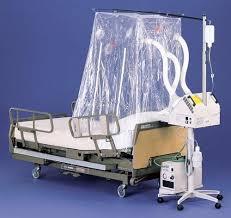
I can remember one night during a bad thunderstorm mum had to ring the ambos as Jeannie was in a really made way, mum told me years later that she was worried if they would make it ok as the ambulance shook due to the strong wind and the rain was extremely heavy. Jeannie was placed in an oxygen tent, she was that bad, it wasn’t the only time she was placed in an oxygen tent due to an asthma attack.

Jeannie never goes anywhere without an inhaler, she would have one in her handbag, in the car, in the bedroom, in the kitchen and if possible in a pocket.

Young Mariners Pool

Ok I came across this book that belonged to my dad and decided to use it for a couple of posts, it is called Newcastle the missing Years by Greg & Syliva Ray.

Back in 1937 opened what was called the Young Mariners Pool what made this pool unique was on the bottom of it was a map of the world.

The pool is said to have been the idea of city engineer L J Price, who was inspired by watching a young boy truing to sail a model boat in the ocean.

With the aid of a geography master from Newcastle Boys High School and a Mr Johnson if the city’s architect department the pool became a personal hobby. They hoped that when completed it would be a big attraction of the beach.

The pool was to be about 20 metres wide, egg shaped, and its continents and islands jutted about 20cm’s above the water. The second stage was the canoe pool which was created by the construction of a large arc-shaped seawall that extended the wading pool into a great circle atop the rocky platform with the depth of the wading pool being controlled by sluice gates.

The canoe pool was completed in 1941, with much debate over whether it was worth building at all.

Both pools suffered from filling with sand causing the council a right headache and costing the council more money to remove. That was until they discovered it was a handy source for covering garbage dumps and filling parks and being used as to dressing on lawns and gardens.

The map of the world was damaged by storms in the 1960’s with parts ending up off Nobby’s breakwater they could be seen for a long time but eventually faded.

This pool is part of The Newcastle Ocean Baths which are a sea bath in Newcastle, New South Wales. The site includes pavilions, pools and promenades. The baths are known for architectural features such as the Striped Classical / Art Deco facade and bleacher seating.

Jaguar

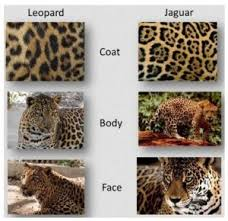
This week’s big cat is often confused with leopards both have similar brown/yellow base fur, with dark rosette markings. It is the Jaguar; however, they have small dots or irregular shapes within the larger rosette markings. They are also stockier and more muscular and have a shorter tail.

They are around 1.5 to 2.5 metres in length (5-8 feet), they are between 70-120 kilos (154-265 pounds. Their life span is 12-16yrs and a litter usually contains up to 4 cubs.

It is thew largest of the big cats to be found in the Americas, they once inhabited between the southern states of the USA to the tip of South America. However, now they are limited to the north and central parts of South America.

The number of Jaguars took a big dive in the 60’s and 70’s with as many as 18,000 killer each year for their coats. Thankfully Jaguar fur is no longer fashionable and there are many organisations trying to protect wild animals.

They prefer to live in forest areas, but they have been spotted around dry woodland and grasslands. Where they live affects their bodies, as in those living in the forest areas are smaller than those living in open areas. The forest dwellers also have a darker colour to them.

Where they live also effects how they hunt, those close to humans’ hunt at night, those more in the wild hunt during the day. They hunt cattle, horses, deer, reptiles, monkeys and fish. They can climb trees but not as good as Leopards can.

They were revered in ancient cultures, the Mayans believed they were the God of the underworld and helped the sun travel under the earth at night.

Hungray

This week we are in Central Europe and the country of Hungary, which is a landlocked country, the capital is Budapest with the Danube River running through it almost cutting the country in half.

It is bordered by Slovakia to the north, Ukraine to the northeast, Romania to the east and southeast, Serbia to the south, Croatia and Slovenia to the southwest, and Austria to the west.

It is believed the Hungarians migrated from Asia over a thousand years ago, how they know this is something I don’t understand.

Its cityscape is studded with architectural landmarks from Buda’s medieval Castle Hill and grand neoclassical buildings along Pest’s Andrássy Avenue to the 19th-century Chain Bridge. Turkish and Roman influence on Hungarian culture includes the popularity of mineral spas, including at thermal Lake Hévíz.

The population is around 10 million, it is an area of around 93,340sq/km, and the official language is Hungarian.

The national flag of Hungary is a horizontal tricolour of red, white and green. In this exact form, it has been the official flag of Hungary since 23 May 1957. The flag’s form originates from national republican movements of the 18th and 19th centuries, while its colours are from the Middle Ages. 

The coat of arms of Hungary was adopted on 11 July 1990, after the end of communist rule. The arms have been used before, both with and without the Holy Crown of Hungary, sometimes as part of a larger, more complex coat of arms, and its elements date back to the Middle Ages.

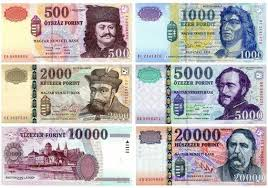
The forint is the currency of Hungary. It was formerly divided into 100 fillér, but fillér coins are no longer in circulation. The introduction of the forint on 1 August 1946 was a crucial step in the post-World War II stabilisation of the Hungarian economy, and the currency remained relatively stable until the 1980s.

The politics of Hungary takes place in a framework of a parliamentary representative democratic republic. The prime minister is the head of government of a pluriform multi-party system, while the president is the head of state and holds a largely ceremonial position.

Hungary’s national symbol appears to be an eagle or falcon of some kind, but it’s actually an entirely fictional mythical bird known as a “Turul”. The Turul comes from an ancient Hungarian legend.

The national flower is the Tulip, but they are the largest producer of the tulip in the world. 

Week 38 of 2024

DENNI’S BIRTHDAY SHE IS 12 TODAY

Had a rough night very restless and cold I got up at 4.53am I was just too cold. It is 8 degrees and my BGL was 4.0

I am so tired that I am going to close my eyes before I do the online shopping.

Sandy and Denni came over so I could give Denni her birthday present.

I also closed my eyes for another hour between 2 & 3pm.

It has been a cold day.

Tim paid his tax bill but didn’t wait for me to help and didn’t put in the new reference number so he will have to ring the ATO tomorrow about that.

Steps: 2,103

Had a good night, woke once to pee then again at 5am just before the alarm went off. It is a cold morning with the temp being 6 degrees, my BGL is 4.5.

I have a lot of pain in my upper back and my chest. When Sandy called in to drop off my meds, she picked up from the chemist for me I had her rub Vicks into my upper back, and it has helped.

I mostly cold day, managed a 1hr nap, having even just a one-hour nap helps me.                           

Steps:2,365

Had a good night, didn’t wake once, slept through to the alarm went off at 5am.

It doesn’t feel as cold this morning, the temp is 8 degrees and my BGL was 4.8

It is a warm day; I am feeling shaky today. I managed a 1.5hr nap in my armchair.

Spoke to Sam about not taking meds of a morning she said she didn’t forget but didn’t want to take it to see how she did at school. I said ok she could have told me that.

Steps: 2,698

Had a rough night took me a while to settle down but once I did, I slept ok.

It is a cold start to the day at 7 degrees my BGL was 4.8

I had to change into my warm PJ bottoms for a while due to the cold. By 11am I was back in the 3/4 light weight pants.

Jess bought me Macca’s for lunch.

I tried to have a nap but only managed 20-minutes, I just started to feel restless.

Still managed to stay up till 9pm.

Steps: 3,060

Had a better night, woke twice I think, I also woke with a headache this morning. It is 11 degrees and my BGL was 4.8.

At 6am the power went out I checked the circuit breakers flicked a couple of switches, and some power returned but no lights. After messing around with things for a little while I rang Tasha and discovered she had the same issue, so it is just waiting for it to come good now.

We didn’t lose power in the kitchen but when I made my milkshake the blender was only operating at half speed. It was good enough to make the milkshake though.

By 11am I had to change into shorts.

By midday I had a lot of pain in my left shoulder.

Steps:3,414

Had a so-so night was restless between 11.40 and 12.40 so got up and used the powerfit and watched something on You Tube before going back to bed and sleeping till the alarm went off at 5am. It is 10 degrees and my BGL was 5.0.

Sue drove me to Aldi and Millers this morning it was a nice outing. I love how much we laugh when we are together. I wore a skirt over my shorts along with matching earrings and necklace.

It is a really warm day the temp is 24 degrees.

Tim won’t be home till around 11.30pm then he has to get up at 7am as he is working tomorrow.

Steps: 4,183

SKYLAR’S BIRTHDAY SHE IS 4 TODAY

Had a good night, slept well but when I got up at 5am I found myself just standing there, not with it so I went back to bed for an hour. When I got up at 6am I felt awake and with it.

I sent a birthday message to Skylar via Sandy’s phone, at 11.30am Sandy called in to see if I had a cake tin, I don’t she didn’t look or sound good and told me to spray with Glen 20 which is a disinfectant spray, so I did.

Tim arrived home around 6.30pm.

Steps: 3,989

Gateshead New South Wales Australia

Growing up I lived in the suburb of Lake Macquarie called Gateshead we moved to Gateshead before I started school and when I did go to school, I sent to Gateshead public school starting in Kindergarten and ending with year ten, for me going through to year twelve wasn’t possible I simply didn’t have the smarts to do so.

Gateshead is a suburb of the City of Lake Macquarie, Greater Newcastle, New South Wales, Australia, 12 kilometres from Newcastle’s central business district on the eastern side of Lake Macquarie. It is part of the City of Lake Macquarie East ward and is home to a number of primary and high schools and a private hospital. 

It is possible that Mr W.T. Verge, the first surveyor of the area, named the suburb in 1876. The name would have been taken from the town of Gateshead in the county of Tyne and Wear, England. It’s on the southern bank of the River Tyne opposite Newcastle upon Tyne.

                                    What Gateshead High School looked liked when I was there

The first streets were Goundry, Jamieson, O’Brien, Sydney,    Casey, Oxford, Heshbon and Church Streets. The first street we lived in was Schroder Avenue this was a two-bedroom house and when I was about nine or ten, we moved to Flame Street a three-bedroom house and when I was seventeen, we moved to Bean Steet which was a four-bedroom house. All the properties were subsidised government rentals, my parents stayed at Bean Street till their deaths.  

In 1877 Mr. W.T. Verge produced a design for the town. Little development occurred during the nineteenth century. By 1910 there were only three houses. Drinking water from Merewether was brought by Mr. Jennings. John Young – the slaughter man delivered meat and bread. Groceries were delivered by Sheedy’s of Adamstown in a horse and cart. Papers, mail and food could also be obtained from Charlestown.

By 1929 there were seven houses at Gateshead. During the 1930’s Gateshead was mainly a collection of two to three acre farms. Water was used from tanks or taken from springs which were once located at Bulls Garden Road, Running Creek and old Belmont Road. These springs now form part of the creek. Although the Pacific Highway was completed during the early 1930’s most Gateshead roads remained unpaved. A small shop began selling produce from Milroy’s farm.

                                This building was still there when I was in primary school

In 1934 the Emergency Relief Scheme constructed drains and cleared streets to provide work during the Depression. During the war there was an army camp on the site of the present Gateshead High School.

In 1945 the Housing Commission took possession of some houses (located on Schroder Avenue and the Crescent) which had been used by the Army during the war. Seventy more houses were completed and occupied between 1948 and 1950.

By 1945 one hundred and thirty adults were residing in the town.

By 1961 the town had a sewage system.

El Alamein Pt 2

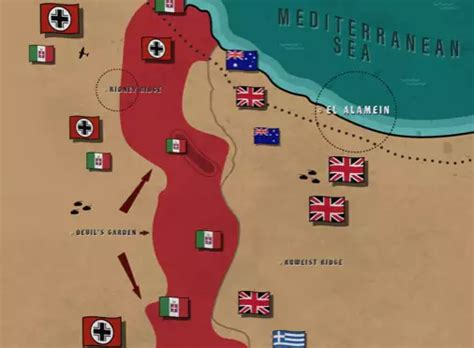
Time to go back to El Alamein were in the middle of 1942 there was great Axis pressure on the desert fighters. It was in June 1942 that Rommel was finally able to capture Tobruk with 35,000 prisoners of war.

At the end of June, the Australian 9th division was ordered back to Egypt, arriving in July. The following battles prevented Rommel from advancing further into Egypt also even though he gained ground this took him further away from his supply lines in Libya. The Allies bombing of the German supply ships caused him stress, he was worried about the lack of petrol. In October he was planning a 12-day battle but only had enough fuel for 11 days.

It was under a full moon on 23 October the Allies let lose a massive bombardment against Rommel’s lines, at 9pm fire from 900 medium and field guns lit up the night sky. The front extended about 60 kilometres running North to South.

There were three phases of the battle with the first two days being devoted to preparing the way for the Eighth Army to break through the enemy line. The next seven days and nights saw crumbling operations, with the final phase saw the Allies break through and Rommel retreating.

Although there was only around 14,000 Aussies involved out of the 220,000 strong Allies their contribution was considered a crucial one.

The main task of the Aussies was to form a strong flank in the northern sector they were required to draw Axis fire on the northern flank while other divisions broke through on the south. The fighting was fierce and at times hand to hand with many amazing, courageous acts as soldiers stormed the enemy post dying will doing so.

The 2/48th battalion received four posthumous Victoria Crosses during the war.

Rommel wrote that the British resisted desperately, with rivers of blood being poured over miserable stirps of land.  

Another miserable but important strip of land was near the railway and was known as the “saucer”. This position was under attack for several days and was defended by the 2/24th & 2/28th and reinforced by a British tank regiment and a Rhodesian battery of anti-tank guns.

The climax of the battle of El Alamein came at the start of November with the start of operation Supercharge which succeeded in storming through enemy lines.

By the end of 1942 even though Aussie’s were still under fire the prospects were much improved compared with the start of the year. The Japanese had withdrawn from Papua and the Yanks were fighting back on Guadalcanal. Northern Australia was now a secure military base for the Aussies and the Yanks.

Winston Churchill said after the battle od El Alamein “his is not the end, it is not even the beginning of the end, but it is, perhaps the end of the beginning”.

Cheetah

This week’s big cat is the fastest animal on Earth, the cheetah is unique in many ways, it kinda looks like a large muscular greyhound with its sleek body and long thin, powerful legs.  An adult can run up to 113km/h or 70 mph.  They have large nasal passages allowing them to breathe easy while running.

They like to live in dry areas like the bush lands of Savanah and the semi-deserts, they feed on gazelles, impala, wildebeests and zebras. They like to hunt during the day, following a herd from a distance then selecting and old, an injured or a young victim, it will chase its victim and usually catches it on its first attempt. Its powerful jaw muscles enable it to tightly hold and suffocate its prey.

Most males prefer to live alone and will claim and make an area as their own.  Their paws are more like dogs then a cats being narrow and hard padded and non-retractable like a cats which allows for better grip while running.

They can be as long as 1.5 metres or 3.5 feet, as tall a 1 metre or 3 feet they weigh about 45-65 kilos or 99-143 pounds, they have a life span of 12-14 years, females usually have between 2 and 4 cubs at a time.

Unlike other big cats they don’t roar but purr, they also make high pitched yelps and barks as well as moan and bleat. They have a tawny to creamy white or pale buff fur that is marked with evenly spaced, solid black spots. The head is small and rounded, with a short snout and black tear-like facial streaks. 

Cheetahs are in the “vulnerable” category and are at risk of extinction in the wild. They face a number of threats, including losing their prey and habitat to human activity, human-animal conflict, and illegal animal trade. Less than 100 animals live in East Africa, less than 2,000 in Sudan, and fewer than 500 live in Northeast Africa. The total number of cheetahs in the world is estimated to be approximately 6,517 mature individuals.

Czech Republic

This week we are in Central Europe which is the region lying between the defined areas of Eastern and Western Europe. It includes the countries of Estonia, Latvia, Lithuania, Poland, Slovakia, Czech Republic and Hungary.

So, this week we will start with the Czech Republic, also known as Czechia, is a landlocked country in Central Europe. Historically known as Bohemia, it is bordered by Austria to the south, Germany to the west, Poland to the northeast, and Slovakia to the southeast. 

The country was once known as Czechoslovakia but in November 1989, the Velvet Revolution ended communist rule in the country and restored democracy. On 31 December 1992, Czechoslovakia was peacefully dissolved, with its constituent states becoming the independent states of the Czech Republic and Slovakia.

It has a population of around 10.7million, the capital is Prague, and the official language is Czech.

The koruna, or crown, has been the currency of the Czech Republic since 1993. The koruna is one of the European Union’s eight currencies, and the Czech Republic is legally bound to adopt the euro in the future. The official name in Czech is koruna česká.

The Czech National Bank, is the central bank and financial market supervisor in the Czech Republic, headquartered in Prague. It is a member of the European System of Central Banks.

The flag of the Czech Republic is the same as the flag of the former Czechoslovakia. Upon the dissolution of Czechoslovakia in December 1992, the Czech Republic kept the Czechoslovak flag while Slovakia adopted its own flag. The first flag of Czechoslovakia was based on the flag of Bohemia and was white over red. It was created in 1920, shortly after the founding of the first independent Czechoslovak state. The white, red, and blue colors are both symbolic and historic.

The coat of arms of the Czech Republic is divided into two principal variants. Greater coat of arms displays the three historical regions—the Czech lands—which make up the nation. Lesser coat of arms displays lone silver double-tailed lion in red shield. The Czech coat of arms dates back to the 13th century. It consists of a shield divided into four squares. The top left and bottom right squares are red, with a white, double-tailed crowned lion. The lion is the symbol of Bohemia and signifies power and sovereignty.

Its national bird is I think the female eagle, and its national flower is the rose and the lion is the national animal.

It is considered a relative safe country with violent crime low but petty crime exists as it does in all countries.

Many Czech’s speak English, German and Russian.