Week 41 of 2024

I slept well again, straight through the night till the alarm went off. A nice morning with a temp of 14 degrees, my BGL was 4.8.

Another warm day with a temp of 26 degrees.

Tim bought another whipper snipper.

Sue brought over some Kiwi fruit she bought and didn’t like.

Daylight savings will start tonight.

Steps:4,110

I slept well again, straight through the night till the alarm went off. I was a little confused as the clock in the bathroom said 6am but my phone said 5am and I thought I had set it to the right time before going to bed. I was wrong I put it two hours forward not one silly me.

It is a nice 11 degrees this morning I am in shorts and my BGL is 4.7.

Tim and I went to Lake Fair so I could go to Big W and the Reject Shop as well as Woolies. By the time I got home I was exhausted. I bought a pair of bike shorts, and a pyjama set both size 16 and both fit. I have asked Tasha if she could go and get me another set in a different colour.

I turned the air con on around 1pm as it was that hot and I was able to turn it off around 6pm.

Steps: 5,422 

I had another night where I slept through, I like those nights today is going to much cooler then yesterday with a temp of 18 degrees, my BGL was 4.9 this morning.

Summer walked down and posted my letters for me.

Micheal picked up Summer just before 3pm

I sorted out my Christmas jewellery and gave Sandy a bag of things I was only going to bin to see if her girls want any of them.

Stedps:4,496

I had another good night woke only once to go to the loo and straight back to sleep.

It is a coldish, wet morning with the temp being 13 degrees my BGL is 4.3

I am not doing good; my upper body will not stop moving and using the computer is difficult.

Tim home by 12.15pm, he had me order pizza and he picked it up on his way home. He also ate most of it.

It has rained on and off all day.

Steps: 5,102

I had another good night sleeping straight through, this morning Tim got up when I got up, he has a busy day ahead of him starting with work followed by two or three afternoon medical appointments.

Tim didn’t get home till 5.30pm. the diabetic specialist has changed his medication. He also has to have a blood test and a bunch of scans done oh is arm, thumb and abdomen.

I am having a restless night along with having a pain in the gut, so I got up to use the powerfit.

Steps:7,757

I had a rough start to the night took me a while to settle but once I did, I was ok and slept till the alarm went off. It is a pleasant 14 degrees, and my BL was 5.0

It turned out a pretty warm day, I changed into shorts after returning from the shops.

Tim and I went to the shops, he went and had his blood test and booked into to have his scans done. He has to go to Belmont as Warners Bay are fully booked for when he wanted.

Tim is working tonight and tomorrow night.

Steps: 6,472

I had a pretty good night, slept pretty much all night, I did wake when Tim got home and spoke to him for a few minutes before going back to sleep.

It is a cold and wet morning with a temp of 15 degrees.

Tim left for work around 11am he will not be home till after midnight. When it stopped raining, I walked up and checked the letter box.

Steps: 7, 598

Epilepsy

This week I am going to share a little about the condition Epilepsy, my nephew Dawson has this condition.

Epilepsy happens as a result of abnormal electrical brain activity, also known as a seizure, kind of like an electrical storm inside the head. And because the brain controls so much, a lot of different things can go wrong. Suffers may have periods of unusual behaviours, feelings and sometimes loss of awareness.

Epilepsy may occur as a result of a genetic disorder or an acquired brain injury, such as a trauma or stroke. Other brain related causes are things like meningitis, encephalitis or a brain abscess. Then there are brain diseases such as Alzheimer’s. It is also believed that alcohol or drug use as well as high or low blood sugar levels.

In fact, in around half of all cases the cause is unknown. It may take years after an injury for seizures to develop.

During a seizure, a person experiences abnormal behaviour, symptoms and sensations, sometimes including loss of consciousness caused by fainting. It isn’t uncommon to see the suffers having rhythmic muscle contractions or muscle spasms. Some people say they experience an aura or the sensation of pins and needles.

Also common: seizures, amnesia, anxiety, depression, headache, sleepiness, staring spells, or temporary paralysis after a seizure.

After a seizure the person may feel really tired.

Most people have none or only a few symptoms between seizures.

Epilepsy is usually treated by medication and in some cases by surgery, devices or dietary changes.

You should see a doctor this is your first seizure, or you have repeated seizures, you have seizures more often than is normal for you, you are not sure if you’ve had a seizure or if you have a diagnosis of epilepsy but feel like your medicine is not helping.

You should seek medical attention after a seizure if you are injured, if you are pregnant or have diabetes.

Next week I will post about the different types of seizures.

Transport in Newcastle from way back when

                                                           Early Buses

This week will be looking at early public transport in Newcastle.

In 1940 transport in Newcastle was at a crossroads, many people relied on public transport in the form or trams, trains and buses due to the depression in the 1930’s private cars were rare.

Horse drawn vehicles were still pretty common and with the fuel shortages and rubber for tyres being in short supply during the second world war. Many businesses went back to using horse drawn vehicles, however, it became harder to get feed for the horses as the war dragged on.

A horse drawn ambulance

Prior to the construction of various road projects connecting the outer western suburbs of Newie crossing the Hunter River including the Stockton Bridge numerous ferry services, both privately run and publicly operated.

Early Stockton Ferry Warf 

Shuttling people and cars across the Hunter River to link the area of Stockton with the rest of Newcastle during the 19th and 20th centuries, the ferry runs from Market Street Wharf to Stockton.

                    People waiting for the ferry


Newcastle first had trams from 1887 until 1950, when the final line, the Waratah line, was replaced by buses. At its peak, the system ran to Speers Point and West Wallsend.

                        An early tram

The first railway in Australia was built by the Australian Agricultural Company in 1831. The railway was an inclined plane railway from the Company’s A pit in Church Street Newcastle to Newcastle Harbour.

                        Newcastle Station 

The first government operated bus route commenced on 22 September 1935 to Mayfield. On 10 June 1950, the final tram routes were withdrawn. On 2 February 1983, the Stockton ferry service was taken over from a private operator.

                        The first buses

                            Early Buses

Cars have been super important in Australia’s history. They first came to Australia in the early 1900s and back then not many people could afford them. In the 1950s, Australia started making its own cars, and that made a lot of jobs and made cars easier to get.

                A Model T on display at the Newcastle Museum 

I have not been able to find when the first cars arrived in Newcastle.

Puma

This week’s big cat is the puma which is also known as the cougar, panther or mountain lion that can be found in Cananda, North America and parts of South America. Although they are not considered big cats

The puma has a small has a small, broad head with small round ears and long hind legs and a tail with a black tip, it has a powerful body.

An adult puma may have either a grey or reddish-yellow in colour, it’s fur is fawn-grey tipped with reddish-brown or greyish in colour. It has no spots which is one of the main differences between a puma and a jaguar. They can also be black in colour.

While on the hunt, the puma uses the strength of its powerful back legs to lunge at its prey with a simple leap while it is still running. They like to keep under cover while stalking its prey, when it pounces it will grip its preys neck breaking the neck or dragging it to the ground.

They like to hunt alone by day or night and will hide its food in dense undergrowth returning to it over several days. Large prey like elk may provide food for over a week. It can also attack cows and horses; this is the main reason man hunts them.

They can’t roar. They instead produce low-pitched hisses, growls, purrs, as well as chirps and whistles, many of which are comparable to those of domestic cats.

Pumas are rarely dangerous for humans, though attacks are more common in human-dominated landscapes. For that reason, there are more attacks in the United States than in Patagonia, where pumas tend to live in wild, unspoiled places. Attacks on pets and livestock (for instance sheep) might happen in some areas.

Estonia

We are still in Central Europe or maybe we are Northern Europe as my refence book says Central, but the internet says Northern Europe anyway the country is Estonia

Estonia, a country in Northern Europe, borders the Baltic Sea and Gulf of Finland. Including more than 1,500 islands, its diverse terrain spans rocky beaches, old-growth forest and many lakes. It also has a high ratio of meteorite craters to land area.

Formerly part of the Soviet Union, it’s dotted with castles, churches and hilltop fortresses. The capital, Tallinn, is known for its preserved Old Town, museums and the 314m-high Tallinn TV Tower, which has an observation deck.

The official language is Estonia; however, English is spoken widely enough that, in practical terms, learning Estonian isn’t necessary it has a population s 1.4 million.

The national flag of Estonia is a tricolour featuring three equal horizontal bands of blue at the top, black in the centre, and white at the bottom. The flag is called sinimustvalge in Estonian.

The colours of the flag are said to symbolize: Blue: the colour of faith, loyalty and devotion, the blue sky, sea and lakes of Estonia. Black: tragic past of Estonian nation, the traditionally black jacket of the Estonian peasant during past times. White: the striving towards enlightenment and virtue.

The coat of arms of the Republic of Estonia is a golden shield which includes a picture of three left-facing blue lions with red tongues in the middle, with golden oak branches placed on both sides of the shield.

The national animal is the wolf due to it being a survival-expert, that respects it’s their family and territories, thus making it the best national animal.

The people of Estonia chose the cornflower as a national symbol in 1968, but the flower was a folk emblem for many years prior to that. In Estonia, cornflowers grow mostly in rye fields, so Estonians have long associated the flower with their staple grain.

On 4 May 1992, limestone was declared to be Estonia’s national stone. Estonian limestone – grey and dull at first sight, rather it is multi-coloured and multi-faceted, ranging from pure white to crimson, from seaweed green to chocolate brown.

It was the first country to adopt an online political voting system! 99% of Estonian state services are available online.

The official currency in Estonia is the euro- abbreviated to the currency code EUR. 1 Euro is subdivided into 100 cents. The Estonian kroon was circulated in Estonia between 1928-1940 and 1992-2011. Estonia joined the European Union in 2004 and the Eurozone in 2011.

Between 1 January and 14 January 2011, the kroon circulated together with the euro, after which the euro became the sole legal tender in Estonia. The kroon was subdivided into 100 cents.

Estonia is a parliamentary republic. Its prime minister, who is the head of government, is nominated by the president and approved by parliament. He or she is in charge of the executive power vested in government. The president, who is the head of state, is elected by Parliament or electoral college for 5 years.

Among the Baltic countries, Estonia has the happiest people with half of the Estonian population reported to always being happy or at least most of the time, about a third feel happy sometimes, about a ten percent are rarely happy, and only around 3 percent saying they are never happy,

Week 40 of 2024

After I went back to bed, I settled ok and slept till the alarm went off.

Tim is going with Jess to Sydney today she has people to pick up from the airport and Jess hates Sydney and Sydney’s traffic.

It is 14 degrees and my BGL was 5.0

Asked both Tasha and Sue to go to Woolies for me, Sue went not sure about Tasha as yet. Yes, Tasha went as well.

Tim and Jess arrived home around 2.15pm.

Steps:5,892

I slept in because I left my phone in the lounge-room, it was 7am before I woke up. I woke up with a heavy head and not feeling like I am all with it.

The temp is 15 degrees and my BGL is 5.0, it is also cold and wet this morning.

It warmed up by 10.30am.

The girls walked down posted my letters for me and Sydney vacuumed for me.

I have very little motivation today 

I am extremely tired but can’t sleep

Steps: 5,783

I slept well, it did take me a while to settle down but once I did, I was fine and slept till the alarm went.

It is 9 degrees and my BGL was 4.2

Kathy dropped the girls off at 8.35, she arrived only a few minutes after Tim left for work.

Had a phone call from podiatrist they have changed my appointment from Thursday to Friday.

Dawson arrived around 1pm for a visit.

Tim rang at 2pm to let me know that he will be late, he arrived home at the same time Micheal arrived to get the girls.

Tim now working all week, so will need to find someone to take me to the podiatrist on Friday.

Steps: 4,190

I slept well, fell asleep fast and didn’t wake till the alarm went off. It is 13 degrees and my BGL was 4.8

I was watching TV when Sue arrived, I was surprised to see her, her phone is restricted till she pays something off her bill. She didn’t want me to worry as she couldn’t reply to me messages. I asked her while she was here if she could drive me to the podiatrist, she said she would.

Steps: 4,535

I slept well again and woke up feeling good a feeling I like. It is 12 degrees, my BGL was 4.9 and the ground outside is wet.

No rain and not hot nor cold just a nice day.

Sandy and Temika came over so Temika could use my computer to do something with her banking for work that she wasn’t able to do on her phone.

Tim went to the dentist to get a tooth filled cost him $600

Steps: 5,659   

I slept well again and woke up feeling good although I am cold very cold that I had to turn the heater on. It is only 7 degrees and my BGL was 3.4.

Tim left at around 8am he said he should be home by 9pm tonight.

It turned out a warm day.

Sue drove to the podiatrist and then to the Warners Bay Plaza to get a few things. We also checked the P O Box.

Tim arrived home at 1pm and left again at 3pm. He will be back around 9pm.

Steps: 4,511

I slept well again but woke up feeling heavy headed and not fully with it. It is 18 degrees my BGL was 4.8 it is supposed to be a warm day.

We ended p with a nice warm day with temp of 28 degrees. Tim did a lot of yard work took him over 3hrs.

Yesterday while at work he hurt his right arm around the elbow where he had surgery after his accident, and he still has a lot of pain in it and no strength.

I didn’t exercise today so my steps are low. Steps: 1,220     

COPD

This week we are taking a look at COPD, this is a serious condition, my dad suffered from it. So, what is it, well COPD stands for Chronic obstructive pulmonary disease (COPD) is a common lung disease causing restricted airflow and breathing problems. It is sometimes called emphysema or chronic bronchitis.

In people with COPD, the lungs can get damaged or clogged with phlegm. Symptoms include cough, sometimes with phlegm, difficulty breathing, wheezing and tiredness.

Smoking and air pollution are the most common causes of COPD. People with COPD are at higher risk of other health problems.

COPD is not curable, but symptoms can improve if one avoids smoking and exposure to air pollution and gets vaccines to prevent infections. It can also be treated with medicines, oxygen and pulmonary rehabilitation.

Some websites say there are four stages of COPD but most said there are three.

The first symptoms of COPD tend to come on slowly and can be very mild. In the early stages, you may not have symptoms all the time and you may find there is very little or no impact on your life or independence. You may cough up mucus in the mornings or feel more short of breath than usual if you walk quickly or exert yourself. You may be prescribed a bronchodilator inhaler, and you should get yearly flu shots.

As COPD progresses, you may gradually notice symptoms almost every day and find it harder to do your normal daily activities such as gardening, hanging out the washing, or carrying groceries without feeling short of breath. You may also experience a repetitive cough, and increased phlegm production which is often thick and white or brownish in colour. Feeling tired and getting more chest infections or taking longer to recover from an illness can also be experienced in the moderate stage of COPD.

This is often the stage where you may first become aware of symptoms and seek treatment. Your doctor may prescribe a bronchodilator medication if they haven’t already, along with recommending breathing exercises techniques like pursed lip breathing and coordinated breathing can help you exert yourself less during physical activities and maintain an active lifestyle.

You may also be offered pulmonary rehabilitation which my dad did and he found it helpful, it is designed to give those with COPD the tools to manage their condition and reduce the severity of their symptoms, thus giving them a better quality of life.

In severe COPD, you will likely experience symptoms most of the time. You may find it very hard to walk upstairs or across the room without feeling very short of breath, feel tired more of the time despite resting and cough frequently with a lot more mucus. It is common to feel frustrated with the constant need to clear your mucus from your airways and to experience frequent chest infections that take several weeks to recover from.

At stage 3, lung function has significantly decreased. As the walls of the air sacs in the lungs continue to weaken, it becomes more difficult to take in oxygen and remove carbon dioxide while exhaling.

Previous symptoms are more intense and more noticeable: shortness of breath has worsened, coughing or wheezing occurs more frequently, and you may produce thicker mucus.

Some experience any or all off of the following symptoms

Extreme fatigue or weakness

Feelings of confusion or forgetfulness

Swelling of the ankles, feet and legs

Tightness in the chest

More frequent chest infections

You may also experience what are called flare-us when these flare-ups happen the symptoms suddenly become more severe and lung function dramatically changes. When this happens, you may feel greater amounts of mucus clogging your bronchial tubes and sudden constrictions of the muscles around your airways.

Flare-ups are the main cause of COPD suffers end up in hospital, during a flare-up suffers will experience

Breathlessness or shortness of breath

Increase in coughing attacks

Wheezing or whistling noises when you breathe

Increase of mucus

Fatigue or sleep problems

Cognitive impairment including confusion, depression, or memory lapses

In what is called stage 4 of COPD, lung function is very low, symptoms worsen and become more persistent. Shortness of breath and chest tightness occur with everyday activities, and it becomes a big effort just to breathe.  Resulting in the suffered having to go to hospital more. Suffers may also notice a crackling sound to their breathing and an irregular or fast heartbeat. This stage is also called the ends stage.

Hunter Street, Newcastle NSW,Australia

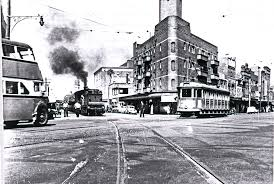
When I was young it was considered to be a big deal to go into town to go the movies or to do some shopping and by in town I mean into Newcastle mainly Hunter Street.

So, this week I will write a bit about Hunter Street’s history and present.

Hunter Street is a major road in the Newcastle central business district, in New South Wales. The street, formerly three separate thoroughfares, extends from Pacific Street in the city’s east, to Selma Street in Newcastle West and since 2008 has been the focus of community-led creative enterprises and projects.

Hunter Street runs in the vicinity of an early nineteenth-century track known as Wellington Street that extended from Watt Street (formerly George Street) in the east to Perkins Street in the west. The strip was renamed Hunter Street by Henry Dangar in 1823 and by the mid nineteenth-century commercial and residential properties had been built on most addresses east of Perkins Street.

By 1900, Hunter Street had stretched a long way and had 26 hotels operating along the street. In 1887the first steam trams came into operation by 1898 the first restrictions on vehicular traffic drawn by animals were introduced

Drainage problems and raw sewerage necessitated the sealing of Hunter Street, first carried out with wooden blocks, concrete and asphalt.

After the opening of the Newcastle Steelworks in 1915, Newcastle became increasingly suburban, and Hunter Street developed as a destination for commerce and retail. The size and extravagance of Newcastle’s early twentieth-century department stores demonstrates the popularity of city shopping.

Established as the city’s main street for commercial and retail activity, Hunter Street entered a period of severe decline after World War II. However, it recovered over time.

Hunter Street developed as the commercial and civic hub of the region. Along its spine were the pubs, banks, insurance houses, shops, department stores, and cooperative societies that formed the civic and cultural life of Newcastle.

In 1989 an earthquake hit Newcastle and due to the damage making Hunter Street inaccessible for two weeks.

The in 1990 there was a recession which coupled with record youth unemployment, brought the emptying of Hunter Street to a terrible low in 2008, with the vacancy rate at 20% and chronically vacant properties beginning to deteriorate.

In recent years there have been efforts to clean up and bring life back into Hunter Street, as I haven’t been there myself I can’t say what it is like now.