Woman’s work during war times

First up there is a new post over here:

https://jamfn.blogspot.com/2025/02/a-sister-like-you.html

Now for today’s post.
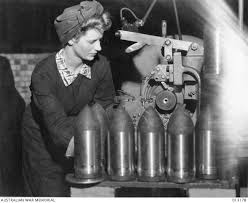
During the second world war saw many women working in wartime heavy industries in many countries including Australia, here in Newcastle hundreds of women were recruited to replace the men off fighting.

Around 500 men from Lysaght’s workshops alone were gone off fighting, the new spinner shop opened by Lysaght’s to make protective streamlined cowlings for aircraft propeller hubs, they were made of aluminum and had to be manufactured to extremely fine   tolerances.  This was a brand-new enterprise for Newcastle, those working there were taught by having to recondition 60 English made spinners for De Havilland Mosquito bombers, this work continued as a combination of local made and imported parts and by the time the plant finally wound up, they had made 900 spinners for the Mosquitoes, Beauforts and Lincoln aircraft.

The girls had to learn every job so that absences didn’t slow things down, they also had to wear scarves to keep their hair out of the machines, although there were accidents and if someone’s hair got caught in something like a drill chuck, the machine would have to be shut down and they would be lucky if they weren’t scalped.

In fact, women many countries worked in a variety of roles, including in the Australian Women’s Army Services (AWAS) and the Women’s Auxiliary Australian Air Force (WAAAF). They performed essential duties that were previously considered to be men’s work. 

They operated anti-aircraft batteries, searchlights they also worked with range-finders. Women also worked in intelligence roles and defensive roles. They drove transports and plotted coordinates
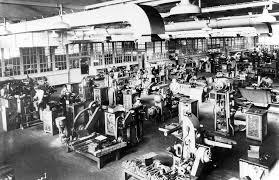
Women’s contributions to the war effort helped to advance employment opportunities for women after the war, also their work during the war led to the establishment of the Women’s Employment Board in 1943.

Women’s work during the war led to women receiving 75% of the male wage for the same job.
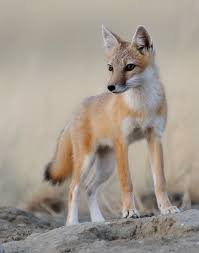
Swift Fox

This weeks’ fox is the swift fox.

The swift fox is a small light orange-tan fox around the size of a domestic cat found in the western grasslands of North America, such as Montana, Colorado, New Mexico, Kansas, Oklahoma and Texas. It also lives in southern Manitoba, Saskatchewan and Alberta in Canada, where it was previously extirpated. 

It has pale yellow fur with brownish ears and a fluffy tail with a black spot at the base of its tail and at the tip. Swift Foxes are characteristically nocturnal animals, although they are sometimes active during the daytime as well. The leave their dens at night to hunt and rarely move far from their dens.

They are solitary hunters, and their activity varies by season. They are nocturnal in the winter and become more diel in the summer.

Like other foxes they are monogamous and likely pair for life, unless a mate dies.

Swift foxes are charismatic with their alert, intelligent personalities and incredible physical abilities. The species earned its common name from early Western settlers impressed by its speed and agility—the swift fox has been clocked at nearly 40 mph.

They typically live 3-6 years but have been known to live up to 14 years.

The pups are born blind their eyes remain closed for up to 15 days they are dependent on their mothers for the first few weeks of their lives. They are weaned at about 6 to 7 weeks old and stay with their parents for about 6 months.

The gestation period is about 50 to 60 days with the average litter size is 4 to 5 pups. Young males become reproductively mature at one year of age and young females usually start breeding when they are two years old.

They are omnivores and eat a variety of foods, including insects, grass, reptiles, and carrion.

Israel

Ok after a bit of thought I am kicking of countries in the middle east with Israel.

Israel, officially the State of Israel, is a country in Western Asia. It is situated in the Southern Levant of the Middle East, and shares borders with Lebanon and Syria to the north, the West Bank and Jordan to the east, the Gaza Strip and Egypt to the southwest, and the Mediterranean Sea to the west.

The capital is Jerusalem, the population was 9.7 million in 2023. The official language is Hebrew.

It was called British Palestine in 1920 because that portion of the Ottoman Empire was given to the British to manage after World War I.

Both Jews and Arabs have claimed it as theirs alone. From a purely historical perspective, “Israel” predates “Palestine” by more than a millennium. But, with the Jewish people then dispersed from their homeland, “Palestine” became home to a substantial Arab population, again for more than a millennium

It is the homeland of the Jewish people, it is also the birthplace of Christianity, it also contains Islam’s third holiest site – the Dome of the Rock, and the Baha’i Gardens in Haifa.

Did you know voicemail technology was developed in Israel, or that there are more than 135 beaches.

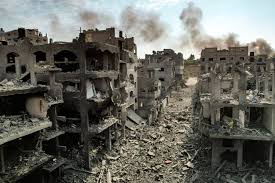
An armed conflict between Israel and Hamas-led Palestinian militant groups has been taking place in the Gaza Strip and Israel since 7 October 2023.

This is the fifth war since 2008 in the Gaza–Israel conflict, and the most significant military engagement in the region since the Yom Kippur War in 1973.

If like me, you don’t what or who HAMAS is well here is the answer. The Islamic Resistance Movement, abbreviated Hamas, is a Palestinian nationalist Sunni Islamist political organisation with a military wing known as the Al-Qassam Brigades. It has governed the Israeli-occupied Gaza Strip since 2007. 

The Israeli flag is white with a blue Star of David in the middle and two horizontal blue stripes. The flag was adopted on October 28, 1948, five months after Israel declared independence. The meaning goes beyond its visual elements. The Star of David at its center is a symbol of Jewish unity and connection to faith. The blue stripes represent the rivers of Babylon, evoking the longing for the Jewish homeland as described in the Bible.

The new Israeli shekel is Israel’s official currency. The value of one new shekel is equal to one hundred agorot. Since the year 1986, the Israeli Shekel has served as the country’s primary unit of currency.

The official religion is Orthodox Judaism, as I am sure most people would know, however, Israel’s laws protect the freedom of religion for all people, or so they say, how true that is I do not know.

The country’s basic laws define it as a Jewish democratic state. 

Judaism has been influential in Israel since the country’s founding. It plays a major role in the country’s political and state institutions. 

Each city and area of government has a religious council that regulates Jewish practices. 

Israel has religious courts that regulate personal status matters. 

Naturally everyone knows how dangerous it is to visit this country right now.

Week 5 of 2025

TIM’S BIRTHDAY HE IS 64 TODAY

I had a sleep in, I got up at 4.45 to pee and due to how tired I felt I decided to take my tablets and when the alarm went off at 5am I turned it off and stayed in bed till 5.30.

It is a cool morning with a temp of 17 degrees, my BGL was 5.5

Sue has been feeling sad today as it would also be Mick’s birthday, and it has made her sad.

I gave Tim the folder with the messages I asked people to write to him for his birthday, he has read through it and seems happy with it a bit surprised so many wrote something.

It has been a hot day reached a top of 29 degrees.

Kathy and the girls came over to see Tim and they gave him three small garden gnomes which he has placed around his garden out the back.

Here we are at another Monday, and it’s supposed to be a hot one, it is currently 23 degrees, and we are looking at a top temp of 32 degrees.0

Tim took Sam for a driving lesson they were gone a couple of hours.

By 2pm it was 33 degrees and by 4pm I was starting to feel unwell due to the heat. I have a headache and a runny nose and generally feel not so good.

It is 11.30pm and I just woke up drenched in sweat, Tim had turned the air con off when he came to bed. I won’t turn it back on, but I will use the fan in it and see how that goes.

Steps:7,661

Well, it’s Tuesday and we are in for a scorcher, it is currently 25C and we are looking at a top of 38C. My BGL was 4.8

Sue took me to have my hearing checked only to find out there were not opened. I had to reschedule I now go on the 13 Feb.

The temp reached 40C

Tasha’s boarder and friend’s dog was accidently locked outside by Tasha and got sunstroke and had a seizure. Tasha felt so bad she rushed the dog to the vets, that cost $2,500 and she asked Tim if he would loan her $1,600 and he said no.

We had a storm around 7pm but it wasn’t much of a storm and didn’t last long

Steps: 8,480

Here we are at another Wednesday, and it is much cooler then yesterday, it is currently 21C and we are looking at a top temp of only 24C. My BGL was 5.1

Kathy dropped the girls of around 8.45am, Tim is now working this afternoon.

Sue came over around 9.30am and I was able to give her the dress I bought her as well as the top, she really liked the dress, and it looked so nice on her.

Around 1pm Dawson turned up he was here till around 2.30pm, he said he might be back tomorrow to talk to Tim about getting help finding another car.

I have had a rough day my body has been moving a lot all damn day and I am truly exhausted.

Steps: 4,843

Well, it’s Thursday again and thankfully it is going to be another cool day, it is currently 20C with a top of 26C. My BGL was 5.1

It has been a horrible day weather wise, very humid and I don’t like that.

Sandy dropped in to see me she told me she was able to reject the house she was offered in Windale, due to its location.  It was too close to Michelle, and it is a known drug area.

Sandy had emailed the case worker for Landon & Skylar as well as other people with her concerns with the location and it was because of those people she was able to reject the house as they were the ones to contact housing saying the house wasn’t acceptable.

Dawson came over this afternoon to have a chat with Tim about Tim help him find another car.

Tim picked up our new car, it is a Mazda 6, silver in colour and a station wagon.

Steps: 8,140

It is Saturday and the first day of February, I had a 50-minute sleep in as when I got up at 5am I still felt tired so went back to bed setting the timer on my phoned for an hour but after only 50-minutes I felt awake, so I got up.

It is currently 21C and we are looking at a top temp of 27C, with the humidity being 90%

Tim has gone out for the day to his work’s Christmas party, yeah in February, he will be gone all day.

Sandy walked over to see me; she had Skylar with her, she told me that Dave’s car isn’t running and will need to be towed.

Tim got home around 5pm, he said he had a good time.

Steps 11,627

Hello February

First up you will find my hodgepodge post here: https://jamfn.blogspot.com/2025/01/hodgepodge-on-wet-day.html

Next you can find my getting to know me post here: https://jamfn.blogspot.com/2025/02/getting-to-know-me.html

Here we are at the start of February, so I am, kicking off the month with some facts about February in Australia:

  • Seasons

In Australia, February is part of summer, which runs from December to February. 

  • Birthdays

People born in February are said to be unique, creative, and generous. Their birthstone is amethyst, and their birth flowers are violet and iris. 

  • Holidays

Some holidays celebrated in February in Australia include Lunar New Year, Valentine’s Day, and the anniversary of the Apology to the Stolen Generations. 

  • Historical events

Some historical events that happened in February in Australia include:

  • 1793: John Macarthur established Elizabeth Farm at Parramatta 
  • 1798: Matthew Flinders explored the Furneaux Islands in Bass Strait 
  • 1851: Edward Hargraves discovered gold near Bathurst, which started the first Australian gold rush 
  • 1990: Carmen Lawrence became the first female Premier of Western Australia 

In February in Australia, a key special day is the “National Apology Anniversary” on February 13th, which marks the anniversary of the apology to the Stolen Generations; additionally, depending on the lunar calendar, Lunar New Year may fall in February, which is widely celebrated in the country. 

Other notable days in February in Australia may include:

  • Lunar New Year: Celebrated by many Asian communities in Australia, the date varies based on the lunar calendar. 
  • World Day of Social Justice: Observed on February 20th. 
  • Ovarian Cancer Awareness Month: The entire month of February is dedicated to raising awareness about ovarian cancer. 

In my own family we have four birthdays in the month starting with my daughter Natasha on the 14th, then my granddaughter Summer on the 21st, next is my great-nephew Daemon on the 22nd and lastly we have his sister my great-niece Thea.

Canada’s National Anthem

This week we are looking at the national anthem of Canada, the song is called “O Canada”, it was originally commissioned by Lieutenant Governor of Quebec Théodore Robitaille for the 1880 Saint-Jean-Baptiste Day ceremony; Calixa Lavallée composed the music, after which French-language words were written by the poet and judge Sir Adolphe-Basile Routhier.

While “O Canada” is the national anthem of Canada, “God Save The King” is their Royal Anthem. Both songs have multiple verses, though typically only the first verse is sung. The English lyrics of the Royal Anthem are traditional.

The French lyrics were written by Sir Adolphe-Basile Routhier, a poet and judge. 

The English lyrics were written by Robert Stanley Weir, a lawyer and recorder of Montreal. 

“O Canada” became Canada’s official national anthem on July 1, 1980. 

When it comes to the song being sung in schools, it is provincially mandated, but students do not need to sing if a parent or guardian requests that they be exempt.

Many Indigenous peoples view ‘O Canada’ as a harmful reminder of the historical oppression that Indigenous peoples face. 0

It is often sung at sporting events involving Canadian teams, and on Canada Day. English lyrics by Robert Stanley Weir

O Canada! Our home and native land!
True patriot love thou dost in us command.
We see thee rising fair, dear land,
The True North, strong and free;
And stand on guard, O Canada,
We stand on guard for thee.

(Refrain)
O Canada! O Canada!
O Canada! We stand on guard for thee,
O Canada! We stand on guard for thee.

O Canada! Where pines and maples grow,
Great prairies spread and lordly rivers flow,
How dear to us thy broad domain,
From East to Western sea!
Thou land of hope for all who toil!
Thou True North, strong and free!

(Refrain)

O Canada! Beneath thy shining skies
May stalwart sons and gentle maidens rise,
To keep thee steadfast through the years
From East to Western sea,
Our own beloved native land,
Our True North, strong and free!

(Refrain)

Ruler Supreme, Who hearest humble prayer,
Hold our dominion within Thy loving care.
Help us to find, O God, in Thee
A lasting, rich reward,
As waiting for the Better Day,
We ever stand on guard.

(Refrain)

French lyrics by Sir Adolphe-Basile Routhier

O Canada! Terre de nos aïeux,
Ton front est ceint de fleurons glorieux!
Car ton bras sait porter l’épée,
Il sait porter la croix!


Ton histoire est une épopée
Des plus brillants exploits.
Et ta valeur, de foi trempée,


Protégera nos foyers et nos droits,
Protégera nos foyers et nos droits.


Sous l’oeil de Dieu, près du fleuve géant,
Le Canadien grandit en espérant.
Il est né d’une race fière,
Béni fut son berceau:
Le ciel a marqué sa carrière
Dans ce monde nouveau.
Toujours guidé par sa lumière,
Il gardera l’honneur de son drapeau,
Il gardera l’honneur de son drapeau.


De son patron, précurseur du vrai Dieu,
Il porte au front l’auréole de feu.
Ennemi de la tyrannie
Mais plein de loyauté.
Il veut garder dans l’harmonie,
Sa fière liberté;
Et par l’effort de son génie,
Sur notre sol asseoir la vérité,
Sur notre sol asseoir la vérité.


Amour sacré du trône et de l’autel,
Remplis nos coeurs de ton souffle immortel!
Parmi les races étrangères,
Notre guide est la loi;
Sachons être un peuple de frères,
Sous le joug de la foi.
Et répétons, comme nos pères,
Le cri vainqueur: “Pour le Christ et le roi,”
Le cri vainqueur: “Pour le Christ et le roi.”

Official lyrics of “O Canada”

English lyrics

O Canada! Our home and native land!
True patriot love in all of us command.*

With glowing hearts we see thee rise,
The True North, strong and free!

From far and wide,
O Canada, we stand on guard for thee.

God keep our land glorious and free!
O Canada, we stand on guard for thee.

O Canada, we stand on guard for thee.

She would be 85 today

My mum would be 85 today and words cannot really express how sad I am feeling that she isn’t here for us to celebrate, if she was here, we would all be at her place, and we would either order pizza for lunch or ger KFC.

I would have sent a reminder about her birthday to all her grandchildren and asked them to pop over and see her during the day and most of them would have done just that.  My parents had 18 grandchildren including Landon and Skylar and 19 great-grandchildren.

Family was very important to both mum and dad and the importance of family they passed on to their children.

Even though she has been gone 4yrs in April I still have times when I pick up the phone to call her, I spoke to mum every day for something like 20yrs sometimes two or three times a day.

Today it is raining so I can’t go to the cemetery as it would be a soaking mess but when it fines up, I will get someone most likely Sue to take me over.

Mum wasn’t just my mum she was my best friend and the loss of her and dad has ripped a large hole in me and I often feel lost without them around. I do believe they are watching over me and the rest of their family.

Newcastle’s Role in World War 2

Well, here we are at another Wednesday and this week we will step back to World War 2 for a little more about Newcastle, New South Wales role in Australia’s war effort.

The Japanese knew damn well how important Newcastle’s steel industry and coalmines would be for this small nation to be able to fight and defend itself, as without steel for ships, planes, tanks and weapons any country would struggle to survive a major conflict.  

When the BHP opened its steelworks in 1915 the city became a cornerstone of the country’s defence as well as a target for attack by an enemy.

It seems that in the 1920’s Japan studied Newcastle and its surrounds with intense interest. They believed it was important to seize the Hunter’s coalfields and cutting them off from Australia’s defence force.

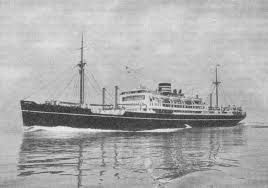
They also conducted a sustained and intensive investigation of the topography and economic installations of the Newcastle area.  Most of this information was gathered by officers on Japanese merchant ships that visited Newcastle for coal. On almost every visit to Newcastle the Japanese officers would spend most of their time ashore, driving around the area in chauffeur-driven hired cars. They made maps and took an innumerable amount of photos, it was the shipping companies who paid for these trips and presumably were reimbursed by their government.

Australia’s intelligence people noted that almost all the Japanese officers visited a Japanese owned milliner’s shop, the shop closed up when questions were asked but soon after a Japanese owned fruit shop opened. It was owned by a well known Japanese agent who had a reputation of wealth and leisure and the dingy understocked fruit shop didn’t seem to go with the man.

Between 1924 and 1926 many Japanese ships went out of their way to pass as close as possible to Newcastle paying special attention to the beaches.

In the 1930’s well before the war many of our leading politicians and industrialist believed a conflict was inevitable. When BHP chief Essington Lewis visited Japan in the 1930’s and saw how the Japanese were putting a lot of energy and resources into arming itself for war, he was alarmed and on returning home set about preparing the BHP for a major munitions manufacturing company.

This man was hugely influential, and the federal government appointed him director of munitions meaning he managed a large part od the country’s industrial war efforts.

Newcastle’s steelworks and associated factories were destined to play a massive part in the nations defence, a huge array of weapons, parts and tools were produced in Newcastle with thousands of people being employed.

The challenges the city’s factories faced as they tried to replaced previously imported items were huge, but they managed to produce and churn out items that required the most demanding accuracy. It was a tribute to the hard work and dedication that a relatively novice workforce was able to turn its hand to this new industry with such success.

BHP learned to make the special steels needed for armour and armour-piercing weapons, other firms made steel helmets and other items. The firm of Lysaght made parts for tanks used by Australian forces, they also mass produced the Wollongong designed Owen sub-machine gun, as well as floating pontoons, portable aircraft hangers, army machetes and the precision-made “spinners” for the propellers of Mosquito aircraft.

Newcastle was one of the few locations to be attacked by  the Japanese.

Tibetan Fox

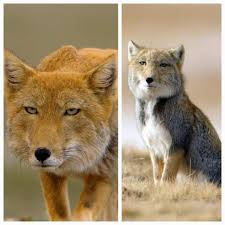
This week we are looking at The Tibetan fox, also known as the Tibetan sand fox, is a species of true fox endemic to the high Tibetan Plateau, Ladakh plateau, Nepal, China, Sikkim, and Bhutan, up to elevations of about 5,300 metres.

These foxes have a soft and dense rufous coloured coat from the crown, neck, back to the lower legs. Its muzzle is narrow, its cheeks, flanks, upper legs and rumps are grey, and its bushy tail has white tips.

They primarily prey on plateau pikas, followed by rodents, marmots, woolly hares, rabbits, small ground birds and lizards. It also scavenges on the carcasses of Tibetan antelopes, musk deer, blue sheep and livestock. Tibetan foxes are mostly solitary, daytime hunters as their main prey, pikas, are diurnal.

Like some foxes they are monogamous, and they won’t change their spouse unless one of them passes away.

They can live up to 10 years in ideal conditions. However, most foxes die from natural causes or are hunted by humans before they reach five years old.

There are no major threats to the species at present, although poisoning of pikas (a major prey item) in much of the Tibetan plateau poses a concern. Nonetheless, there is no evidence that the species is currently undergoing a decline that would warrant listing in a threatened category.

After a gestation period of 51 – 53 days, Tibetan Sand Foxes give birth to a litter of 3 – 6 young in a den.

The Middle East

Ok I am moving away from Africa and venturing into the Middle East, this is a geopolitical region encompassing the Arabian Peninsula, the Levant, Turkey, Egypt, Iran, and Iraq. The term came into widespread usage by the United Kingdom and western European nations in the early 20th century as a replacement of the term Near East.

The Middle East is considered to include countries like Egypt, Iran, Iraq, Israel, Jordan, Kuwait, Lebanon, Saudi Arabia, Turkey, United Arab Emirates, and others, totalling around 17 countries. Although the exact number depends on the definition used. Some sources include the Arabian Peninsula, the Levant, and parts of North Africa within the Middle East.

Egypt is traditionally considered to be part of the Middle East. It is a regional power in the Middle East, North Africa, and the Muslim world. I included it in the North African Countries.

However, when you consider that the official language of Egypt is Arabic. And the official religion of Egypt is Islam. As well as the fact that some say the majority of Egyptians today identify as Arabs linguistically, while others say that there is a growing minority reject this.

Roughly 60% of the population in the Middle East is under 25 years old. The term “Arab” generally refers to people who speak Arabic as their first language. The majority of Arabs are Muslims, but the majority of Muslims are not Arabs. The words Islam and Muslim are derived from the Arabic word salam, which means peace.

The Middle East is the birthplace of Christianity, Islam, and Judaism. It is, therefore, a region of great diversity. While Arabs compose the majority of the Middle East’s population, the region is also home to Berbers, Kurds, Jews, Persians, Turks, and a vast array of other ethnic and religious minorities.

The Middle East is about 3.82 million square miles or 9.9 million square kilometres It makes up about 6.2% of the Earth’s land.

The largest country is Saudi Arabia, which is about 800,000 square miles or 2.1 million square kilometres and the smallest country is Bahrain, which is about 295 square miles or 765 square kilometres.

The Middle East is known for its vast deserts, including the Sahara Desert and the Arabian Peninsula’s “Empty Quarter.

The highest point is Mount Damavand in Iran, which is 18,406 feet or 5,610 meters tall and the lowest point is the Dead Sea, which is 1,388 feet or 423 meters below sea level.

Next week we will start looking at different counties.