Week 50 of 2025

Hi all, I hope everyone is well.

I woke to find Tim asleep on the lounge he didn’t get home till 2am so as I was getting up, I told him to go to bed for a while. I had a good night slept for 8hrs.

It is 25C at 5.30am

We left around 9.30am and arrived at the motor inn at 2.20pm, we stopped at Denman bakery, and I bought a cheese & bacon sausage roll and Tim bought a cheese and bacon pie, and he didn’t like it. The sausage roll was pretty good not the best one I have had but far from the worse.

The motor inn is nice the room looks

It is 28C at 2.30pm

We went to the RSL for dinner, we got roast beef and veggies, I liked it, we were back at motel by 7pm.

I realised that I forgot a comb, my blood test kit, a USB wall plug, brought the charger cables.

I am so tired, but I can’t settle down.

Steps:7,771 = 3.9 k’s or 2.4 miles.

I am up at 5am as per usual, had a rough night, took ages for me to settle. Then when Tim came to bed, he kicked me three times in the left leg.

It is 17C at 5.30am in Dubbo.

Tim said something about putting the walker in the boot first, I asked if it could go in last as he will need to get it out each time I want to walk any distance. He sounded snappy with me when he said NO.

When we arrived at the observatory, he decided to put the walker in the back seat as it was easier to get in and out of the car.

We arrived at Orange around 1.30 pm, when Tim found the place, we were booked into, it wasn’t suitable as there were too many stairs and no lift. So, he cancelled the booking but when he tried to contact Booking.com he couldn’t work it out and the only phone number we could find was in the USA. When we tried to find somewhere else it wasn’t easy most affordable places had no vacancies or were too expensive.

So, we now at Cowra for 4 nights, the room here is ok, although I cannot get into the shower.

The whole Orange accommodation saga made me feel tense and upset as for some reason I felt like it was somehow my fault even though Tim hasn’t done or said anything to make me feel that way.

Steps: 7,490 = 3.8k’s

I slept well once I got to sleep, managed a good 8hrs when the alarm went at 5am I got up took my medication and went back to bed till 6.20am. I then got up had a wash applied make-up and moisturised my arms as per usual, before I got dressed. Tim is still asleep, the temp at 6.30am 12C.

After Tim got up, we went to Maccas for breakie, after that went to tourist info centre before going to check out war cemeteries and the POW camp. After that we drove out to check out a dam.

We stopped and bought pizza for tea; however, I forgot to say I wanted BBQ sauce not pizza sauce.

Our new motel room has a disability bathroom, and it is the only room that has one, we have not been charged extra.

The temp got up to 36C

I had a nice hottish shower, my left arm is very sore.

Steps: 8,455

I slept really well, got a good 7hrs and 50 mins of sleep I am up at 5am as per usual, and have washed and dressed. It is currently 15C or 50F Tim wants to visit the Japanese Gardens this morning after that I am not sure what we will do.

At 7.30am it was 20C in Cowra and 20C in Warners Bay.

The Japanese gardens were so peaceful and lovely, I managed to walk around it. As we left the gardens it was 31C.

After that we went to the shops before returning to the motel, the other things we want to check out are only opened on Thursdays. By 2pm it was 36C

At 5.40pm I was so tired I started to cry in frustration, Tim suggested I lay down for a bit, so I got changed for bed and I am doing that.

Steps: 7,011

I ended up sleeping all night although I did wake on and off, I had 9hrs of sleep and got up at 5am when the alarm went off. After my wash I dressed, although I couldn’t find a washcloth, they were there yesterday arvo I don’t know what Tim did with them. Tim has had the radio going through his phone all night.

I did have 2 bottles of Midori yesterday but that shouldn’t have contributed to how I was feeling.

We went and checked out the peace bell, then we went to the rail heritage centre, both were interesting, but the rail place was not disabled friendly.

We returned to the motel for lunch and while here it started to rain, so we are not going out again.

No need for the air con on this arvo, I think I will be having another early night as I’m feeling tired at 6pm, I also have an earache.

At 6pm it is 22C

Steps:7,837= 4k’s

BLAIN’S BIRTHDAY HE IS 20 TODAY

I slept well, had 9hrs of sleep, at 5.30am it was 15C, my body is moving a lot, and it is exhausting.

Tim got up at 6.30am and we left the motel by 7.15am.

Since we were driving through Bathurst Tim decided to drive around the Mount Panorama Circuit, which was cool, for those who don’t know this is where the Bathurst car race is held, this race is a big deal in Australia.

I had a phone call from Centrelink about my DSP claim; they wanted to know if Tim’s compo claim only involved him and not me as well.

We arrived home at 3.30pm, Blain was at his mums and came to see us and I was able to give him his birthday gift, a $25 Visa Gift Card.

Steps: 11,715 = 5.9k’s or 3.7 miles

Saturday and it’s been a busy morning Tim is back at work I had a good night slept for 7hrs &20mins.

I have been busy since getting up, cleaned the kitchen, vacuumed out put the clothes on to wash all before 6.30am.

Sue came over to show me her new haircut, and she drove me to then shops to get a few things. Her hair looks so good, it’s much shorter so will not be so hot on her neck.

I am going to see if Tim will cut my hair tomorrow.

Steps: 9,892 = 5k’s or 3 miles

Monkey’s

Today’s topic is monkeys, so what is a monkey, well a monkey is a tailed primate, excluding lemurs, tarsiers, and lorises. They are different from apes because apes do not have tails. Monkeys have narrow chests and specific skeletal features that distinguish them from apes. Most monkey species, of which there are nearly 200, reside in tropical forests and move on all four limbs.

Monkeys are divided into two main groups: Old World and New World monkeys. Old World monkeys belong to the family Cercopithecidae, while New World monkeys are platyrrhines, comprising five families. These groups are distinguished by their noses: New World monkeys have broad noses with wide septums and outward-facing nostrils, while Old World monkeys have narrow noses with thin septums and downward-facing nostrils.

Most monkeys have good problem-solving skills and can learn from experience, but they do not reach the cognitive levels of great apes. Monkeys are highly social animals that live in troops.

Monkeys are found in the wild in many countries across Africa, Asia, and the Americas. While they are most prevalent in tropical rainforests, some species have adapted to live in other environments, including snowy mountains and urban areas.  

How long do they live well that differs depending on the species, their environment (wild vs. captivity), and other factors. However, in general in the wild most live between 15-30yrs, baboons, can live up to 40yrs.

Monkeys in captivity often live much longer than their wild counterparts due to protection from predators, disease, and competition for food. It’s common for monkeys in zoos or research centres to live well into their 30’s or 40’s.

Monkeys are highly adaptable omnivores, and their diet can vary significantly depending on the species, their habitat, and the season. While the image of a monkey eating a banana is iconic, it’s not a primary food source for many wild species, and their diets are much more diverse.  

They are opportunistic eaters, and their diet reflects their ability to adapt to their surroundings and take advantage of any available food source. They eat a large variety of fruits and not just bananas, they also eat berries, mangos and figs to name a few. They also eat nuts and seeds, some are able to crack open hard nuts and seeds.

Many monkeys, especially larger species like howler monkeys and colobus monkeys, have specialized digestive systems to process fibrous plant material.  

They get crucial protein from a variety of animal sources, such as invertebrates like ants, termites, caterpillars, and spiders, as well as small vertebrates like lizards, frogs, bird eggs, and even small birds and rodents.  

The Nullarbor


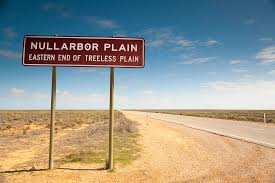
This week we are looking at the area of Australia called The Nullarbor Plain, which means “no trees” in Latin, is a vast, arid region in southern Australia with a rich history, both for Indigenous Australians and Europeans. 

Historically, it was seasonally occupied by the Mirning and Yinyila Indigenous peoples, who knew it as Oondiri, meaning “waterless”.

Europeans first charted the coast in the 17th century, but the interior remained largely unexplored until Edward Eyre’s epic crossing in 1841. The Nullarbor has since been a site of pastoralism, railway construction, and even nuclear testing, shaping its modern landscape and infrastructure.  They have a deep and continuing connection to the Nullarbor. 

The name “Nullarbor” was coined by surveyor Edmund Delissern in1865.  Pastoralists established stations along the telegraph and railway lines, and small settlements developed around these. 

The Nullarbor was used for nuclear testing in the 1950s, leading to the displacement of Indigenous populations.  The Trans-Australian Railway   completed in 1917, facilitated travel and trade across the Nullarbor. 

The Eyre Highway. A road across the Nullarbor, was completed in 1976, connecting South Australia and Western Australia. The highway is a 1,664-kilometre, it is signed as National Highways 1 and A1, it forms part of Highway 1 and the Australian National Highway network linking Perth and Adelaide.

Driving directly across the Nullarbor Plain (from Norseman to Ceduna) takes approximately 12.5 hours of non-stop driving. However, most travellers allocate 2-3 days for the journey to allow for stops at attractions, wildlife viewing, and enjoying the scenery. 

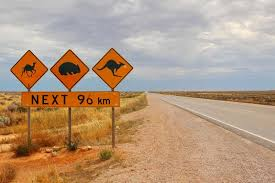
When driving across the Nullarbor people need to beware of trucks as there are triple-decker road trains which have brutal slipstreams, so slow down or pull over to let them pass. Also at night the road. turns into a marsupial rave party at night, from camels, kangaroos, dingoes and occasionally wombats. With no phone service, no other travellers, and emergency services hours away, getting into an accident could leave you stranded without help.

When camping Nullarbor, keep an eye out for scorpions, bird-eating spiders, eastern brown snakes, and death adders. Avoid setting up camp near bodies of water, high vegetation, rocks, fallen logs, or under trees. Also, remind curious kiddos that sticking hands in holes in the ground, under rocks, logs, or trees could disturb a creepy crawly!

If you run into trouble, do not leave your vehicle to search for help. Drones, planes, foot searches, and car trackers will see a vehicle and find you.

The area is known for its vast cave systems, some of which contain fossils and provide insights into the region’s past climate. 

The Nullarbor continues to be a place of both natural beauty and human activity, with tourism and transport playing a significant role. 

Alice Springs NT Australia

I have spent most of the day trying to decide what the topic of today’s post would be, and I ended up picking the town of Alice Springs.

Aussies commonly refer to Alice Springs as “The Alice” or simply “Alice”.

This is one town I would like to visit one day my parents visited the Alice and enjoyed the visit, I do remember mum & dad telling me that when the bought wine from a bottle shop, they were told to make sure it was covered so it couldn’t be seen by looking in a window and to get in their car and drive to a different area. This was because some of the local aboriginals would break into the car if they saw grog inside and if they were seen placing alcohol in the car and walking away the car would be broken into.

Alice Springs is a remote town in Australia’s Northern Territory, halfway between Darwin and Adelaide, both 1,500km away. It’s a popular gateway for exploring the Red Centre, the country’s interior desert region. Its 1872 origin as part of the Overland Telegraph Line (linking Darwin and Adelaide) is preserved in the vintage buildings and equipment at the Alice Springs Telegraph Station Historical Reserve.

It has an estimated population of around 28,922. This is based on the Alice Springs Town Council LGA profile, which was last updated in January 2025. The town is the major settlement in Central Australia and a significant population centre in the Northern Territory. 

The population of Alice Springs is an estimate because it is based on projections and statistical modelling rather than a direct head count. The Australian Bureau of Statistics (ABS) uses various methods, including census data and estimated resident population (ERP) figures, to calculate population numbers, but these are subject to revision and may not perfectly reflect the actual population at any given time, especially in smaller areas like Alice Springs. 

Alice Springs was established in 1872 with the construction of the Alice Springs Telegraph Station, part of the Australian Overland Telegraph Line (OTL) connecting Adelaide to Darwin. It was originally named Stuart, but the settlement near the telegraph station was later renamed Alice Springs in 1933. The name Alice Springs was given by W.W. Mills, after Alice Todd, wife of Sir Charles Todd, who was instrumental in the construction of the telegraph line. 

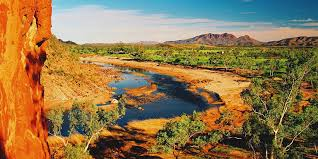
The Arrernte people are the traditional owners and custodians of Alice Springs, also known as Mparntwe in the Arrernte language. They have a deep and enduring connection to the land, dating back tens of thousands of years. The Arrernte have stories and significant sites related to the creation of the landscape, including the MacDonnell Ranges.

Alice Springs is famous for its unique location in the heart of Australia, its strong Aboriginal culture and art scene, and its stunning natural landscapes, including the MacDonnell Ranges. It’s also known as a hub for exploring the broader Red Centre region and for its outback character.

Alice Springs faces a complex combination of social and crime-related issues that contribute to a perception of danger. These include high rates of alcohol-related violence, property crime, and domestic violence, along with concerns about youth crime and the impact of past policies. While the town has a diverse population and attracts tourists, these issues have led to increased fear and anxiety among residents. 

While Alice Springs faces significant challenges, it’s important to acknowledge that it is also a place of cultural significance, with a diverse population and a strong community spirit. Efforts are underway to address the underlying issues and improve safety and well-being for all residents. 

Hippo’s

This week we are looking at hippo’s aka hippopotamus they are what some refer to as stout and naked-skinned. They are semiaquatic artiodactyl mammals, possessing three-chambered stomachs and walking on four toes on each foot. While they resemble pigs physiologically, their closest living relatives are the cetaceans. They are sometimes referred to as hippopotamids.

Their hooves are different from other ungulates, as they are more like fingernails. Their feet are webbed, which helps them move about in water.

They are found in the heart of Africa’s wetlands. These semi-aquatic creatures live in and around lakes, rivers, and grassland swamps. There are two species of hippopotamuses, the common river hippopotamus and the smaller pygmy hippopotamus.

Common river hippopotamuses are native to sub-Saharan Africa. They live in waterways like rivers, lakes, swamps, and estuaries. These semi-aquatic mammals can be found in various African countries, with populations in both East and West Africa.

Pygmy hippos, unlike their larger relatives, are found in the tropical rainforests and swamps of four West African countries: Côte d’Ivoire, Guinea, Liberia, and Sierra Leone. Their slightly smaller bodies have adapted to allow them to easily navigate the vegetation in rainforests.

Hippos must keep their skin wet with mud or water for most of the day to stay hydrated. While they don’t have sweat glands, they secrete a red substance called blood sweat. This helps protect their reddish-brown, thick yet sensitive skin from sunburn and keeps it moisturised. Despite their need to spend most of their time in the water, hippos can’t swim. Instead, they run or walk along riverbeds. When they’re rafting—napping while submerged in water—a subconscious reflex keeps them near the water’s surface.

They are formidable creatures and considered the second largest land mammal, smaller only than elephants. The average male hippo can weigh around 3,200 kilos (7,000 pounds, they’re typically around 3.5 metres (11 feet) long and 1.5 metres tall (5 feet).

While adult pygmy hippos stand about 75–100 cm (2.46–3.28 ft) high at the shoulder, are 150–175 cm (4.92–5.74 ft) in length and weigh 180–275 kg (397–606 lb). Their lifespan in captivity ranges from 30 to 55 years, though it is unlikely that they live this long in the wild.

Hippos have bulky, barrel-shaped bodies, short and stout legs, large heads, and enormously powerful jaws. Their jaws can open to 180 degrees and their bite is three times stronger than a lion. They have incredible sharp teeth that can grow up to 50cms long, which are used for eating and defence. The common hippopotamus has four webbed toes adapted to support them on land and in water. On the other hand, pygmy hippos tend to have less webbing and slightly longer legs. A hippo’s eyes and nostrils sit on top of its head, which helps it stay mostly submerged in water while breathing and keeping an eye on its surroundings. Although hippos can’t breathe underwater, they can hold their breath for up to five mins.

Hippos exhibit strong social bonds and typically live in groups of anywhere between 40 to 200, known as bloats, pods, or herds.

They are territorial creatures and use their dung to mark their territory. Male hippos have been known to flick their dung around to assert dominance. This dung is actually important to their aquatic ecosystems, as it transfers vital nutrients from land to water, allowing insects, plants, and other microorganisms to flourish. 

They play a crucial role in the ecosystem it inhabits in other ways, too. These herbivores graze on the vegetation surrounding wetlands, helping prevent overgrowth, which can clog water sources, disrupt the natural flow of water, and threaten the biodiversity of aquatic ecosystems. 

Healthy wetlands act as effective carbon sinks and remove excess carbon from the atmosphere. By maintaining the balance of these delicate ecosystems, hippos help mitigate the effects of climate change.

Hippos are facing several threats to their survival as a species. Global conservation efforts are critical to ensuring the well-being of the species and the ecosystems it inhabits. 

Week 51 of 2024

I had a good night slept straight through again, it isn’t hot yet, but it is somewhat sticky.

It is 21 degrees at 6am and my BGL is 4.4

Did a small load of washing and Tim hung it outside to dry.

Tim has taken Jess and Sam up to the square to do some shopping, Jess didn’t want to deal with the parking issue.

It got up to 30 degrees today, I have done all the Christmas cards will post the last of them tomorrow.

5,421

I had a good night slept straight through again, and yet again it is a somewhat sticky morning.

It is 23 degrees my BGL was 5.5, it got to a bloody hot 33 degrees here, I even had to turn the bedroom air con on to help cool the house down.

I managed to walk down and post the last of the Christmas cards, now watch me receive cards from people I didn’t send one to.

Steps:6,107

I had a good night slept straight through yet again, it is a pleasant 20 degrees but we ae in for a scorcher supposed to get to 36 degrees, my BGL was 6.5, why so high I do not know

I just went to pick up my glass for a drink and knocked it over, all cleaned up know.

The temp did get to 36 around 2pm I turned the air con in the bedroom on as well.

Tim home early, his bus broke down and screwed up his day.

I told Sue that she wants on Christmas Day she can come and have lunch with me and Tim, she said she will see how she feels on the day.

I am having trouble sleeping so I got up at 10.30pm and will now go back to bed it is now midnight.

Steps: 8,105

After I went back to bed, I slept well till 5am. It is a much cooler morning then yesterday, only supposed to get a top of 22 degrees today. It is currently 20 degrees, with a cool breeze blowing through the house.

My BGL is 5.1

Today is the last day of school for the year, it is raining so I have to wear my rain poncho.

I can’t decide what I want for lunch but since it is Wednesday, I will wait and see if Tim asks me to order pizza. He did so good thing I waited.

Steps: 5,149            

I had a good night, up dressed and looking forward to the day. It is a nice 18 degrees and my BGL was 4.9.

Sue took me to the plaza so I could get a few things. On the way home we stopped at Sandy’s to pick up a couple of empty containers of Sue’s. Sue asked if she had heard about the test results and since Sandy didn’t want me to know about the tests, she got pissy and cracked the shits.

Sue let me know Sandy said sorry for getting the shits and all is ok between them. 

Tim is off today but he is going to the works Christmas drinks, Gary next door drove him.

Tim has set up the new TV, with help from Sam.

I have been in a lot of pain all day.

Sandy came over to see me this evening she walked here with Josh as her bodyguard, Josh is Temika’s boyfriend. She explained about the tests she had done last week.

Steps 5,820

I had a good night, up dressed and looking forward to the day. It is a nice 16 degrees and my BGL was 4.9.

Sue called and I gave her money from Tim she was really touched that he gave her money, he did this as she is always driving me around for appointments and shopping.

Tim is working tonight, he will leave around 4pm and should be home around 10pm

It has been a nice day, I received a couple of packages, that should be all.

Sue rang me this afternoon telling me that lunch at Dave’s is tomorrow not Sunday both me and Sue said he told us the 22nd he said he thought Saturday was the 22nd

This has upset me as Tim is working tomorrow and will not be able to attend.

I did an online order from Liquorland, Sue will pick it up for me as the only store that had all I wanted in stock is the one just down from her place.

Tim home early, he walked in a t 8pm 2hrs earlier than expected.

Steps:4,980

I had a good night, up dressed and looking forward to the day. It is a nice 14 degrees and my BGL was 4.9.

Sue drove me over to Dave’s for lunch, it was a nice outing lunch was nice and Dave and Leigh gave me a $50 gift card and Sue gave me a new top, a diary a small calendar and an ice towel to have around my neck on hot days. I really like the ice towel it does feel nice around my neck.

It has been a really hot day with a temp of 34 degrees Celsius or 93 degrees Fahrenheit.

Steps:1,555