Zebra

                                                                    PLAINS ZEBRA

Hi everyone, yesterday I forgot to post this so I’m doing it now and if I manage to write Wednesday’s post I will post it this afternoon, if not then tomorrow.
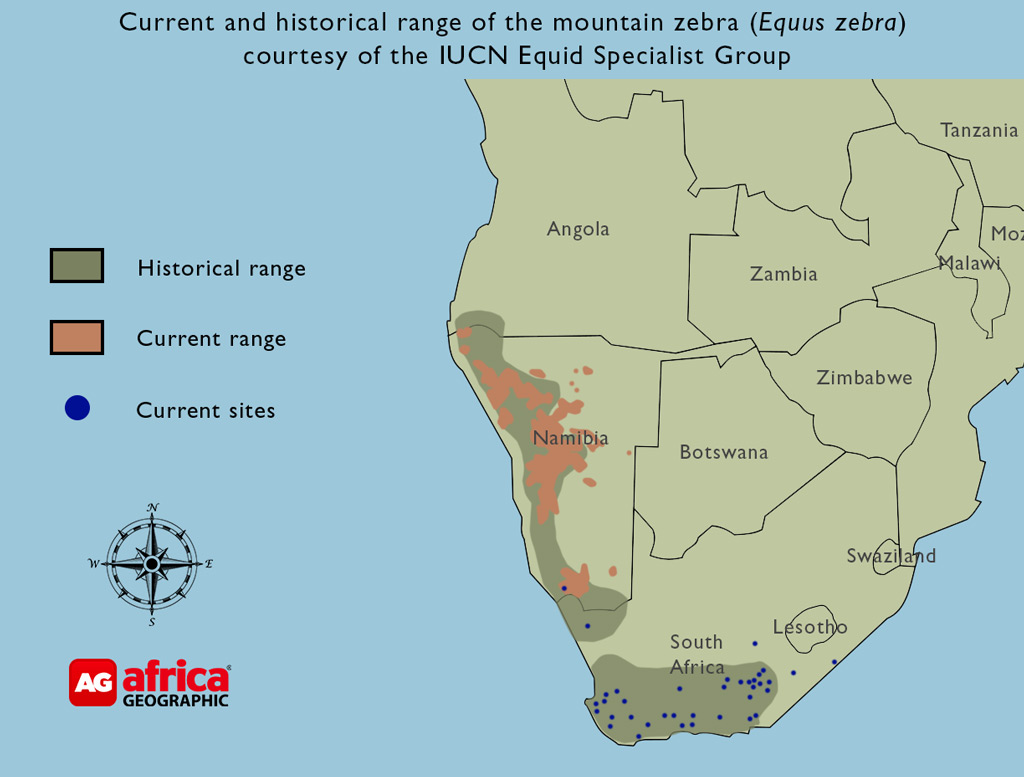
                    AREA’S WHERE ZEBRA’S ARE FOUND

This week we are looking at the zebra, a mammal they are found in various countries across the African continent. Specifically, they inhabit regions within Kenya, Ethiopia, Somalia, Namibia, Angola, and South Africa. Different zebra species, like Grevy’s zebras and Mountain zebras, have more specific ranges within these areas, while Plains zebras are the most widespread. 

They look similar to horses. They stand between 47 and 55 inches (120 and 140 centimetres) tall at the shoulder. Each species of zebra has its own pattern of stripes. The plains zebra has broad stripes that are widely spaced. The stripes of Grevy’s zebra are narrow and closely spaced, and the belly is white. The mountain zebra has a grid like pattern of stripes on the rump.

                        MOUNTAIN ZEBRA

Zebra stripes are like fingerprints. No two zebras are alike. This helps to identify individuals.

They eat mostly tall, rough grasses. Some types also eat shrubs, herbs, and bulbs. Unlike many ungulates in Africa, zebras do not require short grass to graze. Instead, they eat a wide variety of different grasses, sometimes even eating leaves and young trees. As a result, they can range more widely than many other species, often venturing into woodlands. They are considered to be “pioneer grazers” preparing plains for more specialized grazers who rely on short, nutritional grasses.

                        GREVY ZEBRA

Zebras communicate with each other using calls and facial expressions. They often greet each other with nose-to-nose contact. Plains zebras have at least 6 different vocal calls. A two-syllable call is used to alert herd members to predators while snorts indicate happiness. They also use facial expressions to communicate. When greeting each other, they will stick their ears up and push their faces forward. When feeling threatened, they will press their ears against their heads.

Female zebras may have one foal each year. Females and their young usually live in small family groups headed by one male. Thes groups are called “harems.”. Harems generally remain together for months or even years, making it an incredibly stable family unit.

But female Grevy’s zebras may form family groups without head males. Family groups sometimes join together in larger herds. Zebras also may form mixed herds with antelopes.

A male zebra is called a stallion. Female zebras are called mares, and their young are called foals. 

Every year, hundreds of thousands of zebras gather up their young and begin the long journey from Tanzania’s Serengeti plains, north to Kenya. This annual trek to find food and water covers a distance of around 2,900 kilometres (1,800 miles) and exposes them to a myriad of dangers. River crossings leave herds vulnerable to crocodiles, while the size of the migration itself brings lions, hyenas, and wild dogs.

Rhinoceros

This week’s hooved animal is the rhinoceros or rhino the word rhinoceros is a combination of two Greek words – rhino (nose) and ceros (horn).

There are five living species of rhinoceros – white, black, greater one-horned, Javan and Sumatran. In addition, a number of other animals have rhinoceros as part of their names, including the rhinoceros auklet, rhinoceros beetle, rhinoceros chameleon, rhinoceros cockroach, rhinoceros fish, rhinoceros hornbill, rhinoceros iguana, rhinoceros rat snake, rhino shrimp, and rhinoceros viper. All of them have horn-like appendages on their noses.

They can be found in several countries across both Africa and Asia. In Africa, you can find them in Angola, Botswana, Kenya, Malawi, Mozambique, Namibia, South Africa, Tanzania, Uganda, Zambia, and Zimbabwe. In Asia, they can be found in India, Indonesia, Nepal, and Vietnam. 

The two main species of rhino in Africa are the black rhino and the white rhino. Black rhinos are found in 12 African countries, with the largest populations in Namibia, South Africa, Kenya, and Zimbabwe. White rhinos are found in 11 African countries. 

Asia is home to the greater one-horned rhino, Javan rhino, and Sumatran rhino. You can find them in India, Indonesia, Nepal, and Vietnam. 

A rhino’s horn is not attached to its skull. It is actually a compacted mass of hairs that continues to grow throughout the animal’s lifetime, just like our own hair and nails. The longest horn on record belonged to a white rhino and measured just under 152cm or 60 inches, which is five feet, and I am only four foot eleven inches tall.

The rhinoceros’s closest living relative is the tapir. Horses and zebras are also related, but less closely than tapirs. All three belong to the group of odd-toed ungulates, known as Perissodactyla. Really horses and zebras that sounds weird.

The white rhino’s name comes from the Afrikaans word “wyd,” which means “wide” and describes its mouth. Early English settlers in South Africa misinterpreted the “wyd” for “white”. Black rhinos may have received their name from the dark wet mud in their wallows that made them appear black in colour. Both species are gray in colour, the famous Blue Rhino, corporate logo for the well-known propane tank company, is entirely a figment of its founder’s imagination.

After mating, adult male and female rhinos typically go their separate ways. After the calf is born, it will spend a couple of years or more in the company of its mother, and perhaps associate with other females and their calves, but the father rhino is not part of the standard social group.

They are not generally considered friendly to humans, although they are not inherently aggressive. They prefer to be just left alone and will only charge if they feel threatened or are protecting their young. Female rhinos, especially those with calves, can be particularly dangerous in the wild. While they may not intentionally seek to harm humans, their size and power make them a serious threat if they do charge. 

The live anywhere between 35 and 50yrs depending on the breed.

All five species of rhinos are herbivores, eating mainly vegetation. They spend most of their time browsing and grazing through their natural habitat in search of plants and grasses to eat.

Eritrea Nation Anthem

First up there is a new hodgepodge post here: https://jamfn.blogspot.com/2025/01/a-cold-hodgepodge-in-summer.html

This week we are looking at the national anthem of Eritrea, but I wasn’t able to find much information about it.

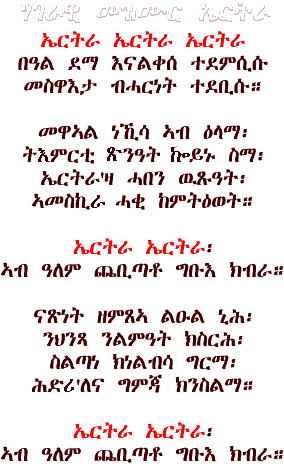
The national anthem is called, “Eritrea, Eritrea, Eritrea”, it was written by poet Solomon Tsehaye Beraki and composed by organist Isaac Abraham Meharezghi.  This was back in 1986 and was updated in 1993 after Eritrea gained independence.

The anthem represents the common national consciousness that developed among the people of Eritrea during their nearly three-decade war of independence. 

These are the lyrics.

The English translation is this.

Ertra, Ertra, Ertra,
The barbarian enemy humiliatingly defeated
And martyrdom has paid for freedom

Decades of devotion for purpose
Your name became challenger, miraculous
Ertra, comfort for the oppressed
Proved that truth can win after all

Ertra, Ertra
A sovereign state on earth after all

Dedication that led to liberation
Will build up and make her green
We shall honour her with progress
We have a word to her to embellish

Ertra, Ertra
A sovereign state on earth after all

Eritrea

This week we are still in Africa, and this is a country I only recently heard of while watching something on YouTube about modern day slavery.  

So, we are looking at the country of Eritrea.

Eritrea is a northeast African country on the Red Sea coast. It shares borders with Ethiopia, Sudan and Djibouti. The capital city, Asmara, is known for its Italian colonial buildings, like St. Joseph’s Cathedral, as well as art deco structures. Italian, Egyptian and Turkish architecture in Massawa reflect the port city’s colourful history. Notable buildings here include St. Mariam Cathedral and the Imperial Palace.

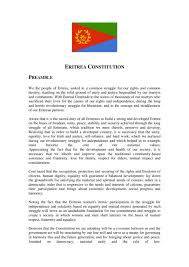
It has a population of 3.7 million and has no official language, as it is a multilingual country, and as the Constitution establishes the “equality of all Eritrean languages”. Tigrinya, Arabic, and English serve as de facto working languages, with English used in university education and many technical fields.

The flag of Eritrea is made up of a red triangle, a green triangle, and a blue triangle, with a yellow olive branch and wreath in the centre. The first Eritrean flag was adopted in 1952, but was replaced by Ethiopia in 1958, The Eritrean People’s Liberation Front (EPLF) adopted a flag in 1977, the current flag was adopted on December 5, 1995.

The country’s official religions are Eritrean Orthodox Tewahedo Christianity, Sunni Islam, Roman Catholicism, and Evangelical Protestantism. However, the government restricts the activities of these religions and persecutes members of unregistered religious groups. 

What does this mean? Well, the government’s constitution and laws prohibit discrimination based on religion. However, the government restricts the activities of the officially recognized religions. The government intimidates and prosecutes people who practice unregistered religions, it also prevents unregistered religions from building houses of worship or practicing their religion. Also, the government detains people for their religious beliefs, including minors.

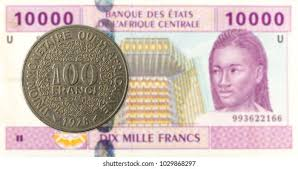
The currency is the nakfa and was introduced on 15 November 1997 to replace the Ethiopian birr at par. It takes it name from then place of Nakfa were the first victory in their war of independence took place.

Like many other African countries, it is not a safe place to visit.

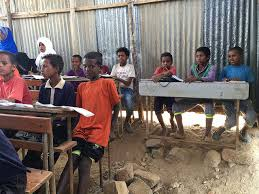
The country’s education system includes basic, secondary, and tertiary education. The government has been working to improve the quality of education and increase access to schools. Due to the country’s geography which include remote areas education is difficult.

Other problems are the amount of poverty, and many children living in nomadic areas also children with disabilities have difficulty accessing education.

In fact, many children are unable to read and understand what they are reading, and it is not unusual for as much as 48% of primary school-aged children to not attend school.

Eritrea has been involved in several wars and conflicts, including the Eritrean–Ethiopian War, the Djiboutian–Eritrean conflict, and the Tigray War. 

Eritrean–Ethiopian War lasted from 1998 to 2000 and was between Eritrea and Ethiopia. The war resulted in the Algiers Agreement, tens of thousands lost their lives on both sides. The war resulted in minor changes to the border between the two countries. 

Eritrean–Ethiopian border conflict this was a violent standoff and proxy conflict between Eritrea and Ethiopia that lasted from 1998 to 2018. In 2018, Ethiopia agreed to cede Badme to Eritrea.

Eritrean War of Independence as armed conflict that lasted from 1961 to 1991 this war ended in 1991 with the fall of the Derg regime.

Djiboutian–Eritrean conflict occurred in 2008 between Eritrea and Djibouti it lasted only three days of indecisive fighting.

Lastly there was the Tigray War a conflict that occurred from 2020 to 2022 between Ethiopia and Eritrea it ended with the Ethiopia–Tigray peace agreement.

The Republic of the Congo

Hello Monday, this week we are having a look at the Republic of the Congo. The currency used is the Central African Franc and the country has a population of around 6 million. The official language is French.

The Republic of Congo, also called Congo-Brazzaville, is a central African nation with rainforest reserves that are habitats for gorillas.

The capital city is Brazzaville, it lies across the Congo River from Kinshasa, the capital of neighbouring Democratic Republic of Congo.

Yes, Congo is split in two the Republic of Congo is much smaller the Democratic Republic of Congo. Both countries are named for the Congo River, the two countries share a lot of traditions, languages ​​like Lingala and Kikongo, dishes and other things.

Brazzaville’s highlights include traditional craft markets and the mid-20th-century Basilique Sainte-Anne, with a green-tiled roof and spire. Just outside the city are the Congo Rapids. The cylindrical Nabemba Tower overlooks the river in the city centre. The marble Pierre Savorgnan de Brazza Memorial contains the remains of the city’s founder. 

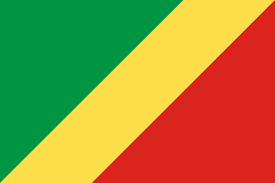
The flag has a diagonal yellow stripe that separates a green triangle

on the left from a red triangle on the right. The flag’s colours and shapes have symbolic meanings, Green is for agriculture and forests, Yellow is for friendship and the nobility of the people, Red well that is unexplained.

The Republic of the Congo is a secular country with no official religion. The constitution protects freedom of religion and belief and prohibits the use of religion for political purposes. 

The majority of the population in the Republic of the Congo is Christian, with Catholicism being the largest denomination.

Other religions in the country include Traditional African religions and Islam. The country also has independent African churches, including the Kimbanguist Church, the Matsouana Church, and the Bougist Church. 

The Republic of Congo has had a multiparty political system since the early 1990’s. The voting age in the Republic of Congo is 18 years.

The Republic of Congo is a Presidential Republic whereby the President acts as both Head of State and Head of the Government. The new constitution (adopted by referendum in 2002), established a seven year presidential term and a bicameral national parliament.

Angola National Anthem

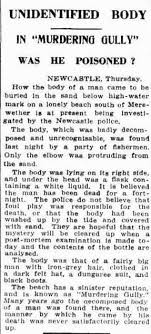
Since a couple of you asked about Murdering Gully and because I am also interested in how it got that name, I have none some research and this is what I found out. Nothing I could find stuff about a place call Murdering Gully in Victoria but the only site that information about Murdering Gully in my area was the Newcastle Herald site and they wanted me to sign up for a paid subscription which I did not want to do. So, I do not know why it was called that.

Moving on today is Friday and that means it is time for a national anthem and since I wrote about Angola on Monday, I will share their anthem today.

“Angola Avante” was composed by Ruy Mingas. The lyrics to the song were penned by Manuel Rui Alves Monteiro, an author who studied in Huambo and is affiliated with both the country’s Writer Union and Union of Artists and Composers.

The song was officially designated as the country’s national anthem in 1975, when the country gained independence on 11 November that year. It is enshrined under Article 164 of Angola’s constitution.

Its lyrics refer to several key events in the history of the MPLA. However, this has been rendered “obsolete” since the end of the one-party state in 1992. As a result, there have been efforts to modify the national anthem, along with other national symbols. However, none of these have come to fruition, and the anthem remains unchanged as of 2014.

Portuguese

O Pátria, nunca mais esqueceremos
Os heróis do quatro de Fevereio.
O Pátria, nós saudamos os teus filhos
Tombados pela nossa Independência.
Honramos o passado e a nossa História,
Construindo no Trabalho o Homem novo,
Honramos o passado e a nossa História,
Construindo no Trabalho o Homem novo.

CHORUS:
Angola, avante!
Revolução, pelo Poder Popular!
Pátria Unida, Liberdade,
Um só povo, uma só Nação!
Angola, avante!
Revolução, pelo Poder Popular!
Pátria Unida, Liberdade,
Um só povo, uma só Nação!

Levantemos nossas vozes libertadas
Para glóriados povos africanos.
Marchemos, combatentes angolanos,
Solidários com os povos oprimidos.
Orgulhosos lutaremos Pela Paz
Com as forças progressistas do mundo.
Orgulhosos lutaremos Pela Paz
Com as forças progressistas do mundo.

English Translation

 O Fatherland, we shall never forget
The heroes of the Fourth of February.
O Fatherland, we salute your sons
Who died for our Independence.
We honour the past and our history
As by our work we build the New Man.
We honour the past and our history
As by our work we build the New Man.

CHORUS:
Forward, Angola!
Revolution through the power of the People!
A United Country, Freedom,
One People, one Nation!
Forward, Angola!
Revolution through the power of the People!
A United Country, Freedom,
One People, one Nation!

2. Let us raise our liberated voices
To the glory of the peoples of Africa.
We shall march, Angolan fighters,
In solidarity with oppressed peoples.
We shall fight proudly for Peace
Along with the progressive forces of the world.
We shall fight proudly for Peace
Along with the progressive forces of the world.

Angola

Well, it is time to return to my normal run of the mill posts, kicking off with the first country of the year and it is Angola.

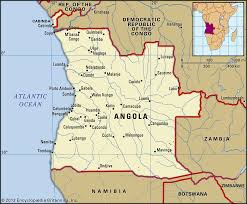
The country is officially the Republic of Angola it is a country on the west-central coast of Southern Africa.

The country has a varied terrain which encompasses tropical Atlantic beaches, a labyrinthine system of rivers and Sub-Saharan desert that extends across the border into Namibia. The country’s colonial history is reflected in its Portuguese-influenced cuisine and its landmarks including Fortaleza de São Miguel, a fortress built by the Portuguese in 1576 to defend Luanda.

It is the second-largest Portuguese speaking country in both size and population, it has a population of 38.5 million, 10 million of which live in the capital of Luanda.

Which is a port city on the west coast of Southern Africa. A seafront promenade known as the Marginal runs alongside Luanda Bay. Nearby is the well-preserved 16th-century Fortress of São Miguel, which now contains the Museum of the Armed Forces. The fort has views of the harbor and the Ilha do Cabo, a long, thin peninsula in the bay that’s home to beaches, bars and restaurants.

It is the seventh largest country in Africa and is divided into 18 provinces.

Their flag came into use when the nation gained independence from Portugal on 11 November 1975. It is split horizontally into an upper red half and a lower black half with an emblem resting at the centre. It features a yellow half gear wheel crossed by a machete and crowned with a star.

As outlined in their constitution, the red half of the flag signifies bloodshed – during Angola’s colonial period, independence struggle, and in defence of the country. The black half symbolizes Africa. In the central emblem, the gear represents industrial workers and production, the machete represents peasantry, agricultural production and the armed struggle, and the red star, symbolizes international solidarity and progress. The yellow colour of the emblem symbolizes the country’s wealth.

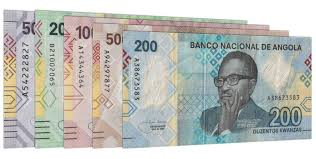
The currency used is the kwanza there have been four different currencies using the name kwanza since 1977. The currency derives its name from the Kwanza River.

The prevalent religion is Christianity, followed by traditional faiths. Roman Catholics make up the largest portion of the population. There are other Christian denominations such as Protestants, such as the Church of Our Lord Jesus Christ in the World, Seventh-day Adventists, Methodists, Baptists.

Indigenous beliefs are still very important in Angolan culture and are often practiced in addition to Christianity.

Muslims, Jews, Baha’is, and other religious groups make up about 9% of the population.

The government has become more tolerant of religious organizations since the formal abandonment of Marxism. However, the government still uses administrative control, co-optation, and restrictions to manage religious organizations. For example, in 2019, the police conducted a campaign against illicit traders and non-recognized churches, which some say called into question religious freedom in Angola. 

Angola’s National Institute for Religious Affairs (INAR) is responsible for the registration of religious groups and the oversight of religious activities. The law requires religious groups to submit documents defining their organizational structure, location, and other information. Religious doctrine must also conform to the principles and rights outlined in the constitution. 

The current political regime in Angola is presidentialism, in which the President of the Republic is also head of state and government; it is advised by a Council of Ministers, which together with the President form the national executive power.

Like other African nations it is not a safe place to visit.

The Country of Chad

Hello everyone, this week see’s us visiting the country of Chad.

Chad, officially the Republic of Chad, is an independent state at the crossroads of North and Central Africa. The landlocked country is bordered by Libya to the north, Sudan to the east, the Central African Republic to the south, Cameroon to the southwest, Nigeria to the southwest, and Niger to the west. It is often called the “Dead Heart of Africa” due to its central and landlocked location. 

It has a diverse landscape with an arid centre and a desert dominated north and a more fertile south. The country is divided into 23 regions.

The regions are represented in the country’s bicameral parliament, which includes a Senate that represents autonomous communities. The Senate’s members are indirectly elected by an electoral college of provincial and communal councillors. 

Chad’s regions have different social structures and ethnic groups, and local or regional society is often more important to Chadians than national society:

The Sara, the country’s main ethnic group, live in the south. The Sara are sedentary people, and their essential social unit is the lineage.

It is often called the “Dead Heart of Africa” due to its central and landlocked location. 

The north is inhabited by nomads, mostly Toubous. 

Most of the population lives by agriculture; cotton is grown in the south, and cattle are raised in the central region. Chad joined the ranks of oil-producing countries in 2003, raising hopes that the revenues generated would improve the country’s economic situation.

It has a population around 18.5 million, the official languages are French and Arabic.

The currency is the Central African Franc.

N’Djamena is the capital and largest city in the country. It is also a special statute region, divided into 10 districts or arrondissements. The city serves as the centre of economic activity in Chad.

The country has an Executive President who is head of state and a Prime Minister as well as a council of minister

Branches: Executive–president (head of state), prime minister, Council of Ministers.

                        Chad’s Flag

The national flag of Chad is a vertical tricolour of indigo, yellow, and red. It was adopted on 6 November 1959, almost a year after the founding of the autonomous Republic of Chad. Since the 1990s, its similarity to the flag of Romania has caused international discussion.

                        Romania’s Flag

Like many African countries Chad is not considered a safe country to visit due to the high risk of violent crime, terrorism, kidnapping, and civil unrest.

The main religions in Chad are Islam and Christianity, with Islam being practiced by the majority of the population.

Chad’s constitution establishes the country as secular and affirms the separation of religion and state. The government generally respects religious freedom and observes several religious holidays as national holidays. It’s common for Muslims and Christians to attend each other’s festivities. 

South Africa

Good morning all it is a much cooler day here in my part of the world, this week we are looking at another African country but this one you should all have heard of it is South Africa.

It is on the southernmost tip of the African continent, it is known for its great diversity in cultures, languages, religious beliefs and ethnic groups.

When we think of the capital most of us would say Cape Town but in fact, South Africa has three capitals as each branch of government has its own capital city. The administrative capital of South Africa is Pretoria, the legislative capital is Cape Town, and the judicial capital is Bloemfontein.

Why is this well in 1910, when the Union of South Africa was formed, there was a great dispute about the location of the new country’s capital city. A compromise was reached to spread a balance of power throughout the country, and this led to the three capitals of South Africa.

The population is around 63 million, with Black South Africans as the majority, with around 80% the rest is made up of coloured South Africans at around 8%, Indian or Asian South Africans at around 2.6% and  White South Africans being around 8%.

The country has nine provinces:

  • The Eastern Cape
  • The Free State
  • Gauteng
  • KwaZulu-Natal
  • Limpopo
  • Mpumalanga
  • The Northern Cape
  • North West
  • The Western Cape 

Each province has its own government, including a premier, legislature, and executive council. The provinces also have their own distinct landscapes, populations, economies, and climates. 

South Africa’s provinces were increased from four to nine in the lead-up to the 1994 general election.

This was done by reintegrating the country’s former homelands, known as Bantustans, into the country. 

The flag is a horizontal bicolour of red and blue with a green band in the middle that splits into a “Y” shape. The flag also features a black triangle on the hoist side, with narrow yellow or gold bands separating the triangle from the arms of the “Y”.

The flag was adopted in 1994 after the end of Apartheid to represent the country’s new democracy.

The country has a diverse religious population, with Christianity being the most widely practice with around 85% of the population being Christian. The largest group of Christian churches are the African Independent Churches, which include the Zion Christian Church and the Apostolic Church. 

Around 7% of the population practices Indigenous beliefs. Many Indigenous people combine Christian and Indigenous religious practices. 

It is believed that about 6% of the population is atheist or agnostic. 

There is also Hinduism, Islam, Buddhism, and Judaism practiced in the country.

South Africa is a secular state with a constitution that guarantees freedom of religion. The state’s relationship with religion is more moderate and tolerant, allowing for voluntary religious observances within state institutions.

Like many African countries South Africa isn’t considered a safe country to visit due to crime, civil unrest, and kidnapping. Violent crime is common and includes armed robbery, rape, carjacking, and mugging. There are also “smash-and-grab” attacks on vehicles. It is the 20th worst country in regards of safety and security.

Many would know of Apartheid which was in South Africa from 1948 to 1994 and was the racial segregation under the all-white government of South Africa which dictated that non-white South Africans (a majority of the population) were required to live in separate areas from whites and use separate public facilities and contact between the two groups would be limited. The different racial group were physically separated according to their location, public facilities and social life.

In 1948, after the National Party won that year’s elections, Apartheid became a social project of the government based on a series of laws which made it legal.

There are at least thirty-five languages are spoken in the country with twelve of them being regarded as official languages, they are Ndebele, Pedi, Sotho, Swazi, Tsonga, Tswana, Venda, Afrikaans, Xhosa, Zulu, English and South African Sign Language.

English is the primary language used in parliamentary and state discourse, though all official languages are equal in legal status.

The South African Rand  is the currency of South Africa and is issued by the South African Reserve Bank. The South African rand has the symbol R. It is subdivided into 100 cents. The name is derived from the word ‘Witwatersrand’, which means ‘ridge of white waters’.

Burundi

Ok let’s move onto central and southern Africa and area that includes Burundi, Chad, Central African Republic, South Africa, the Republic of Congo, Rwanda, Zimbabwe and Namibia.

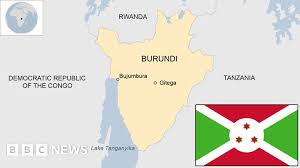
Let’s start with Burundi, officially the Republic of Burundi, it is a landlocked country in the Great Rift Valley at the junction between the African Great Lakes region and Southeast Africa, with population of over 14 million people.

It is considered by some to be the poorest country in the world and is one of the least developed countries. Over 1 million of its people are facing crisis levels of hunger today. This is due to poverty, climate shocks, soaring inflation and fuel shortages.

The town of Gitega, located in the central part of Burundi as the Political Capital, while Bujumbura, which is in the southwestern of the country, adjacent to the Lake Tanganyika is the Economic Capital.

Prior to 2019 Bujumbura served as Burundi’s national capital, but legislation passed that year designated Gitega as the country’s political capital and Bujumbura as the economic capital. The transfer of government functions to Gitega proceeded in the following years.

The original flag was adopted after the country’s independence from Belgium on 1 July 1962. It went through several revisions and now consists of a white saltire which divides the field into alternating red and green areas. The centre of the saltire merges into a white disk, on which there are three red solid six-pointed stars outlined in green. The current ratio is 3:5, which was changed from 2:3 on 27 September 1982.

The franc is the currency of Burundi. It is nominally subdivided into 100 centimes, although coins have never been issued in centimes since Burundi began issuing its own currency.

Burundi’s political system is that of a presidential representative democratic republic based upon a multi-party state. The president of Burundi is the head of state and head of government. The president is elected by absolute majority vote through a two round system. The supreme court is the highest court of the land. Judges are nominated by the judicial service commission and then appointed by the president with the approval of the senate.

Burundi has a diverse religious population, with the majority identifying as Christian and a minority identifying as Muslim: 

Christianity is the most common religion in Burundi, with about three-fifths of the population identifying as Roman Catholic and more than one-eighth identifying as Protestant. 

Islam is a minority religion in Burundi, with Muslims making up less than one-twentieth of the population. The majority of Muslims in Burundi are Sunni, but there are also Shia and Ismaili communities. 

A large minority of the population, including some Roman Catholics, practice traditional religions. 

The government of Burundi has granted tax waivers to religious groups for the purchase of materials for development projects and for imported religious items. The government has also provided opportunities for religious leaders to preach about scriptures and moral issues. 

This is another country that is not considered a safe destination for tourists due to a number of risks, such as a threat of terrorism, political violence, violent crime, including mugging, purse snatching, pickpocketing, assault, carjacking, home invasion, grenade attacks, and armed robbery and there is a risk of kidnapping for ransom, and criminals have targeted foreigners in the past.

Not somewhere I would go.