National Anthem of the Republic of Congo

This week’s national anthem is “La Congolaise” which is the national anthem of the Republic of the Congo.

It was adopted in 1959 after the country’s independence from France, it was replaced in 1969 by “Les Trois Glorieuses” only to be reinstated in 1991. The lyrics were written by Jacques Tondra and Georges Kibanghi, and the music was composed by Jean Royer and Joseph Spadilière.

I
En ce jour le soleil se lève
Et notre Congo resplendit.
Une longue nuit s’achève,
Un grand bonheur a surgi.
Chantons tous avec ivresse
Le chant de la liberté.

Refrain :
Congolais, debout fièrement partout,
Proclamons l’union de notre nation,
Oublions ce qui nous divise,
Soyons plus unis que jamais,
Vivons pour notre devise:
Unité, travail, progrès,
Vivons pour notre devise:
Unité, travail, progrès!

II
Des forêts jusqu’à la savanne,
Des savannes jusqu’à la mer,
Un seul peuple, une seule âme,
Un seul cœur, ardent et fier,
Luttons tous, tant que nous sommes,
Pour notre vieux pays noir.

Refrain

III
Et s’il nous faut mourir, en somme
Qu’importe puisque nos enfants,
Partout, pourront dire comme
On triomphe en combattant,
Et dans le moindre village
Chantent sous nos trois couleurs.

Refrain
I
On this day the sun rises
And our Congo stands resplendent.
A long night is ended,
A great happiness has come.
Let us all, with wild joyfulness, sing
The song of freedom.

Chorus:
Arise, Congolese, proud every man,
Proclaim the unity of our nation.
Let us forget what divides us
And become more united than ever.
Let us live our motto:
Unity, work, progress.
Let us live our motto:
Unity, work, progress!

II
From the forest to the savannah,
From the savannah to the sea,
One people, one soul,
One heart, ardent and proud.
Let us all fight, every one of us,
For our black  country.

Chorus

III
And if we have to die,
What does it really matter? Our children
Everywhere will be able to say how
Triumph comes through battle,
And in the smallest village
Sing beneath our three colours
Chorus

Angola National Anthem

Since a couple of you asked about Murdering Gully and because I am also interested in how it got that name, I have none some research and this is what I found out. Nothing I could find stuff about a place call Murdering Gully in Victoria but the only site that information about Murdering Gully in my area was the Newcastle Herald site and they wanted me to sign up for a paid subscription which I did not want to do. So, I do not know why it was called that.

Moving on today is Friday and that means it is time for a national anthem and since I wrote about Angola on Monday, I will share their anthem today.

“Angola Avante” was composed by Ruy Mingas. The lyrics to the song were penned by Manuel Rui Alves Monteiro, an author who studied in Huambo and is affiliated with both the country’s Writer Union and Union of Artists and Composers.

The song was officially designated as the country’s national anthem in 1975, when the country gained independence on 11 November that year. It is enshrined under Article 164 of Angola’s constitution.

Its lyrics refer to several key events in the history of the MPLA. However, this has been rendered “obsolete” since the end of the one-party state in 1992. As a result, there have been efforts to modify the national anthem, along with other national symbols. However, none of these have come to fruition, and the anthem remains unchanged as of 2014.

Portuguese

O Pátria, nunca mais esqueceremos
Os heróis do quatro de Fevereio.
O Pátria, nós saudamos os teus filhos
Tombados pela nossa Independência.
Honramos o passado e a nossa História,
Construindo no Trabalho o Homem novo,
Honramos o passado e a nossa História,
Construindo no Trabalho o Homem novo.

CHORUS:
Angola, avante!
Revolução, pelo Poder Popular!
Pátria Unida, Liberdade,
Um só povo, uma só Nação!
Angola, avante!
Revolução, pelo Poder Popular!
Pátria Unida, Liberdade,
Um só povo, uma só Nação!

Levantemos nossas vozes libertadas
Para glóriados povos africanos.
Marchemos, combatentes angolanos,
Solidários com os povos oprimidos.
Orgulhosos lutaremos Pela Paz
Com as forças progressistas do mundo.
Orgulhosos lutaremos Pela Paz
Com as forças progressistas do mundo.

English Translation

 O Fatherland, we shall never forget
The heroes of the Fourth of February.
O Fatherland, we salute your sons
Who died for our Independence.
We honour the past and our history
As by our work we build the New Man.
We honour the past and our history
As by our work we build the New Man.

CHORUS:
Forward, Angola!
Revolution through the power of the People!
A United Country, Freedom,
One People, one Nation!
Forward, Angola!
Revolution through the power of the People!
A United Country, Freedom,
One People, one Nation!

2. Let us raise our liberated voices
To the glory of the peoples of Africa.
We shall march, Angolan fighters,
In solidarity with oppressed peoples.
We shall fight proudly for Peace
Along with the progressive forces of the world.
We shall fight proudly for Peace
Along with the progressive forces of the world.

Angola

Well, it is time to return to my normal run of the mill posts, kicking off with the first country of the year and it is Angola.

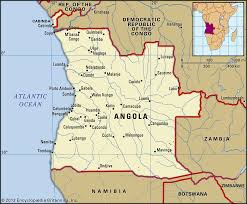
The country is officially the Republic of Angola it is a country on the west-central coast of Southern Africa.

The country has a varied terrain which encompasses tropical Atlantic beaches, a labyrinthine system of rivers and Sub-Saharan desert that extends across the border into Namibia. The country’s colonial history is reflected in its Portuguese-influenced cuisine and its landmarks including Fortaleza de São Miguel, a fortress built by the Portuguese in 1576 to defend Luanda.

It is the second-largest Portuguese speaking country in both size and population, it has a population of 38.5 million, 10 million of which live in the capital of Luanda.

Which is a port city on the west coast of Southern Africa. A seafront promenade known as the Marginal runs alongside Luanda Bay. Nearby is the well-preserved 16th-century Fortress of São Miguel, which now contains the Museum of the Armed Forces. The fort has views of the harbor and the Ilha do Cabo, a long, thin peninsula in the bay that’s home to beaches, bars and restaurants.

It is the seventh largest country in Africa and is divided into 18 provinces.

Their flag came into use when the nation gained independence from Portugal on 11 November 1975. It is split horizontally into an upper red half and a lower black half with an emblem resting at the centre. It features a yellow half gear wheel crossed by a machete and crowned with a star.

As outlined in their constitution, the red half of the flag signifies bloodshed – during Angola’s colonial period, independence struggle, and in defence of the country. The black half symbolizes Africa. In the central emblem, the gear represents industrial workers and production, the machete represents peasantry, agricultural production and the armed struggle, and the red star, symbolizes international solidarity and progress. The yellow colour of the emblem symbolizes the country’s wealth.

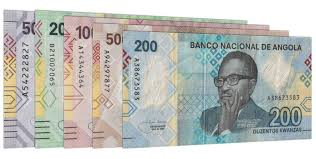
The currency used is the kwanza there have been four different currencies using the name kwanza since 1977. The currency derives its name from the Kwanza River.

The prevalent religion is Christianity, followed by traditional faiths. Roman Catholics make up the largest portion of the population. There are other Christian denominations such as Protestants, such as the Church of Our Lord Jesus Christ in the World, Seventh-day Adventists, Methodists, Baptists.

Indigenous beliefs are still very important in Angolan culture and are often practiced in addition to Christianity.

Muslims, Jews, Baha’is, and other religious groups make up about 9% of the population.

The government has become more tolerant of religious organizations since the formal abandonment of Marxism. However, the government still uses administrative control, co-optation, and restrictions to manage religious organizations. For example, in 2019, the police conducted a campaign against illicit traders and non-recognized churches, which some say called into question religious freedom in Angola. 

Angola’s National Institute for Religious Affairs (INAR) is responsible for the registration of religious groups and the oversight of religious activities. The law requires religious groups to submit documents defining their organizational structure, location, and other information. Religious doctrine must also conform to the principles and rights outlined in the constitution. 

The current political regime in Angola is presidentialism, in which the President of the Republic is also head of state and government; it is advised by a Council of Ministers, which together with the President form the national executive power.

Like other African nations it is not a safe place to visit.