Dingo

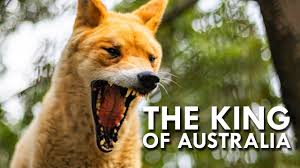
Well, here we are at another Monday and time to look at another wild dog, this week it is the Australian Dingo.

Dingoes have a lifespan from as few as 3yrs to usually around 16yrs but some have been known to live for 20yrs.

The dingo is an ancient lineage of dog found in Australia, however, compared with the skull of the dog, the dingo possesses a longer muzzle, longer carnassial teeth, longer and more slender canine teeth, larger auditory bullae, a flatter cranium with a larger sagittal crest, and larger nuchal lines.

The dingo’s three main coat colourations are light ginger or tan, black and tan, or creamy white. The skull is wedge-shaped and appears large in proportion to the body.

The dingo is closely related to the New Guinea singing dog. The oldest remains of dingoes in Australia are around 3,500 years old.

A dingo pack usually consists of a mated pair, their offspring from the current year, and sometimes offspring from the previous year.

Dingoes do not bark like a dog but howl, chortle, yelp, whine, growl, chatter, snort, cough and purr.

Dingoes are largely terrestrial carnivores they have a broad diet including fresh meat, fish, eggs and carrion they occasionally eat plants and fruits. They’re opportunistic hunters but will also scavenge food. The bulk of their diet is made up of meat: they eat kangaroos, wallabies, feral pigs, wombats, small mammals (rabbits, rodents), birds and lizards.

Their strong jaw and large canines permit the dingo to procure and machinate rather tough prey, allowing them to tear meat from carcasses and crush bones to obtain calcium and fat.
Dingoes have a strict social hierarchy and regularly mate for life. Female dingoes have one annual breeding cycle, March to June. The dingo pack helps with the rearing of pups which are weaned at about 2 months, at which time the pups may be abandoned or can stay with the parents for up to a year. Dingo pups are fully grown by 7 months.

They are primarily killed by humans, crocodiles, and sometimes by other canid species, such as jackals and domestic dogs. They are also killed by Dingoes from other packs. Pups may be taken by large birds of prey.

They are highly intelligent and intuitive animals that have a high capacity to solve problems and plan.

With this high intelligence and foresight comes a strong sense of self-awareness and independence.

African Wild Dog

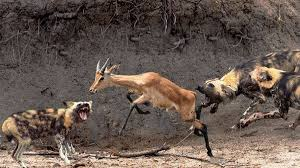
This week we are kicking of the series about wild dogs from around the world and we will start with the African wild dog, also known as the painted dog or Cape hunting dog.

The African wild dog has a colourful, patchy coat. They have large bat-like ears and a bushy tail with a white tip, which may serve as a flag to keep the pack in contact while hunting. Their markings are as unique as a human fingerprint, making it easy to identify individuals.

This dog is native to sub-Saharan Africa

These wild dog packs have an 80% success rate when hunting, thanks to high levels of communication.

They generally live up to the age of 11 when living in the wild.

It can also run up to 70km or 44mph this is the same as a greyhound, over a long time. Of all large carnivores they are regarded as the most efficient hunters as their targeted prey rarely escapes. They hunt for a wide variety of prey, including gazelles and other antelopes, warthogs, wildebeest calves, rats, and birds.

They like to live in packs averaging from seven to 15 members and sometimes up to 40. Before the recent population decline, packs of up to 100 were recorded.  Within the pack, there is a unique social structure.

They cooperate in taking care of the wounded and sick members, there is a general lack of aggression exhibited between members of the pack, and there is little intimidation among the social hierarchy.

Every hunting pack has a dominant pair. They are usually the only pair that remains monogamous for life. Wild dogs also have a large range of vocalizations that include a short bark of alarm, a rallying howl, and a bell-like contact call that can be heard over long distances. Elaborate greeting rituals are accompanied by twittering and whining.

They are pack animals that are quick to defend themselves against any threatening animal. While they don’t prey on humans and typically approach them out of curiosity rather than aggression, it’s best not to go near them.

Introduction to wild dogs

Well, I have run of big cats to write about, so I am moving onto other four-legged dangerous animals that being wild dogs. A wild dog is a member of the canine family such as the hunting dog of Africa, the dhole of India and the dingo of Australia.

A ‘wild dog’ can be any free-ranging dog without an owner. This includes domestic dogs that are homeless, dingoes, and hybrids of the two.

Domestic dogs may also behave like wild dogs when they are unsupervised or unrestrained. These are usually referred to as feral dogs often they have escaped to the wild, either through accident or neglect, and have reverted in the natural state to some of the characteristics inherent in all dogs.

There are 35 species of wild dogs are currently recognized. They belong to the dog family, Canidae, which also includes all extinct dog species. Members of the family Canidae are known as canids and may also be referred to as ‘canines’. The world’s wild dogs include animals known as wolves, foxes and jackals.

Like wolves and dogs, African wild dogs do belong to the Canidae family. However, grey wolves, coyotes, dogs and jackals are all in the Canis genus, whereas African wild dogs are the only living species of the Lycaeon genus.

Then we have the bush dog is a canine found in Central and South America. In spite of its extensive range, it is very rare in most areas except in Suriname, Guyana and Peru; it was first described by Peter Wilhelm Lund from fossils in Brazilian caves and was believed to be extinct.

Next week I will pick a dog and write about it.

Puma

This week’s big cat is the puma which is also known as the cougar, panther or mountain lion that can be found in Cananda, North America and parts of South America. Although they are not considered big cats

The puma has a small has a small, broad head with small round ears and long hind legs and a tail with a black tip, it has a powerful body.

An adult puma may have either a grey or reddish-yellow in colour, it’s fur is fawn-grey tipped with reddish-brown or greyish in colour. It has no spots which is one of the main differences between a puma and a jaguar. They can also be black in colour.

While on the hunt, the puma uses the strength of its powerful back legs to lunge at its prey with a simple leap while it is still running. They like to keep under cover while stalking its prey, when it pounces it will grip its preys neck breaking the neck or dragging it to the ground.

They like to hunt alone by day or night and will hide its food in dense undergrowth returning to it over several days. Large prey like elk may provide food for over a week. It can also attack cows and horses; this is the main reason man hunts them.

They can’t roar. They instead produce low-pitched hisses, growls, purrs, as well as chirps and whistles, many of which are comparable to those of domestic cats.

Pumas are rarely dangerous for humans, though attacks are more common in human-dominated landscapes. For that reason, there are more attacks in the United States than in Patagonia, where pumas tend to live in wild, unspoiled places. Attacks on pets and livestock (for instance sheep) might happen in some areas.

Lynx & Ocelot

Not all big cats are as big as Lions, Tigers or Leopards the Lynx and the Ocelot are much smaller, but they are still awesome.  

Both of these cats are good hunters, and both are in danger of extinction. 

The Lynx can be found in parts of Africa, Asia, Europe and North America. They prefer to stay in forests or in rocky brush-covered places. They prefer to sleep in caves or hollow trees and will climb trees and lie on the branches.

They hunt mainly at night feeding on rabbits and other small animals, although if hungry they may kill a fox or deer.

The Lynx’s fur grows long all over its body it is light grey or greyish brown and has a silky feel. It is spotted and striped, they have stubby tails and long turfs of hair on their pointed ears. They also have huge feet which are covered in thick fur, they can act like snowshoes and help it run swiftly over snow.

Now look at the Ocelot which has varies reddish-yellow to smoky-pearl in colour, it’s body is covered with black spots of different sizes. The ones on its legs and feet are like dots while other parts of the body have shell-shaped spots. It also has a pink nose and large translucent eyes.

The ocelot is also known as the leopard or tiger cat of the USA, it lives in an area ranging from Texas to Argentina.  It likes to eat mice, rabbits, snakes, lizards, birds, monkeys and young deer.

They have been hunted for their fur but now there are laws to stop it.

They will fight fiercely, sometimes to the death, in territorial disputes. Like most felines, they are solitary, usually meeting only to mate. However, during the day they rest in trees or other dense foliage and will occasionally share their spot with another ocelot of the same gender.