This week we are having a look at Canberra the capital of Australia located in the Australian Capital Territory or ACT.
Canberra’s history begins with Aboriginal Australians, followed by European settlement in the 19th century, and its designation as Australia’s capital in 1908, with construction beginning in 1911 and the capital moving from Melbourne in 1927.
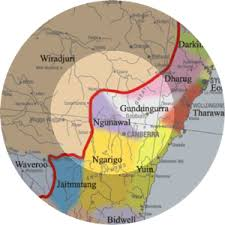
The area was inhabited by Aboriginal Australians, including the Ngunnawal and Ngambri peoples, for thousands of years, possibly as long as 21,000 years.
The Ngunnawal and Ngambri people, continue to live and travel through the area, preserving their culture through land connections and artistic expression, although there have been ongoing disputes and court cases regarding their recognition.
European settlement began in the first half of the 19th century, with landmarks like St John’s Anglican Church and Blundells Cottage remaining from this period.
In 1908, the Australian government decided to establish a new capital, choosing the Canberra-Yass district as the location, which was about 100 miles from Sydney.
Construction of the city began in 1911, and the first Parliament House was completed in 1927, marking the official move of the capital from Melbourne.
The name “Canberra” is believed to have come from the Aboriginal word “Canberry” or “Canbury”, meaning “a place of meeting”.
Canberra has three sister cities: Nara in Japan, Beijing in China, and Wellington in New Zealand.
As of the end of June 2024, Canberra’s estimated resident population was 474,132.
Canberra’s police are the AFP they have a community policing arm called ACT Policing, which responds to incidents in the Australian Capital Territory.
The territory measures 85 kilometers or 53 miles north to south and 53 kilometers or 33 miles east to west. It covers an area of 2,358 square kilometers, or 910 square miles.
Several rivers flow through the Australian Capital Territory.
Its most famous lake is Lake Burley Griffin which is an artificial lake in the centre of Canberra. It was created in 1963 by the damming of the Molonglo River, which formerly ran between the city centre and Parliamentary Triangle.
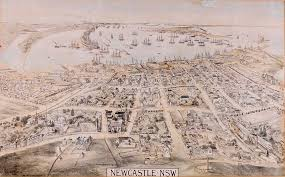
Today, we are looking at a bit of the history of Newcastle in New South Wales, the town was named after the famous coal port in England, Newcastle-upon-Tyne. The city was originally called Coal River and then Kingstown.
In 1797, Lieutenant John Shortland discovered the Hunter River estuary while searching for escaped convicts. Then in 1801, Governor King authorized a group of convicts and soldiers to settle in Newcastle to mine coal. This settlement was short-lived and closed in 1802 but was re-established in 1804.
After the settlement was re-established, it was named Newcastle to imitate the English coal port. The city’s link to Newcastle-upon-Tyne is still evident in some of its place names, such as Jesmond, Hexham, Wickham, Wallsend, and Gateshead.
The coal mined from the area was the colony of NSW first export. Newcastle gained a reputation as a “hellhole” as it was where the most dangerous convicts were sent to dig in the coal mines as punishment.
Newcastle remained a penal settlement until 1822, when the settlement was opened up to farming. Military rule ended in 1823, and prisoner numbers were reduced to 100 while the remaining 900 were sent to Port Macquarie. Port Macquarie is 245km or 153 miles.
After the town was freed from the influence of penal law it began to acquire the aspect of a typical pioneer settlement, and free settlers soon poured into the hinterland.
Today, the Port of Newcastle remains the economic and trade centre for the resource rich Hunter Valley. It is the world’s largest coal export port and Australia’s oldest and second largest tonnage throughput port.
The population of Newcastle, New South Wales in 2024 is around 174,529. This is based on a forecast prepared by population experts on behalf of the City of Newcastle.
Lake Macquarie’s estimated resident population is around 220,000 people, making it the third largest regional city in NSW.
Hi everyone, Debby from My Shasta Home, she can be found here: https://myshastahome.blogspot.com/ asked to know more about the apology for the stolen generation.
On 13 February 2008, Prime Minister Kevin Rudd offered a formal apology to Australia’s Indigenous peoples, particularly the Stolen Generations, on behalf of the nation at Australian Parliament House.
The Apology was presented as a motion for voting to the Chamber. It acknowledged that ‘the laws and policies of successive Parliaments and governments had resulted in the forcible removal of Aboriginal and Torres Strait Islander children from their families and ‘inflicted profound grief, suffering and loss on these our fellow Australians’.
Between 1910 and 1970 thousands of Aboriginal and Torres Strait Islander children were forcibly removed from their families and communities by churches, welfare organisations and governments. The exact number is not known. However, is estimated that, anywhere from 1 in 10 to 1 in 3 Indigenous children were forcibly removed from their families and fostered or adopted by non-Indigenous families or raised in institutions. These children are known as the Stolen Generations. Many experienced neglect, physical and sexual abuse and exploitative labour, and were denied contact with their families.
Below are a couple of the statements given to the inquiry.
Lots of white kids do get taken away, but that’s for a reason – not like us. We just got taken away because we was black kids, I suppose – half-caste kids. If they wouldn’t like it, they shouldn’t do it to Aboriginal families.
Confidential evidence 357, South Australia Bringing Them Home, 1997
The Government has to explain why it happened. What was the intention? I have to know why I was taken. I have to know why I was given the life I was given and why I’m scarred today. Why was my Mum meant to suffer? Why was I made to suffer with no Aboriginality and no identity, no culture? Why did they think that the life they gave me was better than the one my Mum would give me? And an apology is important because I’ve never been apologised to. My mother’s never been apologised to, not once, and I would like to be apologised to.
Confidential evidence 139, Victoria: woman removed at 12 months in 1967 Bringing Them Home, 1997
On 26th May 1997 the Inquiry’s Bringing Them Home report was tabled in Parliament. The Report documented the grief and loss caused by the breaking of cultural, spiritual, and family ties, and the intergenerational impact on the lives and wellbeing of Aboriginal and Torres Strait Islander peoples, as well as their resilience and dignity:
For individuals, their removal as children and the abuse they experienced at the hands of the authorities, or their delegates, have permanently scarred their lives. The harm continues in later generations, affecting their children and grandchildren.
Bringing Them Home, 1997
A key recommendation of the report was the need for an official acknowledgement of and apology for the forcible removal of Aboriginal and Torres Strait Islander children.
Below is what the apology says.
I move:
That today we honour the Indigenous peoples of this land, the oldest continuing cultures in human history.
We reflect on their past mistreatment.
We reflect in particular on the mistreatment of those who were Stolen Generations—this blemished chapter in our nation’s history.
The time has now come for the nation to turn a new page in Australia’s history by righting the wrongs of the past and so moving forward with confidence to the future.
We apologise for the laws and policies of successive Parliaments and governments that have inflicted profound grief, suffering and loss on these our fellow Australians.
We apologise especially for the removal of Aboriginal and Torres Strait Islander children from their families, their communities and their country.
For the pain, suffering and hurt of these Stolen Generations, their descendants and for their families left behind, we say sorry.
To the mothers and the fathers, the brothers and the sisters, for the breaking up of families and communities, we say sorry.
And for the indignity and degradation thus inflicted on a proud people and a proud culture, we say sorry.
The Hon Kevin Rudd 13 February 2008
The National Apology is considered a milestone step toward reconciliation between Indigenous and non-Indigenous Australians.
The Prime Minister’s speech was met with applause, tears, and relief from many Aboriginal and Torres Strait Islander peoples, including members of the Stolen Generations, present in the House of Representatives. Thousands of people gathered throughout the country to watch a broadcast of the Apology, including hundreds watching from the Great Hall and thousands on the lawns outside Parliament House.
Following the speeches, Lorraine Peeters (Weilwun and Gamilaroi peoples), acting on behalf of the Stolen Generations present in the Parliament, presented a glass coolamon to the Prime Minister Kevin Rudd and the Leader of the Opposition, Brendan Nelson. The coolamon – made by Bai Bai Napangardi, an artist from the Balgo community in Western Australia – contained a message that said:
On behalf of our people, thank you for saying sorry.In return we give you this gift on behalf of us affected by being taken away from our families. This is our way of saying thank you. The gift is a glass coolamon, fragile yet strong. Coolamons have carried our children. The gift is a symbol of the hope we place in the new relationship you wish to forge with our people. A relationship that itself is fragile yet strong. We have a new covenant between our peoples, that we will do all we can to make sure our children are carried forward, loved and nurtured and able to live a full life.’
The Prime Minister and Leader of the Opposition then jointly presented the coolamon to the Speaker of the House of Representatives, who accepted it saying:
I gratefully receive this gift on behalf of the House. It will represent a very important point in the history of not only this chamber but our nation.
At the conclusion of the formal proceedings in the Chamber, an event was held in Members Hall, attended by many representatives of the Stolen Generations, Indigenous leaders, Indigenous and other organisations, and current and former parliamentarians. There, Tom Calma, then Aboriginal and Torres Strait Islander Social Justice Commissioner, responded to the Apology. Nominated by the National Stolen Generations Alliance and the National Sorry Day Committee, the two national bodies representing the Stolen Generations and their families, he declared that it was an ‘historic day’, one
… on which ‘our leaders – across the political spectrum – have chosen dignity, hope and respect as the guiding principles for the relationship with our first nations’ peoples’.
The National Apology and the Coolamon are on display at Parliament House.
Well, here we are at another Wednesday and this week we will step back to World War 2 for a little more about Newcastle, New South Wales role in Australia’s war effort.
The Japanese knew damn well how important Newcastle’s steel industry and coalmines would be for this small nation to be able to fight and defend itself, as without steel for ships, planes, tanks and weapons any country would struggle to survive a major conflict.
When the BHP opened its steelworks in 1915 the city became a cornerstone of the country’s defence as well as a target for attack by an enemy.
It seems that in the 1920’s Japan studied Newcastle and its surrounds with intense interest. They believed it was important to seize the Hunter’s coalfields and cutting them off from Australia’s defence force.
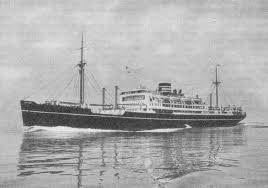
They also conducted a sustained and intensive investigation of the topography and economic installations of the Newcastle area. Most of this information was gathered by officers on Japanese merchant ships that visited Newcastle for coal. On almost every visit to Newcastle the Japanese officers would spend most of their time ashore, driving around the area in chauffeur-driven hired cars. They made maps and took an innumerable amount of photos, it was the shipping companies who paid for these trips and presumably were reimbursed by their government.
Australia’s intelligence people noted that almost all the Japanese officers visited a Japanese owned milliner’s shop, the shop closed up when questions were asked but soon after a Japanese owned fruit shop opened. It was owned by a well known Japanese agent who had a reputation of wealth and leisure and the dingy understocked fruit shop didn’t seem to go with the man.
Between 1924 and 1926 many Japanese ships went out of their way to pass as close as possible to Newcastle paying special attention to the beaches.
In the 1930’s well before the war many of our leading politicians and industrialist believed a conflict was inevitable. When BHP chief Essington Lewis visited Japan in the 1930’s and saw how the Japanese were putting a lot of energy and resources into arming itself for war, he was alarmed and on returning home set about preparing the BHP for a major munitions manufacturing company.
This man was hugely influential, and the federal government appointed him director of munitions meaning he managed a large part od the country’s industrial war efforts.
Newcastle’s steelworks and associated factories were destined to play a massive part in the nations defence, a huge array of weapons, parts and tools were produced in Newcastle with thousands of people being employed.
The challenges the city’s factories faced as they tried to replaced previously imported items were huge, but they managed to produce and churn out items that required the most demanding accuracy. It was a tribute to the hard work and dedication that a relatively novice workforce was able to turn its hand to this new industry with such success.
BHP learned to make the special steels needed for armour and armour-piercing weapons, other firms made steel helmets and other items. The firm of Lysaght made parts for tanks used by Australian forces, they also mass produced the Wollongong designed Owen sub-machine gun, as well as floating pontoons, portable aircraft hangers, army machetes and the precision-made “spinners” for the propellers of Mosquito aircraft.
Newcastle was one of the few locations to be attacked by the Japanese.
Hi everyone before starting this year’s countries to learn about I thought we would star with some basic information most people may know but many will not.
Like there are seven continents on this planet, a continent is one of Earth’s seven main divisions of land. The continents are, from largest to smallest: Asia, Africa, North America, South America, Antarctica, Europe, and Australia.
According to the United Nations, there are 195 countries in the world, with 193 being part of the United Nations and two not being members, those two are the Holy See (Vatican City) and the State of Palestine.
However, other organizations may list a different number of countries. For example, the CIA lists 237 countries. Many other nations also consider themselves to be fully-fledged nations.
There are 54 countries in Africa, 44 in Europe, 48 in Asia, 23 in North America, 12 in South America, 14 in Oceania including Australia which is also considered a continent on its own and then there is Antarctica which of course has no countries.
Now you may be like me and think Oceania what the hell I wasn’t taught about this continent, I thought Australia was the sixth continent.
Well for some reason, those wise folks in geography academia decided we needed another way to identify them. And now we have Oceania. Oceania covers the whole area: All of Australia, all of New Zealand, PLUS the myriad of islands in the region that were orphaned without a continent home.
Also, Oceania is not considered a continent if you are using a geographical definition of continent. However, when dividing the world into 7 regions the islands of the Pacific are usually grouped with Australia and called Oceania, and sometimes these regions are called continents even though this is not technically correct.
When you think about it that makes sense since generally most people would say there is only one country in the continent of Australia. However, some say differently listing the following countries as part of the continent, Fiji, Kiribati, Marshall Islands, Micronesia, Nauru, New Zealand, Palau, Papua and New Guinea, Samoa, Solomons, Tonga, Tuvalu, Vanuatu. Australia is one country. There are no other sovereign nations in the Australian mainland.
I find all that confusing and now have a headache.
This is the first post about a country’s national anthem and of course the country is Australia, our national anthem is Advance Australia Fair it was written and composed by Peter Dodds McCormick in 1878.
It has been our national anthem since 19 April 1984.
Before then it was God Save the Queen.
Advance Australia Fair” was chosen as Australia’s national anthem after a series of polls and a plebiscite:
In 1974, The Australian Bureau of Statistics conducted a poll of 60,000 people, with 51.4% of respondents choosing “Advance Australia Fair” as their preferred anthem. So, it was adopted as the Australian National Anthem, but in 1976 ‘God Save The Queen’ was reinstated.
Then in 1977, The Australian Electoral Office conducted a poll as part of a referendum on various issues. Over 7 million people voted, with 43.29% choosing “Advance Australia Fair”, over three other contenders, including “Waltzing Matilda.”
In 1984 The Governor-General proclaimed “Advance Australia Fair” as the national anthem, along with the verses written by the National Australia Day Council.
Some of the original words, however, have been altered for the official version—including the first line, changed from “Australia’s sons, let us rejoice”, to “Australians all let us rejoice.”
In 2021 the second line was changed from “For we are young and free” to “For we are one and free” to acknowledge Aboriginal and Torres Strait Islanders and their history.
The song is about Australia’s strength and beauty and references the migration of European settlers. The word “fair” has been the subject of controversy, with some arguing it means beautiful, while others suggest it has links to being white.
The song originally had four verses but only the first two are used in the anthem.
Australians all let us rejoice, For we are one and free; We’ve golden soil and wealth for toil, Our home is girt by sea. Our land abounds in Nature’s gifts Of beauty rich and rare; In history’s page, let every stage Advance Australia fair. In joyful strains then let us sing, “Advance Australia Fair.”
Beneath our radiant Southern Cross We’ll toil with hearts and hands; To make this Commonwealth of ours Renowned of all the lands; For those who’ve come across the seas We’ve boundless plains to share; With courage let us all combine To Advance Australia fair. In joyful strains then let us sing, “Advance Australia Fair.”
This week we are looking again as Newcastle during the second world war, back then many incidents of the war remained unknown to most Aussies until authorities thought it was safe to discuss them.
Those running the country thought there would be fear and panic and damage to morale, so it was better the general public knew pretty much nothing.
A MINI SUBMARINE
However, when the Japanese attacked the east coast, it was impossible to hide that it happened. On the 31 May and 1 June 1942 mini submarine attacked Sydney harbour. This caused havoc in the harbour and cost 21 lives before they were destroyed, a few days later another attack happen of the Central Coast this time a merchant ship the Iron Chieftain was sunk killing 12 crew.
On the 8 June 1942 shells were fired at Sydney Harbour with just one exploding this caused defence authorities to fear a wider attack, so a message was sent to Newcastle to be prepared for an attack.
FORT SCRATCHLEY Novocastrians heard the sirens and emergency personnel were put on alert, the all clear was sounded many hours later but the threat had not passed. Newcastle had shells fired at them from a position in Stockton Bight at around 2.15am.
Japanese records show that 34 shells from a position about nine kilometres north-east of Fort Scratchley. Eight-star shells burst one by one in the sky to illuminate potential same goes for two others that landed in the east end tram terminus.
As it turns out only two of the shell fired at Newcastle exploded on land one shattering against the sea wall just north of Newcastle Baths and one in Parnell Place which is at the top end of Newcastle. This hurled a shower of metal splinters towards near by homes and peppering walls with metal shards, damaging rainwater downpipes and blowing out house windows. The attack lasted around 20 minutes until just after the guns at Fort Scratchley returned fire.
FORT SCRATCHLEY GUN YES IT STILL WORKS The guns at Fort Scratchley were built more than half a century earlier when an invasion was feared by Russia.
After the attack the ports of Newcastle and Sydney were temporarily closed.
In February 1943 the east coast of Australia was attacked again which caused the death of 36 merchant mariners many of whom were from Newcastle.
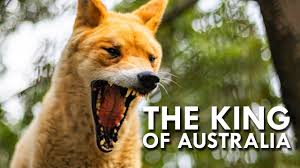
Well, here we are at another Monday and time to look at another wild dog, this week it is the Australian Dingo.
Dingoes have a lifespan from as few as 3yrs to usually around 16yrs but some have been known to live for 20yrs.
The dingo is an ancient lineage of dog found in Australia, however, compared with the skull of the dog, the dingo possesses a longer muzzle, longer carnassial teeth, longer and more slender canine teeth, larger auditory bullae, a flatter cranium with a larger sagittal crest, and larger nuchal lines.
The dingo’s three main coat colourations are light ginger or tan, black and tan, or creamy white. The skull is wedge-shaped and appears large in proportion to the body.
The dingo is closely related to the New Guinea singing dog. The oldest remains of dingoes in Australia are around 3,500 years old.
A dingo pack usually consists of a mated pair, their offspring from the current year, and sometimes offspring from the previous year.
Dingoes do not bark like a dog but howl, chortle, yelp, whine, growl, chatter, snort, cough and purr.
Dingoes are largely terrestrial carnivores they have a broad diet including fresh meat, fish, eggs and carrion they occasionally eat plants and fruits. They’re opportunistic hunters but will also scavenge food. The bulk of their diet is made up of meat: they eat kangaroos, wallabies, feral pigs, wombats, small mammals (rabbits, rodents), birds and lizards.
Their strong jaw and large canines permit the dingo to procure and machinate rather tough prey, allowing them to tear meat from carcasses and crush bones to obtain calcium and fat.
Dingoes have a strict social hierarchy and regularly mate for life. Female dingoes have one annual breeding cycle, March to June. The dingo pack helps with the rearing of pups which are weaned at about 2 months, at which time the pups may be abandoned or can stay with the parents for up to a year. Dingo pups are fully grown by 7 months.
They are primarily killed by humans, crocodiles, and sometimes by other canid species, such as jackals and domestic dogs. They are also killed by Dingoes from other packs. Pups may be taken by large birds of prey.
They are highly intelligent and intuitive animals that have a high capacity to solve problems and plan.
With this high intelligence and foresight comes a strong sense of self-awareness and independence.
This week will be looking at early public transport in Newcastle.
In 1940 transport in Newcastle was at a crossroads, many people relied on public transport in the form or trams, trains and buses due to the depression in the 1930’s private cars were rare.
Horse drawn vehicles were still pretty common and with the fuel shortages and rubber for tyres being in short supply during the second world war. Many businesses went back to using horse drawn vehicles, however, it became harder to get feed for the horses as the war dragged on.
A horse drawn ambulance
Prior to the construction of various road projects connecting the outer western suburbs of Newie crossing the Hunter River including the Stockton Bridge numerous ferry services, both privately run and publicly operated.
Early Stockton Ferry Warf
Shuttling people and cars across the Hunter River to link the area of Stockton with the rest of Newcastle during the 19th and 20th centuries, the ferry runs from Market Street Wharf to Stockton.
People waiting for the ferry
Newcastle first had trams from 1887 until 1950, when the final line, the Waratah line, was replaced by buses. At its peak, the system ran to Speers Point and West Wallsend.
An early tram
The first railway in Australia was built by the Australian Agricultural Company in 1831. The railway was an inclined plane railway from the Company’s A pit in Church Street Newcastle to Newcastle Harbour.
Newcastle Station
The first government operated bus route commenced on 22 September 1935 to Mayfield. On 10 June 1950, the final tram routes were withdrawn. On 2 February 1983, the Stockton ferry service was taken over from a private operator.
The first buses
Early Buses
Cars have been super important in Australia’s history. They first came to Australia in the early 1900s and back then not many people could afford them. In the 1950s, Australia started making its own cars, and that made a lot of jobs and made cars easier to get.
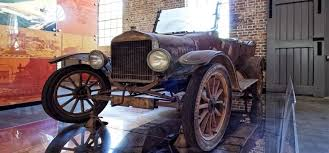
A Model T on display at the Newcastle Museum
I have not been able to find when the first cars arrived in Newcastle.
When I was young it was considered to be a big deal to go into town to go the movies or to do some shopping and by in town I mean into Newcastle mainly Hunter Street.
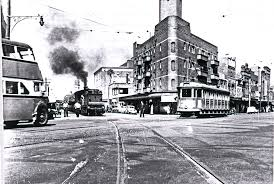
So, this week I will write a bit about Hunter Street’s history and present.
Hunter Street is a major road in the Newcastle central business district, in New South Wales. The street, formerly three separate thoroughfares, extends from Pacific Street in the city’s east, to Selma Street in Newcastle West and since 2008 has been the focus of community-led creative enterprises and projects.
Hunter Street runs in the vicinity of an early nineteenth-century track known as Wellington Street that extended from Watt Street (formerly George Street) in the east to Perkins Street in the west. The strip was renamed Hunter Street by Henry Dangar in 1823 and by the mid nineteenth-century commercial and residential properties had been built on most addresses east of Perkins Street.
By 1900, Hunter Street had stretched a long way and had 26 hotels operating along the street. In 1887the first steam trams came into operation by 1898 the first restrictions on vehicular traffic drawn by animals were introduced
Drainage problems and raw sewerage necessitated the sealing of Hunter Street, first carried out with wooden blocks, concrete and asphalt.
After the opening of the Newcastle Steelworks in 1915, Newcastle became increasingly suburban, and Hunter Street developed as a destination for commerce and retail. The size and extravagance of Newcastle’s early twentieth-century department stores demonstrates the popularity of city shopping.
Established as the city’s main street for commercial and retail activity, Hunter Street entered a period of severe decline after World War II. However, it recovered over time.
Hunter Street developed as the commercial and civic hub of the region. Along its spine were the pubs, banks, insurance houses, shops, department stores, and cooperative societies that formed the civic and cultural life of Newcastle.
In 1989 an earthquake hit Newcastle and due to the damage making Hunter Street inaccessible for two weeks.
The in 1990 there was a recession which coupled with record youth unemployment, brought the emptying of Hunter Street to a terrible low in 2008, with the vacancy rate at 20% and chronically vacant properties beginning to deteriorate.
In recent years there have been efforts to clean up and bring life back into Hunter Street, as I haven’t been there myself I can’t say what it is like now.













 Jo-AnneRamplings