Emu

This week we are looking at the Emu they are the second-largest living birds in the world, native only to Australia, and known for their speed, endurance, and unique breeding habits.

They stand up to 1.75–2 meters tall and weigh 50–55 kg (110–121 lbs), with brownish feathers with a shaggy texture; long legs adapted for running. They have three forward-facing toes, which help them sprint and manoeuvre quickly.

Some may know and some may not know but emus can run as fast as 50 km/h which is 31 mph, and they can jump up to 2 meters which is 7 feet and to that they are damn strong swimmer and move through water damn fast when they want to.

These birds are omnivorous with their diet consisting of seeds, fruits, flowers, shoots, and insects like beetles and grasshoppers. They will travel long distances to find food and water, often forming loose groups called “mobs.”

They will mate for life in the wild, the female will lay 7–10 large dark green eggs, each about 13 cm long, but it the male who incubates the eggs for ~60 days and raises the chicks, while the female often moves on to mate again.

Now are you wondering what they sound like, well the female makes a deep, low-pitched sounds that can sound like drumming and often described as a hollow and resonant sound. These calls can carry for long distances and are used for communication, especially during breeding season. Males tend to sound like a soft grunt.

These calls are used to attract mates, signal territory, or keep contact with other emus.

Have you heard of the Emu War of 1932 this was a war us humans lost, the Australian army tried to cull emus damaging crops, but the birds proved too elusive. Despite firing 10,000 rounds of ammunition, fewer than 1,000 were killed, and the “war” was considered a failure.

Cockatoo

Last week I wrote about birds in general, this week I am writing about the Cockatoo.

Cockatoos are intelligent, expressive parrot’s native to Australasia, known for their dramatic crests, powerful beaks, and deep emotional bonds with humans. They’re among the most affectionate and long-lived pet birds.

There are around 21 recognized species, including the Sulphur-crested, Galah, Palm, and Major Mitchell’s cockatoos

They are native to Australia, New Guinea, Indonesia, and the Solomon Islands.

Typically white, black, or pink with dramatic crests; less rainbow-coloured than other parrots

Their beak is strong, curved with a unique “three-way bite” for cracking nuts and gripping objects

They live in flocks and form lifelong pair bonds, they are loud and expressive, you wouldn’t want one if you lived I an apartment due to their volume.

They like to eat seeds, nuts, fruits, roots, and insects; use their beaks and strong tongues to forage.

They have a lifespan: 25–60 years, with some living over 70 years in captivity, in the wild they live in tree hollows and both parents care for their young.

They reproduce through internal fertilization, followed by egg-laying and a dedicated incubation period of about 28–30 days. The female lays 1–3 eggs per clutch, typically spaced a few days apart. Eggs are laid in a nest cavity or nesting box lined with wood shavings or soft material. The eggs are white and oval, and both parents may take turns incubating them.

Incubation lasts 28–30 days, during which the eggs must be kept at a stable temperature (~37.2°C) and humidity (55–60%).

Eggs are turned regularly to ensure even development and prevent the embryo from sticking to the shell. They are born blind and featherless, relying entirely on their parents. Their feathers start appearing in a few weeks and by 10 to 12 weeks they are ready to leave the nest.

They are highly social and attentive parents, often forming lifelong bonds. They teach their young vocalizations, foraging, and social behaviours essential for survival.

Birds

Hello everyone, this week we are looking at birds, did you know there are over 11,000 species of birds throughout the world and 800 different species in Australia.

Now I expect everyone knows that all birds have feathers, beaks and wings but not all can fly. I will talk about those that don’t fly next week.

The country with the largest number of different species in Colombia with about 1,917.

This remarkable avian diversity is due to Colombia’s unique geography and climate.

The country with the fewest bird species is Vatican City, due to its extremely small size and limited natural habitat. However, if you’re considering larger countries with more ecological context, Iceland is often cited as having notably low avian diversity.

Do you know the diet of birds, most eat plants and seeds but there are some that eat meat, meat eaters are considered birds of prey. However, there are some that are not like the Butcher bird and the Magpie both are native to Australia.

Birds that have musical voices are called songbirds; they have specially developed vocal cords which are called the syrinx which they use to produced sounds resembling songs. They also have a special section in their brain which helps them learn their songs.

The birds that fly do so to find food and avoid predators; birds have a very light skeleton and strong muscles and wings. The shape and size of their wings determine the distance between and type of flight they can do.

Birds have feathers for flight, insulation, communication, camouflage, and protection—making feathers one of the most versatile and essential adaptations in the animal kingdom.

However, their feathers are not just for flight, they have bright, patterned feathers are used in courtship rituals to attract mates. Males often display more vibrant colours than females. Birds fluff, spread, or raise feathers to signal aggression, readiness to mate, or submission.

Many birds have feather colours and patterns that match their surroundings, helping them avoid predators or sneak up on prey.

Some species molt into different plumage depending on the season for better camouflage.

Feathers protect birds from UV radiation, wind, rain, and physical injuries.

Dense feather layers help shield sensitive skin from harsh environments.

Cuba Pt 2

This week we are looking at Cuba’s national things.

The coat of arms of Cuba features a shield prominently displayed in front of a fasces crowned with a Phrygian cap. The shield is supported by an oak branch on one side and a laurel wreath on the other. This heraldic design, created by Miguel Teurbe Tolón in 1849, is the official symbol of Cuba.

The national bird of Cuba is the Cuban Trogon, also known as the Tocororo. This vibrant bird features a green back, a blue crest, a red belly and beak, and a white throat and chest. Its distinctive colours mirror those of the Cuban flag, which is why it was chosen as the national symbol. 

The national flower of Cuba is the white ginger lily, also known as the White Mariposa or Butterfly Jasmine. Its scientific name is Hedychium conarium. 

The national dish of Cuba is Ropa Vieja, which translates to “old clothes” in Spanish. It’s a flavourful stew made from shredded beef, tomatoes, bell peppers, onions, and spices. The dish is often served with rice, black beans, and plantains. 

While Cuba doesn’t have a single officially designated national drink, the Mojito and the Cuba Libre are widely recognized as its most iconic and popular cocktails. The Mojito, a blend of rum, mint, lime, and sugar, is a classic Cuban drink often associated with the country’s hot weather and vibrant culture. The Cuba Libre, a simple mixture of rum and Coca-Cola, is another beloved beverage that symbolizes Cuba’s struggle for independence and remains a symbol of Cuban identity. 

The national colours of Cuba are red, white, and blue. These colours are prominently featured on the Cuban flag, which consists of three blue stripes, two white stripes, and a red triangle with a white star. 

Symbolism of the Colours:

  • Blue: Represents the country’s maritime location and the ideals of its people.
  • Red: Symbolizes the blood spilled by those who fought for Cuban independence.
  • White: Represents the purity of the revolutionary cause. 

The national sport of Cuba is baseball. While football (soccer) is also popular, baseball has a strong cultural significance and is considered the national sport. It was introduced in the 1860s from the United States and quickly became a beloved pastime. 

Island Fox

This will be the last post about foxes we are ending with the Island Fox.

The Island fox is native to six of the eight Channel Islands in California it is considered critically endangered by the IUCN, it is threaten by golden eagles, disease, and habitat destruction.

The Catalina Island Conservancy and Institute for Wildlife Studies have established a fox recovery program for the island fox. This program includes vaccination, relocation, and captive breeding. 

The island fox is a small fox species that is endemic to six of the eight Channel Islands of California. There are six subspecies, each unique to the island it lives on, reflecting its evolutionary history. They are generally docile, show little fear of humans, and are easily tamed.

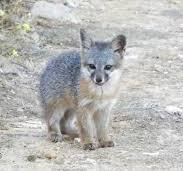
The island fox has similar markings to the gray fox. They have gray colouring on the back, rust colouring on the sides, and white underneath. The face has a distinctive black, white, and rufous-coloured patterns.

In March 2004, four subspecies of the island fox were classified as a federally protected endangered species: the Santa Cruz Island fox, Santa Rosa Island fox, San Miguel Island fox and the Santa Catalina Island fox.

Island foxes reach sexual maturity at 10 months, and females usually breed within the first year. These foxes can live for up to 10 years in the wild, but four to six years is more typical.

They are generally docile, show little fear of humans, and are easily tamed. Island foxes played an important role in the spiritual lives of native Channel Islanders. They have been likely semi-domesticated as pets, used as pelts, or for other functions, like pest control.

They are omnivorous, eating both plants and other animals. They eat a large amount of insects, some island deer mice, reptiles, and fruit from native plants. New evidence is showing marine resources may be important for island foxes. Their diet also changes with the seasons.

 The primary threat to the island fox is predation by invasive golden eagles. The species is also very vulnerable to canine distemper transmitted by domestic dogs, habitat fragmentation due to development, and habitat loss to introduced livestock and game species.