I’m struggling but I am still here trying to do the best I can day after day

Hi, everyone, I guess you would have noticed that during the last few weeks my posting hasn’t been up to scratch but that should be changing as I am going to start setting apart one day a week to write up posts which is what I have done for years but recently I stopped doing that and was writing the post the day I was posting it.

Now for a bit of honesty as I am sure most are aware I have Parkinson’s Disease well the last couple of weeks I have felt overwhelmed and in so much pain day after day, in the evenings I often feel so tired it is an effort to focus and stay awake but when I say I am going to bed early Tim will say something that makes me feel that I shouldn’t be and I know he doesn’t mean to make me feel bad in any way but I do.

My day starts at 5am and yeah, I know some would say why get up so early, but I like the quiet of the morning and I am most productive first thing by 10am I am starting to feel worn out and need to put my feet up and rest for a while. I am thankfully able to do most of the housework there was a while there before I was medicated that I could do bugga all.

During these really cold days I have been getting a lot of headaches and body aches and having moments when everything seems too much to deal with.

I have daily pain and stiffness, at times I have insomnia (but thankfully I am sleeping well at the moment), weakness, and stiffness when standing and walking for a bit till my legs come good.  I have to stand and get my balance, and the first few steps can look odd but once things start to work, I am ok. I have had times when sitting is uncomfortable due to my body aching or me starting to feel stiff all over.

I often struggle to get words out the path between my brain and mouth is often blocked and can make things difficult. I will often jumble up what I am trying to say, and it is frustrating to me.  Tim often comments that I take too long to answer him but I’m doing the best I can.

Swallowing can be an issue at times and yeah, I know I should take smaller bites, and I do try to do so but there are times I don’t remember to do so, there have been many times when food gets stuck, and I am chocking and coughing trying to dislodge it.

I have gained weight again and this is very depressing for me, telling me to eat less doesn’t help reminding me how much weight others in the family have lost doesn’t help, it just depresses me more.

My body can get very cold during winter and very hot during summer and having someone comment oh you’re cold or oh you’re hot with that shocked tone is also depressing for me. I can’t change how I am all I can do is try and cope the best I can.

Life at the moment is a roller coaster that is moving slow, my emotions are all over the place some days and I feel that the cold wet days are affecting my moods, making it more difficult to deal with the depression.

I cannot thank my sister Sue enough for giving me back a sense of a normal life, I get to go shopping regularly, I have someone to take me to appointments and someone who I can laugh with, and we do laugh a lot when together.

I am blessed with a loving and supportive family and none of them say or do anything to intentionally upset me but there are times when I feel some do not want to take the time to read and understand how Parkinson’s having is affecting me.

Some may think I should take a break from blogging, but it is a big part of what keeps me going day after day, like having to ring Sam 4 or 5 times in the morning to make sure she is up and getting ready for school.

There are days when everything feels like such a struggle and way too much effort is needed to do anything and everything.

Anyway I am hoping that I will continue to improve and I will make sure each Sunday I will take the time to write up posts  for the following week.

Uploading: 48166 of 48166 bytes uploaded.

Rejection Sensitive Dysphoria

First up there are two new posts over at my Random Stuff

https://jamfn.blogspot.com/2025/03/just-bit-of-hodgepodge.html

https://jamfn.blogspot.com/2025/03/just-bit-of-hodgepodge.html


Today we are looking at a condition called, rejection sensitive dysphoria or RSD, this is a condition that my eldest daughter has been diagnosed with along with ADHD.  This condition isn’t something I have ever heard of till now.

It is a condition that causes intense emotional pain when someone feels rejected, criticized, or fails.

People with RSD may avoid situations where they might fail or be rejected it can affect children, teens, and adults. 

RSD is not an official medical diagnosis, but there are treatments that can help 

Symptoms of Rejection Sensitive Dysphoria

Rejection can, and often does, provoke an emotional response in all of us. What marks RSD is that this response is inappropriate for the circumstance and can last for days or longer after the rejection. Symptoms of Rejection Sensitive dysphoria can vary from person to person, but some common symptoms include:

  • Chronically low self-esteem 
  • Inability or trouble containing emotions after being rejected – such as fits of anger or tears
  • Sudden drops into depression or anxiety, such as those typically hallmarked by bipolar
  • Avoidance of tasks, big or small, that could end in failure 
  • People pleasing behaviour 
  • Fear or apprehension of authority figures
  • Perfectionism or overcompensation for internal feelings of shortcomings
  • Isolating behaviours 
  • Stage fright, fear of public speaking or social awkwardness even around friends and family

RSD can impact many aspects of life, including relationships, academics, and professional endeavours. It can also lead to anxiety, depression, self-harm, and suicidal thoughts or behaviours. 

Causes

  • Differences in brain structure that make it harder to regulate emotions and behaviours related to rejection 
  • A deep-seated fear of negative judgment 
  • A sense of falling short, failing to meet one’s own high standards or others’ expectations 

Treatment is a combination of medications, therapies, and lifestyle changes. A big part is learning how to manage and cope with RSD can help people live fulfilling lives.

Process Delay Disorder

Hi everyone, this week we are looking at a condition that my eldest daughter told me about, it is called Process Delay Disorder. Has anyone heard of this?

What is it, well it’s a condition that makes it difficult for people to process information from their senses. This can include visual, auditory, or sensory information. 

It is a time-relating characteristic that determines an amount of time during which a scheduled process or activity is stopped or idle. It is an unplanned extension in the process’s duration caused by some circumstances that impedes the process’s commencement or continuation.

The symptoms include. 

  • Difficulty remembering new information
  • Difficulty following multi-step instructions
  • Difficulty understanding speech, especially in noisy places
  • Difficulty completing math operations
  • Difficulty interacting with others

There are many things that could cause it, including. 

  • Physical illness or injury
  • Lack of sleep
  • Reaction to medications
  • Attention Deficit Hyperactivity Disorder (ADHD)
  • Learning disorders
  • Emotional factors
  • Fewer neurotransmitters in the brain
  • Epilepsy

There’s no cure for auditory processing disorder, however, there is treatment.

When it comes to treatment, it seems something called auditory training, this means to undertake activities that will improve someone’s concentration and listening.

Reading regularly, is thought to help as reading exercises your brain muscles like any other muscle, and the more you read, the faster you might be able to process information.

Playing brain games, also help as there are many brain-training games and puzzles that can help improve your processing speed.

Processing disorders can affect a person’s ability to learn, work, and socialize. They can also lead to low self-esteem and anxiety. 

Bipolar Disorder Treatment

First off there is a Hodgepodge post  here:http://jamfn.blogspot.com/2025/01/its-hodgepodge-time.html

Now for today’s post

This week we are looking at the treatment for bipolar disorder. There are two major parts to managing bipolar disorder: acute management and long-term management.

Treatment needs to be ongoing and tailored for each person.   

You also need to remember that treatment for bipolar disorder needs to factor in any conditions you have such as anxiety or substance use disorder. Other medical illnesses such as hypertension, obesity and thyroid problems sometimes occur together with bipolar disorder.

Mental health practitioners need to work out your treatment according to whether you’re experiencing hypomania, mania, depression or euthymia (absence of depression or mania). A highly qualified mental health practitioner needs to prescribe your treatment. Each person needs a treatment plan tailored for their individual needs, as everyone with bipolar disorder experiences it differently.

Do not try to self-medicate or develop your own treatment plan.

Acute management aims to stabilise someone currently experiencing mania or depression.

Medications like mood stabilisers and antipsychotics are the main focus of acute management of bipolar mania and depression. Electroconvulsive therapy (ECT) can be effective for treatment-resistant acute mood episodes, especially in people experiencing depression with psychotic features.

Long-term management involves maintenance and prevention of relapse, and optimised functional recovery socially and at work. Medications and psychological and lifestyle approaches are aimed at providing long-term prevention of relapse, building resilience, and improving quality of life.

There are specially trained mental health professionals such as psychiatrists and psychologists who can help you with bipolar disorder

You need a thorough check from a health professional before treatment is prescribed and specially prescribed medication is the most effective way to treat and manage bipolar disorder. However, psychological and lifestyle therapies can be helpful additions to your treatment.

Some may experience ‘rapid cycling’ can go between depression and mania a few times a week (some even cycle within the same day). While others might have mood changes less often and less severely.

There are also some who can have very severe episodes of mania with psychotic symptoms (hallucinating or delusions) and need hospitalisation.

Some people can experience normal moods in between their swings, though the majority of individuals experience some low-level symptoms between episodes.

Bipolar Disorder

 First off there is a new post over here:https://jamfn.blogspot.com/2025/01/its-hodgepodge-day.html

Now today’s post

Good morning, all this week we are having a brief look at bipolar disorder, a condition I expect most have heard of but how many know anything about it, I know bugga all.

Bipolar disorder is a mental illness that causes extreme shifts in mood, energy, activity levels, and concentration. It is also known as manic-depressive illness or manic depression. It usually requires lifelong treatment and does not go away on its own.

The exact cause of bipolar disorder is unknown, but a combination of factors may contribute to its onset and how it progresses. 

These include genetics as it often runs in families, the way a person’s brain functions as well as its structure as people with the disorder may have a different structure to those without it. The chemicals in our brains are involved in psychiatric disorders as an abnormal functioning of brain circuits that involve serotonin may contribute to bipolar disorder.

Of course, drinking alcohol or using some recreational drugs are believed to increase your risk of developing bipolar disorder.

Then there are environmental factors meaning things that are considered an adverse or life-altering event, such as bereavement, violence, or the breakdown of a relationship, can trigger or exacerbate symptoms. 

The condition has many symptoms that include the following

  • Overwhelming sadness
  • Low energy and fatigue
  • Lack of motivation
  • Feelings of hopelessness or worthlessness
  • Difficulty concentrating and making decisions
  • Uncontrollable crying
  • Thoughts of death or suicide

Treatment includes medication such as mood stabilising drugs, antipsychotic and antidepressant medications, psychological therapy and some lifestyle changes may be called for.

This is a condition that requires lifelong treatment and is complicated and often will involve many assessments sometimes with different doctors in order to be diagnosed. There are no blood tests that will diagnose it, nor is there any medical or brain scans that will make a diagnosis easy.

A Little About Depression

ImageDepression is a terrible condition that affects many people myself included and it should not be taken lightly but too many people do just that. Now most people think if someone has depression they will be sad and cry a lot and will have suicidal thoughts but that is not the case. Depression can affect different people in different ways, I do get sad and I do cry a lot and things do get to me easy when I am not taking my medication, however both Tim and Kathy are different both of them get angry and moody and all in all they are not nice to be around. They both have times when they want to stop taking their medication, in fact at the moment Tim is cutting back how often he takes his medication because he no longer things he needs it. I said only time will tell and if I say to him I think he needs to increase it again I don’t want him arguing with me about it………

Sometimes depression or a depressed mood may have no apparent cause and sometimes it may be caused by a number of factors (by themselves or in combination), such as:

  • Genetics or a history of depression within your family. 
  • Biochemical – In normal brain functioning, neurotransmitters (which regulate mood) jump from one nerve cell to the next, with the signal being as strong in the second and subsequent cells as it was in the first. For people who have depression, the mood regulating neurotransmitters fail to function normally, meaning that the signal is either depleted or disrupted before passing on to the next nerve cell, thus resulting in a lowering of your mood. In non-melancholic depression, it’s likely that the transmission of serotonin (which improves mood) is reduced or less active, whereas in people with melancholic and psychotic depression, the neurotransmitters noradrenaline and dopamine are more likely to have failed or be functioning abnormally. 
  • A stressful event or chain of events such as a family break-up, abuse, ongoing bullying at school, rape, a death, a relationship break up, family conflict.
  • Personality style – Certain personality types are more at risk of depression than others. This includes people who tend to be anxious, have low self-esteem, are perfectionists or are shy.
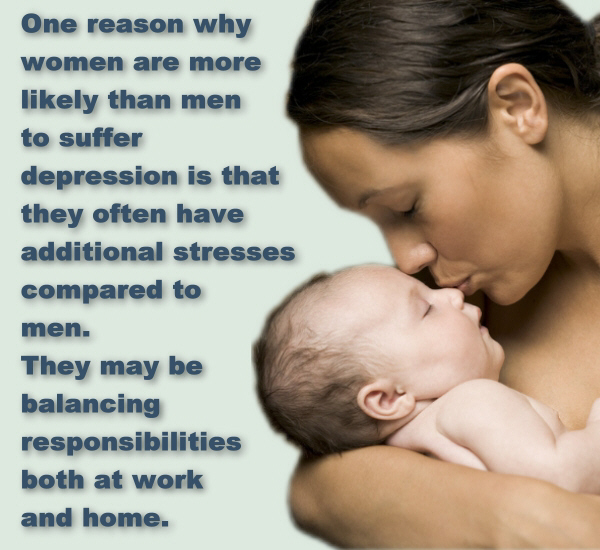
  • Having a baby (called post-natal depression).
  • Other mental illnesses such as schizophrenia.

I remember when Kathy was first prescribed medication for her depression it was explained to me that it was felt that her brain wasn’t producing enough serotonin and because she was so young (14) that this could be a lifelong problem with her and only time would tell if she would ever be able to stop taking the medication.  

I was also told that if the depression was caused by genetics or chemical or through something like schizophrenia then it would most likely be a lifelong condition, the other causes of depression are different and after having medication for a short while it will no longer be needed.

If a person had a condition like a heart condition or epilsey no one would be saying you have been taking medication for a while now and maybe you don’t need it anymore, so why do people thing depression is different. It is as if they don’t think it is a “real” disease.

I know that some people will only suffer from depression for a short period of time or are able to stop taking medication for it and if that is you then that is awesome, but it is not me nor is it my daughter Kathy or my sister Sue. 

Also some people may not be suffering from depression but are in fact burnt out. Here is the difference between depression and burnout………………


Depression                                                                         Burnout

Flat and Numb                                                                  Drained and Defeated

Tired all the time due to low mood                         Exhausted by you relentless responsibilities

Withdrawn & Disinterested                                       Overwhelmed & Unmotivated

Enjoyable activities are no longer enjoyable      Frustrated you don’t have time to do anything enjoyable

Life keeps bring you down                                          Life seems unfair and full of pressures

Worried that you’ll never feel happy                     Worried that you won’t get onto of things