

This week we are kicking of the series about wild dogs from around the world and we will start with the African wild dog, also known as the painted dog or Cape hunting dog.
The African wild dog has a colourful, patchy coat. They have large bat-like ears and a bushy tail with a white tip, which may serve as a flag to keep the pack in contact while hunting. Their markings are as unique as a human fingerprint, making it easy to identify individuals.
This dog is native to sub-Saharan Africa
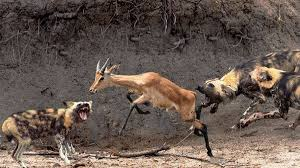
These wild dog packs have an 80% success rate when hunting, thanks to high levels of communication.

They generally live up to the age of 11 when living in the wild.
It can also run up to 70km or 44mph this is the same as a greyhound, over a long time. Of all large carnivores they are regarded as the most efficient hunters as their targeted prey rarely escapes. They hunt for a wide variety of prey, including gazelles and other antelopes, warthogs, wildebeest calves, rats, and birds.
They like to live in packs averaging from seven to 15 members and sometimes up to 40. Before the recent population decline, packs of up to 100 were recorded. Within the pack, there is a unique social structure.
They cooperate in taking care of the wounded and sick members, there is a general lack of aggression exhibited between members of the pack, and there is little intimidation among the social hierarchy.
Every hunting pack has a dominant pair. They are usually the only pair that remains monogamous for life. Wild dogs also have a large range of vocalizations that include a short bark of alarm, a rallying howl, and a bell-like contact call that can be heard over long distances. Elaborate greeting rituals are accompanied by twittering and whining.
They are pack animals that are quick to defend themselves against any threatening animal. While they don’t prey on humans and typically approach them out of curiosity rather than aggression, it’s best not to go near them.


 Jo-AnneRamplings