

This week we are looking at the Andean Bear also known as the Spectacled Bear, this is a species of bear native to the Andes Mountains in northern and western South America. It is the only living species of bear native to South America, and the last remaining short-faced bear.
The bears are an endangered species, listed as Vulnerable, and it is illegal to kill them. The Andean bear is the last remaining short-faced bear spectacled bears are the only surviving species of bear native to South America, and the only surviving member of the subfamily Tremarctinae.
They are technically the largest land carnivore on that continent, although as little as 5% of its diet is composed of meat. South America’s largest obligate carnivore is the jaguar. Among South America’s extant, native land animals, only the Baird’s and South American Tapirs are heavier than this species. They are a mid-sized species of bear.
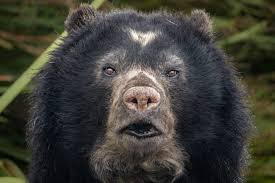
Overall, its fur is blackish in colour, though bears may vary from jet black to dark brown and to even a reddish hue. The species typically has distinctive, beige-coloured marking across its face and upper chest, though not all Spectacled bears have “spectacle” markings. The pattern and extent of pale markings are slightly different on each individual bear and bears can be readily distinguished by this.
They are relatively small compared to other bear species.
Males typically weigh between 220-440 pounds and are 5.5 to 6.5 feet long, while females weigh between 80-180 pounds and are slightly smaller. They stand 2 to 3 feet tall at the shoulder.
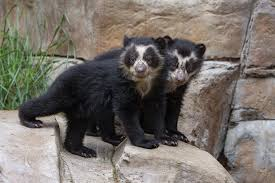
They have relatively large heads compared to their body size, as well as powerful claws and paws that help them climb trees and build nests. Despite their size, they are known for their adaptability to different environments within the Andes, from cloud forests to coastal deserts.
They inhabit mountainous regions of South America, primarily the Andes Mountains, from Venezuela to Bolivia. They are found in a variety of habitats including rainforests, cloud forests, grasslands, and even scrublands. They are known to build platform nests in trees for eating and sleeping and are generally active year-round.
They feed on fruits and bromeliads being there favored foods, but also eat berries, grasses, bulbs, cactus flowers and small animals such as rodents, rabbits and birds. Near settlements, bears sometimes raid cornfields. Andean bears climb trees and forage on the ground.
They have a lifespan of around 20yrs in the wild but up to about 38yrs under human care they have a gestation of between 160 to 255 days and can have between 1 and 4 cubs they are considered mature between 4 and 7 years.
They are the only bears are the only known to eat bromeliads. Has rings of white or light fur around its eyes. The rest of the bear’s fur is black or dark brown.
Andean bears, also known as spectacled bears, are generally considered one of the least aggressive bear species towards humans. While they are capable of defending themselves if threatened, they typically avoid encounters with people and are known for their shy and elusive nature. Attacks on humans are rare, with only one confirmed human death attributed to a spectacled bear. They can run up to 30 mph.


 Jo-AnneRamplings