Mount Gambier

This week we are looking at the second largest city/town in South Australia, which is Mount Gambier, with a population of over 26,000. It is located on the Limestone Coast. It is in the southeastern corner of South Australia.

The town was founded by Hastings Cunningham and was first called “Gambierton” in 1854 by subdividing a block of 77 acres (31 ha). From 1861 to 1878, the Post Office was known by this name before reverting to Mount Gambier.

It’s known for its limestone, volcanic landscape and crater lakes. One of these, Blue Lake, turns cobalt blue in summer. Nearby, the Centenary Tower offers panoramic views of the area. The Umpherston Sinkhole contains a lush sunken garden. The Lady Nelson Visitor Centre houses a full-size replica of a late-18th-century ship.

Mount Gambier’s history is marked by its volcanic origins, early European exploration, and development as a significant regional centre in South Australia. The extinct volcano, Mount Gambier, was first sighted by Lieutenant James Grant in 1800 and named after Admiral James Gambier. European settlement began in the 1840s, with the area becoming a major agricultural and timber centre.

The traditional owners of the Mount Gambier area are the Boandik people, also known as the Bungandidj. They are the First Nations people of the region, and their language and culture are deeply connected to the land and waterways. The name “Bungandidj” is said to mean “people of the reeds”. 

Organizations like the City of Mount Gambier and headspace Mount Gambier formally acknowledge the Boandik people as the traditional custodians. 

There’s a growing movement to recognize the Boandik presence and connection to the land through dual naming of significant sites, alongside their European names. 

The Bungandidj language is being revitalized, and efforts are underway to reintroduce it into the community. 

The Boandik people have a long and rich history in the region, and their stories and cultural knowledge are important to the area’s identity. 

Mount Gambier is generally considered a safe place, but like any location, it has areas where caution is advised, especially at night or in more remote areas. While some crime statistics show increases in thefts and break-ins, these are not indicative of the overall safety of the city for residents and visitors. 

Vatican City

I thought after writing about Russia the largest country in the world, I would write about the smallest country.

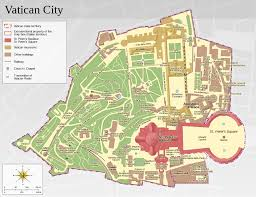
The smallest country in the world by both area and population is Vatican City. It is an independent city-state located within Rome, Italy, and serves as the spiritual and administrative centre of the Roman Catholic Church. Its area is just 0.44 square kilometres (0.17 square miles). 

Vatican City, a city-state surrounded by Rome, Italy, is the headquarters of the Roman Catholic Church. It’s home to the Pope and a trove of iconic art and architecture. Its Vatican Museums house ancient Roman sculptures such as the famed “Laocoön and His Sons” as well as Renaissance frescoes in the Raphael Rooms and the Sistine Chapel, famous for Michelangelo’s ceiling.

The entire population of Vatican City is only around 800 people. Every citizen who resides in the city is Roman Catholic and is considered to be influential or significant in some way within Catholicism.

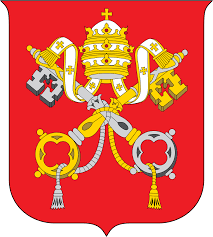
The flag of Vatican City is a vertical bicolour of yellow and white, with the emblem of the Holy See (a papal tiara and crossed keys of Saint Peter) centred on the white half. The yellow symbolizes spiritual power, while the white represents temporal power. The keys represent the Pope’s authority, and the tiara symbolizes the Pope’s threefold power. 

It was adopted in 1929; the year Pope Pius XI signed the Lateran Treaty with Italy creating the new independent state of Vatican City.

The Vatican City passport is a passport issued by the Holy See (the governing body of the Vatican) or by the Vatican City State. It’s ranked among the most powerful passports globally, granting holders visa-free or visa-on-arrival access to a large number of countries. The Vatican issues both diplomatic and service passports, while the Vatican City State issues ordinary passports for its citizens.

The euro is the official currency of the Vatican City, although Vatican City is not a member of the Eurozone or the European Union. The euro has been the official currency of Vatican City since 2002.

The coat of arms of Vatican City is the coat of arms used by Vatican City, which was originally adopted by the Fundamental Law of Vatican City State on 7 June 1929. This coat of arms is defined by law as having the silver key in bend and the gold key in bend sinister.

England

This week I am looking at the country of England, last year I wrote about the United Kingdom of which England is part.

The area now known as England has a long history, with evidence of human presence dating back over 800,000 years, with stone tools and footprints discovered at Happisburgh in Norfolk. 

Though the Kingdom of England, as a unified entity, emerged in the late 9th century and existed until 1707 when it united with Scotland to form the Kingdom of Great Britain. 

The Romans invaded and occupied the area in AD 43, leaving a significant impact on the region’s culture and infrastructure. After the Romans left in the 5th century, the area was inhabited by various Anglo-Saxon kingdoms. 

The Kingdom of England emerged in the late 9th century as various Anglo-Saxon kingdoms were unified under a single ruler. 

The Kingdom of England and the Kingdom of Scotland were united under one monarch in 1603, and in 1707, they formally merged to form the Kingdom of Great Britain. The Kingdom of Great Britain existed from 1707 to 1801, when it merged with the Kingdom of Ireland to form the United Kingdom of Great Britain and Ireland. 

England’s population is estimated to be around 56.5 million, representing about 84.3% of the total UK population. 

The dominant religion in England is Christianity, with the Church of England being the established state church, although it represents less than half of the population, with a growing number of people identifying as non-religious. 

Other religions include Islam, Hinduism, Sikhism, Judaism, Buddhism. There is also an increase in the number of people identifying as non-religious.

Besides the Church of England, other Christian traditions include Roman Catholicism, Methodism, Presbyterianism, Mormonism, and Baptists. 

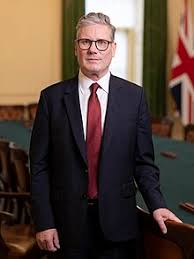
The current Prime Minster is Keir Starmer elections are held when the prime minster calls for one. As the ability to request a dissolution of parliament and call a general election lies with the prime minister. This means that a prime minister can effectively announce an election at a time of their choosing.

If the prime minister does not call an election earlier, then parliament would be automatically dissolved “the beginning of the day that is the fifth anniversary of the day on which it first met”, with the election being held 25 working days after that date. This means the latest date for the next general election will be 21 August 2029.

The legal age to drink, vote or marry is 18, although until 2023 you could legally marry as young as 16 with your parents’ consent.

The law also expands the offence of forced marriage to make it illegal to arrange for a child under 18 to marry, regardless of whether force or coercion is used. 

Adults who facilitate underage marriages can face up to seven years in prison. 

The law change aims to protect vulnerable children from being forced into marriage and to address the damaging impact of child marriage. 

The legal minimum age to work is 13 years old, but with restrictions, and young people can work full-time once they reach the minimum school leaving age which is 16.

The legal age to join the British Armed Forces is 16, but with parental consent, and those under 18 will be considered junior soldiers until they turn 18, at which point they can become regular soldiers. 

If you’re under 17 years and 6 months old, you’ll start your Army career at the Army Foundation College, Harrogate, as a Junior Soldier. You can become a regular soldier at 18 years old. 

You can start your application when you’re 15 years and 7 months old, but you won’t be able to go to the assessment centre until you’re at least 15 years and 9 months old. 

Those who sign on when 16 or 17 must serve until they are 22. However, a soldier cannot be deployed to the front line until they are aged 18. 

In England, you can start receiving the state pension, at the age of 66, but it is set to rise to 67 by 2028 and to 68 from 2044. 

Ok that’s enough for this post, I may do a part two looking at other stuff about the country.

Newcastle’s Trams Way Back When

Hello Wednesday, hello world, hello readers today we are looking at the rise and fall of the electric tramway.

Newcastle’s first tram service started in 1887, it ran between the city and the suburbs Wallsend/Plattsburg, it was a steam service. The tram actual went down Robert St in Wallsend straight pass the house my brother now owns and lives in. I know this because I remember my Great-Aunt Joyce, who owned the house before my brother told me more then once. 

Steam trams were speedy and reliable, but they also caused environmental issues.

The electrification of the network began at the end of 1923 with the Mayfield service and over time extended. The tram first came into service in November 1924.

For a while there was a hybrid network between electric and steam trams, with steam trams running between Wallsend and Speers Point as well as West Wallsend.

The system was exclusively electric by 1930, the tram network was gradually converted to bus and trolleybus operations from the 1930s

In the 1930s poor patronage and competition from bus services led to the realisation that trams were not paying their way. During the Great Depression, there was not the political will to remove a service that provided jobs and cheap transport, however by the late 1930s this had changed, and the Port Waratah and Carrington lines were closed in 1938.

Many believe that it was World War 11 that delayed any further closures. Because of fuel rationing buses were not allowed to run services where trams operated. The end of the war saw the Mayfield line close in 1948, the Wallsend line in 1949 with the remainder in 1950.

As tram services in Newcastle declined, the Hamilton Depot was converted to a bus depot, which it continues as today operated by Newcastle Transport.

Buses gradually took over from trams as time went by with the last tram run ending on the 12 June 1950, it was tram number 147 and ran to Waratah before terminating at 12.10am an account was given by a transport enthusiast named Ken Magor, he wrote the following.


The tram leaving on its last run was covered in streamers and as it passed through the streets of its route there were surprising numbers that awaited its final run. Of course, Hunter Street with its late revellers gave it a resounding cheer as it passed by. A large and happy crowd filled the tram and rode to the terminus where many photos were taken, and a Mr Taylor let off a rather large rocket and comments were made that if trams ever returned to Newcastle they would be “jet propelled”.

Twelve members of the Australian Electric Traction Association, whose members worked hard for the retention of the tramway system but with no luck. This was due to non-co-operation of local bodies, made the trip from Sydney for the last tram ride.

Week 51 of 2024

I had a good night slept straight through again, it isn’t hot yet, but it is somewhat sticky.

It is 21 degrees at 6am and my BGL is 4.4

Did a small load of washing and Tim hung it outside to dry.

Tim has taken Jess and Sam up to the square to do some shopping, Jess didn’t want to deal with the parking issue.

It got up to 30 degrees today, I have done all the Christmas cards will post the last of them tomorrow.

5,421

I had a good night slept straight through again, and yet again it is a somewhat sticky morning.

It is 23 degrees my BGL was 5.5, it got to a bloody hot 33 degrees here, I even had to turn the bedroom air con on to help cool the house down.

I managed to walk down and post the last of the Christmas cards, now watch me receive cards from people I didn’t send one to.

Steps:6,107

I had a good night slept straight through yet again, it is a pleasant 20 degrees but we ae in for a scorcher supposed to get to 36 degrees, my BGL was 6.5, why so high I do not know

I just went to pick up my glass for a drink and knocked it over, all cleaned up know.

The temp did get to 36 around 2pm I turned the air con in the bedroom on as well.

Tim home early, his bus broke down and screwed up his day.

I told Sue that she wants on Christmas Day she can come and have lunch with me and Tim, she said she will see how she feels on the day.

I am having trouble sleeping so I got up at 10.30pm and will now go back to bed it is now midnight.

Steps: 8,105

After I went back to bed, I slept well till 5am. It is a much cooler morning then yesterday, only supposed to get a top of 22 degrees today. It is currently 20 degrees, with a cool breeze blowing through the house.

My BGL is 5.1

Today is the last day of school for the year, it is raining so I have to wear my rain poncho.

I can’t decide what I want for lunch but since it is Wednesday, I will wait and see if Tim asks me to order pizza. He did so good thing I waited.

Steps: 5,149            

I had a good night, up dressed and looking forward to the day. It is a nice 18 degrees and my BGL was 4.9.

Sue took me to the plaza so I could get a few things. On the way home we stopped at Sandy’s to pick up a couple of empty containers of Sue’s. Sue asked if she had heard about the test results and since Sandy didn’t want me to know about the tests, she got pissy and cracked the shits.

Sue let me know Sandy said sorry for getting the shits and all is ok between them. 

Tim is off today but he is going to the works Christmas drinks, Gary next door drove him.

Tim has set up the new TV, with help from Sam.

I have been in a lot of pain all day.

Sandy came over to see me this evening she walked here with Josh as her bodyguard, Josh is Temika’s boyfriend. She explained about the tests she had done last week.

Steps 5,820

I had a good night, up dressed and looking forward to the day. It is a nice 16 degrees and my BGL was 4.9.

Sue called and I gave her money from Tim she was really touched that he gave her money, he did this as she is always driving me around for appointments and shopping.

Tim is working tonight, he will leave around 4pm and should be home around 10pm

It has been a nice day, I received a couple of packages, that should be all.

Sue rang me this afternoon telling me that lunch at Dave’s is tomorrow not Sunday both me and Sue said he told us the 22nd he said he thought Saturday was the 22nd

This has upset me as Tim is working tomorrow and will not be able to attend.

I did an online order from Liquorland, Sue will pick it up for me as the only store that had all I wanted in stock is the one just down from her place.

Tim home early, he walked in a t 8pm 2hrs earlier than expected.

Steps:4,980

I had a good night, up dressed and looking forward to the day. It is a nice 14 degrees and my BGL was 4.9.

Sue drove me over to Dave’s for lunch, it was a nice outing lunch was nice and Dave and Leigh gave me a $50 gift card and Sue gave me a new top, a diary a small calendar and an ice towel to have around my neck on hot days. I really like the ice towel it does feel nice around my neck.

It has been a really hot day with a temp of 34 degrees Celsius or 93 degrees Fahrenheit.

Steps:1,555

Greece

Good morning, everyone who read this, hope you are doing well this week we are off to Greece.

People have lived in Greece for more than 5,000 years and it has been considered a civilised country for 2,500 years.

Greece is a country in southeastern Europe with thousands of islands throughout the Aegean and Ionian seas. Influential in ancient times, it’s often called the cradle of Western civilization.

The capital is Athens, which retains landmarks including the 5th-century B.C. Acropolis citadel with the Parthenon temple. Greece is also known for its beaches, from the black sands of Santorini to the party resorts of Mykonos.

The country has a population of around 11 million, the official currency is the euro. The euro replaced the Greek modern drachma as Greece’s official currency in 2002, following the country’s introduction into the Eurozone in 2001.

The national flag of Greece, popularly referred to as the Blue-and-White or the Cyan-and-White, is officially recognised by Greece as one of its national symbols and has 5 equal horizontal stripes of blue alternating with white. Blue and white are the national colours of Greece, as blue symbolizes the sky and seas and white denotes the purity of the Greek independence struggle. The cross represents the Christian religion.

Due to its deep connection to the sea, it has adopted the dolphin as its national animal. Revered in ancient mythology and folklore, the dolphin symbolizes intelligence, harmony, and the maritime heritage of Greece.

The little owl is the national bird of Greece, is also known as the owl of Athena and is believed to provide knowledge and wisdom worthy of the goddess.

While looking for the national flower of Greece I found some sites saying it is the Bear’s Breech which is also as the Sea Dock, Oyster Plant, and by its biological name, Acanthus Mollis. Others said it was the lily. Specifically, the white lily is often associated with purity and has historical significance in Greek culture. Additionally, the oleander is also commonly linked to Greece, particularly in its natural landscapes.

In ancient Greek religion and mythology, there were 12 gods called Zeus, Hera, Poseidon, Demeter, Athena, Apollo, Artemis, Ares, Hephaestus, Aphrodite, Hermes, and either Hestia or Dionysus.

Now days religion in Greece is dominated by Christianity, particular the Greek Orthodox Church, which is within the larger communion of the Eastern Orthodox Church. It represented 90% of the total population in 2015 and is constitutionally recognized as the “prevailing religion” of Greece.

Many people will think of the Trojan Horse when thinking about Greece it was in case you do not know a wooden horse said to have been used by the Greeks during the Trojan War to enter the city of Troy and win the war.

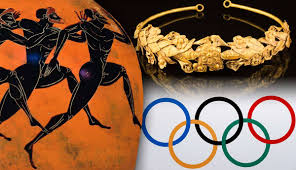
Also, many people when they think of Greece will comment that it is home to the first Olympic games, way back when the ancient Games were staged in Olympia, Greece, from 776 BC through 393 AD, it took 1503 years for the Olympics to return. 

The first modern Olympics were held in Athens, Greece, in 1896. The man responsible for its rebirth was a Frenchman named Baron Pierre de Coubertin, who presented the idea in 1894.

That will do for Greece.

Estonia

We are still in Central Europe or maybe we are Northern Europe as my refence book says Central, but the internet says Northern Europe anyway the country is Estonia

Estonia, a country in Northern Europe, borders the Baltic Sea and Gulf of Finland. Including more than 1,500 islands, its diverse terrain spans rocky beaches, old-growth forest and many lakes. It also has a high ratio of meteorite craters to land area.

Formerly part of the Soviet Union, it’s dotted with castles, churches and hilltop fortresses. The capital, Tallinn, is known for its preserved Old Town, museums and the 314m-high Tallinn TV Tower, which has an observation deck.

The official language is Estonia; however, English is spoken widely enough that, in practical terms, learning Estonian isn’t necessary it has a population s 1.4 million.

The national flag of Estonia is a tricolour featuring three equal horizontal bands of blue at the top, black in the centre, and white at the bottom. The flag is called sinimustvalge in Estonian.

The colours of the flag are said to symbolize: Blue: the colour of faith, loyalty and devotion, the blue sky, sea and lakes of Estonia. Black: tragic past of Estonian nation, the traditionally black jacket of the Estonian peasant during past times. White: the striving towards enlightenment and virtue.

The coat of arms of the Republic of Estonia is a golden shield which includes a picture of three left-facing blue lions with red tongues in the middle, with golden oak branches placed on both sides of the shield.

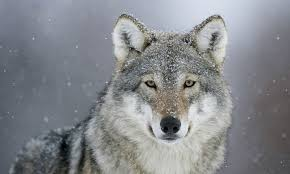
The national animal is the wolf due to it being a survival-expert, that respects it’s their family and territories, thus making it the best national animal.

The people of Estonia chose the cornflower as a national symbol in 1968, but the flower was a folk emblem for many years prior to that. In Estonia, cornflowers grow mostly in rye fields, so Estonians have long associated the flower with their staple grain.

On 4 May 1992, limestone was declared to be Estonia’s national stone. Estonian limestone – grey and dull at first sight, rather it is multi-coloured and multi-faceted, ranging from pure white to crimson, from seaweed green to chocolate brown.

It was the first country to adopt an online political voting system! 99% of Estonian state services are available online.

The official currency in Estonia is the euro- abbreviated to the currency code EUR. 1 Euro is subdivided into 100 cents. The Estonian kroon was circulated in Estonia between 1928-1940 and 1992-2011. Estonia joined the European Union in 2004 and the Eurozone in 2011.

Between 1 January and 14 January 2011, the kroon circulated together with the euro, after which the euro became the sole legal tender in Estonia. The kroon was subdivided into 100 cents.

Estonia is a parliamentary republic. Its prime minister, who is the head of government, is nominated by the president and approved by parliament. He or she is in charge of the executive power vested in government. The president, who is the head of state, is elected by Parliament or electoral college for 5 years.

Among the Baltic countries, Estonia has the happiest people with half of the Estonian population reported to always being happy or at least most of the time, about a third feel happy sometimes, about a ten percent are rarely happy, and only around 3 percent saying they are never happy,

Bulgaria

Good morning, time to visit another country this week we are visiting the Balkan region in Southeastern Europe which takes its name from the Balkan Mountains which run from Bulgaria into eastern Serbia.

So, the country will be Bulgaria a country with diverse terrain encompassing Black Sea coastline, a mountainous interior and rivers, including the Danube. A cultural melting pot with Greek, Slavic, Ottoman, and Persian influences, it has a rich heritage of traditional dance, music, costumes, and crafts.

At the foot of domed Vitosha mountain is its capital city, Sofia, dating to the 5th century B.C

The population is around 6.5 million and the language spoken is Bulgarian.

The lev is the currency of Bulgaria. Although Bulgaria is part of the EU, it is not part of the Eurozone. Eurozone is the group of counties that use the euro as their currency. Some prices are often published in euro, but this is simply to make things easier for visiting foreigners. Transactions are always done in Leva/BGN.

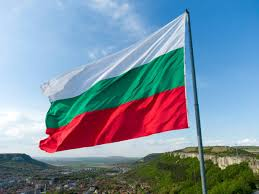
The national flag of Bulgaria is a tricolour consisting of three equal-sized horizontal bands of white, green, and red. The flag was first adopted after the 1877–1878 Russo-Turkish War, when Bulgaria gained de facto independence. After the downfall of the communist government, the old plain tricolour was reestablished on November 27, 1990. The white of the flag is said to stand for peace, love, and freedom, while green emphasizes the agricultural wealth of Bulgaria. Red is for the independence struggle and military courage.

Bulgaria is a parliamentary republic and conforms with the Constitution of the Republic passed by the Grand National Assembly in July 1991. The Constitution of the Republic of Bulgaria is the supreme law of the country and may not be contravened by any other law. All international treaties, which are ratified pursuant to the constitutional procedure, are considered part of domestic legislation.

The National Assembly is a unicameral parliament. It consists of 240 Members of Parliament, who are directly elected every four years. The National Assembly is a permanent acting body, directed by a board of Chairpersons, including the Speaker of the National Assembly. The Speaker of the National Assembly represents the National Assembly externally.

The head of the state is the President, who embodies the unity of the nation and represents the Republic of Bulgaria in international relations.

The Council of Ministers represents the executive branch and decides on the domestic and foreign policy of the country. The government manages the implementation of the state budget, governs state property and approves or rescinds certain categories of international treaties as postulated by the Constitution.

Some say Bulgaria is not dangerous for tourists if you stick to the rules and respect the culture. Crime is very low in Bulgaria; however, pickpocketing and petty theft have been recorded in the more touristy areas and main cities.

With the same colours as the flag, Shopska Salad is often proclaimed as Bulgaria’s national dish. It is often said to have been invented in the 1960s by the socialist party to showcase local ingredients to tourists and promote the theory that Bulgarian vegetables were among the tastiest in Europe.