History of chocolate

Hello everyone, today we are looking at the history of something most people like, that is chocolate.

The word “Chocolate” is likely derived from Nahuatl words such as chocolatl or xocoatl, though scholars still debate the exact origin. The first record of the English word chocolate was in 1604.

Some say that begins with sacred rituals in ancient Mesoamerica maybe it does, maybe it doesn’t but here are some of the information I have found.

The earliest known use of cacao traces back over 5,000 years in what is now Mexico.

The earliest confirmed civilization to use cacao, likely as a ceremonial drink was by The Olmecs way back around 1500 BCE. The is archaeological evidence that shows traces of theobromine a cacao compound in ancient pottery.

Then we have the Maya who cultivated cacao and drank it regularly as a thick, frothy, often mixed with chili, honey, or water drink. It is believed that it was a daily ritual.

It was considered “the food of the gods”, sacred enough to be buried with nobles. However, it wasn’t just for elites; many households consumed it daily.

Moving on to the Aztecs who valued cacao beans so highly they used them as currency, worth more than gold.

They drank xocolatl, a bitter, spiced chocolate beverage believed to give strength and vitality. Cacao was considered a divine gift from the god Quetzalcoatl.

Around the 1500’s chocolate had found its way to Europe with Spanish conquistadors encountered cacao in 1519 and brought it to Spain.

It was initially used as medicine; but soon became a fashionable drink among European elites. It was around this time that sugar was added, transforming the bitter drink into something closer to modern hot chocolate.

Over the next three centuries, chocolate spread across Europe, sparking debates about its religious and medicinal value.

It was in 1847 that chocolate became solid when Joseph Fry discovered that mixing cocoa powder, sugar, and melted cocoa butter produced a smooth, mouldable paste, something no one had achieved before. This mixture could finally be poured into a mould and set into a bar, making it the world’s first solid eating chocolate.

It was during World War 1 that Chocolate became a global commodity, especially after World War I, when soldiers received chocolate rations.

Over time new forms emerged such as white chocolate, couverture, and countless others. Also, production skyrocketed, with major markets expanding in Asia and Africa.

By 2018, the global chocolate trade exceeded US$100 billion.

Eye diseases and disorders

This week we are looking at eye diseases or disorders at least 2.2 billion people worldwide have some form of vision impairment or eye condition that’s about 28% of the population. This figure doesn’t include things like dry eye or conjunctivitis or any other condition that doesn’t affect sight, if it did the percentage would be more like 50% of the population.

Eye diseases include any condition that affects the cornea, lens, retina, optic nerve, eyelids, or the visual pathways in the brain. Some are mild and temporary; others can cause permanent vision loss if untreated.

Eye conditions for into one of eight categories these are the following.

Refractive Disorders (Most Common Worldwide)

These affect how light bends in the eye.

  • Myopia (short‑sightedness) – distant vision blurred
  • Hyperopia (long‑sightedness) – near vision blurred
  • Astigmatism – uneven focus due to irregular cornea
  • Presbyopia – age‑related loss of near focus (40+)

Treatment: glasses, contact lenses, or refractive surgery.

Lens Disorders

Cataracts

Clouding of the lens causing blurred or dim vision.

  • Extremely common with age
  • Treated with cataract surgery (one of the safest surgeries worldwide

Retina Disorders

These affect the light‑sensitive layer at the back of the eye.

Age‑Related Macular Degeneration (AMD)

  • Damages central vision
  • Leading cause of blindness in older adults
  • Two types: dry and wet

Diabetic Retinopathy

  • Caused by diabetes damaging retinal blood vessels
  • Can lead to blindness if untreated

Retinal Detachment

  • Retina pulls away from the back of the eye
  • Medical emergency
  • Symptoms: flashes, floaters, curtain over vision

Macular Hole / Macular Pucker

  • Distortion or loss of central vision

Optic Nerve Disorders

Glaucoma

  • Damage to the optic nerve, often due to high eye pressure
  • Causes gradual, irreversible vision loss
  • Requires lifelong management

Optic Neuritis

  • Inflammation of the optic nerve
  • Often linked to autoimmune conditions

Corneal Disorders

Keratoconus

  • Cornea thins and bulges into a cone shape
  • Causes distorted vision
  • Treated with cross‑linking, contacts, or corneal transplant

Corneal Ulcer

  • Open sore, usually from infection
  • Painful and urgent to treat

Eyelid & Surface Disorders

Blepharitis

  • Inflammation of eyelid margins
  • Causes irritation, crusting, dryness

Conjunctivitis (Pink Eye)

  • Viral, bacterial, or allergic
  • Causes redness, discharge, irritation

Dry Eye Disease

  • Very common
  • Caused by poor tear quality or quantity

Childhood Eye Disorders

Amblyopia (Lazy Eye)

  • Brain favours one eye
  • Treatable if caught early

Strabismus (Eye Turn)

  • Eyes misaligned
  • May require glasses, exercises, or surgery

Rare but Serious Conditions

·       Uveitis – inflammation inside the eye

·       Retinoblastoma – childhood eye cancer

·       Graves’ Eye Disease – autoimmune swelling behind the eyes

·       Idiopathic Intracranial Hypertension – pressure on optic nerve

When it comes to our eyes people should seek immediate help if they experience any of the following

  • Sudden vision loss
  • Flashes or a curtain over vision
  • Severe eye pain
  • Sudden double vision
  • Chemical injury

These can indicate emergencies like retinal detachment, acute glaucoma, or infection.

My Christmas

How was everyone’s Christmas, mine was ok nothing great, I just haven’t been feeling this year, in fact we have cancelled the siblings gathering as none of us are feeling it this year. Both me and Sue have decided that next year instead of going to Dave’s we all should go out for lunch at the Eastern Tiger and I suggested that next year instead of Tasha cooking lunch for us we should go to the Eastern Tiger and she liked that idea.

                                                                GIFTS FROM SUE

As for gifts well Tim gave me nothing, Tasha gave me nothing, Jessica gave me nothing. Kathy-Lee gave me some nice oils, Sue gave me2 dairies, a small calendar and a sister plaque.

                                                            KATHY’S GIFT TO ME

On Boxing Day Tim and I went to Kathy’s for lunch and Michael made his smash burgers which are so yummy, he also made homemade garlic bread that was also so nice.

                                                                KATHY’S GIFT TO TIM 

Today the 27 Dec Tim and I went to the Eastern Tiger for lunch, Tim commented that I didn’t eat much but my appetite has been very low. 

Haiti National Things

This week we are looking at some of the national things connected with Haiti the national animal of Haiti is also the national bird. It is the Hispaniolan trogon. It is a colourful bird with a rich assortment of bright feathers along its wings and breast, and a unique pattern on its tail. It’s found only on the island of Hispaniola, which is shared by Haiti and the Dominican Republic. It is becoming increasingly rare there due to ongoing habitat loss.

Their national flower is the Hibiscus. Specifically, the Hibiscus rosa-sinensis, also known as the pink hibiscus or rose mallow, is the flower often associated with Haiti. In Haitian Creole, it’s called “choublak” or “rose kayenn”. 

The hibiscus is a vibrant and resilient flower that symbolizes the Haitian spirit. It is used in various ways, from traditional herbal teas to being a decorative element and a symbol for political parties, like the Fusion of Haitian Social Democrats. The national tree is the Royal Palm.

Haiti’s national dish is soupe joumou (pumpkin soup). It’s a tradition to eat this soup on New Year’s Day to celebrate Haiti’s independence. The soup is made with squash (joumou), beef, and vegetables, and is known for its symbolism of freedom and hope.

The national sport of Haiti is football (soccer) and huge crowds will come out to cheer at games. Children can be seen playing football all over Haiti’s city streets and rural roads.

Haiti’s national drink is Clairin, a rum made from pure sugar cane. It’s produced by small, artisanal distilleries throughout the island. Clairin is known for its rustic, pure flavour, often expressing herbaceous, vegetal, earthy, and grassy notes. 

In Haiti, the age of consent for sexual activity is 18 years old. The legal age for marriage is also 18 for males and 15 for females but can be lower with parental or presidential authorization. 

The traditional dress for Haitian women is know as a karabela. The dress is made of blue cotton or linen with red lace to symbolize the colors of the Haitian flag. Orange, yellow, and green lace are also used to accent the dress. It is full-length, normally worn off the shoulders.

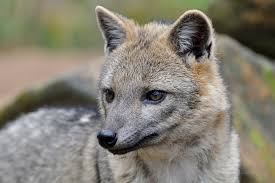
Crab-eating fox

This is week we are looking at the crab-eat fox, also known as the forest dog, wood fox, bushfox or maikong, is an extant species of medium-sized canid endemic to the central part of South America since at least the Pleistocene epoch. Like South American foxes, which are in the genus Lycalopex, it is not closely related to true foxes. 

They can be found in the ranges in savannas; woodlands; subtropical forests; prickly, shrubby thickets; and tropical savannas such as the caatinga, plains, and campo, from Colombia and southern Venezuela in the north to Paraguay, Uruguay and northern Argentina at the southernmost reaches of its range.

They can be solitary but can also form couples or even families of up to disturbed by human activities. The species gets its name because during the wet season it searches for crabs on muddy floodplains.

Crab-eating foxes are omnivorous; their diet includes many fruits, vertebrates, insects, amphibians, crabs and other crustaceans, birds and carrion.

The crab-eating fox is predominantly greyish-brown, with areas of red on the face and legs, and black-tipped ears and tail. It has short, strong legs and its tail is long and bushy. The head and body length averages 64.3 centimetres (25.3 in), and the average tail length is 28.5 centimetres (11.2 in).

They reach sexual maturity within 9–10 months. Adult females give birth to one or two litters per year, depending on the climate and the availability of food. The reproductive period most often begins in November or December, and again in July.

The birth of offspring follows after an approximately 56-day gestation, typically in January, February or sometimes March then again from September to October. If giving birth to one litter, they typically give birth in the early spring. The parents are monogamous and raises the pups together, which are weaned at around three months old and become independent of their parents around 5–8 months old.

Week 47 of 2024

It is 12.50am, I went to bed at 9pm but fully fall asleep I dosed on and off till midnight when I got up to pee. I decided to use the powerfit and now I am starting today’s diary enter as even though I am tired I don’t know if I will fall asleep, so I am staying up for a bit.

I went back to bed at 2am slept ok and when the alarm went off at 5am I got up. The temp is 19 degrees and my BGL is 5.1

At around 8am I went back to bed for an hour; after getting up Tim and I went to the shops.

I have done bugga all today, Tim did cut my hair though.

LEIGH’S BIRTHDAY

I had a good night slept well and woke to a cold wet morning so different from yesterday.

It is 19 degrees and my BGL is 5.0

I walked up with Sam in the rain, thankfully I have my rain poncho, so I didn’t get wet.

Jess came down and said she would take me to Kmart tomorrow to look at dresses.

It stopped raining and warmed up.

I decided I would do a load of washing and hang it up before I go to bed.

Steps:6,950

I had a good night slept well, however, while taking my morning meds I had problems swallowing and this resulted in tablets melting in my mouth, not nice.

It is 18 degrees and fine, my BGL was 4.8. like

Jess and I went to Kmart she bought me a couple of dresses and a nightie she also paid for my face cream.

Blain was supposed to be coming home today but he overslept and missed his flight. Tasha said she has no idea when he will be able to come home since neither her nor Jono have money to pay for his flight.

Tried on the dresses one is perfect and one is a bit big, I am going to see if I can find someone to go and exchange it for me.

Steps: 9,170

I had another good night the temp this morning was 16 degrees and my BGL was 5.2.

I am feeling energic this morning wonder how long that will last.

Sam brought down her mother’s heavy fluoro work jacket and asked me if it could go in the washing machine, we checked the label, and it said do not machine wash. So, I told her to leave it with me, I washed it in the washing machine, but I know how to change the settings so was done on a quick delicate wash.

I sent both Sydney-May and Summer a message this morning, asking how the holiday is going, both replied which was nice. I had a long voice message from Summer, Syd sent a written message it was good hearing from them.

Steps: 9,111

I had another good night the temp this morning was 16 degrees and my BGL was 4.9

It turned out to be a nice day I have done very little as just not a lot of motivation today

Steps:6,884

I had another good night the temp this morning was 16 degrees and my BGL was 4.9

I felt great this morning and managed to not only vacuum and clean the bathroom and my computer desk. I also cleaned the sliding glass doors.

Tim suggested we got to the Eastern Tiger for lunch tomorrow and suggested we ask Sue if she would like to come, she does so I made a booking for 11.30am tomorrow.

Realise when I was folding up the new blue dress to go in a bag that it is size 18 not a 16, we went by what was on the hanger and didn’t look at the dress.

Got the Christmas decorations out and will put the up over the weekend.

I went to bed at 9pm but at 10.20pm I got up and used the powerfit as I was restless.

Steps: 9,894

I am having a shocking night, it is 1.15am and I have little to no sleep, if I did does off at any point, I am unaware of it. At 1am I got fed up with the tossing and turning and decided t get up for a while. Thankfully today is Saturday so if I need to go back to bed after I take my 5am meds I can.

Yeah, I did go back to bed for an extra hour, after taking my meds. I felt ok when I got up.

Tim, Sue and I went to the Eastern Tiger for lunch that was great. After lunch I went and exchanged the dress that was a size to big.

The first thing I did after getting home was turn the air con on, it was 30 degrees in the house. It is now around 25 degrees inside the house.

I am feeling worn out and drained and a little sad, nothing that I can put my finger on.

My steps are low today as with the heat and feeling worn out and tired I just didn’t do much.

Steps: 4,289

Shortages and rationing

This week we are going to look at shortages and rationing during WW11. Naturally Australia wasn’t the only country to have shortages and rationing.

After blackout rules became more enforced due to the submarine attacks found and increase in the demand for torches and batteries. However, it was next to impossible finding them.

At other times during the war there was shortages of a wide variety of goods, including some items most people don’t think of such as flannel underwear and woollen trousers, considered vital for men working in heavy industries.

A chronic worldwide shortage of shipping meant many goods generally imported were no longer available, substitutes could be found for some things but often people just had to do without.

Petrol was rationed and tyres were hard to find as rubber was diverted to the war effort. Many cars were converted to run on charcoal gas, these cars were hard to miss due to the big gas bags on their roofs. Petrol rationing was introduced in 1940.

Also is short supply were coins and by the end of 1942 pennies and half-pennies were almost unprocurable.

During 1942 rationing was introduced for food and clothing this meant having a ration book and coupons and in 1943 you needed a coupon for household furnishings.

Naturally this resulted in a thriving black market especially in waterfront places like Newcastle.

Here in Newcastle, there was a housing problem as the house building was placed on hold during the war. Public transport was also in short supply due to funding and rationing of petrol.

As a result of the fuel issues horse were brought back into service although fodder was also in short supply and Newcastle businesses lobbied the government to provide rail wagons to carry stock feed from country areas to keep freight moving.

Supermarket’s history

 First you can find a new hodgepodge post over here:

http://jamfn.blogspot.com/2024/11/not-taking-hodgepodge-for-granted.html

Next you have this:

Have you ever thought about supermarkets, most of us shop in one but what was the first one in your country or state, do you know?

It isn’t something I had given any thought to till this morning sitting here thinking about blog posts, so I decided to do some research, and this is what I discovered.

Prior to 1938 there were many grocery chains, but none called themselves a supermarket. Many stores also offered self-service.

Possibly the first Australian business to experiment with self-service was the department store, Grace Brothers, which installed an “experimental” self-service food hall in their basement in 1921

Starting n 1923, here in Newie (Newcastle)a fella by the name of Farr started Farr’s Markets, he soon had stored throughout northern NSW, he opened a store in Bondi Junction.

It was in 1938 that Farr’s markets first advertised themselves as a “super market” and was the first ones to use the term.

Like today’s supermarkets, Farr’s had many different departments including fresh produce. They also pioneered the idea of ready-cooked meals – in 1931 their Goulburn store included a “provision department” supplying cooked food.

Like many developments in retailing, it began in America when, in 1916, Clarence Saunders opened his first Piggly Wiggly store in Memphis, Tennessee.

Now some may be thinking what about Coles and Woolworths, well on the 9 April 1914 a man named George Coles opened the Coles Variety Store on Smith Street in the Melbourne suburb of Collingwood. Further expansion occurred and Coles’ interest in food retailing was spurred in 1958 when it acquired 54 John Connell Dickins grocery stores.

On 5 December 1924 in Pitt Street of Sydney’s Imperial Arcade, called “Woolworths Stupendous Bargain Basement”.

I might do another post about modern day supermarkets