Uzbekistan

Here we are at another Monday, I wasn’t sure I would do a post today due to feeling tired and worn out and not having a lot of motivation but here I am writing about the country of Uzbekistan, not a country I have heard of but I do like doing posts about places and other stuff I know little or nothing about.  This country has a population of around 36 million.

Uzbekistan is a Central Asian nation and former Soviet republic. It’s known for its mosques, mausoleums and other sites linked to the Silk Road, the ancient trade route between China and the Mediterranean. Samarkand, a major city on the route, contains a landmark of Islamic architecture: the Registan, a plaza bordered by 3 ornate, mosaic-covered religious schools dating to the 15th and 17th centuries
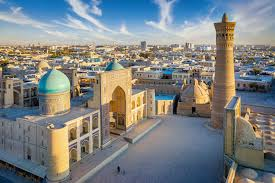
The capital city is Tashkent, it’s known for its many museums and its mix of modern and Soviet-era architecture. The Amir Timur Museum houses manuscripts, weapons and other relics from the Timurid dynasty. Nearby, the huge State Museum of History of Uzbekistan has centuries-old Buddhist artifacts. The city’s skyline is distinguished by Tashkent Tower, which offers city views from its observation deck.

The official currency is the Sum, the country replaced the ruble with the sum at par in on 16 July 1994. No subdivisions of this sum were initially issued and only banknotes were produced, in denominations of 1, 3, 5, 10, 25, 50, 100, 200, 500, 1,000, 5,000, and 10,000 sum. Further series, however, have introduced coins and a subunit, the tiyin. Because it was meant to be a transitional currency, the design was rather simplistic.
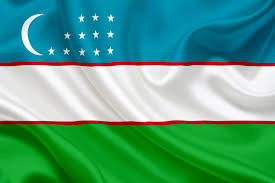
The flag of Uzbekistan is a horizontal triband with three equal bands of blue, white, and green, separated by two thin red stripes. In the upper left canton (hoist side), there’s a white crescent moon and twelve white stars. The blue band represents the sky and water and is also associated with the Turkic peoples. The white represents peace and purity. The green symbolizes nature and new life. The red stripes are a symbol of the power of life. The crescent moon is a traditional Uzbek symbol, and the twelve stars represent the twelve months of the Islamic calendar and the constellations. 

Islam is the predominant religion, with the vast majority of the population identifying as Muslim. While Islam is dominant, there are also other officially recognized faiths, and the country has a diverse religious landscape.

Other faiths are also present, including Russian Orthodox Christianity, Judaism, Buddhism, there are also significant populations of Baha’is, Zoroastrians, and Roman Catholics. 

Uzbekistan’s government acknowledges religious freedom, but it also maintains a system of state control over religious organizations, including registration requirements and oversight of religious literature. The Muslim Board of Uzbekistan (MBU) plays a significant role in managing Islamic affairs, and it works within a framework established by the government. 

Uzbek is a Karluk Turkic language spoken by Uzbeks. It is the official and national language of Uzbekistan and formally succeeded Chagatai, an earlier Karluk language endonymically called Türki or Türkçe, as the literary language of Uzbekistan in the 1920s.  However, many other native languages are spoken in the country. These include several other Turkic languages, Persian and Russian.

Sacred Band of Thebes

Today I am writing a post suggested by and for my transgender granddaughter Sam, who is mentioned often in my diary posts, she has learnt a bit about these soldiers, I think at school, abut I am not 100% sure about that.

Anyway, the subject is The Sacred Band of Thebes.

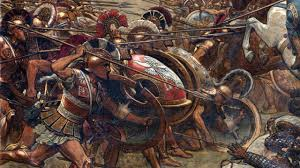
The Sacred Band of Thebes was an elite heavy infantry of select soldiers, allegedly consisting of 150 pairs of male couples which formed the elite force of the Theban army in the 4th century BC, ending Spartan domination. Its predominance began with its crucial role in the Battle of Leuctra in 371 BC.

They were formed under the leadership of Gorgidas but first ac

hieved fame under the general Pelopidas. They remained invincible from 378-338 BCE when the entire troop fell together at the Battle of Chaeronea.

The military unit is first mentioned in 324 BCE in a speech, but their full story wasn’t known to much later.

The Sacred Band were deployed early in the Boeotian War in 378 BCE under Gorgidas but became famous for their participation in the Battle of Leuctra in 371 BCE. They remained undefeated until the decisive battle of Chaeronea in 338 BCE when the Macedonians under Philip II and his son Alexander the Great crushed the combined forces of Thebes and Athens.

The Sacred Band fell together as a single unit and, according to Plutarch, were mourned by Philip II of Macedon himself as valiant warriors. They would later became legendary figures exemplifying courage and military strength.

The city of Thebes, where this band had been founded in 378 BCE was particularly unique in how it regarded the love, between men. A young Plato is thought to have said “the rule has been laid down straightforwardly that it is right to gratify (male) lovers, and no one, young or old, would say that it is wrong.”

Of course, it was not uncommon for male-male encounters to be pursued by ancient Greek soldiers, demonstrated through the institutionalised practices of homoeroticism in Spartan militia and the cities of Crete.

The very act of homoeroticism was thoroughly incorporated into the educational systems of the Greek world. It was a means to lead a boy into adulthood, and by the Classical period, it extended into higher culture: “from the military to athletic games, from philosophy to historiography.”  

But why would Thebes want to specifically create an elite unit of bonded male lovers, if homoeroticism was already part-and-parcel of ancient Greece’s cultural fabric?

According to Plato’s philosophical thought, lover-soldiers would inspire the courage and bravery needed on the battlefield. Plato tells us that:

The last person a lover could bear to be seen by, when leaving his place in the battleline or abandoning his weapons, is his boyfriend; instead, he’d prefer to die many times. As for abandoning his boyfriend or failing to help him in danger – no one is such a coward that he could not be inspired into courage by love and made the equal of someone who’s naturally very brave. — The Symposium, 179a’

It is said that such was the powerful display of love that it brought the great king to tears. So, to mark the burial site, a marble lion was erected in honour of the fallen, acting as a “symbol of their courage.”

The Lion of Chaeronea is still standing. It’s a funerary monument erected in honour of the Theban Sacred Band, who died in the Battle of Chaeronea in 338 BC. The monument was rediscovered in 1818 and later restored, and it remains a prominent landmark near the battle site. 

This once-famous troop of heroes is often passed over in discussions of Greek history possibly because they were gay and the concept of a victorious unit of gay warriors is at odds with the prevalent homophobia of the present day.

As LGBTQ+ activism makes more progress in educating people, however, the Sacred Band of Thebes is again receiving the kind of recognition they deserve.

Mount Gambier

This week we are looking at the second largest city/town in South Australia, which is Mount Gambier, with a population of over 26,000. It is located on the Limestone Coast. It is in the southeastern corner of South Australia.

The town was founded by Hastings Cunningham and was first called “Gambierton” in 1854 by subdividing a block of 77 acres (31 ha). From 1861 to 1878, the Post Office was known by this name before reverting to Mount Gambier.

It’s known for its limestone, volcanic landscape and crater lakes. One of these, Blue Lake, turns cobalt blue in summer. Nearby, the Centenary Tower offers panoramic views of the area. The Umpherston Sinkhole contains a lush sunken garden. The Lady Nelson Visitor Centre houses a full-size replica of a late-18th-century ship.

Mount Gambier’s history is marked by its volcanic origins, early European exploration, and development as a significant regional centre in South Australia. The extinct volcano, Mount Gambier, was first sighted by Lieutenant James Grant in 1800 and named after Admiral James Gambier. European settlement began in the 1840s, with the area becoming a major agricultural and timber centre.

The traditional owners of the Mount Gambier area are the Boandik people, also known as the Bungandidj. They are the First Nations people of the region, and their language and culture are deeply connected to the land and waterways. The name “Bungandidj” is said to mean “people of the reeds”. 

Organizations like the City of Mount Gambier and headspace Mount Gambier formally acknowledge the Boandik people as the traditional custodians. 

There’s a growing movement to recognize the Boandik presence and connection to the land through dual naming of significant sites, alongside their European names. 

The Bungandidj language is being revitalized, and efforts are underway to reintroduce it into the community. 

The Boandik people have a long and rich history in the region, and their stories and cultural knowledge are important to the area’s identity. 

Mount Gambier is generally considered a safe place, but like any location, it has areas where caution is advised, especially at night or in more remote areas. While some crime statistics show increases in thefts and break-ins, these are not indicative of the overall safety of the city for residents and visitors. 

Vatican City

I thought after writing about Russia the largest country in the world, I would write about the smallest country.

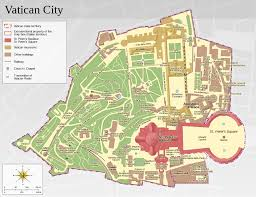
The smallest country in the world by both area and population is Vatican City. It is an independent city-state located within Rome, Italy, and serves as the spiritual and administrative centre of the Roman Catholic Church. Its area is just 0.44 square kilometres (0.17 square miles). 

Vatican City, a city-state surrounded by Rome, Italy, is the headquarters of the Roman Catholic Church. It’s home to the Pope and a trove of iconic art and architecture. Its Vatican Museums house ancient Roman sculptures such as the famed “Laocoön and His Sons” as well as Renaissance frescoes in the Raphael Rooms and the Sistine Chapel, famous for Michelangelo’s ceiling.

The entire population of Vatican City is only around 800 people. Every citizen who resides in the city is Roman Catholic and is considered to be influential or significant in some way within Catholicism.

The flag of Vatican City is a vertical bicolour of yellow and white, with the emblem of the Holy See (a papal tiara and crossed keys of Saint Peter) centred on the white half. The yellow symbolizes spiritual power, while the white represents temporal power. The keys represent the Pope’s authority, and the tiara symbolizes the Pope’s threefold power. 

It was adopted in 1929; the year Pope Pius XI signed the Lateran Treaty with Italy creating the new independent state of Vatican City.

The Vatican City passport is a passport issued by the Holy See (the governing body of the Vatican) or by the Vatican City State. It’s ranked among the most powerful passports globally, granting holders visa-free or visa-on-arrival access to a large number of countries. The Vatican issues both diplomatic and service passports, while the Vatican City State issues ordinary passports for its citizens.

The euro is the official currency of the Vatican City, although Vatican City is not a member of the Eurozone or the European Union. The euro has been the official currency of Vatican City since 2002.

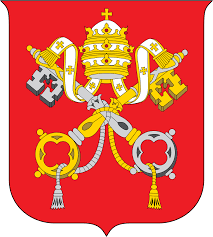
The coat of arms of Vatican City is the coat of arms used by Vatican City, which was originally adopted by the Fundamental Law of Vatican City State on 7 June 1929. This coat of arms is defined by law as having the silver key in bend and the gold key in bend sinister.

Nicaragua National Anthem

This week we are looking at the national anthem of Nicaragua which is “Salve a ti, Nicaragua,” which translates to “Hail to thee, Nicaragua.” 

It was approved in 1939 and officially adopted in 1971. The lyrics were written by Salomón Ibarra Mayorga, and the music was composed by Ernesto or Anselmo Castinove, with arrangements by Luis A. Delgadillo.

The melody of the anthem goes back to the 1700s as a liturgical anthem in Spain. It was brought to Nicaragua shortly before independence in 1821 and was declared as the country’s first official anthem sometime between 1835 and 1837.

This wordless melody was used until 1876, when it was replaced with the song Soldados,ciudadanos (Soldiers, Citizens). Also thought to be wordless. It was replaced yet again in 1893 after General José Santos Zelaya took over the country; it was replaced with Hermosa Soberana (Beautiful Sovereign) which was composed by Zelaya’s son-in-law Alejandro Cousin and was written by either Rubén Darío, Santiago Argüello or Manuel Maldonado.

This was replaced in 1910 after Zelaya fled the country, but the song remains a popular patriotic song in Nicaragua.

After decades of political upheaval, which was reflected in the anthem, it was decided to bring stability back to the country by bringing stability to the anthem, so the first anthem, the piece of liturgical music brought over from Spain nearly 90 years previously, was reinstated as the anthem, but had to be recreated from memory as no written record of the music was found. Emergency lyrics were written by Marco Antonio Ortega under the title LA Patria Amada (The Beloved Homeland) until a contest could be held for new lyrics.

The first priority was to arrange the old music of the national anthem, and Luis Abraham Delgadillo, a Nicaraguan composer who studied in Milan, was chosen to arrange the anthem. A contest was then held for the new lyrics for the anthem. The requirements were that there be words for both parts of the anthem, the only topic would be peace and work (as a contrast to the political upheavals of recent history) and that the words fit the melody. The winning lyrics were adopted by the government in 1939.

Hail to thee, Nicaragua!

In thy soil, no longer rages the cannon’s voice,
Nor does thy glorious two-coloured banner stain
With the blood of brothers.
May peace shine beautiful in thy sky,
Nothing tarnishes thy immortal glory,
For labour is thy worthy laurel,
And honour is thy triumphal ensign! 

20th Century Russia

This week we will have a look at Russia during the twentieth century, this was a period of immense political, social, and economic upheaval, marked by revolution, civil war, and the rise of communism.

The century began with the Tsarist empire, ended with the collapse of the Soviet Union, and saw the country transform into a communist state. Key events include the Russian Revolution, World War I, the rise of Joseph Stalin, the Cold War, and the eventual disintegration of the Soviet Union. 

                  St Petersburg early 20th Century

Russia’s participation in the war contributed to the social and political unrest that led to the February Revolution in 1917. This is when the monarchy was overthrown, and the Bolsheviks, led by Vladimir Lenin, seized power, establishing the world’s first communist society. This marked a shift from autocratic rule to a communist regime. This was known as the Russian Revolution’.

The country found themselves with a civil war which lasted between 1918-1922, this saw the Bolsheviks fighting against various anti-communist forces, ultimately solidifying their control over the country. 

After the civil war Russia united with other republics to form the Union of Soviet Socialist Republics (USSR). 

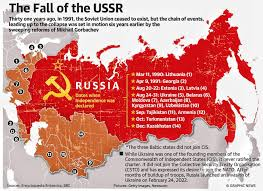
The Soviet Union was composed of 15 Soviet Socialist Republics (SSRs). These republics were: Russia, Ukraine, Belarus, Moldova, Lithuania, Latvia, Estonia, Georgia, Armenia, Azerbaijan, Kazakhstan, Uzbekistan, Kyrgyzstan, Tajikistan, and Turkmenistan. 

It was at this time that Joseph Stalin became the dominant leader, implementing policies of industrialization, collectivization of agriculture, and widespread repression.

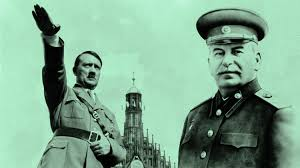
During the second world war The Soviet Union fought against Nazi Germany and the Axis powers, suffering immense casualties but ultimately contributing to the Allied victory.

At first The Soviet Union officially maintained neutrality during WW2 but cooperated with and assisted Germany. However, after Nazi Germany attacked the USSR on June 22, 1941, the country allied with the United Kingdom and then the United States after the latter joined the war in December 1941. 

On 22 June 1941, Adolf Hitler launched Operation Barbarossa, an invasion of the Soviet Union with the largest invasion force in history.

Hitler had always wanted to see Germany expand eastwards to gain Lebensraum or ‘living space’ for its people. After the fall of France Hitler ordered plans to be drawn up for an invasion of the Soviet Union. He intended to destroy what he saw as Stalin’s ‘Jewish Bolshevist’ regime and establish Nazi dominance.

Soviet forces launched a counteroffensive against the Germans arrayed at Stalingrad in mid-November 1942. They quickly encircled an entire German army, more than 220,000 soldiers. In February 1943, after months of fierce fighting and heavy casualties, the surviving German forces—only about 91,000 soldiers—surrendered.

After the second world war the country known as East Germany, officially the German Democratic Republic (GDR), was formed in October 1949 within the Soviet occupation zone of Germany following World War II. The Socialist Unity Party of Germany (SED), led by Walter Ulbricht, played a key role in its establishment and subsequent governance. The GDR was established as a communist state within the Soviet zone, marking the beginning of the Cold War division of Germany. 

Between 1947-1991 saw what was known as the Cold War, this was the ideological and political rivalry between the Soviet Union and the United States shaped global politics and led to an arms race.

The Cold War was a period of geopolitical tension between the United States and the Soviet Union. It was characterized by an ideological struggle between capitalism and communism, a nuclear arms race, and proxy wars, but no direct military conflict between the two superpowers.

The Soviet Union collapsed in 1991 due to a combination of internal factors like economic stagnation, overextension of the military, and rising ethnic tensions, along with the influence of the Cold War and US policy of containment. 

Mikhail Gorbachev’s reforms, including perestroika (economic restructuring) and glasnost (openness), while intended to revitalize the Soviet system, inadvertently accelerated its demise. 

The Soviet economy was struggling with low productivity, inefficient planning, and a lack of innovation. They were heavily invested in a large military, especially during the Cold War, which strained its economy. 

As the USSR was a vast empire with numerous ethnic groups, it was natural that many would feel oppressed and sought greater autonomy or independence. 

Gorbachev’s reforms, while intended to address the economic problems, also opened the door for more political and cultural freedom. This led to increased criticism of the government, rising nationalist sentiments, and the weakening of the Communist Party’s grip on power. 

In 1991, hardliners attempted to overthrow Gorbachev, but the coup failed due to a lack of support from the military. 

After the failed coup, the Soviet Union’s republics began declaring their independence, and Gorbachev resigned as president. The Soviet Union was formally dissolved on December 26, 1991. 

The collapse of the Soviet Union had a profound impact on the world, leading to the end of the Cold War, the emergence of new nations in Eastern Europe and Central Asia, and a shift in global power dynamics. 

That will do it for this post more about Russia next Monday.

History of Russia Part 1

This week we are having a look at Russia’s history which can be divided into four parts the pre- Slavic era/ Kievan Rus’ period, the time of the Russian Empire and the time of the Soviet Union followed by the post-Soviet era.

The first East Slavic state, Kievan Rus’, emerged in the 9th century, adopting Orthodox Christianity from the Byzantine Empire in 988.

Over time, the Grand Duchy of Moscow unified Russian lands, leading to the proclamation of the Tsardom of Russia in 1547.

The Russian Empire expanded through conquest and exploration, becoming the world’s largest country by the early 18th century. 

The Russian Revolution in 1917 led to the abolition of the monarchy and the establishment of the Soviet Union. The Soviet Union dissolved in 1991, leading to Russia becoming an independent country.

Russia started more or less with Mongol invasions, through to ages of enlightenment and industrialization to revolutions and wars, Russia is known not just for its political rises of world power and upheaval, but for its cultural contributions like ballet, Tolstoy, Tchaikovsky, caviar and vodka.

The first czar of Russia was Ivan IV aka Ivan the Terrible he ruled from 1547 to 1584, he was the grandson of Ivan the Great he expands the Muscovite territory into Siberia while instituting a reign of terror against nobility using military rule. He died of a stroke in 1584.

Now for a little about the Romanov Dynasty, which rule for around three hundred years. In 1613 after several years of unrest, famine, civil war and invasions, Mikhail Romanov is coronated as czar at age 16, ending a long period of instability.

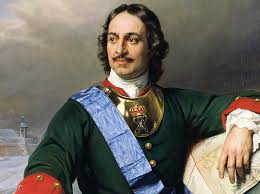
Between 1689-1725 Russia was ruled by Peter the Great it was under his rein that saw the building a new capital in St. Petersburg, modernizing the military (and founding the Russian navy) and reorganizing the government. With his introduction of Western European culture, Russia becomes a world power.

In 1762 Russia’s longest-ruling female leader, Catherine II, aka Catherine the Great, takes power in a bloodless coup and her reign marks Russia’s era of enlightenment. A champion of the arts, her 30-plus-year rule also extends Russia’s borders.

When Czar Alexander III came to power in 1861 he issues his Emancipation Reform, abolishing serfdom and allowing peasants to purchase land. His other notable reforms include universal military service, strengthening Russia’s borders and promoting self-government. In 1867, he sells Alaska and the Aleutian Islands to the United States, gilding the St. Isaac Cathedral domes in St. Petersburg with the proceeds. He was assassinated in 1881.


Russian National Anthem

This week we are looking at Russia’s national anthem.

The “State Anthem of the Russian Federation” is the national anthem of Russia. It uses the same melody as the “State Anthem of the Union of Soviet Socialist Republics”, composed by Alexander Alexandrov, and new lyrics by Sergey Mikhalkov, who had collaborated with Gabriel El-Registan on the original anthem.

In 1944, that earliest version replaced ” The Internationale” as a new, more Soviet-centric and Russia-centric Soviet anthem. The same melody, but without any lyrics, was used after 1956. A second version of the lyrics was written by Mikhalkov in 1970 and adopted in 1977, placing less emphasis on WWII and more on the victory of communism, and without mentioning Joseph Stalin by name.

Glinka’s anthem was replaced soon after Yeltsin’s successor, Vladimir Putin, first took office on 7 May 2000. The federal legislature established and approved the music of the national anthem of the Soviet Union, with newly written lyrics, in December 2000, and it became the second anthem used by Russia after the dissolution of the Soviet Union.

The government sponsored a contest to find lyrics, eventually settling upon a new composition by Mikhalkov; according to the government, the lyrics were selected to evoke and eulogize the history and traditions of Russia. Yeltsin criticized Putin for supporting the reintroduction of the Soviet-era national anthem even though opinion polls showed that many Russians favoured this decision.

Public perception of the anthem is positive among Russians. A 2009 poll showed that 56% of respondents felt proud when hearing the national anthem, and that 25% liked it.

Below are then lyrics in English.

Russia is our sacred state,
Russia is our beloved country.
A mighty will, great glory –
Your dignity for all time!

Be glorified, our free Fatherland,
The age-old union of fraternal peoples,
Ancestor-given wisdom of the people!
Be glorified, country! We are proud of you!

From the southern seas to the polar edge
Our forests and fields are spread out.
You are the only one in the world! You are the only one –
the native land so kept by God!

Be glorified, our free Fatherland,
The age-old union of fraternal peoples,
Ancestor-given wisdom of the people!
Be glorified, country! We are proud of you!

A wide scope for dreams and for life
The coming years open to us.
We are given strength by our fidelity to the Fatherland.
So it was, so it is and it will always be so!

Be glorified, our free Fatherland,
The age-old union of fraternal peoples,
Ancestor-given wisdom of the people!
Be glorified, country! We are proud of you!

Perth

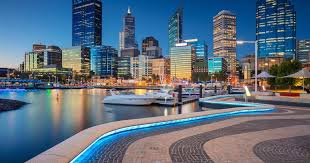
This week we are looking at the last of Australia’s capital cities and that city is Perth, capital of Western Australia. It sits where the Swan River meets the southwest coast. Sandy beaches line its suburbs, and the huge, riverside Kings Park and Botanic Garden on Mount Eliza offer sweeping views of the city. The Perth Cultural Centre houses the state ballet and opera companies, and occupies its own central precinct, including a theatre, library and the Art Gallery of Western Australia. 

It was named after the Scottish city of Perth. The name was chosen by Governor Charles Fremantle, who was instructed by the British Secretary for the Colonies, Sir George Murray, who was a native of Perthshire, Scotland. 

It was founded by Captain James Stirling as the capital of the Swan River Colony in 1829. It was the first free-settler colony in Australia established by private capital. From 1850, convicts began to arrive at the colony in large numbers to build roads and other public infrastructure.

The Traditional Owners of Perth are the Whadjuk Nyoongar people. They are part of the larger Noongar nation and have been the custodians of the land and waters for at least 45,000 years. The town recognizes the Whadjuk people as the Traditional Owners.

The river is a sacred place for Nyoongar peoples and they preserved many stories of the Waugal, a water-serpent understood to be responsible for the creation and maintenance of the river and most of the water features around Perth. The Nyoongar peoples moved with the seasons, travelling inland in winter, then returning in late spring to capture game such as wallabies, kangaroos and possums. A main camp site was at what is now known as Kings Park (Mooro Kaarta). Aboriginal peoples also frequented the mud flats (Matagarup) which later became Heirisson Island as it was a productive fishing spot.

The Nyoongar peoples had contact with various seafaring visitors including the Dutch and the French before the arrival of Captain James Stirling who colonised the region for the British in 1829. Relations between the settlers and the Aboriginal peoples were not always harmonious as the latter were dispossessed of their land and subjected to sometimes harsh and unsympathetic colonial rule. Fast forward to December 2009 when the State Government signed a framework agreement with the representative body, the South West Aboriginal and Land and Sea Council, aimed at resolving through negotiation six Nyoongar Native Title claims over Perth and the south-west of Western Australia. The city is working closely with its Aboriginal community to deliver 71 actions in the City’s Reflect Reconciliation Action Plan which aim to build respect, relationships and opportunity with the Aboriginal and Torres Strait Islander communities. 

Since water transport was vital to communications in the new colony before roads were built, the meanderings of the Swan River determined the site of the first towns. Governor Stirling decided that the site for the colony’s capital would be sited on the river 18km from the sea port of Fremantle. On 12 August 1829 Mrs Helen Dance, wife of the commander of HMS Sulphur, drove an axe into a tree (near the current Perth Town Hall) to mark the colony’s foundation.

The city site was mid-way between the sea and the farming areas of the Upper Swan. However, the early years were difficult financially for the colony and in 1850 it was decided that convict labour would be beneficial in that regard. Between 1850 and 1868 almost 10,000 convicts were transported from Britain. Due to the influx of convicts, many public works were completed during the period from 1856-79, notably the Perth Town Hall. It was not until 1856 that Perth officially gained ‘city’ status when it was declared a Bishop’s See by Queen Victoria.

The first meeting of the Perth City Council was held on 10 December 1858. Rich gold discoveries in the Kalgoorlie region in the early 1890s brought a new era of prosperity for the city and many impressive buildings, some of which still grace the streets to this day. The city also experienced significant population growth. Representative government evolved in Western Australia in the second half of the 19th Century and in 1901 Western Australia federated with the other Australian States to form the Commonwealth of Australia. Perth experienced another mining boom in the 1960s and the wealth it generated could be evidenced by the city’s changing CBD skyline.

Perth became widely known as the City of Lights when U.S. astronaut John Glenn told the world he had seen the city’s lights during his historic orbit around the Earth in February 1962. There was also international attention on Perth later that year when the British Empire and Commonwealth Games were held in the city.

The City of Perth is the fastest growing local government area with a population approaching 20,000. It has ranked consistently among the Top 10 most liveable cities in the world, as surveyed by the highly regarded The Economist Intelligence Unit. Once again, wealth generated by the State’s natural resources is driving development of the city, with the difference being that many companies and businesses are choosing to make Perth their home.

Adelaide

This week we are looking at the town of Adelaide the capital of South Australia, it has a population of around 1.4 million.

It is unique in Australia for being a planned city established as a free settlement, not a penal colony. Founded in 1836, it was named in honour of Adelaide of Saxe-Meiningen, wife of King William IV. The city’s layout, designed by Colonel William Light, features a grid pattern surrounded by parklands, making it a “city within a park”.

It was the first Australian city to be linked by telegraph to London (1872), and the first to allow women to vote (1895). 

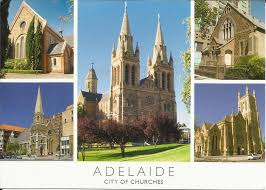
It is also known as the “City of Churches” due to the presence of numerous religious buildings. 

The River Torrens, flowing through the city, played a significant role in its development and is a landmark feature. That being its ring of parkland on the River Torrens is home to renowned museums such as the Art Gallery of South Australia, displaying expansive collections including noted Indigenous art, and the South Australian Museum, devoted to natural history. The city’s Adelaide Festival is an annual international arts gathering with spin-offs including fringe and film events.

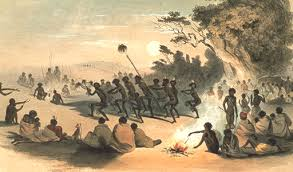
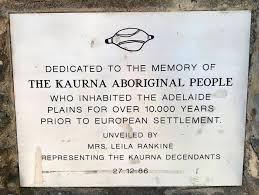
The traditional owners of the Adelaide region, specifically the Adelaide Plains, are the Kaurna people. They are recognized as the custodians of this land, with their traditional lands extending from Port Broughton to Cape Jervis. The City of Adelaide formally acknowledges the Kaurna people as the traditional owners and pays respect to their Elders, past and present. 

The traditional Kaurna name for Adelaide is Tarntanya, which translates to “red kangaroo place”. The Kaurna people are the Traditional Owners of the Adelaide Plains, and Adelaide was their central gathering place and area of movement and activity. While the city of Adelaide is now known by its European name, the Kaurna name is increasingly recognized and used, particularly in signage and dual naming efforts. 

So, what is the town known for well, its vibrant arts and cultural scene, particularly its extensive festival calendar. It’s also recognized for its high-quality education and beautiful natural landscapes, including beaches and wine regions. Furthermore, Adelaide is a city known for its charming architecture, exceptional coffee, and artisan produce.

The Adelaide region has a Mediterranean climate, characterised with cold to mild wet winters and warm to hot dry summers. Most of the region’s rainfall occurs from mid-autumn to mid spring (April to October), which coincides with southern Australia’s wet season.

In May 1899, in a break with the common international practice of setting one-hour intervals between adjacent time zones, South Australia advanced Central Standard Time by thirty minutes after lobbying by businesses who wanted to be closer to Melbourne time and cricketers and footballers who wanted more daylight.