Cuba Pt 2

This week we are looking at Cuba’s national things.

The coat of arms of Cuba features a shield prominently displayed in front of a fasces crowned with a Phrygian cap. The shield is supported by an oak branch on one side and a laurel wreath on the other. This heraldic design, created by Miguel Teurbe Tolón in 1849, is the official symbol of Cuba.

The national bird of Cuba is the Cuban Trogon, also known as the Tocororo. This vibrant bird features a green back, a blue crest, a red belly and beak, and a white throat and chest. Its distinctive colours mirror those of the Cuban flag, which is why it was chosen as the national symbol. 

The national flower of Cuba is the white ginger lily, also known as the White Mariposa or Butterfly Jasmine. Its scientific name is Hedychium conarium. 

The national dish of Cuba is Ropa Vieja, which translates to “old clothes” in Spanish. It’s a flavourful stew made from shredded beef, tomatoes, bell peppers, onions, and spices. The dish is often served with rice, black beans, and plantains. 

While Cuba doesn’t have a single officially designated national drink, the Mojito and the Cuba Libre are widely recognized as its most iconic and popular cocktails. The Mojito, a blend of rum, mint, lime, and sugar, is a classic Cuban drink often associated with the country’s hot weather and vibrant culture. The Cuba Libre, a simple mixture of rum and Coca-Cola, is another beloved beverage that symbolizes Cuba’s struggle for independence and remains a symbol of Cuban identity. 

The national colours of Cuba are red, white, and blue. These colours are prominently featured on the Cuban flag, which consists of three blue stripes, two white stripes, and a red triangle with a white star. 

Symbolism of the Colours:

  • Blue: Represents the country’s maritime location and the ideals of its people.
  • Red: Symbolizes the blood spilled by those who fought for Cuban independence.
  • White: Represents the purity of the revolutionary cause. 

The national sport of Cuba is baseball. While football (soccer) is also popular, baseball has a strong cultural significance and is considered the national sport. It was introduced in the 1860s from the United States and quickly became a beloved pastime. 
Largest Horse Breeds

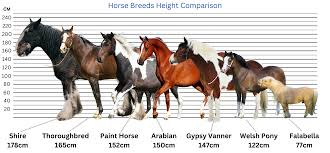
This week we are looking at the world’s largest horse breeds with the Shire horse often considered the largest horse breed. It is a British breed known for its impressive size and strength, with some individuals reaching heights of 18 to 21 hands. The largest Shire on record, Sampson (later Mammoth), stood at 21.5 hands. They usually black, bay, or grey.

This horse originated in England and are known for their large size and powerful build. They can weigh up to 2,200 pounds and stand up to 18 hands tall. Historically used for pulling heavy carts and ploughing fields. 

They are now used for horse riding, show events, as well as still being used for work in some areas. They are known for their gentle and calm temperament. 

The Shire breed have held world records for both the largest and tallest horse. 
They are primarily found in the United Kingdom, Australia, Canada, and the United States. While the breed originated in England, they have been exported and bred in other countries as well. 

In addition to the Shire, other large horse breeds include the Clydesdale which is another British draft horse breed, known for its size and strength, and often used in parades and horse shows. Clydesdale horses are found in several countries around the world, most notably in their native Scotland, Oklahoma State University, as well as in Australia, New Zealand, Canada and the United States.

They were also exported to other countries like Russia and South America. Today, the breed is particularly popular in Australia, where it’s known as “the breed that built Australia”. 

Then there is the Belgian Draft Horse, known for its large size and strong build, used for farm work and heavy hauling. They are primarily found in Belgium, where they originated, and the United States, particularly the American Brabant. The breed is also found in other parts of Europe and North America. 

Next week we will look at the smallest horses 

Cuba

This week we going back to North American counties, there are 23 countries in North America, each with its own history and culture.

This week’s country is Cuba.

Cuba, officially the Republic of Cuba, is an island country, comprising the island of Cuba, Isla de la Juventud, and 4,195 islands, islets and cays surrounding the main island. It is located where the northern Caribbean Sea, Gulf of Mexico, and Atlantic Ocean meet.

The capital is Havana it has Spanish colonial architecture in its 16th-cecntury Old Havana core which includes the Castillo de la Real Fuerza, a fort and maritime museum. The National Capitol Building is an iconic 1920s landmark. Also in Old Havana is the baroque Catedral de San Cristóbal and Plaza Vieja, whose buildings reflect the city’s vibrant architectural mix.

The population is around 11 million and the language is Spanish.

In Cuba, religion is a vibrant and diverse aspect of culture, with Catholicism being the largest single religious group. While the government has a history of promoting atheism, today, religion thrives with a mix of Catholicism, Protestant Christianity, Afro-Cuban religions like Santería, and other syncretic practices.

The Cuban peso also known as moneda nacional, is the official currency of Cuba. The Cuban peso historically circulated at par with the Spanish-American silver dollar from the 16th to 19th centuries, and then at par with the U.S. dollar from 1881 to 1959. one and the country now has a single-currency economy. Until 1st January 2021, Cuba had spent nearly 20 years living and working with 2 currencies, the CUP ( Cuban Peso ) and the CUC ( Cuban Convertible Peso )

.

The Cuban flag, officially called the Bandera nacional de Cuba, features five alternating horizontal stripes of navy blue and white, with a red triangle at the hoist (the side with the pole) bearing a white five-pointed star in its centre. This design reflects Cuba’s history, particularly its struggle for independence and the unification of its regions. The flag was officially adopted on May 20, 1902.

Symbolism of the Colours:

Blue: Represents the country’s maritime location and the ideals of its people.

Red: Symbolizes the blood spilled by those who fought for Cuban independence.

White: Represents the purity of the revolutionary cause. 

Cuba is constitutionally defined as a single party Marxist–Leninist socialist republic with semi-presidential powers.

iguel Díaz-Canel. Miguel Díaz-Canel Bermúdez (Latin American Spanish: [miˈɣel ˈdi.as kaˈnel]; born 20 April 1960) is a Cuban politician and engineer. He has served as the 8th first secretary of the Communist Party of Cuba since 2021 and as the 17th president of Cuba since 2019.

The current Constitution of Cuba was adopted in 2019 after a public referendum, and it is considered the last socialist-inspired constitution with Soviet influence. The 2019 constitution aims to become a “normative constitution,” ensuring direct application of its principles, a challenge given Cuba’s history of weak legal culture. The constitution emphasizes socialism, communism, and the exploitation of man by man, while also promoting environmental protection and responding to climate change. 

England

This week I am looking at the country of England, last year I wrote about the United Kingdom of which England is part.

The area now known as England has a long history, with evidence of human presence dating back over 800,000 years, with stone tools and footprints discovered at Happisburgh in Norfolk. 

Though the Kingdom of England, as a unified entity, emerged in the late 9th century and existed until 1707 when it united with Scotland to form the Kingdom of Great Britain. 

The Romans invaded and occupied the area in AD 43, leaving a significant impact on the region’s culture and infrastructure. After the Romans left in the 5th century, the area was inhabited by various Anglo-Saxon kingdoms. 

The Kingdom of England emerged in the late 9th century as various Anglo-Saxon kingdoms were unified under a single ruler. 

The Kingdom of England and the Kingdom of Scotland were united under one monarch in 1603, and in 1707, they formally merged to form the Kingdom of Great Britain. The Kingdom of Great Britain existed from 1707 to 1801, when it merged with the Kingdom of Ireland to form the United Kingdom of Great Britain and Ireland. 

England’s population is estimated to be around 56.5 million, representing about 84.3% of the total UK population. 

The dominant religion in England is Christianity, with the Church of England being the established state church, although it represents less than half of the population, with a growing number of people identifying as non-religious. 

Other religions include Islam, Hinduism, Sikhism, Judaism, Buddhism. There is also an increase in the number of people identifying as non-religious.

Besides the Church of England, other Christian traditions include Roman Catholicism, Methodism, Presbyterianism, Mormonism, and Baptists. 

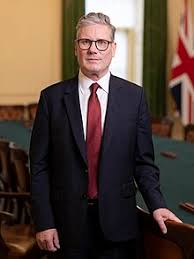
The current Prime Minster is Keir Starmer elections are held when the prime minster calls for one. As the ability to request a dissolution of parliament and call a general election lies with the prime minister. This means that a prime minister can effectively announce an election at a time of their choosing.

If the prime minister does not call an election earlier, then parliament would be automatically dissolved “the beginning of the day that is the fifth anniversary of the day on which it first met”, with the election being held 25 working days after that date. This means the latest date for the next general election will be 21 August 2029.

The legal age to drink, vote or marry is 18, although until 2023 you could legally marry as young as 16 with your parents’ consent.

The law also expands the offence of forced marriage to make it illegal to arrange for a child under 18 to marry, regardless of whether force or coercion is used. 

Adults who facilitate underage marriages can face up to seven years in prison. 

The law change aims to protect vulnerable children from being forced into marriage and to address the damaging impact of child marriage. 

The legal minimum age to work is 13 years old, but with restrictions, and young people can work full-time once they reach the minimum school leaving age which is 16.

The legal age to join the British Armed Forces is 16, but with parental consent, and those under 18 will be considered junior soldiers until they turn 18, at which point they can become regular soldiers. 

If you’re under 17 years and 6 months old, you’ll start your Army career at the Army Foundation College, Harrogate, as a Junior Soldier. You can become a regular soldier at 18 years old. 

You can start your application when you’re 15 years and 7 months old, but you won’t be able to go to the assessment centre until you’re at least 15 years and 9 months old. 

Those who sign on when 16 or 17 must serve until they are 22. However, a soldier cannot be deployed to the front line until they are aged 18. 

In England, you can start receiving the state pension, at the age of 66, but it is set to rise to 67 by 2028 and to 68 from 2044. 

Ok that’s enough for this post, I may do a part two looking at other stuff about the country.

National Anthem of the United Kingdom

This week’s national anthem is Northern Ireland’s which because the country is part of the United Kingdom they use “God Save the King” as its national anthem, but at the Commonwealth Games, “Londonderry Air” (also known as “Danny Boy”) is used as the Northern Irish team’s victory anthem. 

When Northern Irish players compete alongside players from the Republic of Ireland as one team, they all sing “Ireland’s Call”. 

The anthem “God Save the King” has a history dating back to the 18th century, with the first published version of the lyrics and tune appearing in 1745, though the origins of both are somewhat obscure. 

The song was first publicly performed in London in 1745, and by the beginning of the 19th century, it had become known as the national anthem. 

The origin of both the words and music is unclear, with the anonymous song appearing in Gentleman’s Magazine in 1745 and the tune appearing around the same time in an anthology called Thesaurus Musicus. 

Some possible composers and lyricists suggested including John Bull, Thomas Ravenscroft, Henry Purcell, and Henry Carey, but the authorship remains disputed. 

The song’s first performance in 1745 coincided with the Jacobite rebellion, and it was sung in support of King George II. 

The melody of “God Save the King” has been used for national anthems in other countries, like the national anthem of Liechtenstein, “Oben am jungen Rhein”. 

The lyrics were originally “God save great George our king,” but were later changed to “God save our gracious king” to accommodate the names of later monarchs like William IV and Victoria. 

Since 2003, “God Save the King”, considered an all-inclusive anthem for Great Britain and Northern Ireland, as well as other countries within the Commonwealth, has been dropped from the Commonwealth Games. In 2006, English winners heard Elgar’s “Pomp and Circumstance”, usually known as “Land of Hope and Glory”, but after a poll conducted prior to the 2010 Games, “Jerusalem” was adopted as England’s new Commonwealth Games anthem.

The words of the National Anthem are as follows:

God save our gracious King!

Long live our noble King!

God save the King!

Send him victorious,

Happy and glorious,

Long to reign over us,

God save the King.

Thy choicest gifts in store

On him be pleased to pour,

Long may he reign.

May he defend our laws,

And ever give us cause,

To sing with heart and voice,

God save the King.

Northern Ireland

So here we are at the start of another week, this week’s country is Northern Ireland.

Northern Ireland is a part of the United Kingdom in the north-east of the island of Ireland that is variously described as a country, province or region. Northern Ireland shares an open border to the south and west with the Republic of Ireland.

The official currency is the pound sterling, Bank of England notes are the only banknotes that are legal tender in England and Wales. Scottish, Northern Ireland, Jersey, Guernsey and Manx banknotes are not legal tender in England and Wales. However, they are not illegal under English law and creditors and traders may accept them if they so choose.

Northern Ireland remains separate from the Republic of Ireland because after the Irish War of Independence and the signing of the Anglo-Irish Treaty in 1921, the Government of Ireland Act 1920 partitioned the island, with the six northeastern counties (predominantly Protestant and Unionist) remaining part of the United Kingdom, while the rest became the Irish Free State (later the Republic of Ireland). 

The main difference between Ireland and Northern Ireland is that Ireland is a sovereign, independent country, while Northern Ireland is a constituent country within the United Kingdom. 

Citizens of Northern Ireland can choose to be either British or Irish citizens. 

The population is 1.9 million, the capital is Belfast and the official language is English. Although since 2022 Irish has also be recognised as an official language.

Their only official flag is the Union Jack, the flag of the United Kingdom.

Christianity is the largest religion, with Catholics and Protestants (including those from other Christian backgrounds) comprising the majority of the population. While the Catholic share of the population has overtaken the Protestant share, neither group constitutes a majority.

Belfast has a long history of riots between Catholics and Protestants. Beginning in 1835 there have been at least 15 major riots in Belfast, the most violent ones taking place in 1864, 1886 and 1921.

A series of riots known as “The Troubles,” stemmed from deep-seated sectarian tensions between Catholics (nationalists) and Protestants (unionists) over Northern Ireland’s status and treatment of the Catholic minority, erupting into violence from the late 1960s to the Good Friday Agreement in 1998.

In the 21st century, Northern Ireland has seen a resurgence of violence and riots, particularly in 2021, stemming from issues like Brexit and the COVID-19 pandemic, with loyalist groups engaging in protests that escalated into civil unrest.

Northern Ireland is generally a very safe place to visit, with a low crime rate and a welcoming atmosphere, making it a safe destination for tourists.

Canberra

This week we are having a look at Canberra the capital of Australia located in the Australian Capital Territory or ACT.

Canberra’s history begins with Aboriginal Australians, followed by European settlement in the 19th century, and its designation as Australia’s capital in 1908, with construction beginning in 1911 and the capital moving from Melbourne in 1927. 

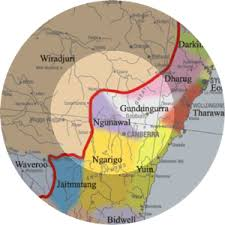
The area was inhabited by Aboriginal Australians, including the Ngunnawal and Ngambri peoples, for thousands of years, possibly as long as 21,000 years. 

The Ngunnawal and Ngambri people, continue to live and travel through the area, preserving their culture through land connections and artistic expression, although there have been ongoing disputes and court cases regarding their recognition.

European settlement began in the first half of the 19th century, with landmarks like St John’s Anglican Church and Blundells Cottage remaining from this period. 

In 1908, the Australian government decided to establish a new capital, choosing the Canberra-Yass district as the location, which was about 100 miles from Sydney. 

Construction of the city began in 1911, and the first Parliament House was completed in 1927, marking the official move of the capital from Melbourne. 

The name “Canberra” is believed to have come from the Aboriginal word “Canberry” or “Canbury”, meaning “a place of meeting”. 

Canberra has three sister cities: Nara in Japan, Beijing in China, and Wellington in New Zealand. 

As of the end of June 2024, Canberra’s estimated resident population was 474,132.

Canberra’s police are the AFP they have a community policing arm called ACT Policing, which responds to incidents in the Australian Capital Territory. 

The territory measures 85 kilometers or 53 miles north to south and 53 kilometers or 33 miles east to west. It covers an area of 2,358 square kilometers, or 910 square miles.

Several rivers flow through the Australian Capital Territory.

Its most famous lake is Lake Burley Griffin which is an artificial lake in the centre of Canberra. It was created in 1963 by the damming of the Molonglo River, which formerly ran between the city centre and Parliamentary Triangle. 

Bahrain

This week we are looking at Bahrain, officially the Kingdom of Bahrain, which is an island country of the Middle East, in West Asia. It is situated on the Persian Gulf, and comprises a small archipelago made up of 50 natural islands and an additional 33 artificial islands, centred on Bahrain Island which makes up around 83 percent of the country’s landmass.

The country has a population of only 1.6 million

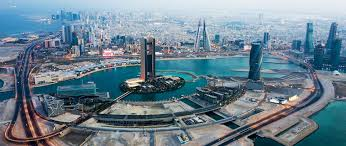
The modern capital of the gulf island nation of Bahrain, is Manama it has been at the centre of major trade routes since antiquity. Its acclaimed Bahrain National Museum showcases artifacts from the ancient Dilmun civilization that flourished in the region for millennia.

The city’s thriving Bab el-Bahrain Souq offers wares from colourful handwoven fabrics and spices to pearls. 

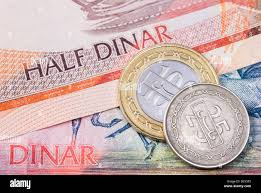
Their currency is the Bahraini dinar, the name is derived from the Roman denarius.

The Bahraini dinar was introduced in 1965, replacing the Gulf Rupee.

Arabic is the official language of Bahrain, although English is widely used.

Their flag consists of a white band on the left, separated from a red area on the right by five triangles that serve as a serrated line.

Alcohol is legal in Bahrain. However, drunken public behaviour is against the law. You could be fined, imprisoned or deported. Security officers and airline staff will not tolerate passengers believed to be drunk at the airport, including those who are in transit. The legal drinking age is 21.

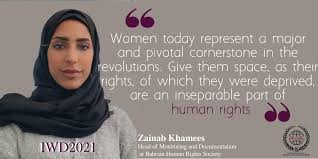
The country recognises women’s equality in political, social, cultural, and economic spheres, granting them the right to vote and stand for office, and has taken steps to protect their rights through legislation and initiatives. 

The Bahraini Constitution ensures women are afforded public rights and freedoms, including the right to participate in public affairs, vote, and stand for office. 

Bahrain is a member of the Convention on the Elimination of All Forms of Discrimination against Women (CEDAW). 

In 2017, Bahrain adopted the unified Personal Status Law (PSL), a step towards protecting both Sunni and Shi’ite women under an inclusive legal framework. 

The Kingdom of Bahrain emphasizes that its legislation does not include discriminatory provisions against women. 

Achieving gender balance and prohibiting gender discrimination in all areas of life are fundamental principles enshrined in the Constitution of the Kingdom of Bahrain for both men and women. 

Women have the right to vote and stand in national elections, a right granted in 2002. 

Women are represented in the Legislative Authority, with 19% of participation in 2020, including 15% elected to the parliament and 23% appointed to the Shura Council.

Women also participate in the Municipal Council, with 23% representation. 

While there’s no strict dress code, it’s generally recommended that women dress modestly in public, covering shoulders and wearing skirts or trousers that fall below the knee.

Very tight or transparent clothing is considered inappropriate for both genders. 

While there is a majority of people that remain narrow-minded, there’s a larger number of people who accept that people are allowed to be different from each other. 

The youth of Bahrain and their parents are allowing room for more diversity. 

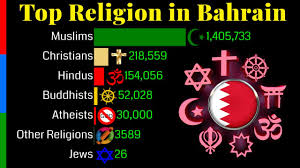
Bahrain’s official religion is Islam, with Sharia serving as a principal source for legislation, and the majority of Bahraini citizens are Muslims, including both Sunni and Shia sects, with the latter being in the majority. 

Besides Islam, Bahrain also has a small population of other religions, including Christians, Jews, Hindus, Baha’is, Buddhists, and Sikhs, among others. 

The country has an association that promotes religious coexistence and tolerance, aiming to foster respect for different faiths and advocate for peaceful coexistence. 

Mining Disasters

This week we are talking about mine disasters in my area, that being Newcastle in New South Wales.

My paternal grandfather was a coal miner as was his father both worked at the Standford Merthyr collier, I believe my great-grandfather was killed while working he was crushed between two mine train cars also known as minecarts or mine wagons, are specialized rail vehicles used to transport ore, rock, or other materials within mines.

There is a miner’s memorial in the town of Kurri Kurri which has a plaque with all the names of miners who passed while working in the local mines and his name is on it.

I know my grandfather was working at the mine at the age of 14.

One of the first disaster was on Monday 21st March 1898 at the Dudley pit around 9.20 am a huge explosion was heard as far away as Belmont and a rumbling underground as far away as Newcastle.

Coal dust filled the air for more than 15 minutes, when it had cleared it was realised the pithead roof had been partially blown off, the shaft cage had been propelled from the bottom of the shaft 30 feet into the air, lots of other destruction and trapped men inside. The local town folk ran to the pithead hoping for survivors, but the loss of life was inevitable given the extensive underground damage, smoke and poisonous gases.

There was little hope of survivors, but the rescue team worked late into the night. Over the next 2 weeks the rescue team managed to recover 10 out of the 15 bodies.            

The mine was flooded and there were still fires burning underground. The decision to close the pit was made and it was not re-opened until 17th June. Newspapers at the time reported on the dangers of the mining industry and this explosion was one of many world-wide.

The official inquiries and inquests found there to be an accumulation of a huge volume of gas in the pit to be the major cause of the disaster. The only comfort for the townsfolk at this time was that there were not more men killed as only the shift men and some officials were underground.

Normally there could be up to 200 working on-site.

Moving on in April 1946 rain caused subsidence at Cessnock No 2 colliery, this led to heat build up and the fires that followed made national news. Some thought the fire should be blasted with artillery or bombed from the air to get the fires under control. Of course, local residents thought those were stupid and dangerous ideas, thus the idea was scrapped.

Some thought that the 10m coal seam should have been mined using open cut mining, but during WW11 it seems the government pushed for underground mining.

At Easter 1946 previous predictions of a possible collapse, heating and fires if the rich seams were worked underground were proved right.

The fire underground was so fierce that at times flames burst to the surface shooting up to 10m into the air. Great sinkholes also appeared in the ground around the area and there were awful smelling fumes around causing distress to local residents.

Explosives were used to blow in the sides of the craters and soil was dumped in.

Miners from all over the district joined in to help control the huge blaze.

There have been many other disasters it isn’t the safest of industries to work in.

Ireland

I was going to write about another middle east country but since today is St. Patrick’s Day I changed my mind and now writing about Ireland.

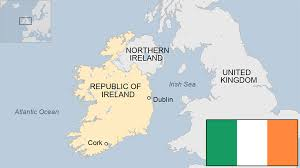
The Republic of Ireland occupies most of the island of Ireland, off the coast of England and Wales. Its capital, Dublin, is the birthplace of writers like Oscar Wilde, and home of Guinness beer. The 9th-century Book of Kells and other illustrated manuscripts are on show in Dublin’s Trinity College Library. Dubbed the “Emerald Isle” for its lush landscape, the country is dotted with castles like medieval Cahir Castle.

The island of Ireland comprises the Republic of Ireland, which is a sovereign country, and Northern Ireland, which is part of the United Kingdom. I will write about Northern Ireland at a later date.

The population is around 5.4 million, there are two official languages, English and Irish.

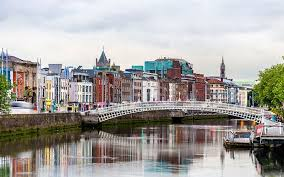
Dublin, capital of the Republic of Ireland, is on Ireland’s east coast at the mouth of the River Liffey. Its historic buildings include Dublin Castle, dating to the 13th century, and imposing St Patrick’s Cathedral, founded in 1191. City parks include landscaped St Stephen’s Green and huge Phoenix Park, containing Dublin Zoo. The National Museum of Ireland explores Irish heritage and culture.

The city expanded rapidly from the 17th century and was briefly the second largest in the British Empire and sixth largest in Western Europe after the Acts of Union in 1800. Following independence in 1922, Dublin became the capital of the Irish Free State, renamed Ireland in 1937.

The national flag of Ireland, often called “the tricolour,” is a vertical tricolour of green, white, and orange, with green at the hoist (pole side). 

Green: Represents Irish nationalism and the Gaelic tradition. 

White: Symbolizes peace and a lasting truce between different groups. 

Orange: Represents the supporters of William of Orange. 

This flag was first introduced by Thomas Francis Meagher in 1848 and became the national flag after the Easter Rising of 1916. 

The flag was given constitutional status in 1937. 

Their currency is the Euro since 1999 before that it was the Irish Pound

When it comes to religion, Christianity, particularly Catholicism, holds a significant place. The Catholic Church has a long history and cultural influence in Ireland, and many Irish people identify with the Catholic faith. 

While Catholicism is the largest religion, other Christian denominations, such as the Church of Ireland (Anglican), and other religions like Islam and Eastern Orthodoxy, are also present. 

A significant portion of the population, 14.5%, identified as having no religion in the 2022 census.

The Irish Constitution guarantees freedom of religion and does not endorse any particular religion. 

There has been a decline in the number of people who identify as Catholic, as well as a rise in the number of people who identify as having no religion.

In Ireland, significant strides have been made in advancing women’s rights, including equal voting rights, legal protections against discrimination, and a focus on eliminating violence against women, but challenges remain, particularly in achieving true gender equality and addressing data gaps. 

The 1937 Constitution of Ireland guaranteed women the right to vote and to nationality and citizenship on an equal basis with men.

Ireland is generally considered a safe and welcoming place to travel, with low crime rates and a friendly population. However, like any destination, it’s important to be aware of potential risks and take necessary precautions, especially in larger cities. 

Ireland has a relatively low crime rate compared to many other European countries

The Irish people are known for their hospitality and welcoming nature. 

Ireland is considered a great destination for solo travellers, both male and female.