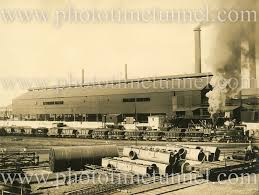
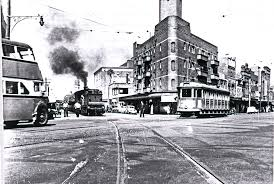
Newcastle’s Role in World War 2

Well, here we are at another Wednesday and this week we will step back to World War 2 for a little more about Newcastle, New South Wales role in Australia’s war effort.

The Japanese knew damn well how important Newcastle’s steel industry and coalmines would be for this small nation to be able to fight and defend itself, as without steel for ships, planes, tanks and weapons any country would struggle to survive a major conflict.  

When the BHP opened its steelworks in 1915 the city became a cornerstone of the country’s defence as well as a target for attack by an enemy.

It seems that in the 1920’s Japan studied Newcastle and its surrounds with intense interest. They believed it was important to seize the Hunter’s coalfields and cutting them off from Australia’s defence force.

They also conducted a sustained and intensive investigation of the topography and economic installations of the Newcastle area.  Most of this information was gathered by officers on Japanese merchant ships that visited Newcastle for coal. On almost every visit to Newcastle the Japanese officers would spend most of their time ashore, driving around the area in chauffeur-driven hired cars. They made maps and took an innumerable amount of photos, it was the shipping companies who paid for these trips and presumably were reimbursed by their government.
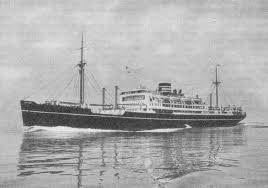
Australia’s intelligence people noted that almost all the Japanese officers visited a Japanese owned milliner’s shop, the shop closed up when questions were asked but soon after a Japanese owned fruit shop opened. It was owned by a well known Japanese agent who had a reputation of wealth and leisure and the dingy understocked fruit shop didn’t seem to go with the man.

Between 1924 and 1926 many Japanese ships went out of their way to pass as close as possible to Newcastle paying special attention to the beaches.

In the 1930’s well before the war many of our leading politicians and industrialist believed a conflict was inevitable. When BHP chief Essington Lewis visited Japan in the 1930’s and saw how the Japanese were putting a lot of energy and resources into arming itself for war, he was alarmed and on returning home set about preparing the BHP for a major munitions manufacturing company.

This man was hugely influential, and the federal government appointed him director of munitions meaning he managed a large part od the country’s industrial war efforts.

Newcastle’s steelworks and associated factories were destined to play a massive part in the nations defence, a huge array of weapons, parts and tools were produced in Newcastle with thousands of people being employed.

The challenges the city’s factories faced as they tried to replaced previously imported items were huge, but they managed to produce and churn out items that required the most demanding accuracy. It was a tribute to the hard work and dedication that a relatively novice workforce was able to turn its hand to this new industry with such success.

BHP learned to make the special steels needed for armour and armour-piercing weapons, other firms made steel helmets and other items. The firm of Lysaght made parts for tanks used by Australian forces, they also mass produced the Wollongong designed Owen sub-machine gun, as well as floating pontoons, portable aircraft hangers, army machetes and the precision-made “spinners” for the propellers of Mosquito aircraft.

Newcastle was one of the few locations to be attacked by  the Japanese.

The Republic of the Congo

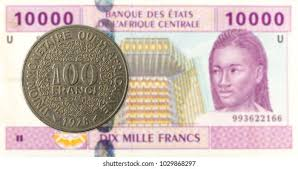
Hello Monday, this week we are having a look at the Republic of the Congo. The currency used is the Central African Franc and the country has a population of around 6 million. The official language is French.

The Republic of Congo, also called Congo-Brazzaville, is a central African nation with rainforest reserves that are habitats for gorillas.

The capital city is Brazzaville, it lies across the Congo River from Kinshasa, the capital of neighbouring Democratic Republic of Congo.

Yes, Congo is split in two the Republic of Congo is much smaller the Democratic Republic of Congo. Both countries are named for the Congo River, the two countries share a lot of traditions, languages ​​like Lingala and Kikongo, dishes and other things.

Brazzaville’s highlights include traditional craft markets and the mid-20th-century Basilique Sainte-Anne, with a green-tiled roof and spire. Just outside the city are the Congo Rapids. The cylindrical Nabemba Tower overlooks the river in the city centre. The marble Pierre Savorgnan de Brazza Memorial contains the remains of the city’s founder. 

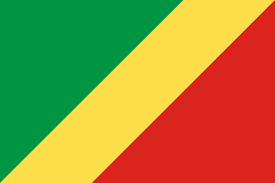
The flag has a diagonal yellow stripe that separates a green triangle

on the left from a red triangle on the right. The flag’s colours and shapes have symbolic meanings, Green is for agriculture and forests, Yellow is for friendship and the nobility of the people, Red well that is unexplained.

The Republic of the Congo is a secular country with no official religion. The constitution protects freedom of religion and belief and prohibits the use of religion for political purposes. 

The majority of the population in the Republic of the Congo is Christian, with Catholicism being the largest denomination.

Other religions in the country include Traditional African religions and Islam. The country also has independent African churches, including the Kimbanguist Church, the Matsouana Church, and the Bougist Church. 

The Republic of Congo has had a multiparty political system since the early 1990’s. The voting age in the Republic of Congo is 18 years.

The Republic of Congo is a Presidential Republic whereby the President acts as both Head of State and Head of the Government. The new constitution (adopted by referendum in 2002), established a seven year presidential term and a bicameral national parliament.

Angola National Anthem

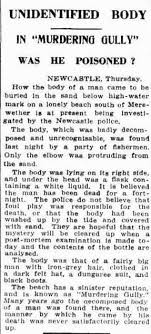
Since a couple of you asked about Murdering Gully and because I am also interested in how it got that name, I have none some research and this is what I found out. Nothing I could find stuff about a place call Murdering Gully in Victoria but the only site that information about Murdering Gully in my area was the Newcastle Herald site and they wanted me to sign up for a paid subscription which I did not want to do. So, I do not know why it was called that.

Moving on today is Friday and that means it is time for a national anthem and since I wrote about Angola on Monday, I will share their anthem today.

“Angola Avante” was composed by Ruy Mingas. The lyrics to the song were penned by Manuel Rui Alves Monteiro, an author who studied in Huambo and is affiliated with both the country’s Writer Union and Union of Artists and Composers.

The song was officially designated as the country’s national anthem in 1975, when the country gained independence on 11 November that year. It is enshrined under Article 164 of Angola’s constitution.

Its lyrics refer to several key events in the history of the MPLA. However, this has been rendered “obsolete” since the end of the one-party state in 1992. As a result, there have been efforts to modify the national anthem, along with other national symbols. However, none of these have come to fruition, and the anthem remains unchanged as of 2014.

Portuguese

O Pátria, nunca mais esqueceremos
Os heróis do quatro de Fevereio.
O Pátria, nós saudamos os teus filhos
Tombados pela nossa Independência.
Honramos o passado e a nossa História,
Construindo no Trabalho o Homem novo,
Honramos o passado e a nossa História,
Construindo no Trabalho o Homem novo.

CHORUS:
Angola, avante!
Revolução, pelo Poder Popular!
Pátria Unida, Liberdade,
Um só povo, uma só Nação!
Angola, avante!
Revolução, pelo Poder Popular!
Pátria Unida, Liberdade,
Um só povo, uma só Nação!

Levantemos nossas vozes libertadas
Para glóriados povos africanos.
Marchemos, combatentes angolanos,
Solidários com os povos oprimidos.
Orgulhosos lutaremos Pela Paz
Com as forças progressistas do mundo.
Orgulhosos lutaremos Pela Paz
Com as forças progressistas do mundo.

English Translation

 O Fatherland, we shall never forget
The heroes of the Fourth of February.
O Fatherland, we salute your sons
Who died for our Independence.
We honour the past and our history
As by our work we build the New Man.
We honour the past and our history
As by our work we build the New Man.

CHORUS:
Forward, Angola!
Revolution through the power of the People!
A United Country, Freedom,
One People, one Nation!
Forward, Angola!
Revolution through the power of the People!
A United Country, Freedom,
One People, one Nation!

2. Let us raise our liberated voices
To the glory of the peoples of Africa.
We shall march, Angolan fighters,
In solidarity with oppressed peoples.
We shall fight proudly for Peace
Along with the progressive forces of the world.
We shall fight proudly for Peace
Along with the progressive forces of the world.

Angola

Well, it is time to return to my normal run of the mill posts, kicking off with the first country of the year and it is Angola.

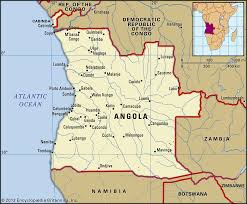
The country is officially the Republic of Angola it is a country on the west-central coast of Southern Africa.

The country has a varied terrain which encompasses tropical Atlantic beaches, a labyrinthine system of rivers and Sub-Saharan desert that extends across the border into Namibia. The country’s colonial history is reflected in its Portuguese-influenced cuisine and its landmarks including Fortaleza de São Miguel, a fortress built by the Portuguese in 1576 to defend Luanda.

It is the second-largest Portuguese speaking country in both size and population, it has a population of 38.5 million, 10 million of which live in the capital of Luanda.

Which is a port city on the west coast of Southern Africa. A seafront promenade known as the Marginal runs alongside Luanda Bay. Nearby is the well-preserved 16th-century Fortress of São Miguel, which now contains the Museum of the Armed Forces. The fort has views of the harbor and the Ilha do Cabo, a long, thin peninsula in the bay that’s home to beaches, bars and restaurants.

It is the seventh largest country in Africa and is divided into 18 provinces.

Their flag came into use when the nation gained independence from Portugal on 11 November 1975. It is split horizontally into an upper red half and a lower black half with an emblem resting at the centre. It features a yellow half gear wheel crossed by a machete and crowned with a star.

As outlined in their constitution, the red half of the flag signifies bloodshed – during Angola’s colonial period, independence struggle, and in defence of the country. The black half symbolizes Africa. In the central emblem, the gear represents industrial workers and production, the machete represents peasantry, agricultural production and the armed struggle, and the red star, symbolizes international solidarity and progress. The yellow colour of the emblem symbolizes the country’s wealth.

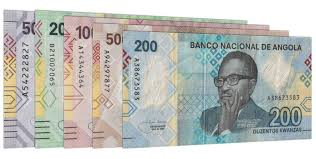
The currency used is the kwanza there have been four different currencies using the name kwanza since 1977. The currency derives its name from the Kwanza River.

The prevalent religion is Christianity, followed by traditional faiths. Roman Catholics make up the largest portion of the population. There are other Christian denominations such as Protestants, such as the Church of Our Lord Jesus Christ in the World, Seventh-day Adventists, Methodists, Baptists.

Indigenous beliefs are still very important in Angolan culture and are often practiced in addition to Christianity.

Muslims, Jews, Baha’is, and other religious groups make up about 9% of the population.

The government has become more tolerant of religious organizations since the formal abandonment of Marxism. However, the government still uses administrative control, co-optation, and restrictions to manage religious organizations. For example, in 2019, the police conducted a campaign against illicit traders and non-recognized churches, which some say called into question religious freedom in Angola. 

Angola’s National Institute for Religious Affairs (INAR) is responsible for the registration of religious groups and the oversight of religious activities. The law requires religious groups to submit documents defining their organizational structure, location, and other information. Religious doctrine must also conform to the principles and rights outlined in the constitution. 

The current political regime in Angola is presidentialism, in which the President of the Republic is also head of state and government; it is advised by a Council of Ministers, which together with the President form the national executive power.

Like other African nations it is not a safe place to visit.

Australia’s Anthem

This is the first post about a country’s national anthem and of course the country is Australia, our national anthem is Advance Australia Fair it was written and composed by Peter Dodds McCormick in 1878.

It has been our national anthem since 19 April 1984.

Before then it was God Save the Queen.

Advance Australia Fair” was chosen as Australia’s national anthem after a series of polls and a plebiscite:

In 1974, The Australian Bureau of Statistics conducted a poll of 60,000 people, with 51.4% of respondents choosing “Advance Australia Fair” as their preferred anthem. So, it was adopted as the Australian National Anthem, but in 1976 ‘God Save The Queen’ was reinstated.

Then in 1977, The Australian Electoral Office conducted a poll as part of a referendum on various issues. Over 7 million people voted, with 43.29% choosing “Advance Australia Fair”, over three other contenders, including “Waltzing Matilda.”

In 1984 The Governor-General proclaimed “Advance Australia Fair” as the national anthem, along with the verses written by the National Australia Day Council.

Some of the original words, however, have been altered for the official version—including the first line, changed from “Australia’s sons, let us rejoice”, to “Australians all let us rejoice.”

In 2021 the second line was changed from “For we are young and free” to “For we are one and free” to acknowledge Aboriginal and Torres Strait Islanders and their history.

The song is about Australia’s strength and beauty and references the migration of European settlers. The word “fair” has been the subject of controversy, with some arguing it means beautiful, while others suggest it has links to being white.

The song originally had four verses but only the first two are used in the anthem.

Australians all let us rejoice,
For we are one and free;
We’ve golden soil and wealth for toil,
Our home is girt by sea.
Our land abounds in Nature’s gifts
Of beauty rich and rare;
In history’s page, let every stage
Advance Australia fair.
In joyful strains then let us sing,
“Advance Australia Fair.”


Beneath our radiant Southern Cross
We’ll toil with hearts and hands;
To make this Commonwealth of ours
Renowned of all the lands;
For those who’ve come across the seas
We’ve boundless plains to share;
With courage let us all combine
To Advance Australia fair.
In joyful strains then let us sing,
“Advance Australia Fair.”

National Anthems

National Anthems    

I have decided to do a new Friday series on national anthems of different countries, but first we will start with this.

The Netherlands has the oldest national anthem in use today, Wilhelmus van Nassouwe, also known as Wilhelmus. It was written between 1568 and 1572 during the Dutch Revolt, but it wasn’t officially adopted until 1932. 

Anthems were originally devotional verses sung during religious services. One of the first songs to be called a “national anthem” was Great Britain’s “God Save the King”. 

Here are some other facts about national anthems:

  • Most national anthems are either hymns or marches.
  • Anthems are usually in the country’s national or most common language.
  • Some countries have multiple versions of their anthem if they have more than one national language. For example, Switzerland’s national anthem, the Swiss Psalm, has different lyrics for each of the country’s four official languages.
  • Some national anthems were written by famous composers. For example, Germany’s Das Lied der Deutschen uses a melody written by Joseph Haydn. 

I will start with the first country next week.

Libya

Good morning, everyone, this Monday we are looking at Libya another country in Northern Africa. It borders the Mediterranean Sea to the north, Egypt to the east, Sudan to the southeast, Chad to the south, Algeria to the West and Tunisia.

It is a country blessed with oil but not with water, it has a population of 6.8 million most of who live in the two major cities of Tripoli which is the capital and Banghazi.

It’s man-made river project it the biggest of its kind in the world. Generally known as The Great Man-Made River is a network of pipes that supplies fresh water obtained from the Nubian Sandstone Aquifer System fossil aquifer across Libya.

The flag consists of a triband red-black-green design, the central black band being twice the width of the outer bands. A white star and crescent is located in the center of the flag. The flag was designed by Omar Faiek Shennib and adopted in 1951 after Libya’s independence. It was abolished in 1969 after the monarchy was overthrown by Col. Muammar al-Qaddafi. Qaddafi implemented several different flags, including a plain green flag in 1977 to symbolize the “Green Revolution”. The flag was reinstated in 2011 after the fall of Qaddafi. 

The currency is The dinar it divided into 1,000 dirhams

Libya’s climate is influenced by the Mediterranean Sea to the north and the Sahara Desert to the south and, as a result, abrupt transitions of weather conditions are experienced across the country. The Mediterranean coastal strip experiences dry summers and relatively wet winters.

The Government of National Unity is a provisional government for Libya formed on 10 March 2021 to unify the rival Government of National Accord based in based in Tobruk. Abdul Hamid Dbeibeh is Prime Minister of the unity government and was selected in the Libyan Political Dialogue Forum on 5 February 2021. This is a de facto backed by the governments of Turkey, Qatar, Algeria and Pakistan.

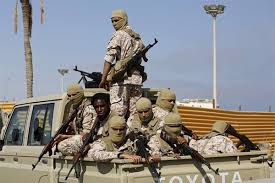
Wondering if you should visit Libya well the advice online is, do not travel to Libya due to crime, terrorism, unexploded landmines, civil unrest, kidnapping, and armed conflict. Country Summary: Crime levels in Libya remain high, including the threat of kidnapping for ransom.

It is not on my list of places to visit.

The majority of Libyans are of Arab or mixed Arab-Berber descent. The Sunni branch of Islam is the official and nationally dominant political, cultural and legal force. Imazighen, who retain the Tamazight language and customs, are indigenous to North Africa and constitute the largest non-Arab minority.

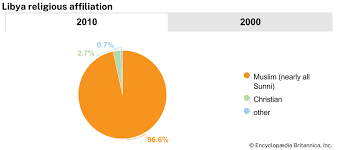
Islam is the main religion in Libya, with the majority of the population identifying as Sunni Muslim. Libya’s religious freedom is limited, and there are restrictions on the ability to practice other religions: 

There is no law that allows people to choose or change their religion 

The criminal code prohibits proselytization and missionary activities 

The criminal code prohibits insulting Islam or the Prophet Muhammad, and can result in the death penalty 

Authorities have restricted the liberties of religious minorities 

Libya’s ancient Jewish population has been gone since 2002, when the last community member died.

Shortages and rationing

This week we are going to look at shortages and rationing during WW11. Naturally Australia wasn’t the only country to have shortages and rationing.

After blackout rules became more enforced due to the submarine attacks found and increase in the demand for torches and batteries. However, it was next to impossible finding them.

At other times during the war there was shortages of a wide variety of goods, including some items most people don’t think of such as flannel underwear and woollen trousers, considered vital for men working in heavy industries.

A chronic worldwide shortage of shipping meant many goods generally imported were no longer available, substitutes could be found for some things but often people just had to do without.

Petrol was rationed and tyres were hard to find as rubber was diverted to the war effort. Many cars were converted to run on charcoal gas, these cars were hard to miss due to the big gas bags on their roofs. Petrol rationing was introduced in 1940.

Also is short supply were coins and by the end of 1942 pennies and half-pennies were almost unprocurable.

During 1942 rationing was introduced for food and clothing this meant having a ration book and coupons and in 1943 you needed a coupon for household furnishings.

Naturally this resulted in a thriving black market especially in waterfront places like Newcastle.

Here in Newcastle, there was a housing problem as the house building was placed on hold during the war. Public transport was also in short supply due to funding and rationing of petrol.

As a result of the fuel issues horse were brought back into service although fodder was also in short supply and Newcastle businesses lobbied the government to provide rail wagons to carry stock feed from country areas to keep freight moving.

Newcastle War Years

 Today we are going to have a look at Newcastle, New South Wales in 1939 when World War 11 started.

It was considered by some that the part Newcastle was to play in the national war effort was inevitably this was due to the city’s heavy industries represented the vital heart of the country’s ability to fight fire with fire.

It wasn’t long before BHP, its subsidiaries and a surprising wide array of smaller industrial plants were flat out making shells, gun barrels, bombs and parts for everything from tanks to aircraft.

As the war progressed the NSW government pressed Newcastle back into shipbuilding and repair business.

BHP chief Essington Lewis had anticipated Japan’s entry into the war and the cities industries were ready to accelerate production after the attack on Pearl Harbour in 1941.

War activity reached hectic levels in 1942 when Japanese submarines prowled of the east coast sinking ships and attacking Newcastle and Sydney.

It was during this time that the RAAF established a base at Williamstown in order to defend the oh so important industries in Newcastle. A seaplane base was also established at Rathmines which is part of Lake Macquarie and the US-built Catalina aircraft did long-range patrols and anti-submarine work.

During the war years military and civil defence infrastructure appeared all over the Hunter, also air raid shelters popped up in streets and tank traps were established on beaches and slit trenches were dung in schools and parks.

Blackouts were enforced and many households dug their own shelters.

Of course, many men signed up to serve their country, going overseas to fight, while U S troops arrived in the city.

Women also went off to war with many joining the Land Army as well as other military forces, operating searchlights and working in radar and communications installations. While others filled the caps left by the men gone off to fight, this was radical change that continued well into the postwar years.

Egypt

Well, we are moving out of Europe and into North Africa this is the second largest and second most populated continent after Asia. North Africa is naturally the northmost region of the African continent it is separated from the rest of Africa by the Sahara Desert.

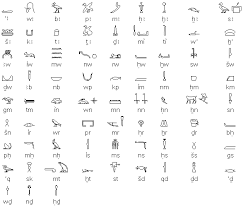
Egypt is one of the most populated countries in Africa and the Middle East, a great majority of the population live near the banks of the river Nile. It is famous for its ancient civilisation and some of the world’s most famous monuments such as the Pyramids and Great Sphinx.

It is a country linking northeast Africa with the Middle East, dates to the time of the pharaohs.

The capital, Cairo, is home to Ottoman landmarks like Muhammad Ali Mosque and the Egyptian Museum. It is set on the Nile River. At its heart is Tahrir Square and the vast Egyptian Museum, a trove of antiquities including royal mummies and gilded King Tutankhamun artifacts. Nearby, Giza is the site of the iconic pyramids and Great Sphinx, dating to the 26th century BC. In Gezira Island’s leafy Zamalek district, 187m Cairo Tower affords panoramic city views.

The Egyptian pound is the official currency of Egypt. The 10  and 20-pound notes are made out of polymer plastic paper as of July 6, 2022.

The official language of Egypt is Arabic, and most Egyptians speak one of several vernacular dialects of that language. As is the case in other Arab countries, the spoken vernacular differs greatly from the literary language.

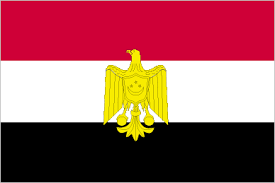
The national flag of Egypt is a tricolour consisting of the three equal horizontal red, white, and black bands of the Egyptian revolutionary flag that dates back to the 1952 Egyptian Revolution. The flag bears Egypt’s national emblem, the Egyptian eagle of Saladin, centred in the white band.

While looking for the country’s national animal I got two responses one being the Dorcas Gazell the other being the Steppe Eagle, which is the country’s national bird.

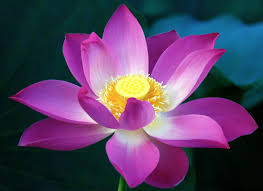
The national flower of Egypt is the Egypt Lotus Flower. This stunning flower has been an important symbol in Egyptian culture for thousands of years, and it is often associated with rebirth and regeneration.

Football is the most popular sport in Egypt, by football I mean soccer many Egyptians gather around to watch various Egyptian clubs and the Egyptian national football team play on an almost daily basis. Zamalek and Al Ahly are amongst the most popular in the country, both of which are based in Cairo.

Throughout much of ancient history Egyptian religion was polytheistic, meaning it recognized many gods and goddesses, as well as a variety of other divine beings.

Now days most experts and media sources estimate approximately 90 percent of the population is Sunni Muslim and 10 percent is Christian. Scholars and NGOs estimate Shia Muslims comprise approximately 1 percent of the population. There are also small numbers of Dawoodi Bohra Muslims and Ahmadi Muslims.

 There is also a new post over at Random Stuff