
Dominica Pt 2

This week we are looking at a few more facts about the country of Dominica.

Their national animal is the Sisserou parrot, also known as the Imperial amazon or Dominican amazon. It is an endangered species, endemic to Dominica, and appears on the national flag and coat of arms.
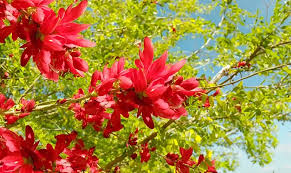
The national flower is the Sabinea carinalis, commonly known as Carib Wood or Bois Caraibe. It’s also referred to as Bwa Kwaib. 

They have an official national dish called Callaloo soup. This hearty, thick soup is made with dasheen leaves, coconut milk, and often includes yams, peppers, onions, salted meat or crab, and green bananas. It’s a staple in Dominican cuisine and is often served during special occasions. 

The coat of arms was adopted on July 21, 1961. It consists of a shield with two guardian sisserou parrots bracing the shield atop of which is a lion passant. The quarters of the shield depict a canoe, a banana tree, a palm and a frog of the native species known as the mountain chicken.

The country has made strides in protecting women’s rights through legal frameworks and international commitments, but challenges remain, particularly in areas like workplace discrimination and access to reproductive health services. The government has enacted legislation addressing violence, including domestic violence and sexual offenses, and has ratified international conventions like CEDAW. However, gaps exist in areas like employment discrimination and the availability of emergency contraception.

The age of consent for sexual relations is 16. The law prohibits using children for commercial sexual exploitation, including child sex trafficking, and related activity may be prosecuted under laws against prostitution or trafficking.

Dominica has a Westminster-style parliamentary government, and there are three political parties–the Dominica Labour Party (the majority party), the Dominica United Workers Party, and the Dominica Freedom Party. A president and prime minister make up the executive branch.

It is considered one of the safest Caribbean countries for travelers. Whether you’re a solo traveler, a same-sex couple, or a family with children, the island’s progressive laws, including legislation decriminalizing same-sex relations on 22 April 2024, ensure a safe and inclusive atmosphere for all demographics.  However, visitors should exercise caution at all times. Regarding outdoor activities, most beaches in Dominica are safe for swimming and snorkelling.

Iraq National Anthem

This week we are looking at Iraq’ national anthem it is titled Mawtini which in English mean My Homeland, it is a poem written by the Palestinian poet Ibrahim Tugan and is a popular patriotic song amongst the Arab people as well as being the official national anthem of Iraq.

It was adopted as the country’s anthem in 2004, the song formerly served as an unofficial anthem of Palestinians and other people of the Middle East during much of the 20th century. In 1996, Palestine formally adopted it as their official anthem. Even though it has since been superseded by something else, many Palestinians still identify strongly with it and consider it the unofficial national anthem of their country.

It has been described as a reflection of the shared experiences and struggles of Arab peoples, evoking strong emotions tied to national pride, hardship, and the aspiration for freedom. It is regarded as a symbol of resistance and a representation of the collective longing for liberation during periods of occupation and oppression. The anthem conveys emotions such as sorrow, anger, and hope, fostering a sense of renewal and solidarity among those who have endured similar adversities. Its lyrics express a deep love for the homeland, a commitment to its liberation, and a vision of a united and free nation. This message resonates widely across the Arab world, reflecting the shared struggles for independence, identity, and sovereignty.

The national anthem of Iraq between 2003 and 2004 was “Mawtini”, an instrumental composition composed by Iraqi Assyrian musician Louis Zanbaka. 

Also, the “Arḍu l-Furātayni”, also known as the “Land of The Two Rivers”, was the national anthem of Iraq from 1981 to 2003, during the Ba’athist regime of Saddam Hussein. 

My homeland, my homeland,
Glory and beauty, sublimity and splendour
Are in your hills, are in your hills.
Life and deliverance, pleasure and hope
Are in your air, are in your air.
Will I see you, will I see you?
Safely comforted and victoriously honoured.
Will I see you on your eminence?
Reaching to the stars, reaching to the stars
My homeland, my homeland.

My homeland, my homeland,
The youth will not tire
Their goal is your independence.
Or they die, or they die.
We will drink from death, and this will not be our enemies.
Like slaves, like slaves.
We do not want, we do not want
An eternal humiliation, or a miserable life.
We do not want to, but we will take it back.
Our storied glory, our storied glory.
My homeland, my homeland.

My homeland, my homeland,
The sword and the pen, not talk nor the quarrel
Are our symbols, are our symbols.
Our glory and our covenant, and a faithful duty
Moves us, moves us.
Our glory, our glory,
It is an honourable cause and a waving flag.
O, behold you, on your eminence,
Victorious over your enemies, victorious over your enemies.
My homeland, my homeland!