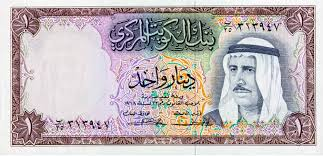
Bahrain

This week we are looking at Bahrain, officially the Kingdom of Bahrain, which is an island country of the Middle East, in West Asia. It is situated on the Persian Gulf, and comprises a small archipelago made up of 50 natural islands and an additional 33 artificial islands, centred on Bahrain Island which makes up around 83 percent of the country’s landmass.

The country has a population of only 1.6 million
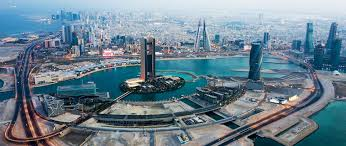
The modern capital of the gulf island nation of Bahrain, is Manama it has been at the centre of major trade routes since antiquity. Its acclaimed Bahrain National Museum showcases artifacts from the ancient Dilmun civilization that flourished in the region for millennia.

The city’s thriving Bab el-Bahrain Souq offers wares from colourful handwoven fabrics and spices to pearls. 
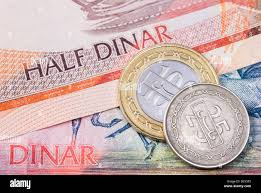
Their currency is the Bahraini dinar, the name is derived from the Roman denarius.

The Bahraini dinar was introduced in 1965, replacing the Gulf Rupee.

Arabic is the official language of Bahrain, although English is widely used.

Their flag consists of a white band on the left, separated from a red area on the right by five triangles that serve as a serrated line.

Alcohol is legal in Bahrain. However, drunken public behaviour is against the law. You could be fined, imprisoned or deported. Security officers and airline staff will not tolerate passengers believed to be drunk at the airport, including those who are in transit. The legal drinking age is 21.

The country recognises women’s equality in political, social, cultural, and economic spheres, granting them the right to vote and stand for office, and has taken steps to protect their rights through legislation and initiatives. 

The Bahraini Constitution ensures women are afforded public rights and freedoms, including the right to participate in public affairs, vote, and stand for office. 

Bahrain is a member of the Convention on the Elimination of All Forms of Discrimination against Women (CEDAW). 

In 2017, Bahrain adopted the unified Personal Status Law (PSL), a step towards protecting both Sunni and Shi’ite women under an inclusive legal framework. 
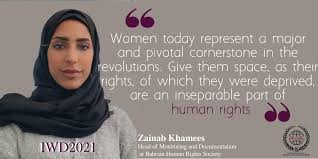
The Kingdom of Bahrain emphasizes that its legislation does not include discriminatory provisions against women. 

Achieving gender balance and prohibiting gender discrimination in all areas of life are fundamental principles enshrined in the Constitution of the Kingdom of Bahrain for both men and women. 

Women have the right to vote and stand in national elections, a right granted in 2002. 

Women are represented in the Legislative Authority, with 19% of participation in 2020, including 15% elected to the parliament and 23% appointed to the Shura Council.

Women also participate in the Municipal Council, with 23% representation. 

While there’s no strict dress code, it’s generally recommended that women dress modestly in public, covering shoulders and wearing skirts or trousers that fall below the knee.

Very tight or transparent clothing is considered inappropriate for both genders. 

While there is a majority of people that remain narrow-minded, there’s a larger number of people who accept that people are allowed to be different from each other. 

The youth of Bahrain and their parents are allowing room for more diversity. 
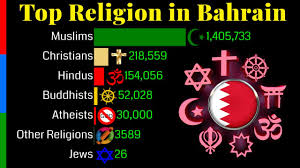
Bahrain’s official religion is Islam, with Sharia serving as a principal source for legislation, and the majority of Bahraini citizens are Muslims, including both Sunni and Shia sects, with the latter being in the majority. 

Besides Islam, Bahrain also has a small population of other religions, including Christians, Jews, Hindus, Baha’is, Buddhists, and Sikhs, among others. 

The country has an association that promotes religious coexistence and tolerance, aiming to foster respect for different faiths and advocate for peaceful coexistence. 

Saudi Arabia

Ok this week we are looking at Saudi Arabia, officially the Kingdom of Saudi Arabia, is a country in West Asia. Located in the centre of the Middle East, it covers the bulk of the Arabian Peninsula and has a land area of about.

The country was established in 1932 by King Abdulaziz Al-Saud, its transformation has been astonishing. In a few short decades, the Kingdom has turned itself from a desert nation to a modern, sophisticated state and a major player on the international stage.

In 1932, the two kingdoms of the Hejaz and Najd were united as the “Kingdom of Saudi Arabia”. Boundaries with Transjordan, Mandatory Iraq, and Kuwait were established by a series of treaties negotiated in the 1920s, with two “neutral zones” created, one with Iraq and the other with Kuwait.

The capital is Riyadh and is the main financial hub, it is on a desert plateau in the country’s centre. The business district landmarks include the 302m-high Kingdom Centre, with a sky bridge connecting 2 towers, and 267m-high Al Faisaliah Centre, with a glass-globe summit.

The currency is the Saudi Riyal and has been since the country was first established.

The flag is green with a white Arabic inscription and a sword. The inscription is the Islamic creed, or shahada, which translates to “There is no deity but God; Muhammad is the Messenger of God”. The current design has been used since 1973.

The colour of Islam is green, the sword represents the strictness in applying justice and the shahada is the central symbolic design of the flag. The flag must always be represented so that the inscription reads correctly on both sides. The flag is never to be flown vertically or at half-mast due to its religious symbolism.

The inscription is the Islamic creed, or shahada: “There is no deity but God; Muhammad is the Messenger of God”. The current design has been used by the government of Saudi Arabia since 15 March 1973.

As of February 2025, the population of Saudi Arabia is 37.47 million.

The official language is Arabic. The three main regional variants spoken by Saudis are: Najdi Arabic – about 14.6 million speakers. Hejazi Arabic – also known as Hijazi Arabic & West Arabian Arabic – about 10.3 million speakers.

The official religion of Saudi Arabia is Islam, and the country is considered an Islamic state. The majority of Saudi citizens are Sunni Muslim, with a Shia minority. 

When it comes to religious freedom there isn’t any, the Saudi government does not provide for freedom of religion under the law. However, the government generally permits Shia religious gatherings and non-Muslim private religious practices. 

The country’s constitution is the Quran and Sunna, which are traditions and practices based on the life of the Prophet Muhammad. 

The legal system is based on sharia, which is Islamic law. 

The government does not allow public worship of any religion other than Islam. 

The government does not allow public display of non-Islamic religious symbols. 

The government criminalizes proselytizing by non-Muslims. 

Shia Muslims make up about 10–12% of the citizen population. 

The majority of remaining Shia are Sulaimani Ismailis, also known as “Seveners”. 

Pockets of Zaydis, another branch of Shia Islam, live in the provinces of Jizan and Najran. 

Saudi Arabia has made progress in improving women’s rights, but discrimination still exists. 

Recent improvements are the following, women can apply for passports, travel abroad, and register marriages and divorces without a male guardian’s permission. 

Women can register as co-heads of households and live independently from their husbands 

Women can join the senior ranks of the military 

Women can change their personal data without a guardian’s permission 

Women can register to perform the Hajj without being accompanied by a mahram 

Women can vote and run in municipal elections 

Female athletes can participate in the Olympics 

There are still other challenges to overcome such as.

Women still face discrimination in law and practice, including in matters of marriage, divorce, child custody, and inheritance 

The Personal Status Law (PSL) codifies male guardianship, which can prevent women from fully consenting to marriage 

Many Saudi women still cover their faces or hair in public even though they are not required to wear a hijab or abaya in public. However, the government does encourage modest dress for both men and women.

When it comes to visiting the country both Australia and The States advise reconsidering travel to Saudi Arabia due to the threat of missile and drone attacks. Also, the country is a target for radical Islamic terror groups. There are also human rights abuses, cultural sensitivities, and government surveillance concerns. 

Iraq

This week we have moved onto Iraq, officially known as the Republic of Iraq, is a country in West Asia, bordered by Saudi Arabia to the south, Turkey to the north, Iran to the east, the Persian Gulf and Kuwait to the southeast, Jordan to the southwest, and Syria to the west. 

The country is dominated by two famous rivers: the Tigris and the Euphrates. They flow southeast from the highlands in the north across the plains toward the Persian Gulf. The fertile region between these rivers has had many names throughout history, including Al-Jazirah, or “the island,” in Arabic and Mesopotamia in Greek.

Many parts of Iraq are harsh places to live. Rocky deserts cover about 40 percent of the land. Another 30 percent is mountainous with bitterly cold winters. Much of the south is marshy and damp. Most Iraqis live along the fertile plains of the Tigris and Euphrates.

Baghdad is the capital and largest city of Iraq, located along the Tigris in the central part of the country. With a population exceeding 7 million, it ranks among the most populous cities in the Middle East and Arab World and forms.

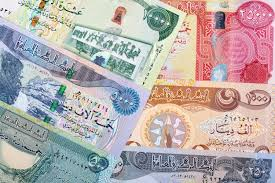
The Iraqi dinar is the currency of Iraq. The Iraqi dinar is issued by the Central Bank of Iraq. On 7 February 2023, the exchange rate with the US Dollar was US$1 = 1300 dinars.

The Iraqi flag has four horizontal stripes of red, white, green, and black. The colours are inspired by a poem by Safi al-Din al-Hilli. The flag also has an Arabic inscription that means “Allah is the Greatest”. 

The current version of the Iraqi flag has been in use since 2008. 

The flag was modified in 1991 by President Saddam Hussein.

In 2004, the Iraqi Governing Council proposed a new flag, but it was almost universally rejected by Iraqis. 

The colours of the Iraqi flag are inspired by a poem by Safi al-Din al-Hilli. 

The poem refers to red as willingness to shed blood, green for Arab fields, black for battles, and white for purity of motives and deeds. 

The three green stars on the flag represent a desire to unite with Egypt and Syria. 

It is one of the most culturally diverse nations in the Middle East. Arabs, Kurds, Turkmen, Assyrians, Mandaeans, and Armenians, among others, speak their own languages and retain their cultural and religious identities.

Iraqis once had some of the best schools and colleges in the Arab world. That changed after the Gulf War in 1991 and the United Nations sanctions that followed. Today only about 40 percent of Iraqis can read or write.

The country is a federal constitutional democracy. The Head of State is the President. The Head of Government is the Prime Minister, who appoints the Council of Ministers (Cabinet). The Council of Representatives (CoR) is the unicameral legislature. The Iraqi people elect the 329 members of the CoR through an open-list, proportional representation electoral process. Nine seats are set aside for representation of Iraqi minorities. The Constitution sets a quota of 25 per cent of CoR seats to be held by women. Members serve four-year terms. The Prime Minister and Cabinet Ministers do not have to be elected members of the CoR but the CoR must approve their nominations. Ministers must forgo their CoR seats to serve in Cabinet.

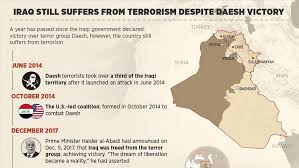
During late 2013 and 2014, the terrorist organisation Da’esh seized territory in west and northwest Iraq, including the city of Mosul. Da’esh systematically persecuted ethnic and religious minorities and committed abuses against vulnerable groups including women and children. On 9 December 2017, then-Prime Minister Haider al-Abadi announced the defeat of Da’esh in Iraq. 

Despite the territorial defeat of Da’esh in Iraq and Syria (announced by the Syrian Democratic Forces in March 2019), Da’esh remains a very real threat to the region. At the request of the Government of Iraq, the Global Coalition to Defeat Da’esh continues to support the Iraqi Security Forces to combat the threat posed by remnants of Da’esh.

Iraqi women today suffer from insufficient educational opportunities and healthcare and limited access to the labor market, as well as high levels of violence and inequality.

The status of women has been affected by wars, Islamic law and the Constitution of Iraq as well as Cultural traditions. Abusive practices such as honour killings and forced marriages still persist.

The security situation in Iraq is volatile and could deteriorate with little warning. There’s a risk of violence, armed conflict, kidnapping and terrorist attacks.

Kuwait

This week we are looking at Kuwait, a country I have heard of but know bugga all about.

Kuwait, officially the State of Kuwait, is a country in West Asia and the geopolitical region known as the Middle East. It is situated in the northern edge of the Arabian Peninsula at the head of the Persian Gulf, bordering Iraq to the north and Saudi Arabia to the south.

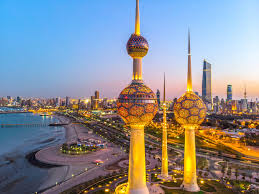
The capital is Kuwait City it’s located on the Persian Gulf, and is the country’s political, cultural, and economic centre. The city has a modern skyline with skyscrapers, mosques, malls, and hotels 

The city features a mix of Western-style architecture and traditional Islamic architecture. It is home to Kuwait’s Seif Palace.

The city’s name comes from the Arabic word kūt, which means “fort”, it underwent a transformation after the discovery of oil in the 1930s. 

As of January 2024, Kuwait’s population was 4.91 million people. This includes 1.545 million Kuwaiti citizens and 3.36 million expatriates. 

The official language is Arabic.

The official currency is the Kuwaiti Dinar.

Their flag was adopted on 7 September 1961, and officially hoisted 24 November 1961. Before 1961, the flag was red and white, like those of other Arabian Gulf states at the time. Now the flag is a tricolour of green, white, and red with a black trapezium on the hoist side. It is the only flag in the world featuring an acute trapezium.

Kuwait is an emirate. The Emir of Kuwait, a hereditary monarch from the Al Sabah ruling family appoints the prime minister (who is always a royal) and other members of government, as well as members of judicial, police and financial institutions.

An emirate is a political territory ruled by an emir, a title used by monarchs or high officeholders in the Muslim world. The term “emirate” is similar to “kingdom” or “principality”. 

The Cabinet of Kuwait is the chief executive body of the State of Kuwait. The 46th cabinet in the history of Kuwait was appointed on 12 May 2024. On 15 April 2024, Amir of Kuwait His Highness Sheikh Mishal Al-Ahmad Al-Jaber Al-Sabah assigned His Highness Sheikh Ahmad Abdullah Al-Ahmad as Prime Minister.

There has been some progress in women’s rights but there is still discrimination in many aspects of life. They have access to education, economic and political rights, and can serve in the military, police, and as judges.

Kuwait’s personal status laws discriminate against women in matters of marriage, divorce, and child custody, including by requiring women to have male guardian permission to marry and by stripping them of spousal maintenance from their husband if they refuse to live with their husbands “without justification.”

In Kuwait, women should dress modestly and conservatively, covering their arms, shoulders, and legs. Tight-fitting clothing is not recommended.

Traditional dress consists of the abaya, along, black cloak that covers the body except for the hands, feet, and face and the daraa a traditional Kuwaiti dress that is long-sleeved, loose, and floor length.The hijab and the niqab are worn by some women, especially during religious occasions.

There’s an increased risk of terrorism in Kuwait, including threats against military bases. Maintain a high level of security awareness and be aware of your surroundings.

It’s illegal to buy, sell, import, carry and consume alcohol. Penalties range from fines to imprisonment and deportation.

Jordan National Anthem

The Royal National Anthem is the national anthem of the Hashemite Kingdom of Jordan. The translated name literally means “Peace be upon the King of Jordan”. As-salamu alaykum is the greeting in Arabic, therefore the name of the anthem can also be regarded as a Royal Salute.

In 1946, the National Anthem was written by the late Abdul Munim Rifai, a renowned Jordanian poet who later served as prime minister. Abdul Qader Tannir composed the music.

The first version of the lyrics was very short, as it only contained the first stanza of the current version. Since then, the anthem has been expanded. The abridged version of the anthem is usually used, while the full version is reserved for special occasions.

The lyrics are below.

Long live the King!
Long live the King,
His rank exalted,
His flags flying high,
In sublimity.
We realised our aspirations,
When you regenerated for us
A renaissance that motivates us,
A renaissance that towers
Above the high, rising stars.
 
O King of the Arabs,
You are greatly honoured
By being a descendent of
The best Prophet,
A great lineage
That all major books spoke of.
 
The glorified youth
Are your devoted soldiers.
Their resolve will never subside
And die away,
Because from you,
They learn perseverance.
 
O King of the Arabs,
You are greatly honoured
By being a descendent of
The best Prophet,
A great lineage
That all major books spoke of.
 
May you always be
A light, a guide
And a master among people,
Delighted and exalted.
And under your flags,
The glory of the Arabs
Rises high.
 
O King of the Arabs,
You are greatly honoured
By being a descendent of
The best Prophet,
A great lineage
That all major books spoke of.

The Middle East

Ok I am moving away from Africa and venturing into the Middle East, this is a geopolitical region encompassing the Arabian Peninsula, the Levant, Turkey, Egypt, Iran, and Iraq. The term came into widespread usage by the United Kingdom and western European nations in the early 20th century as a replacement of the term Near East.

The Middle East is considered to include countries like Egypt, Iran, Iraq, Israel, Jordan, Kuwait, Lebanon, Saudi Arabia, Turkey, United Arab Emirates, and others, totalling around 17 countries. Although the exact number depends on the definition used. Some sources include the Arabian Peninsula, the Levant, and parts of North Africa within the Middle East.

Egypt is traditionally considered to be part of the Middle East. It is a regional power in the Middle East, North Africa, and the Muslim world. I included it in the North African Countries.

However, when you consider that the official language of Egypt is Arabic. And the official religion of Egypt is Islam. As well as the fact that some say the majority of Egyptians today identify as Arabs linguistically, while others say that there is a growing minority reject this.

Roughly 60% of the population in the Middle East is under 25 years old. The term “Arab” generally refers to people who speak Arabic as their first language. The majority of Arabs are Muslims, but the majority of Muslims are not Arabs. The words Islam and Muslim are derived from the Arabic word salam, which means peace.

The Middle East is the birthplace of Christianity, Islam, and Judaism. It is, therefore, a region of great diversity. While Arabs compose the majority of the Middle East’s population, the region is also home to Berbers, Kurds, Jews, Persians, Turks, and a vast array of other ethnic and religious minorities.

The Middle East is about 3.82 million square miles or 9.9 million square kilometres It makes up about 6.2% of the Earth’s land.

The largest country is Saudi Arabia, which is about 800,000 square miles or 2.1 million square kilometres and the smallest country is Bahrain, which is about 295 square miles or 765 square kilometres.

The Middle East is known for its vast deserts, including the Sahara Desert and the Arabian Peninsula’s “Empty Quarter.

The highest point is Mount Damavand in Iran, which is 18,406 feet or 5,610 meters tall and the lowest point is the Dead Sea, which is 1,388 feet or 423 meters below sea level.

Next week we will start looking at different counties.