
Nicaragua National Anthem

This week we are looking at the national anthem of Nicaragua which is “Salve a ti, Nicaragua,” which translates to “Hail to thee, Nicaragua.” 

It was approved in 1939 and officially adopted in 1971. The lyrics were written by Salomón Ibarra Mayorga, and the music was composed by Ernesto or Anselmo Castinove, with arrangements by Luis A. Delgadillo.

The melody of the anthem goes back to the 1700s as a liturgical anthem in Spain. It was brought to Nicaragua shortly before independence in 1821 and was declared as the country’s first official anthem sometime between 1835 and 1837.

This wordless melody was used until 1876, when it was replaced with the song Soldados,ciudadanos (Soldiers, Citizens). Also thought to be wordless. It was replaced yet again in 1893 after General José Santos Zelaya took over the country; it was replaced with Hermosa Soberana (Beautiful Sovereign) which was composed by Zelaya’s son-in-law Alejandro Cousin and was written by either Rubén Darío, Santiago Argüello or Manuel Maldonado.

This was replaced in 1910 after Zelaya fled the country, but the song remains a popular patriotic song in Nicaragua.

After decades of political upheaval, which was reflected in the anthem, it was decided to bring stability back to the country by bringing stability to the anthem, so the first anthem, the piece of liturgical music brought over from Spain nearly 90 years previously, was reinstated as the anthem, but had to be recreated from memory as no written record of the music was found. Emergency lyrics were written by Marco Antonio Ortega under the title LA Patria Amada (The Beloved Homeland) until a contest could be held for new lyrics.

The first priority was to arrange the old music of the national anthem, and Luis Abraham Delgadillo, a Nicaraguan composer who studied in Milan, was chosen to arrange the anthem. A contest was then held for the new lyrics for the anthem. The requirements were that there be words for both parts of the anthem, the only topic would be peace and work (as a contrast to the political upheavals of recent history) and that the words fit the melody. The winning lyrics were adopted by the government in 1939.

Hail to thee, Nicaragua!

In thy soil, no longer rages the cannon’s voice,
Nor does thy glorious two-coloured banner stain
With the blood of brothers.
May peace shine beautiful in thy sky,
Nothing tarnishes thy immortal glory,
For labour is thy worthy laurel,
And honour is thy triumphal ensign! 
National Anthem of the United Kingdom

This week’s national anthem is Northern Ireland’s which because the country is part of the United Kingdom they use “God Save the King” as its national anthem, but at the Commonwealth Games, “Londonderry Air” (also known as “Danny Boy”) is used as the Northern Irish team’s victory anthem. 

When Northern Irish players compete alongside players from the Republic of Ireland as one team, they all sing “Ireland’s Call”. 

The anthem “God Save the King” has a history dating back to the 18th century, with the first published version of the lyrics and tune appearing in 1745, though the origins of both are somewhat obscure. 

The song was first publicly performed in London in 1745, and by the beginning of the 19th century, it had become known as the national anthem. 

The origin of both the words and music is unclear, with the anonymous song appearing in Gentleman’s Magazine in 1745 and the tune appearing around the same time in an anthology called Thesaurus Musicus. 

Some possible composers and lyricists suggested including John Bull, Thomas Ravenscroft, Henry Purcell, and Henry Carey, but the authorship remains disputed. 

The song’s first performance in 1745 coincided with the Jacobite rebellion, and it was sung in support of King George II. 

The melody of “God Save the King” has been used for national anthems in other countries, like the national anthem of Liechtenstein, “Oben am jungen Rhein”. 

The lyrics were originally “God save great George our king,” but were later changed to “God save our gracious king” to accommodate the names of later monarchs like William IV and Victoria. 

Since 2003, “God Save the King”, considered an all-inclusive anthem for Great Britain and Northern Ireland, as well as other countries within the Commonwealth, has been dropped from the Commonwealth Games. In 2006, English winners heard Elgar’s “Pomp and Circumstance”, usually known as “Land of Hope and Glory”, but after a poll conducted prior to the 2010 Games, “Jerusalem” was adopted as England’s new Commonwealth Games anthem.

The words of the National Anthem are as follows:

God save our gracious King!

Long live our noble King!

God save the King!

Send him victorious,

Happy and glorious,

Long to reign over us,

God save the King.

Thy choicest gifts in store

On him be pleased to pour,

Long may he reign.

May he defend our laws,

And ever give us cause,

To sing with heart and voice,

God save the King.

Jordan National Anthem

The Royal National Anthem is the national anthem of the Hashemite Kingdom of Jordan. The translated name literally means “Peace be upon the King of Jordan”. As-salamu alaykum is the greeting in Arabic, therefore the name of the anthem can also be regarded as a Royal Salute.

In 1946, the National Anthem was written by the late Abdul Munim Rifai, a renowned Jordanian poet who later served as prime minister. Abdul Qader Tannir composed the music.

The first version of the lyrics was very short, as it only contained the first stanza of the current version. Since then, the anthem has been expanded. The abridged version of the anthem is usually used, while the full version is reserved for special occasions.

The lyrics are below.

Long live the King!
Long live the King,
His rank exalted,
His flags flying high,
In sublimity.
We realised our aspirations,
When you regenerated for us
A renaissance that motivates us,
A renaissance that towers
Above the high, rising stars.
 
O King of the Arabs,
You are greatly honoured
By being a descendent of
The best Prophet,
A great lineage
That all major books spoke of.
 
The glorified youth
Are your devoted soldiers.
Their resolve will never subside
And die away,
Because from you,
They learn perseverance.
 
O King of the Arabs,
You are greatly honoured
By being a descendent of
The best Prophet,
A great lineage
That all major books spoke of.
 
May you always be
A light, a guide
And a master among people,
Delighted and exalted.
And under your flags,
The glory of the Arabs
Rises high.
 
O King of the Arabs,
You are greatly honoured
By being a descendent of
The best Prophet,
A great lineage
That all major books spoke of.

Swift Fox

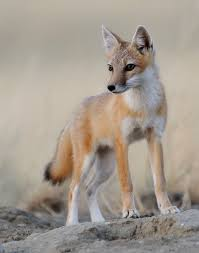
This weeks’ fox is the swift fox.

The swift fox is a small light orange-tan fox around the size of a domestic cat found in the western grasslands of North America, such as Montana, Colorado, New Mexico, Kansas, Oklahoma and Texas. It also lives in southern Manitoba, Saskatchewan and Alberta in Canada, where it was previously extirpated. 

It has pale yellow fur with brownish ears and a fluffy tail with a black spot at the base of its tail and at the tip. Swift Foxes are characteristically nocturnal animals, although they are sometimes active during the daytime as well. The leave their dens at night to hunt and rarely move far from their dens.

They are solitary hunters, and their activity varies by season. They are nocturnal in the winter and become more diel in the summer.

Like other foxes they are monogamous and likely pair for life, unless a mate dies.

Swift foxes are charismatic with their alert, intelligent personalities and incredible physical abilities. The species earned its common name from early Western settlers impressed by its speed and agility—the swift fox has been clocked at nearly 40 mph.

They typically live 3-6 years but have been known to live up to 14 years.

The pups are born blind their eyes remain closed for up to 15 days they are dependent on their mothers for the first few weeks of their lives. They are weaned at about 6 to 7 weeks old and stay with their parents for about 6 months.

The gestation period is about 50 to 60 days with the average litter size is 4 to 5 pups. Young males become reproductively mature at one year of age and young females usually start breeding when they are two years old.

They are omnivores and eat a variety of foods, including insects, grass, reptiles, and carrion.

Canada’s National Anthem

This week we are looking at the national anthem of Canada, the song is called “O Canada”, it was originally commissioned by Lieutenant Governor of Quebec Théodore Robitaille for the 1880 Saint-Jean-Baptiste Day ceremony; Calixa Lavallée composed the music, after which French-language words were written by the poet and judge Sir Adolphe-Basile Routhier.

While “O Canada” is the national anthem of Canada, “God Save The King” is their Royal Anthem. Both songs have multiple verses, though typically only the first verse is sung. The English lyrics of the Royal Anthem are traditional.

The French lyrics were written by Sir Adolphe-Basile Routhier, a poet and judge. 

The English lyrics were written by Robert Stanley Weir, a lawyer and recorder of Montreal. 

“O Canada” became Canada’s official national anthem on July 1, 1980. 

When it comes to the song being sung in schools, it is provincially mandated, but students do not need to sing if a parent or guardian requests that they be exempt.

Many Indigenous peoples view ‘O Canada’ as a harmful reminder of the historical oppression that Indigenous peoples face. 0

It is often sung at sporting events involving Canadian teams, and on Canada Day. English lyrics by Robert Stanley Weir

O Canada! Our home and native land!
True patriot love thou dost in us command.
We see thee rising fair, dear land,
The True North, strong and free;
And stand on guard, O Canada,
We stand on guard for thee.

(Refrain)
O Canada! O Canada!
O Canada! We stand on guard for thee,
O Canada! We stand on guard for thee.

O Canada! Where pines and maples grow,
Great prairies spread and lordly rivers flow,
How dear to us thy broad domain,
From East to Western sea!
Thou land of hope for all who toil!
Thou True North, strong and free!

(Refrain)

O Canada! Beneath thy shining skies
May stalwart sons and gentle maidens rise,
To keep thee steadfast through the years
From East to Western sea,
Our own beloved native land,
Our True North, strong and free!

(Refrain)

Ruler Supreme, Who hearest humble prayer,
Hold our dominion within Thy loving care.
Help us to find, O God, in Thee
A lasting, rich reward,
As waiting for the Better Day,
We ever stand on guard.

(Refrain)

French lyrics by Sir Adolphe-Basile Routhier

O Canada! Terre de nos aïeux,
Ton front est ceint de fleurons glorieux!
Car ton bras sait porter l’épée,
Il sait porter la croix!


Ton histoire est une épopée
Des plus brillants exploits.
Et ta valeur, de foi trempée,


Protégera nos foyers et nos droits,
Protégera nos foyers et nos droits.


Sous l’oeil de Dieu, près du fleuve géant,
Le Canadien grandit en espérant.
Il est né d’une race fière,
Béni fut son berceau:
Le ciel a marqué sa carrière
Dans ce monde nouveau.
Toujours guidé par sa lumière,
Il gardera l’honneur de son drapeau,
Il gardera l’honneur de son drapeau.


De son patron, précurseur du vrai Dieu,
Il porte au front l’auréole de feu.
Ennemi de la tyrannie
Mais plein de loyauté.
Il veut garder dans l’harmonie,
Sa fière liberté;
Et par l’effort de son génie,
Sur notre sol asseoir la vérité,
Sur notre sol asseoir la vérité.


Amour sacré du trône et de l’autel,
Remplis nos coeurs de ton souffle immortel!
Parmi les races étrangères,
Notre guide est la loi;
Sachons être un peuple de frères,
Sous le joug de la foi.
Et répétons, comme nos pères,
Le cri vainqueur: “Pour le Christ et le roi,”
Le cri vainqueur: “Pour le Christ et le roi.”

Official lyrics of “O Canada”

English lyrics

O Canada! Our home and native land!
True patriot love in all of us command.*

With glowing hearts we see thee rise,
The True North, strong and free!

From far and wide,
O Canada, we stand on guard for thee.

God keep our land glorious and free!
O Canada, we stand on guard for thee.

O Canada, we stand on guard for thee.

French National Anthem

This week we are looking at the national anthem of France, which is “La Marseillaise”

It was written in 1792 by Claude Joseph Rouget de Lisle in Strasbourg after the declaration of war by the First French Republic against Austria and was originally titled “Chant de guerre pour l’Armée du Rhin”, (“War Song for the Rhine Army”)

It was formally recognized as the French National Anthem in 1879, and it hasn’t been changed since.

The song has been a subject of debate since the start and has in fact been banned a number of times.

It was banned by Napoleon in 1804 till 1815

It was also banned in 1815 by King Louis XVIII, it was reinstated in 1830.

Only to be banned again during the rule of Napoleon III between 1852-1870 and reinstated again in 1879.

In 1887, an “official version” was adopted by France’s Ministry of War.

After WWII, the Ministry of Education encouraged school children to sing the anthem to “celebrate our liberation and our martyrs.”

It was declared the official national anthem in Article 2 of the 1946 and 1958 constitutions.

It is taught and sung in French schools. However, the song’s lyrics have been controversial, with some questioning whether it is appropriate to teach children the violent imagery in the song.

Here are the lyrics in French and English, which I found at ThoughtCo. https://www.thoughtco.com/la-marseillaise-frances-national-anthem-4080565

FrenchEnglish Translation by Laura K. Lawless
Verse 1: Allons enfants de la patrie,
Le jour de gloire est arrivé !
Contre nous de la tyrannie
L’étendard sanglant est levé ! (bis)
Entendez-vous dans les campagnes,
Mugir ces féroces soldats ?
Ils viennent jusque dans nos bras
Égorger nos fils, nos compagnes!
Verse 1: Let’s go children of the fatherland, The day of glory has arrived!
Against us tyranny’s
Bloody flag is raised! (repeat)
In the countryside, do you hear
The roaring of these fierce soldiers?
They come right to our arms
To slit the throats of our sons, our friends!
Refrain: Aux armes, citoyens !
Formez vos bataillons !
Marchons ! Marchons !
Qu’un sang impur
Abreuve nos sillons !
Refrain: Grab your weapons, citizens!
Form your battalions!
Let us march! Let us march!
May impure blood
Water our fields!
Verse 2: Que veut cette horde d’esclaves,
De traîtres, de rois conjurés ?
Pour qui ces ignobles entraves,
Ces fers dès longtemps préparés ? (bis)
Français ! pour nous, ah ! quel outrage !
Quels transports il doit exciter !
C’est nous qu’on ose méditer
De rendre à l’antique esclavage !
Verse 2: This horde of slaves, traitors, plotting kings,
What do they want?
For whom these vile shackles,
These long-prepared irons? (repeat)
Frenchmen, for us, oh! what an insult!
What emotions that must excite!
It is us that they dare to consider
Returning to ancient slavery!
Verse 3: Quoi ! ces cohortes étrangères
Feraient la loi dans nos foyers !
Quoi ! ces phalanges mercenaires
Terrasseraient nos fiers guerriers ! (bis)
Grand Dieu ! par des mains enchaînées
Nos fronts sous le joug se ploiraient !
De vils despotes deviendraient
Les maîtres de nos destinées !
Verse 3: What! These foreign troops
Would make laws in our home!
What! These mercenary phalanxes
Would bring down our proud warriors! (repeat)
Good Lord! By chained hands
Our brows would bend beneath the yoke!
Vile despots would become
The masters of our fate!
Verse 4: Tremblez, tyrans ! et vous, perfides,
L’opprobre de tous les partis,
Tremblez ! vos projets parricides
Vont enfin recevoir leur prix ! (bis)
Tout est soldat pour vous combattre,
S’ils tombent, nos jeunes héros,
La France en produit de nouveaux,
Contre vous tout prêts à se battre !
Verse 4: Tremble, tyrants! and you, traitors,
The disgrace of all groups,
Tremble! Your parricidal plans
Will finally pay the price! (repeat)
Everyone is a soldier to fight you,
If they fall, our young heros,
France will make more,
Ready to battle you!
Verse 5: Français, en guerriers magnanimes,
Portez ou retenez vos coups !
Épargnez ces tristes victimes,
A regret s’armant contre nous. (bis)
Mais ces despotes sanguinaires,
Mais ces complices de Bouillé,
Tous ces tigres qui, sans pitié,
Déchirent le sein de leur mère !
Verse 5: Frenchmen, as magnanimous warriors,
Bear or hold back your blows!
Spare these sad victims,
Regretfully arming against us. (repeat)
But not these bloodthirsty despots,
But not these accomplices of Bouillé,
All of these animals who, without pity,
Tear their mother’s breast to pieces!
Verse 6: Amour sacré de la patrie,
Conduis, soutiens nos bras vengeurs !
Liberté, Liberté chérie,
Combats avec tes défenseurs ! (bis)
Sous nos drapeaux, que la victoire
Accoure à tes mâles accents !
Que tes ennemis expirants
Voient ton triomphe et notre gloire !
Verse 6: Sacred love of France,
Lead, support our avenging arms!
Liberty, beloved Liberty,
Fight with your defenders! (repeat)
Under our flags, let victory
Hasten to your manly tones!
May your dying enemies
See your triumph and our glory!
Verse 7: Nous entrerons dans la carrière
Quand nos aînés n’y seront plus ;
Nous y trouverons leur poussière
Et la trace de leurs vertus. (bis)
Bien moins jaloux de leur survivre
Que de partager leur cercueil,
Nous aurons le sublime orgueil
De les venger ou de les suivre !
Verse 7: We will enter the pit
When our elders are no longer there;
There, we will find their dust
And the traces of their virtues. (repeat)
Much less eager to outlive them
Than to share their casket,
We will have the sublime pride
Of avenging them or following them!

Australia’s Anthem

This is the first post about a country’s national anthem and of course the country is Australia, our national anthem is Advance Australia Fair it was written and composed by Peter Dodds McCormick in 1878.

It has been our national anthem since 19 April 1984.

Before then it was God Save the Queen.

Advance Australia Fair” was chosen as Australia’s national anthem after a series of polls and a plebiscite:

In 1974, The Australian Bureau of Statistics conducted a poll of 60,000 people, with 51.4% of respondents choosing “Advance Australia Fair” as their preferred anthem. So, it was adopted as the Australian National Anthem, but in 1976 ‘God Save The Queen’ was reinstated.

Then in 1977, The Australian Electoral Office conducted a poll as part of a referendum on various issues. Over 7 million people voted, with 43.29% choosing “Advance Australia Fair”, over three other contenders, including “Waltzing Matilda.”

In 1984 The Governor-General proclaimed “Advance Australia Fair” as the national anthem, along with the verses written by the National Australia Day Council.

Some of the original words, however, have been altered for the official version—including the first line, changed from “Australia’s sons, let us rejoice”, to “Australians all let us rejoice.”

In 2021 the second line was changed from “For we are young and free” to “For we are one and free” to acknowledge Aboriginal and Torres Strait Islanders and their history.

The song is about Australia’s strength and beauty and references the migration of European settlers. The word “fair” has been the subject of controversy, with some arguing it means beautiful, while others suggest it has links to being white.

The song originally had four verses but only the first two are used in the anthem.

Australians all let us rejoice,
For we are one and free;
We’ve golden soil and wealth for toil,
Our home is girt by sea.
Our land abounds in Nature’s gifts
Of beauty rich and rare;
In history’s page, let every stage
Advance Australia fair.
In joyful strains then let us sing,
“Advance Australia Fair.”


Beneath our radiant Southern Cross
We’ll toil with hearts and hands;
To make this Commonwealth of ours
Renowned of all the lands;
For those who’ve come across the seas
We’ve boundless plains to share;
With courage let us all combine
To Advance Australia fair.
In joyful strains then let us sing,
“Advance Australia Fair.”

National Anthems

National Anthems    

I have decided to do a new Friday series on national anthems of different countries, but first we will start with this.

The Netherlands has the oldest national anthem in use today, Wilhelmus van Nassouwe, also known as Wilhelmus. It was written between 1568 and 1572 during the Dutch Revolt, but it wasn’t officially adopted until 1932. 

Anthems were originally devotional verses sung during religious services. One of the first songs to be called a “national anthem” was Great Britain’s “God Save the King”. 

Here are some other facts about national anthems:

  • Most national anthems are either hymns or marches.
  • Anthems are usually in the country’s national or most common language.
  • Some countries have multiple versions of their anthem if they have more than one national language. For example, Switzerland’s national anthem, the Swiss Psalm, has different lyrics for each of the country’s four official languages.
  • Some national anthems were written by famous composers. For example, Germany’s Das Lied der Deutschen uses a melody written by Joseph Haydn. 

I will start with the first country next week.