Russia Today

Hi everyone, this week I thought I would wrap the posts about Russia with a bit about what it’s like now days.

So, the country is experiencing a period of significant transformation and challenges. While its economy has shown resilience, particularly in the face of Western sanctions, it remains heavily reliant on energy exports and faces persistent issues with corruption and human rights abuses. The ongoing war in Ukraine has also led to intensified repression of dissent and a decline in international relations. 

Power is concentrated in the hands of President Vladimir Putin, with a system that suppresses genuine opposition and controls the media. 

Life expectancy is lower than the OECD average, and there are issues with poverty and inequality. Life expectancy for women is 78 years, compared with 68 for men.

The war with the Ukraine has had a profound impact on Russia, leading to a decline in international relations and increased repression within the country. While overall confidence in the military remains high, there are signs that the war has eroded some support, particularly in comparison to pre-war levels. 

The war is a significant factor in Russian life, with many citizens living in a “twilight zone” where the war is both ubiquitous and a backdrop to everyday life. 

The Russian government has been using propaganda to portray the war as a struggle against the West, and this has been effective in uniting some segments of the population. 

The war has led to a transfer of wealth from the government to the military and regions impacted by the conflict, creating a temporary consumer boom. 

Russia’s international standing has been severely damaged by the war, and it faces increased isolation. 

Many countries advise against all travel to Russia due to the ongoing war and associated risks. Also, there’s a high threat of terrorism. Terrorist groups, including al-Qaeda and Daesh-aligned groups, continue to call for attacks in Russia. Attacks can be indiscriminate and may occur on or around seasonal, festive, or religious events in public places, including popular tourist sites.

Next week we will move on to somewhere else as yet undecided 

Libya

Good morning, everyone, this Monday we are looking at Libya another country in Northern Africa. It borders the Mediterranean Sea to the north, Egypt to the east, Sudan to the southeast, Chad to the south, Algeria to the West and Tunisia.

It is a country blessed with oil but not with water, it has a population of 6.8 million most of who live in the two major cities of Tripoli which is the capital and Banghazi.

It’s man-made river project it the biggest of its kind in the world. Generally known as The Great Man-Made River is a network of pipes that supplies fresh water obtained from the Nubian Sandstone Aquifer System fossil aquifer across Libya.

The flag consists of a triband red-black-green design, the central black band being twice the width of the outer bands. A white star and crescent is located in the center of the flag. The flag was designed by Omar Faiek Shennib and adopted in 1951 after Libya’s independence. It was abolished in 1969 after the monarchy was overthrown by Col. Muammar al-Qaddafi. Qaddafi implemented several different flags, including a plain green flag in 1977 to symbolize the “Green Revolution”. The flag was reinstated in 2011 after the fall of Qaddafi. 

The currency is The dinar it divided into 1,000 dirhams

Libya’s climate is influenced by the Mediterranean Sea to the north and the Sahara Desert to the south and, as a result, abrupt transitions of weather conditions are experienced across the country. The Mediterranean coastal strip experiences dry summers and relatively wet winters.

The Government of National Unity is a provisional government for Libya formed on 10 March 2021 to unify the rival Government of National Accord based in based in Tobruk. Abdul Hamid Dbeibeh is Prime Minister of the unity government and was selected in the Libyan Political Dialogue Forum on 5 February 2021. This is a de facto backed by the governments of Turkey, Qatar, Algeria and Pakistan.

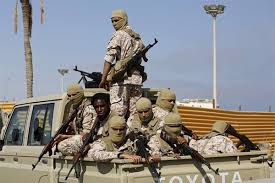
Wondering if you should visit Libya well the advice online is, do not travel to Libya due to crime, terrorism, unexploded landmines, civil unrest, kidnapping, and armed conflict. Country Summary: Crime levels in Libya remain high, including the threat of kidnapping for ransom.

It is not on my list of places to visit.

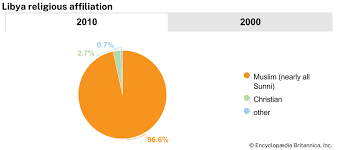
The majority of Libyans are of Arab or mixed Arab-Berber descent. The Sunni branch of Islam is the official and nationally dominant political, cultural and legal force. Imazighen, who retain the Tamazight language and customs, are indigenous to North Africa and constitute the largest non-Arab minority.

Islam is the main religion in Libya, with the majority of the population identifying as Sunni Muslim. Libya’s religious freedom is limited, and there are restrictions on the ability to practice other religions: 

There is no law that allows people to choose or change their religion 

The criminal code prohibits proselytization and missionary activities 

The criminal code prohibits insulting Islam or the Prophet Muhammad, and can result in the death penalty 

Authorities have restricted the liberties of religious minorities 

Libya’s ancient Jewish population has been gone since 2002, when the last community member died.