Fort Scratchley Newcastle’s Big Guns WW2

 This week we are looking at Fort Scratchley which is where the big guns of Newcastle are located. It was built in 1882 to defend the city against a possible Russian attack. 

However, its guns were not fired in anger until 8 June 1942, when the Japanese attacked Newcastle. Although they were only part of the defence of Newcastle, which included heavy guns at Fort Wallace and Shepherds Hill along with searchlights, radar stations and observation post.

At the time there were some Novocastrians who had mixed feelings about the guns, although during live firing exercises they would crowd the hill to watch the gunner’s blast away at make-shift targets towed behind tugs or other boats.

Because the vibration of the guns would break windows and shake crockery from the shelves residents were given noticed of exercises so they could put fragile goods in safe places.    

After World War II the fort was home to 13 Medium Coast Battery RAA, a unit of the National Service Scheme, which was renamed 113 Coast Battery RAA in the 1960s. The army left the site in November 1972.

The 6-in guns were relocated to King Edward Park, 1.3 km (0.8 mi) away, as a memorial. However, after extensive lobbying, they were returned to Fort Scratchley in 1978.

In the first decade of the 21st century the site underwent a multimillion-dollar renovation and reopened as a museum.

In 2014, History show TV presenter Sir Tony Robinson visited the Fort to produce a segment for his show Tour of Duty  which was aired in 2015.

In 2015, the Fort’s sole Nordenfelt gun was restored to fully functional condition and is fired on special occasions from its position in the underground casemate

Fort Scratchley is owned by the City of Newcastle (CN) and managed by volunteers from the Fort Scratchley Historical Society.

There is a guide at the gates who can give you a map to explore the Fort.

Visit the Parade and Ceremony Grounds, galleries and museum collections, learn about our historic guns, however, you cannot tour the tunnel.

Guided tunnel tours are led by passionate Fort Scratchley Historical Society volunteers with a wealth of knowledge and provide unique insight into the history of the site.

Individuals, families and groups of less than 12 people can purchase tickets at the Fort Scratchley shop. Schools, clubs or other social groups of 12 or more people should email booking requests through our contact page.


Unfortunately, due to the narrow stairs and hallways, the tour is unsuitable for wheelchairs, walkers, prams and strollers.

 There’s also a shop with ice creams and drinks, souvenirs and gifts.
Newcastle’s Role in World War 2

Well, here we are at another Wednesday and this week we will step back to World War 2 for a little more about Newcastle, New South Wales role in Australia’s war effort.

The Japanese knew damn well how important Newcastle’s steel industry and coalmines would be for this small nation to be able to fight and defend itself, as without steel for ships, planes, tanks and weapons any country would struggle to survive a major conflict.  

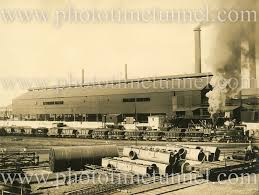
When the BHP opened its steelworks in 1915 the city became a cornerstone of the country’s defence as well as a target for attack by an enemy.

It seems that in the 1920’s Japan studied Newcastle and its surrounds with intense interest. They believed it was important to seize the Hunter’s coalfields and cutting them off from Australia’s defence force.

They also conducted a sustained and intensive investigation of the topography and economic installations of the Newcastle area.  Most of this information was gathered by officers on Japanese merchant ships that visited Newcastle for coal. On almost every visit to Newcastle the Japanese officers would spend most of their time ashore, driving around the area in chauffeur-driven hired cars. They made maps and took an innumerable amount of photos, it was the shipping companies who paid for these trips and presumably were reimbursed by their government.

Australia’s intelligence people noted that almost all the Japanese officers visited a Japanese owned milliner’s shop, the shop closed up when questions were asked but soon after a Japanese owned fruit shop opened. It was owned by a well known Japanese agent who had a reputation of wealth and leisure and the dingy understocked fruit shop didn’t seem to go with the man.

Between 1924 and 1926 many Japanese ships went out of their way to pass as close as possible to Newcastle paying special attention to the beaches.

In the 1930’s well before the war many of our leading politicians and industrialist believed a conflict was inevitable. When BHP chief Essington Lewis visited Japan in the 1930’s and saw how the Japanese were putting a lot of energy and resources into arming itself for war, he was alarmed and on returning home set about preparing the BHP for a major munitions manufacturing company.

This man was hugely influential, and the federal government appointed him director of munitions meaning he managed a large part od the country’s industrial war efforts.

Newcastle’s steelworks and associated factories were destined to play a massive part in the nations defence, a huge array of weapons, parts and tools were produced in Newcastle with thousands of people being employed.

The challenges the city’s factories faced as they tried to replaced previously imported items were huge, but they managed to produce and churn out items that required the most demanding accuracy. It was a tribute to the hard work and dedication that a relatively novice workforce was able to turn its hand to this new industry with such success.

BHP learned to make the special steels needed for armour and armour-piercing weapons, other firms made steel helmets and other items. The firm of Lysaght made parts for tanks used by Australian forces, they also mass produced the Wollongong designed Owen sub-machine gun, as well as floating pontoons, portable aircraft hangers, army machetes and the precision-made “spinners” for the propellers of Mosquito aircraft.

Newcastle was one of the few locations to be attacked by  the Japanese.

Newcastle Water

                                                                Chichester Dam
Well, it’s Wednesday so time again for a little about the history of Newcastle in New South Wales, which is where I live, kinda. I live in the council of Lake Macquarie not Newcastle.

Anyway this week we will have a brief look at Newcastle water.

Newcastle’s earliest of fresh water were wells and springs, as the population grew these soon became inadequate and a pipeline from the Walka waterworks at Maitland took over as the main supply in the 1880’s.

                                                     Chichester Dam Construction

In 1892 The Hunter District Water and Sewerage Board was established, taking over from local councils the job of building regional infrastructure.

It soon became apparent that the supply from the Hunter River wasn’t going to be adequate for the growing population and industry. So, they built Chichester Dam, near Dungog, with working starting during the first World War and was completed with water flowing into the city in 1923. It gravitated to big reservoirs mainly those at Waratah that fed the city’s steelworks and other related industries.

                                                    Hunter Water Board Pipeline Plan

So, for the first time in years Newcastle had a truly reliable water supply.

Just as important as water supply is sewerage, before the city had a proper sewerage system “nightsoil” had to be carted to depots. Otherwise, home burial of sewerage caused problems, contaminating water and spreading disease. Early council sewers emptied into the harbour.

If anyone is wondering what the term “nightsoil” means it is this, human excrement collected at night from buckets, cesspools, and privies.

The men who did the job of collecting the cans of human waste were called either “sanny men” or the “dunny man”. The dunny man would usually access clients’ outhouses via the back lane and would visit every night to ensure a clean outhouse for the next morning.

I couldn’t find when the use of this system finished but I do know that Tim can remember the “dunny man” coming and picking up the can from their dunny when he was very young. So I think it was sometime in the 1960’s.

An ocean outfall was seen as the answer with Bar Beach being the first choice by authorities, however political pressure shifted it to Merewether and plans were laid for a new treatment plant and outfall at Murdering Gully.

It’s hard to understand the sheer scale of the task of building the city’s sewers and the hidden pipelines which is in some cases a really big task to undertake.

The new outfall began working in 1936 it is around this time that the Water Board stop using the name Murdering Gully changing it to Burwood Beach.

Newcastle Attacked 1942

This week we are looking again as Newcastle during the second world war, back then many incidents of the war remained unknown to most Aussies until authorities thought it was safe to discuss them.

Those running the country thought there would be fear and panic and damage to morale, so it was better the general public knew pretty much nothing.

                        A MINI SUBMARINE

However, when the Japanese attacked the east coast, it was impossible to hide that it happened.  On the 31 May and 1 June 1942 mini submarine attacked Sydney harbour. This caused havoc in the harbour and cost 21 lives before they were destroyed, a few days later another attack happen of the Central Coast this time a merchant ship the Iron Chieftain was sunk killing 12 crew.

On the 8 June 1942 shells were fired at Sydney Harbour with just one exploding this caused defence authorities to fear a wider attack, so a message was sent to Newcastle to be prepared for an attack.

                        FORT SCRATCHLEY
Novocastrians heard the sirens and emergency personnel were put on alert, the all clear was sounded many hours later but the threat had not passed. Newcastle had shells fired at them from a position in Stockton Bight at around 2.15am.

Japanese records show that 34 shells from a position about nine kilometres north-east of Fort Scratchley. Eight-star shells burst one by one in the sky to illuminate potential same goes for two others that landed in the east end tram terminus.

As it turns out only two of the shell fired at Newcastle exploded on land one shattering against the sea wall just north of Newcastle Baths and one in Parnell Place which is at the top end of Newcastle. This hurled a shower of metal splinters towards near by homes and peppering walls with metal shards, damaging rainwater downpipes and blowing out house windows. The attack lasted around 20 minutes until just after the guns at Fort Scratchley returned fire.

             FORT SCRATCHLEY GUN YES IT STILL WORKS
The guns at Fort Scratchley were built more than half a century earlier when an invasion was feared by Russia.

After the attack the ports of Newcastle and Sydney were temporarily closed.

In February 1943 the east coast of Australia was attacked again which caused the death of 36 merchant mariners many of whom were from Newcastle.  

Newcastle War Years

 Today we are going to have a look at Newcastle, New South Wales in 1939 when World War 11 started.

It was considered by some that the part Newcastle was to play in the national war effort was inevitably this was due to the city’s heavy industries represented the vital heart of the country’s ability to fight fire with fire.

It wasn’t long before BHP, its subsidiaries and a surprising wide array of smaller industrial plants were flat out making shells, gun barrels, bombs and parts for everything from tanks to aircraft.

As the war progressed the NSW government pressed Newcastle back into shipbuilding and repair business.

BHP chief Essington Lewis had anticipated Japan’s entry into the war and the cities industries were ready to accelerate production after the attack on Pearl Harbour in 1941.

War activity reached hectic levels in 1942 when Japanese submarines prowled of the east coast sinking ships and attacking Newcastle and Sydney.

It was during this time that the RAAF established a base at Williamstown in order to defend the oh so important industries in Newcastle. A seaplane base was also established at Rathmines which is part of Lake Macquarie and the US-built Catalina aircraft did long-range patrols and anti-submarine work.

During the war years military and civil defence infrastructure appeared all over the Hunter, also air raid shelters popped up in streets and tank traps were established on beaches and slit trenches were dung in schools and parks.

Blackouts were enforced and many households dug their own shelters.

Of course, many men signed up to serve their country, going overseas to fight, while U S troops arrived in the city.

Women also went off to war with many joining the Land Army as well as other military forces, operating searchlights and working in radar and communications installations. While others filled the caps left by the men gone off to fight, this was radical change that continued well into the postwar years.

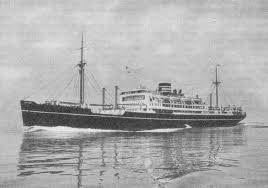
The very sinkable Boambee

Ok this week I am going to share a bit about the steamer Boambee one unlucky vessel.

The 236-tonne wooden steamer was built in 1908 and by the time it ran aground and was dismantled forty years later it had sunk four times, including once at Newcastle’s wharf.

Records show that its first mishap happened at Tweed Heads on 20 December 1923 it was driven ashore by strong gale winds but was able to be refloated. Tweed Heads is a border town between New South Wales and Queensland.

Moving on, it is said to have sunk at Clarence Town Wharf in 1939 while loaded with gravel and wooden sleepers, again it was refloated only to sink again sometime during World War 11 at Hexham. Clarence Town is on the Williams River in New South Wales; the town of Hexham is also in NSW. Hexham is about a half hour drive from where I live.

Later on, it was hit by a ship in Newcastle Harbour and written off, however it would be bought by the Hunter River Steamship Company in 1947 to be used on the Newcastle to Sydney trade.

On its first trip it sprang a leak which was more than the pumps could handle so the captain decided to return to Newcastle while it slowly sank. By the time it reached Newcastle Harbour it was very low in the water and there were no tugs available to help. So, by the time she reached the wharf she began to list and sank ten minutes after reaching its berth.

It took five days, but she was able to be refloated, repaired and renamed.

Now called the Illalong it became the property of the Manning River Steamship Company. In March of 1948 while on route from Sydney to Newcastle with a cargo of brattice cloth for coalminers it went too close inshore during a thick fog and ran aground at Nine Mile Beach which is near Belmont.

This time it was written off again and quickly dismantled   

Hunter Street, Newcastle NSW,Australia

When I was young it was considered to be a big deal to go into town to go the movies or to do some shopping and by in town I mean into Newcastle mainly Hunter Street.

So, this week I will write a bit about Hunter Street’s history and present.

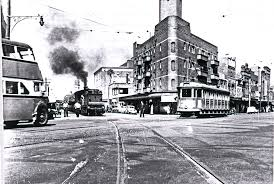
Hunter Street is a major road in the Newcastle central business district, in New South Wales. The street, formerly three separate thoroughfares, extends from Pacific Street in the city’s east, to Selma Street in Newcastle West and since 2008 has been the focus of community-led creative enterprises and projects.

Hunter Street runs in the vicinity of an early nineteenth-century track known as Wellington Street that extended from Watt Street (formerly George Street) in the east to Perkins Street in the west. The strip was renamed Hunter Street by Henry Dangar in 1823 and by the mid nineteenth-century commercial and residential properties had been built on most addresses east of Perkins Street.

By 1900, Hunter Street had stretched a long way and had 26 hotels operating along the street. In 1887the first steam trams came into operation by 1898 the first restrictions on vehicular traffic drawn by animals were introduced

Drainage problems and raw sewerage necessitated the sealing of Hunter Street, first carried out with wooden blocks, concrete and asphalt.

After the opening of the Newcastle Steelworks in 1915, Newcastle became increasingly suburban, and Hunter Street developed as a destination for commerce and retail. The size and extravagance of Newcastle’s early twentieth-century department stores demonstrates the popularity of city shopping.

Established as the city’s main street for commercial and retail activity, Hunter Street entered a period of severe decline after World War II. However, it recovered over time.

Hunter Street developed as the commercial and civic hub of the region. Along its spine were the pubs, banks, insurance houses, shops, department stores, and cooperative societies that formed the civic and cultural life of Newcastle.

In 1989 an earthquake hit Newcastle and due to the damage making Hunter Street inaccessible for two weeks.

The in 1990 there was a recession which coupled with record youth unemployment, brought the emptying of Hunter Street to a terrible low in 2008, with the vacancy rate at 20% and chronically vacant properties beginning to deteriorate.

In recent years there have been efforts to clean up and bring life back into Hunter Street, as I haven’t been there myself I can’t say what it is like now.