Hello everyone, this Monday I am writing a bit about the Bathurst 1000, for those who don’t know it is a car race.
In fact, the Bathurst 1000 is Australia’s most iconic motorsport event, it’s a 1,000 km (621 miles) endurance race held every October at Mount Panorama Circuit in Bathurst, NSW.
It’s the crown jewel of the Supercars Championship and a cultural institution for racing fans.
The Mount Panorama Circuit is a public road for most of the year but transformed into a world‑class racetrack during events. The circuit has dramatic elevation changes of 174 metres, tight technical sections, and the blisteringly fast Conrod Straight, where cars can hit 300 km/h, (187 mph).
The race involves 161 laps which is a total distance of 1,000.29km’s, with teams consisting of two drivers sharing one car. It is known for unpredictable weather, safety cars, crashes, and strategy battles.
It was first run in 1960 as the Armstrong 500 at Phillip Island. It moved to Bathurst in 1963, the distance was increased to 1,000 km in 1973.
The winners receive the Peter Brock Trophy, named after the nine‑time Bathurst champion known as the “King of the Mountain.”
Last year the winners were Matt Payne & Garth Tander, it was Payne’s first Bathurst win and Tander’s sixth, placing him equal third all‑time. It was a chaotic, rain‑affected race with late‑race drama, including a penalty reshuffling the final order.
This year’s race is scheduled for 8–11 October it is promoted as another massive chapter in the Enduro Cup, with fan events, displays, and family‑friendly entertainment.
There’s also the Bathurst 12 Hour, a GT endurance race held earlier in the year. It features GT3 supercars and international drivers. Recent editions have included major crashes and dramatic red flags. I have not heard of this race.
Hi, everyone well Friday is here again and today so here is some information about the national anthem of Indonesia. The anthem is called Indonesia Raya it has been the national anthem since the Proclamation of Indonesian Independence on 17 August 1945.
The first stanza of “Indonesia Raya” was chosen as the national anthem when Indonesia proclaimed its independence on 17 August 1945.
The song is played in flag raising ceremonies in schools across Indonesia every Monday. The flag is raised in a solemn and timed motion so that it reaches the top of the flagpole as the anthem ends. The main flag raising ceremony is held annually on 17 August to commemorate Independence Day. The ceremony is led by the President and is usually held in Merdeka Palace.
In 1951, ownership of the copyright to “Indonesia Raya” came into question. President Sukarno ordered a search for the rightful heir to Soepratman. By law, Supratman was the copyright holder of “Indonesia Raya” as its composer. After Soepratman’s death in 1938, ownership of the rights to his works fell upon the designated heirs, his four surviving sisters. However, because “Indonesia Raya” was officially adopted as the national anthem of Indonesia on 17 August 1945, the work became the property of the state. In addition, the name of “Wage Rudolf Supratman” must be listed as its creator.
As a national anthem, copies of “Indonesia Raya” cannot be circulated as merchandise to be sold. Consequently, the government had the obligation to obtain all the rights to distribute the song, including the original recording, from Yo Kim Tjan. In 1958, the government obtained the sole right to “Indonesia Raya” from Soepratman’s family. The following year, Yo handed the original record of the song to the Indonesian government. With the recommendation of the Department of Education, the government also rewarded Soepratman’s sisters with 250,000 Indonesian rupiah each on 31 May 1960.
Ok well since I wrote about Afghanistan on Monday I will post about their national anthem.
The country has had a number of different national anthems throughout its history as the country has changed governments numerous times mostly resulting from political instability.
In 2004, the new Afghan constitution stated that a new national anthem for the country, requested by the post-Taliban government to signal a new era for Afghanistan, must be written in Pashto and contain the phrase “Allahu Akbar” (God is Great), and mention the names of the ethnic groups in Afghanistan. The winning composition was created by two Afghans living outside the country due to the war.
There has been some criticism of the anthem due to the above stated conditions of composition, that the Pashto requirement places less importance on the other languages spoken in the country; that the phrase “Allahu Akbar” should not be used in the anthem, as it is a sacred phrase in Islam and should not be set to music; and the ethnic groups mentioned in the anthem still do not represent the entire spectrum of nationalities in the country.
On August 15, 2021, the Afghan government fell to the extremist Islamic forces of the Taliban, who effectively controlled the country following that date. The government and its supporters continue to use this anthem in exile.
Here is the English translation
1. This land is Afghanistan It is pride of every Afghan The land of peace, the land of sword Its sons are all braves
2. This is the country of every tribe Land of Baloochs, and Uzbeks Pashtoons, and Hazaras Turkman and Tajiks
3. With them, Arabs and Gojars Pamirian, Nooristanian Barahawi, and Qizilbash Also Aimaq, and Pashaye
4. This Land will shine for ever Like the sun in the blue sky In the chest of Asia It will remain as heart for ever
5. We will follow the one God We all say, Allah is great, we all say, Allah is great, we all say, Allah is great
This week we are looking at the country of Afghanistan, this is a country that for some reason I didn’t think of as being part of Asia, but it is.
It is a landlocked country at the crossroads of Central, South, and Western Asia. It has a rich and complex history as a hub of diverse cultures and civilizations, but its recent history has been defined by decades of conflict and instability.
Since the Taliban regained control of Afghanistan in August 2021, the country has faced a severe humanitarian and economic crisis. The de facto Taliban government has not been formally recognised by most of the international community.
The situation remains volatile and dangerous. The Taliban government is led by Mawlawi Hibatullah Akhundzada. The Islamic State Khorasan Province (ISKP) is also active and continues to conduct violent attacks. The country is considered extremely dangerous for travel due to the high threat of terrorist attacks and kidnapping.
The country is experiencing one of the world’s largest humanitarian crises. Factors contributing to this include economic mismanagement, a significant reduction in international aid, and the departure of many skilled professionals. The country’s GDP has seen a decline since 2021, and poverty and food insecurity are pressing challenges.
The Taliban has reimposed a strict interpretation of Sharia law, leading to severe human rights abuses. These are particularly acute for women and girls, who have been banned from secondary and university education, are largely excluded from public and economic life, and face restrictions on their movement and dress.
The current government is the “interim government” declared by the Taliban. It is a highly centralized system, and many of the human rights gains made over the previous two decades have been reversed.
The Afghan economy has been pushed into a crisis but has shown some signs of a slow recovery driven primarily by agriculture, mining, construction, and commerce. However, challenges remain due to a fragile banking sector, persistent unemployment, and limitations on women’s economic participation. Afghanistan’s economy relies heavily on foreign aid, although this has been significantly reduced since the Taliban’s takeover.
The country has substantial untapped mineral deposits, including lithium, iron, and copper. Traditional exports include dried fruits, nuts, and carpets.
Afghanistan is often referred to as the “graveyard of empires” due to its history of resisting foreign occupation. It has been a crossroads of civilizations for thousands of years, with influences from Persian, Greek, Buddhist, and Islamic empires. The modern state was founded in the 18th century. Since the late 1970s, the country has been mired in continuous warfare, including the Soviet invasion in 1979 and the US-led coalition’s presence from 2001 to 2021.
Afghan culture is a rich tapestry of tribal and ethnic traditions, with a strong emphasis on family, honour, and hospitality. Islam is the official religion and a dominant force in daily life and social customs. The main languages are Dari (Afghan Persian) and Pashto, with many people being fluent in both. Poetry is a highly valued cultural tradition.
The country has numerous historical and archaeological sites, though many have been damaged or destroyed by decades of conflict. The Buddhas of Bamiyan, destroyed by the Taliban in 2001, are one of the most iconic examples of this loss. Efforts are underway by various organizations to preserve Afghanistan’s remaining cultural heritage.
This week we are wrapping up Kazakhstan with these facts.
The national animal of Kazakhstan is the golden eagle. It’s a powerful symbol of the country, representing strength, independence, and freedom, and it also appears on the national flag.
The national flower of Kazakhstan is the lily. Specifically, it’s the Lilium genus, though a specific variety isn’t officially designated. Lilies are recognized as a symbol of purity, grace, and renewal in Kazakhstan.
The national tree of Kazakhstan is the Schrenk’s Spruce, this majestic evergreen is native to the mountainous regions of Kazakhstan and symbolizes resilience and endurance.
The national dish of Kazakhstan is beshbarmak. It’s a hearty dish consisting of boiled meat (traditionally horse or mutton, but also beef) served over wide, flat noodles, often with a flavourful broth and onions. The name “beshbarmak” translates to “five fingers” from the Turkic languages, referring to the traditional way it’s eaten with your hands.
When it came to finding the most popular sport, I received two different answers football and kokpar, so I looked a bit more and it seems that football is the most popular sport overall, while Kokpar is the most popular traditional Kazakh game.
So, it seems that football dominates as the most-watched and participated-in sport in the country, but Kokpar holds a special place as a key part of Kazakh national identity and is widely played during celebrations like Nauruz.
Now you may be wondering what the hell Kokpar is well it’s a traditional equestrian sport, similar to polo but using a goat carcass instead of a ball.
Kazakhstan offers a relatively low cost of living compared to many Western countries, with living expenses significantly lower than in Australia or America but do are wages. The minimum wage is 531.25KZT per hour which is around $1.09 USD or $1.55AUD. America’s minimum wage is between $7.25 and $15.00. In Australia it is $24.10 per hour.
This week we are having a look at Canberra the capital of Australia located in the Australian Capital Territory or ACT.
Canberra’s history begins with Aboriginal Australians, followed by European settlement in the 19th century, and its designation as Australia’s capital in 1908, with construction beginning in 1911 and the capital moving from Melbourne in 1927.
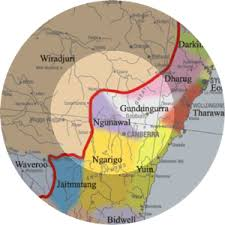
The area was inhabited by Aboriginal Australians, including the Ngunnawal and Ngambri peoples, for thousands of years, possibly as long as 21,000 years.
The Ngunnawal and Ngambri people, continue to live and travel through the area, preserving their culture through land connections and artistic expression, although there have been ongoing disputes and court cases regarding their recognition.
European settlement began in the first half of the 19th century, with landmarks like St John’s Anglican Church and Blundells Cottage remaining from this period.
In 1908, the Australian government decided to establish a new capital, choosing the Canberra-Yass district as the location, which was about 100 miles from Sydney.
Construction of the city began in 1911, and the first Parliament House was completed in 1927, marking the official move of the capital from Melbourne.
The name “Canberra” is believed to have come from the Aboriginal word “Canberry” or “Canbury”, meaning “a place of meeting”.
Canberra has three sister cities: Nara in Japan, Beijing in China, and Wellington in New Zealand.
As of the end of June 2024, Canberra’s estimated resident population was 474,132.
Canberra’s police are the AFP they have a community policing arm called ACT Policing, which responds to incidents in the Australian Capital Territory.
The territory measures 85 kilometers or 53 miles north to south and 53 kilometers or 33 miles east to west. It covers an area of 2,358 square kilometers, or 910 square miles.
Several rivers flow through the Australian Capital Territory.
Its most famous lake is Lake Burley Griffin which is an artificial lake in the centre of Canberra. It was created in 1963 by the damming of the Molonglo River, which formerly ran between the city centre and Parliamentary Triangle.
Hi everyone, Debby from My Shasta Home, she can be found here: https://myshastahome.blogspot.com/ asked to know more about the apology for the stolen generation.
On 13 February 2008, Prime Minister Kevin Rudd offered a formal apology to Australia’s Indigenous peoples, particularly the Stolen Generations, on behalf of the nation at Australian Parliament House.
The Apology was presented as a motion for voting to the Chamber. It acknowledged that ‘the laws and policies of successive Parliaments and governments had resulted in the forcible removal of Aboriginal and Torres Strait Islander children from their families and ‘inflicted profound grief, suffering and loss on these our fellow Australians’.
Between 1910 and 1970 thousands of Aboriginal and Torres Strait Islander children were forcibly removed from their families and communities by churches, welfare organisations and governments. The exact number is not known. However, is estimated that, anywhere from 1 in 10 to 1 in 3 Indigenous children were forcibly removed from their families and fostered or adopted by non-Indigenous families or raised in institutions. These children are known as the Stolen Generations. Many experienced neglect, physical and sexual abuse and exploitative labour, and were denied contact with their families.
Below are a couple of the statements given to the inquiry.
Lots of white kids do get taken away, but that’s for a reason – not like us. We just got taken away because we was black kids, I suppose – half-caste kids. If they wouldn’t like it, they shouldn’t do it to Aboriginal families.
Confidential evidence 357, South Australia Bringing Them Home, 1997
The Government has to explain why it happened. What was the intention? I have to know why I was taken. I have to know why I was given the life I was given and why I’m scarred today. Why was my Mum meant to suffer? Why was I made to suffer with no Aboriginality and no identity, no culture? Why did they think that the life they gave me was better than the one my Mum would give me? And an apology is important because I’ve never been apologised to. My mother’s never been apologised to, not once, and I would like to be apologised to.
Confidential evidence 139, Victoria: woman removed at 12 months in 1967 Bringing Them Home, 1997
On 26th May 1997 the Inquiry’s Bringing Them Home report was tabled in Parliament. The Report documented the grief and loss caused by the breaking of cultural, spiritual, and family ties, and the intergenerational impact on the lives and wellbeing of Aboriginal and Torres Strait Islander peoples, as well as their resilience and dignity:
For individuals, their removal as children and the abuse they experienced at the hands of the authorities, or their delegates, have permanently scarred their lives. The harm continues in later generations, affecting their children and grandchildren.
Bringing Them Home, 1997
A key recommendation of the report was the need for an official acknowledgement of and apology for the forcible removal of Aboriginal and Torres Strait Islander children.
Below is what the apology says.
I move:
That today we honour the Indigenous peoples of this land, the oldest continuing cultures in human history.
We reflect on their past mistreatment.
We reflect in particular on the mistreatment of those who were Stolen Generations—this blemished chapter in our nation’s history.
The time has now come for the nation to turn a new page in Australia’s history by righting the wrongs of the past and so moving forward with confidence to the future.
We apologise for the laws and policies of successive Parliaments and governments that have inflicted profound grief, suffering and loss on these our fellow Australians.
We apologise especially for the removal of Aboriginal and Torres Strait Islander children from their families, their communities and their country.
For the pain, suffering and hurt of these Stolen Generations, their descendants and for their families left behind, we say sorry.
To the mothers and the fathers, the brothers and the sisters, for the breaking up of families and communities, we say sorry.
And for the indignity and degradation thus inflicted on a proud people and a proud culture, we say sorry.
The Hon Kevin Rudd 13 February 2008
The National Apology is considered a milestone step toward reconciliation between Indigenous and non-Indigenous Australians.
The Prime Minister’s speech was met with applause, tears, and relief from many Aboriginal and Torres Strait Islander peoples, including members of the Stolen Generations, present in the House of Representatives. Thousands of people gathered throughout the country to watch a broadcast of the Apology, including hundreds watching from the Great Hall and thousands on the lawns outside Parliament House.
Following the speeches, Lorraine Peeters (Weilwun and Gamilaroi peoples), acting on behalf of the Stolen Generations present in the Parliament, presented a glass coolamon to the Prime Minister Kevin Rudd and the Leader of the Opposition, Brendan Nelson. The coolamon – made by Bai Bai Napangardi, an artist from the Balgo community in Western Australia – contained a message that said:
On behalf of our people, thank you for saying sorry.In return we give you this gift on behalf of us affected by being taken away from our families. This is our way of saying thank you. The gift is a glass coolamon, fragile yet strong. Coolamons have carried our children. The gift is a symbol of the hope we place in the new relationship you wish to forge with our people. A relationship that itself is fragile yet strong. We have a new covenant between our peoples, that we will do all we can to make sure our children are carried forward, loved and nurtured and able to live a full life.’
The Prime Minister and Leader of the Opposition then jointly presented the coolamon to the Speaker of the House of Representatives, who accepted it saying:
I gratefully receive this gift on behalf of the House. It will represent a very important point in the history of not only this chamber but our nation.
At the conclusion of the formal proceedings in the Chamber, an event was held in Members Hall, attended by many representatives of the Stolen Generations, Indigenous leaders, Indigenous and other organisations, and current and former parliamentarians. There, Tom Calma, then Aboriginal and Torres Strait Islander Social Justice Commissioner, responded to the Apology. Nominated by the National Stolen Generations Alliance and the National Sorry Day Committee, the two national bodies representing the Stolen Generations and their families, he declared that it was an ‘historic day’, one
… on which ‘our leaders – across the political spectrum – have chosen dignity, hope and respect as the guiding principles for the relationship with our first nations’ peoples’.
The National Apology and the Coolamon are on display at Parliament House.
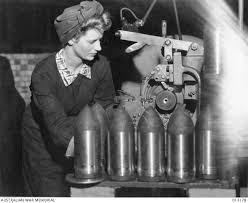
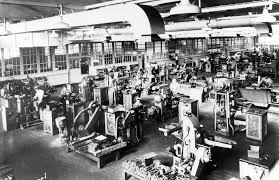
During the second world war saw many women working in wartime heavy industries in many countries including Australia, here in Newcastle hundreds of women were recruited to replace the men off fighting.
Around 500 men from Lysaght’s workshops alone were gone off fighting, the new spinner shop opened by Lysaght’s to make protective streamlined cowlings for aircraft propeller hubs, they were made of aluminum and had to be manufactured to extremely fine tolerances. This was a brand-new enterprise for Newcastle, those working there were taught by having to recondition 60 English made spinners for De Havilland Mosquito bombers, this work continued as a combination of local made and imported parts and by the time the plant finally wound up, they had made 900 spinners for the Mosquitoes, Beauforts and Lincoln aircraft.
The girls had to learn every job so that absences didn’t slow things down, they also had to wear scarves to keep their hair out of the machines, although there were accidents and if someone’s hair got caught in something like a drill chuck, the machine would have to be shut down and they would be lucky if they weren’t scalped.
In fact, women many countries worked in a variety of roles, including in the Australian Women’s Army Services (AWAS) and the Women’s Auxiliary Australian Air Force (WAAAF). They performed essential duties that were previously considered to be men’s work.
They operated anti-aircraft batteries, searchlights they also worked with range-finders. Women also worked in intelligence roles and defensive roles. They drove transports and plotted coordinates
Women’s contributions to the war effort helped to advance employment opportunities for women after the war, also their work during the war led to the establishment of the Women’s Employment Board in 1943.
Women’s work during the war led to women receiving 75% of the male wage for the same job.
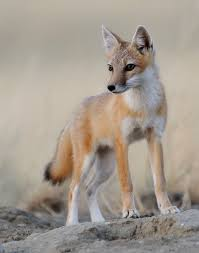
The swift fox is a small light orange-tan fox around the size of a domestic cat found in the western grasslands of North America, such as Montana, Colorado, New Mexico, Kansas, Oklahoma and Texas. It also lives in southern Manitoba, Saskatchewan and Alberta in Canada, where it was previously extirpated.
It has pale yellow fur with brownish ears and a fluffy tail with a black spot at the base of its tail and at the tip. Swift Foxes are characteristically nocturnal animals, although they are sometimes active during the daytime as well. The leave their dens at night to hunt and rarely move far from their dens.
They are solitary hunters, and their activity varies by season. They are nocturnal in the winter and become more diel in the summer.
Like other foxes they are monogamous and likely pair for life, unless a mate dies.
Swift foxes are charismatic with their alert, intelligent personalities and incredible physical abilities. The species earned its common name from early Western settlers impressed by its speed and agility—the swift fox has been clocked at nearly 40 mph.
They typically live 3-6 years but have been known to live up to 14 years.
The pups are born blind their eyes remain closed for up to 15 days they are dependent on their mothers for the first few weeks of their lives. They are weaned at about 6 to 7 weeks old and stay with their parents for about 6 months.
The gestation period is about 50 to 60 days with the average litter size is 4 to 5 pups. Young males become reproductively mature at one year of age and young females usually start breeding when they are two years old.
They are omnivores and eat a variety of foods, including insects, grass, reptiles, and carrion.
Here we are at the start of February, so I am, kicking off the month with some facts about February in Australia:
Seasons
In Australia, February is part of summer, which runs from December to February.
Birthdays
People born in February are said to be unique, creative, and generous. Their birthstone is amethyst, and their birth flowers are violet and iris.
Holidays
Some holidays celebrated in February in Australia include Lunar New Year, Valentine’s Day, and the anniversary of the Apology to the Stolen Generations.
Historical events
Some historical events that happened in February in Australia include:
1793: John Macarthur established Elizabeth Farm at Parramatta
1798: Matthew Flinders explored the Furneaux Islands in Bass Strait
1851: Edward Hargraves discovered gold near Bathurst, which started the first Australian gold rush
1990: Carmen Lawrence became the first female Premier of Western Australia
In February in Australia, a key special day is the “National Apology Anniversary” on February 13th, which marks the anniversary of the apology to the Stolen Generations; additionally, depending on the lunar calendar, Lunar New Year may fall in February, which is widely celebrated in the country.
Other notable days in February in Australia may include:
Lunar New Year: Celebrated by many Asian communities in Australia, the date varies based on the lunar calendar.
World Day of Social Justice: Observed on February 20th.
Ovarian Cancer Awareness Month: The entire month of February is dedicated to raising awareness about ovarian cancer.
In my own family we have four birthdays in the month starting with my daughter Natasha on the 14th, then my granddaughter Summer on the 21st, next is my great-nephew Daemon on the 22nd and lastly we have his sister my great-niece Thea.










 Jo-AnneRamplings