This week we are looking at the national anthem of Eritrea, but I wasn’t able to find much information about it.
The national anthem is called, “Eritrea, Eritrea, Eritrea”, it was written by poet Solomon Tsehaye Beraki and composed by organist Isaac Abraham Meharezghi. This was back in 1986 and was updated in 1993 after Eritrea gained independence.
The anthem represents the common national consciousness that developed among the people of Eritrea during their nearly three-decade war of independence.
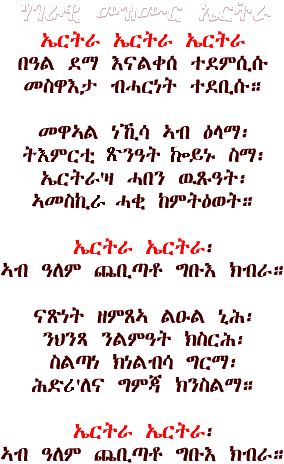
These are the lyrics.
The English translation is this.
Ertra, Ertra, Ertra, The barbarian enemy humiliatingly defeated And martyrdom has paid for freedom
Decades of devotion for purpose Your name became challenger, miraculous Ertra, comfort for the oppressed Proved that truth can win after all
Ertra, Ertra A sovereign state on earth after all
Dedication that led to liberation Will build up and make her green We shall honour her with progress We have a word to her to embellish
This week we are still in Africa, and this is a country I only recently heard of while watching something on YouTube about modern day slavery.
So, we are looking at the country of Eritrea.
Eritrea is a northeast African country on the Red Sea coast. It shares borders with Ethiopia, Sudan and Djibouti. The capital city, Asmara, is known for its Italian colonial buildings, like St. Joseph’s Cathedral, as well as art deco structures. Italian, Egyptian and Turkish architecture in Massawa reflect the port city’s colourful history. Notable buildings here include St. Mariam Cathedral and the Imperial Palace.
It has a population of 3.7 million and has no official language, as it is a multilingual country, and as the Constitution establishes the “equality of all Eritrean languages”. Tigrinya, Arabic, and English serve as de facto working languages, with English used in university education and many technical fields.
The flag of Eritrea is made up of a red triangle, a green triangle, and a blue triangle, with a yellow olive branch and wreath in the centre. The first Eritrean flag was adopted in 1952, but was replaced by Ethiopia in 1958, The Eritrean People’s Liberation Front (EPLF) adopted a flag in 1977, the current flag was adopted on December 5, 1995.
The country’s official religions are Eritrean Orthodox Tewahedo Christianity, Sunni Islam, Roman Catholicism, and Evangelical Protestantism. However, the government restricts the activities of these religions and persecutes members of unregistered religious groups.
What does this mean? Well, the government’s constitution and laws prohibit discrimination based on religion. However, the government restricts the activities of the officially recognized religions. The government intimidates and prosecutes people who practice unregistered religions, it also prevents unregistered religions from building houses of worship or practicing their religion. Also, the government detains people for their religious beliefs, including minors.
The currency is the nakfa and was introduced on 15 November 1997 to replace the Ethiopian birr at par. It takes it name from then place of Nakfa were the first victory in their war of independence took place.
Like many other African countries, it is not a safe place to visit.
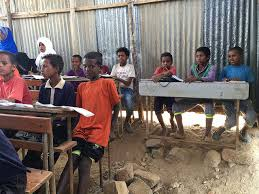
The country’s education system includes basic, secondary, and tertiary education. The government has been working to improve the quality of education and increase access to schools. Due to the country’s geography which include remote areas education is difficult.
Other problems are the amount of poverty, and many children living in nomadic areas also children with disabilities have difficulty accessing education.
In fact, many children are unable to read and understand what they are reading, and it is not unusual for as much as 48% of primary school-aged children to not attend school.
Eritrea has been involved in several wars and conflicts, including the Eritrean–Ethiopian War, the Djiboutian–Eritrean conflict, and the Tigray War.
Eritrean–Ethiopian War lasted from 1998 to 2000 and was between Eritrea and Ethiopia. The war resulted in the Algiers Agreement, tens of thousands lost their lives on both sides. The war resulted in minor changes to the border between the two countries.
Eritrean–Ethiopian border conflict this was a violent standoff and proxy conflict between Eritrea and Ethiopia that lasted from 1998 to 2018. In 2018, Ethiopia agreed to cede Badme to Eritrea.
Eritrean War of Independence as armed conflict that lasted from 1961 to 1991 this war ended in 1991 with the fall of the Derg regime.
Djiboutian–Eritrean conflict occurred in 2008 between Eritrea and Djibouti it lasted only three days of indecisive fighting.
Lastly there was the Tigray War a conflict that occurred from 2020 to 2022 between Ethiopia and Eritrea it ended with the Ethiopia–Tigray peace agreement.
Hello everyone, this week we are having a look at the Kit Fox, anyone heard of this fox before, I haven’t till now.
The kit fox is a fox species that inhabits arid and semi-arid regions of the southwestern United States and northern and central Mexico. These foxes are the smallest of the four species of Vulpes occurring in North America and are among the smallest of the vulpines worldwide.
It has a narrow nose and a small, slim body. The foot pads of kit foxes are small by comparison with other canids. They weigh only about three to six pounds, making them about the size of a full-grown jackrabbit, and the smallest fox in North America.
It is specially adapted for its desert habitat. Its large, close-set ears help dissipate heat, keeping it cool in the hot desert.
They closely resemble swift foxes found on the eastern plains of Colorado but have larger ears and a more angular appearance.
They live for up to seven years in the wild, while captive animals can live up to 12 years.
Their primary food is kangaroo rats, but it also actively hunts white-footed mice, pocket mice, ground squirrels, rabbits and ground-nesting birds. During certain times of the year, kit foxes will also eat insects. They are nocturnal animals finding shelter in dens to avoid the heat of the day and hunt at night.
They rarely drink water since they get all the water and electrolyte they need from their diet. They also have a digestive tract that is super-efficient at absorbing every last millilitre of water from the food they eat.
Coyotes are the biggest predatory threat to kit foxes. Some estimates suggest that three out of four kit fox deaths can be associated with coyote attacks.
In September and October, the female will prepare a natal den, where the male will meet the female. Pair bonds last at least one breeding season. After birth, parents bring food to the dens for the pups. The pups emerge from the dens when they are about five weeks old then forage alongside the parents once they reach four months, by seven months they are ready to leave their parents. They mate for life and have intricate family situations where kits from previous years often stay with the family and help with the new pups.
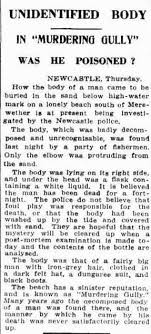
Since a couple of you asked about Murdering Gully and because I am also interested in how it got that name, I have none some research and this is what I found out. Nothing I could find stuff about a place call Murdering Gully in Victoria but the only site that information about Murdering Gully in my area was the Newcastle Herald site and they wanted me to sign up for a paid subscription which I did not want to do. So, I do not know why it was called that.
Moving on today is Friday and that means it is time for a national anthem and since I wrote about Angola on Monday, I will share their anthem today.
“Angola Avante” was composed by Ruy Mingas. The lyrics to the song were penned by Manuel Rui Alves Monteiro, an author who studied in Huambo and is affiliated with both the country’s Writer Union and Union of Artists and Composers.
The song was officially designated as the country’s national anthem in 1975, when the country gained independence on 11 November that year. It is enshrined under Article 164 of Angola’s constitution.
Its lyrics refer to several key events in the history of the MPLA. However, this has been rendered “obsolete” since the end of the one-party state in 1992. As a result, there have been efforts to modify the national anthem, along with other national symbols. However, none of these have come to fruition, and the anthem remains unchanged as of 2014.
Portuguese
O Pátria, nunca mais esqueceremos Os heróis do quatro de Fevereio. O Pátria, nós saudamos os teus filhos Tombados pela nossa Independência. Honramos o passado e a nossa História, Construindo no Trabalho o Homem novo, Honramos o passado e a nossa História, Construindo no Trabalho o Homem novo.
CHORUS: Angola, avante! Revolução, pelo Poder Popular! Pátria Unida, Liberdade, Um só povo, uma só Nação! Angola, avante! Revolução, pelo Poder Popular! Pátria Unida, Liberdade, Um só povo, uma só Nação!
Levantemos nossas vozes libertadas Para glóriados povos africanos. Marchemos, combatentes angolanos, Solidários com os povos oprimidos. Orgulhosos lutaremos Pela Paz Com as forças progressistas do mundo. Orgulhosos lutaremos Pela Paz Com as forças progressistas do mundo.
English Translation
O Fatherland, we shall never forget The heroes of the Fourth of February. O Fatherland, we salute your sons Who died for our Independence. We honour the past and our history As by our work we build the New Man. We honour the past and our history As by our work we build the New Man.
CHORUS: Forward, Angola! Revolution through the power of the People! A United Country, Freedom, One People, one Nation! Forward, Angola! Revolution through the power of the People! A United Country, Freedom, One People, one Nation!
2. Let us raise our liberated voices To the glory of the peoples of Africa. We shall march, Angolan fighters, In solidarity with oppressed peoples. We shall fight proudly for Peace Along with the progressive forces of the world. We shall fight proudly for Peace Along with the progressive forces of the world.
Chichester Dam Well, it’s Wednesday so time again for a little about the history of Newcastle in New South Wales, which is where I live, kinda. I live in the council of Lake Macquarie not Newcastle.
Anyway this week we will have a brief look at Newcastle water.
Newcastle’s earliest of fresh water were wells and springs, as the population grew these soon became inadequate and a pipeline from the Walka waterworks at Maitland took over as the main supply in the 1880’s.
Chichester Dam Construction
In 1892 The Hunter District Water and Sewerage Board was established, taking over from local councils the job of building regional infrastructure.
It soon became apparent that the supply from the Hunter River wasn’t going to be adequate for the growing population and industry. So, they built Chichester Dam, near Dungog, with working starting during the first World War and was completed with water flowing into the city in 1923. It gravitated to big reservoirs mainly those at Waratah that fed the city’s steelworks and other related industries.
Hunter Water Board Pipeline Plan
So, for the first time in years Newcastle had a truly reliable water supply.
Just as important as water supply is sewerage, before the city had a proper sewerage system “nightsoil” had to be carted to depots. Otherwise, home burial of sewerage caused problems, contaminating water and spreading disease. Early council sewers emptied into the harbour.
If anyone is wondering what the term “nightsoil” means it is this, human excrement collected at night from buckets, cesspools, and privies.
The men who did the job of collecting the cans of human waste were called either “sanny men” or the “dunny man”. The dunny man would usually access clients’ outhouses via the back lane and would visit every night to ensure a clean outhouse for the next morning.
I couldn’t find when the use of this system finished but I do know that Tim can remember the “dunny man” coming and picking up the can from their dunny when he was very young. So I think it was sometime in the 1960’s.
An ocean outfall was seen as the answer with Bar Beach being the first choice by authorities, however political pressure shifted it to Merewether and plans were laid for a new treatment plant and outfall at Murdering Gully.
It’s hard to understand the sheer scale of the task of building the city’s sewers and the hidden pipelines which is in some cases a really big task to undertake.
The new outfall began working in 1936 it is around this time that the Water Board stop using the name Murdering Gully changing it to Burwood Beach.
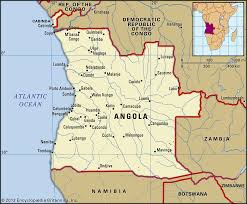
Well, it is time to return to my normal run of the mill posts, kicking off with the first country of the year and it is Angola.
The country is officially the Republic of Angola it is a country on the west-central coast of Southern Africa.
The country has a varied terrain which encompasses tropical Atlantic beaches, a labyrinthine system of rivers and Sub-Saharan desert that extends across the border into Namibia. The country’s colonial history is reflected in its Portuguese-influenced cuisine and its landmarks including Fortaleza de São Miguel, a fortress built by the Portuguese in 1576 to defend Luanda.
It is the second-largest Portuguese speaking country in both size and population, it has a population of 38.5 million, 10 million of which live in the capital of Luanda.
Which is a port city on the west coast of Southern Africa. A seafront promenade known as the Marginal runs alongside Luanda Bay. Nearby is the well-preserved 16th-century Fortress of São Miguel, which now contains the Museum of the Armed Forces. The fort has views of the harbor and the Ilha do Cabo, a long, thin peninsula in the bay that’s home to beaches, bars and restaurants.
It is the seventh largest country in Africa and is divided into 18 provinces.
Their flag came into use when the nation gained independence from Portugal on 11 November 1975. It is split horizontally into an upper red half and a lower black half with an emblem resting at the centre. It features a yellow half gear wheel crossed by a machete and crowned with a star.
As outlined in their constitution, the red half of the flag signifies bloodshed – during Angola’s colonial period, independence struggle, and in defence of the country. The black half symbolizes Africa. In the central emblem, the gear represents industrial workers and production, the machete represents peasantry, agricultural production and the armed struggle, and the red star, symbolizes international solidarity and progress. The yellow colour of the emblem symbolizes the country’s wealth.
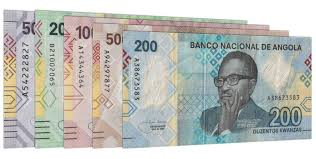
The currency used is the kwanza there have been four different currencies using the name kwanza since 1977. The currency derives its name from the Kwanza River.
The prevalent religion is Christianity, followed by traditional faiths. Roman Catholics make up the largest portion of the population. There are other Christian denominations such as Protestants, such as the Church of Our Lord Jesus Christ in the World, Seventh-day Adventists, Methodists, Baptists.
Indigenous beliefs are still very important in Angolan culture and are often practiced in addition to Christianity.
Muslims, Jews, Baha’is, and other religious groups make up about 9% of the population.
The government has become more tolerant of religious organizations since the formal abandonment of Marxism. However, the government still uses administrative control, co-optation, and restrictions to manage religious organizations. For example, in 2019, the police conducted a campaign against illicit traders and non-recognized churches, which some say called into question religious freedom in Angola.
Angola’s National Institute for Religious Affairs (INAR) is responsible for the registration of religious groups and the oversight of religious activities. The law requires religious groups to submit documents defining their organizational structure, location, and other information. Religious doctrine must also conform to the principles and rights outlined in the constitution.
The current political regime in Angola is presidentialism, in which the President of the Republic is also head of state and government; it is advised by a Council of Ministers, which together with the President form the national executive power.
Like other African nations it is not a safe place to visit.
Hi everyone before starting this year’s countries to learn about I thought we would star with some basic information most people may know but many will not.
Like there are seven continents on this planet, a continent is one of Earth’s seven main divisions of land. The continents are, from largest to smallest: Asia, Africa, North America, South America, Antarctica, Europe, and Australia.
According to the United Nations, there are 195 countries in the world, with 193 being part of the United Nations and two not being members, those two are the Holy See (Vatican City) and the State of Palestine.
However, other organizations may list a different number of countries. For example, the CIA lists 237 countries. Many other nations also consider themselves to be fully-fledged nations.
There are 54 countries in Africa, 44 in Europe, 48 in Asia, 23 in North America, 12 in South America, 14 in Oceania including Australia which is also considered a continent on its own and then there is Antarctica which of course has no countries.
Now you may be like me and think Oceania what the hell I wasn’t taught about this continent, I thought Australia was the sixth continent.
Well for some reason, those wise folks in geography academia decided we needed another way to identify them. And now we have Oceania. Oceania covers the whole area: All of Australia, all of New Zealand, PLUS the myriad of islands in the region that were orphaned without a continent home.
Also, Oceania is not considered a continent if you are using a geographical definition of continent. However, when dividing the world into 7 regions the islands of the Pacific are usually grouped with Australia and called Oceania, and sometimes these regions are called continents even though this is not technically correct.
When you think about it that makes sense since generally most people would say there is only one country in the continent of Australia. However, some say differently listing the following countries as part of the continent, Fiji, Kiribati, Marshall Islands, Micronesia, Nauru, New Zealand, Palau, Papua and New Guinea, Samoa, Solomons, Tonga, Tuvalu, Vanuatu. Australia is one country. There are no other sovereign nations in the Australian mainland.
I find all that confusing and now have a headache.
Hello everyone, this week see’s us visiting the country of Chad.
Chad, officially the Republic of Chad, is an independent state at the crossroads of North and Central Africa. The landlocked country is bordered by Libya to the north, Sudan to the east, the Central African Republic to the south, Cameroon to the southwest, Nigeria to the southwest, and Niger to the west. It is often called the “Dead Heart of Africa” due to its central and landlocked location.
It has a diverse landscape with an arid centre and a desert dominated north and a more fertile south. The country is divided into 23 regions.
The regions are represented in the country’s bicameral parliament, which includes a Senate that represents autonomous communities. The Senate’s members are indirectly elected by an electoral college of provincial and communal councillors.
Chad’s regions have different social structures and ethnic groups, and local or regional society is often more important to Chadians than national society:
The Sara, the country’s main ethnic group, live in the south. The Sara are sedentary people, and their essential social unit is the lineage.
It is often called the “Dead Heart of Africa” due to its central and landlocked location.
The north is inhabited by nomads, mostly Toubous.
Most of the population lives by agriculture; cotton is grown in the south, and cattle are raised in the central region. Chad joined the ranks of oil-producing countries in 2003, raising hopes that the revenues generated would improve the country’s economic situation.
It has a population around 18.5 million, the official languages are French and Arabic.
The currency is the Central African Franc.
N’Djamena is the capital and largest city in the country. It is also a special statute region, divided into 10 districts or arrondissements. The city serves as the centre of economic activity in Chad.
The country has an Executive President who is head of state and a Prime Minister as well as a council of minister
Branches: Executive–president (head of state), prime minister, Council of Ministers.
Chad’s Flag
The national flag of Chad is a vertical tricolour of indigo, yellow, and red. It was adopted on 6 November 1959, almost a year after the founding of the autonomous Republic of Chad. Since the 1990s, its similarity to the flag of Romania has caused international discussion.
Romania’s Flag
Like many African countries Chad is not considered a safe country to visit due to the high risk of violent crime, terrorism, kidnapping, and civil unrest.
The main religions in Chad are Islam and Christianity, with Islam being practiced by the majority of the population.
Chad’s constitution establishes the country as secular and affirms the separation of religion and state. The government generally respects religious freedom and observes several religious holidays as national holidays. It’s common for Muslims and Christians to attend each other’s festivities.
This is the first post about a country’s national anthem and of course the country is Australia, our national anthem is Advance Australia Fair it was written and composed by Peter Dodds McCormick in 1878.
It has been our national anthem since 19 April 1984.
Before then it was God Save the Queen.
Advance Australia Fair” was chosen as Australia’s national anthem after a series of polls and a plebiscite:
In 1974, The Australian Bureau of Statistics conducted a poll of 60,000 people, with 51.4% of respondents choosing “Advance Australia Fair” as their preferred anthem. So, it was adopted as the Australian National Anthem, but in 1976 ‘God Save The Queen’ was reinstated.
Then in 1977, The Australian Electoral Office conducted a poll as part of a referendum on various issues. Over 7 million people voted, with 43.29% choosing “Advance Australia Fair”, over three other contenders, including “Waltzing Matilda.”
In 1984 The Governor-General proclaimed “Advance Australia Fair” as the national anthem, along with the verses written by the National Australia Day Council.
Some of the original words, however, have been altered for the official version—including the first line, changed from “Australia’s sons, let us rejoice”, to “Australians all let us rejoice.”
In 2021 the second line was changed from “For we are young and free” to “For we are one and free” to acknowledge Aboriginal and Torres Strait Islanders and their history.
The song is about Australia’s strength and beauty and references the migration of European settlers. The word “fair” has been the subject of controversy, with some arguing it means beautiful, while others suggest it has links to being white.
The song originally had four verses but only the first two are used in the anthem.
Australians all let us rejoice, For we are one and free; We’ve golden soil and wealth for toil, Our home is girt by sea. Our land abounds in Nature’s gifts Of beauty rich and rare; In history’s page, let every stage Advance Australia fair. In joyful strains then let us sing, “Advance Australia Fair.”
Beneath our radiant Southern Cross We’ll toil with hearts and hands; To make this Commonwealth of ours Renowned of all the lands; For those who’ve come across the seas We’ve boundless plains to share; With courage let us all combine To Advance Australia fair. In joyful strains then let us sing, “Advance Australia Fair.”
This week are looking at the New Guinea Singing Dog, not an animal I have heard of before, how about of you?
The New Guinea singing dog or New Guinea Highland dog is an ancient lineage of dog found in the New Guinea Highlands, on the island of New Guinea. Once considered to be a separate species in its own right, under the name Canis hallstromi, it is closely related to the Australian dingo.
They are thought to be one of the oldest breeds of canine, with some evidence suggesting that they may have been present on the island of New Guinea for over 5,000 years. It was thought that they went extinct in the wild in the 1970s, but in 2018, DNA evidence confirmed the presence of a wild group in New Guinea.
Does it really sing? Well, when it comes to sounds, they really have their own voice! Most of the singing dog’s vocalizations are like that of the wolf, dingo, and domestic dog, but their howl is incredibly unique. By using Sonograms, it is believed that their howl is like the song of the humpback whale.
They are a small to medium size dog species. They have a wedge-shaped head and triangular, upright ears. These dogs have a soft, thick coat and a bushy tail. The eyes of the singing dog are reflective and glow bright green in low light conditions.
They have a distinctive appearance, which includes a dense, long coat that ranges in colour from red to black and brown. These dogs have a small, compact body and a wedge-shaped head with pointed ears. They have a high metabolism and require a diet rich in protein to maintain their energy levels. Their legs, joints, and spine are highly flexible making them skilled climbers.
They are known to live up to 15 years in captivity, but it is unknown how long they live in the wild.
They prey on small mammals, small reptiles, and birds; they even try to hunt 3.5-foot-tall (1-meter-tall) dwarf cassowaries! New Guinea singing dogs have a strong hunting drive and fearless nature, and they are highly curious.
They are not pack animals but are solitary animals but may forage in pairs. They are known to be shy and elusive and live in mountains and thick forests of New Guinea and Indonesia. They are also excellent climbers and can jump high like cats.
You can have a New Guinea Singing Dog as a pet, but they can be challenging to fully domesticate and may not be the best fit for most families.
They are intelligent, lively, and affectionate, but they can be difficult to housetrain and are not very socially active. They can also be fearful and unreliable off-leash. They do best with experienced pet parents who are familiar with the breed.
It is estimated that only 200-300 of these animals are in existence today.