Northern Ireland

So here we are at the start of another week, this week’s country is Northern Ireland.

Northern Ireland is a part of the United Kingdom in the north-east of the island of Ireland that is variously described as a country, province or region. Northern Ireland shares an open border to the south and west with the Republic of Ireland.

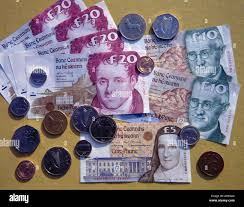
The official currency is the pound sterling, Bank of England notes are the only banknotes that are legal tender in England and Wales. Scottish, Northern Ireland, Jersey, Guernsey and Manx banknotes are not legal tender in England and Wales. However, they are not illegal under English law and creditors and traders may accept them if they so choose.

Northern Ireland remains separate from the Republic of Ireland because after the Irish War of Independence and the signing of the Anglo-Irish Treaty in 1921, the Government of Ireland Act 1920 partitioned the island, with the six northeastern counties (predominantly Protestant and Unionist) remaining part of the United Kingdom, while the rest became the Irish Free State (later the Republic of Ireland). 

The main difference between Ireland and Northern Ireland is that Ireland is a sovereign, independent country, while Northern Ireland is a constituent country within the United Kingdom. 

Citizens of Northern Ireland can choose to be either British or Irish citizens. 

The population is 1.9 million, the capital is Belfast and the official language is English. Although since 2022 Irish has also be recognised as an official language.

Their only official flag is the Union Jack, the flag of the United Kingdom.

Christianity is the largest religion, with Catholics and Protestants (including those from other Christian backgrounds) comprising the majority of the population. While the Catholic share of the population has overtaken the Protestant share, neither group constitutes a majority.

Belfast has a long history of riots between Catholics and Protestants. Beginning in 1835 there have been at least 15 major riots in Belfast, the most violent ones taking place in 1864, 1886 and 1921.

A series of riots known as “The Troubles,” stemmed from deep-seated sectarian tensions between Catholics (nationalists) and Protestants (unionists) over Northern Ireland’s status and treatment of the Catholic minority, erupting into violence from the late 1960s to the Good Friday Agreement in 1998.

In the 21st century, Northern Ireland has seen a resurgence of violence and riots, particularly in 2021, stemming from issues like Brexit and the COVID-19 pandemic, with loyalist groups engaging in protests that escalated into civil unrest.

Northern Ireland is generally a very safe place to visit, with a low crime rate and a welcoming atmosphere, making it a safe destination for tourists.
Ireland

I was going to write about another middle east country but since today is St. Patrick’s Day I changed my mind and now writing about Ireland.

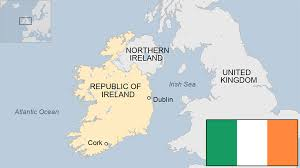
The Republic of Ireland occupies most of the island of Ireland, off the coast of England and Wales. Its capital, Dublin, is the birthplace of writers like Oscar Wilde, and home of Guinness beer. The 9th-century Book of Kells and other illustrated manuscripts are on show in Dublin’s Trinity College Library. Dubbed the “Emerald Isle” for its lush landscape, the country is dotted with castles like medieval Cahir Castle.

The island of Ireland comprises the Republic of Ireland, which is a sovereign country, and Northern Ireland, which is part of the United Kingdom. I will write about Northern Ireland at a later date.

The population is around 5.4 million, there are two official languages, English and Irish.

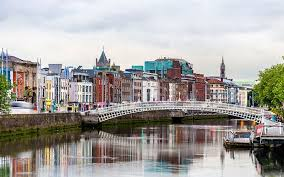
Dublin, capital of the Republic of Ireland, is on Ireland’s east coast at the mouth of the River Liffey. Its historic buildings include Dublin Castle, dating to the 13th century, and imposing St Patrick’s Cathedral, founded in 1191. City parks include landscaped St Stephen’s Green and huge Phoenix Park, containing Dublin Zoo. The National Museum of Ireland explores Irish heritage and culture.

The city expanded rapidly from the 17th century and was briefly the second largest in the British Empire and sixth largest in Western Europe after the Acts of Union in 1800. Following independence in 1922, Dublin became the capital of the Irish Free State, renamed Ireland in 1937.

The national flag of Ireland, often called “the tricolour,” is a vertical tricolour of green, white, and orange, with green at the hoist (pole side). 

Green: Represents Irish nationalism and the Gaelic tradition. 

White: Symbolizes peace and a lasting truce between different groups. 

Orange: Represents the supporters of William of Orange. 

This flag was first introduced by Thomas Francis Meagher in 1848 and became the national flag after the Easter Rising of 1916. 

The flag was given constitutional status in 1937. 

Their currency is the Euro since 1999 before that it was the Irish Pound

When it comes to religion, Christianity, particularly Catholicism, holds a significant place. The Catholic Church has a long history and cultural influence in Ireland, and many Irish people identify with the Catholic faith. 

While Catholicism is the largest religion, other Christian denominations, such as the Church of Ireland (Anglican), and other religions like Islam and Eastern Orthodoxy, are also present. 

A significant portion of the population, 14.5%, identified as having no religion in the 2022 census.

The Irish Constitution guarantees freedom of religion and does not endorse any particular religion. 

There has been a decline in the number of people who identify as Catholic, as well as a rise in the number of people who identify as having no religion.

In Ireland, significant strides have been made in advancing women’s rights, including equal voting rights, legal protections against discrimination, and a focus on eliminating violence against women, but challenges remain, particularly in achieving true gender equality and addressing data gaps. 

The 1937 Constitution of Ireland guaranteed women the right to vote and to nationality and citizenship on an equal basis with men.

Ireland is generally considered a safe and welcoming place to travel, with low crime rates and a friendly population. However, like any destination, it’s important to be aware of potential risks and take necessary precautions, especially in larger cities. 

Ireland has a relatively low crime rate compared to many other European countries

The Irish people are known for their hospitality and welcoming nature. 

Ireland is considered a great destination for solo travellers, both male and female.