
This week we are looking at the town of Darwin which is the capital of the Northern Territory and has been since 1911 when the area was transferred from South Australia to the Commonwealth of Australia. The handover also included a renaming of the city from Palmerston to Darwin. Darwin was also given city status in 1959. It was a former frontier outpost.
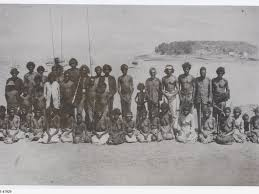
The traditional owners of Darwin are the Larrakia (saltwater) people. Larrakia country runs far beyond the municipal boundaries of Darwin, covering the area from the Cox Peninsula in the west to the Adelaide River in the east. The Larrakia people established the first trade routes in the region, trading with the Tiwi, Wagait, and Wulna people as well as with Indonesian fishermen. Their stories, songs, and ceremonies echo the strong connection and understanding they have with the saltwater country.
Darwin is a gateway to massive Kakadu National Park. Its popular waterfront area has several beaches and green areas like Bicentennial Park. Also near the water is the Museum and Art Gallery of the Northern Territory, displaying Southeast Asian and Pacific art, plus a pearling lugger and other seafaring vessels.

In 1839, the HMS Beagle with Lt. John Lort Stokes aboard sailed into the waters of what is now known as Darwin harbour. Stokes named the harbour after his former shipmate British evolutionist Charles Darwin but contrary to popular rumours, Darwin himself never visited the area.
Darwin was originally founded as Palmerston in 1869, although the port was always known as Port Darwin. The town’s growth was accelerated when gold was discovered at Pine Creek in 1871.

In 1939 a Darwin Town Management Board was formed comprising three Commonwealth Government officers and a Citizens’ Advisory Committee. However, it ceased when Darwin was bombed during World War II.
Between February 1942 and October 1943, the Japanese launched more than 60 air raids over Darwin.
Since the early 1960s, Council has hosted a service on 19 February to commemorate the Bombing of Darwin. In 2011, the Governor General of Australia officially declared the 19 February ‘Bombing of Darwin Day – A National Day of Observance’.
When Darwin returned to civilian control after the war, a new Town Management Board was formed comprising officials and a representative group of residents.

On 1 July 1957 the people of Darwin elected for the first time a Mayor and 12 Councillors. There was much enthusiasm at the time for granting of self-governance with a voter turnout of more than 85 per cent on Election Day, 29 June 1957. Council’s first elected Mayor was Lucius (Bill) Richardson.

In May 1975, Darwin elected its first female Mayor, Dr Ella Stack, who also played a strong role in the Darwin Reconstruction Committee.
In 1978 the Commonwealth passed The Northern Territory (Self Government) Act 1978 establishing the Northern Territory as a distinct political entity under the Crown, with limited state-like powers, effective on 1 July 1978.
In November 1979 Dr Stack became Darwin’s first Lord Mayor.
Darwin was the scene of the biggest airlift in Australian history after Cyclone Tracy devastated the city in the early hours of Christmas Day 1974. Cyclone Tracy killed 66 people and injured thousands more. Many of those who died or were injured were struck by flying debris.
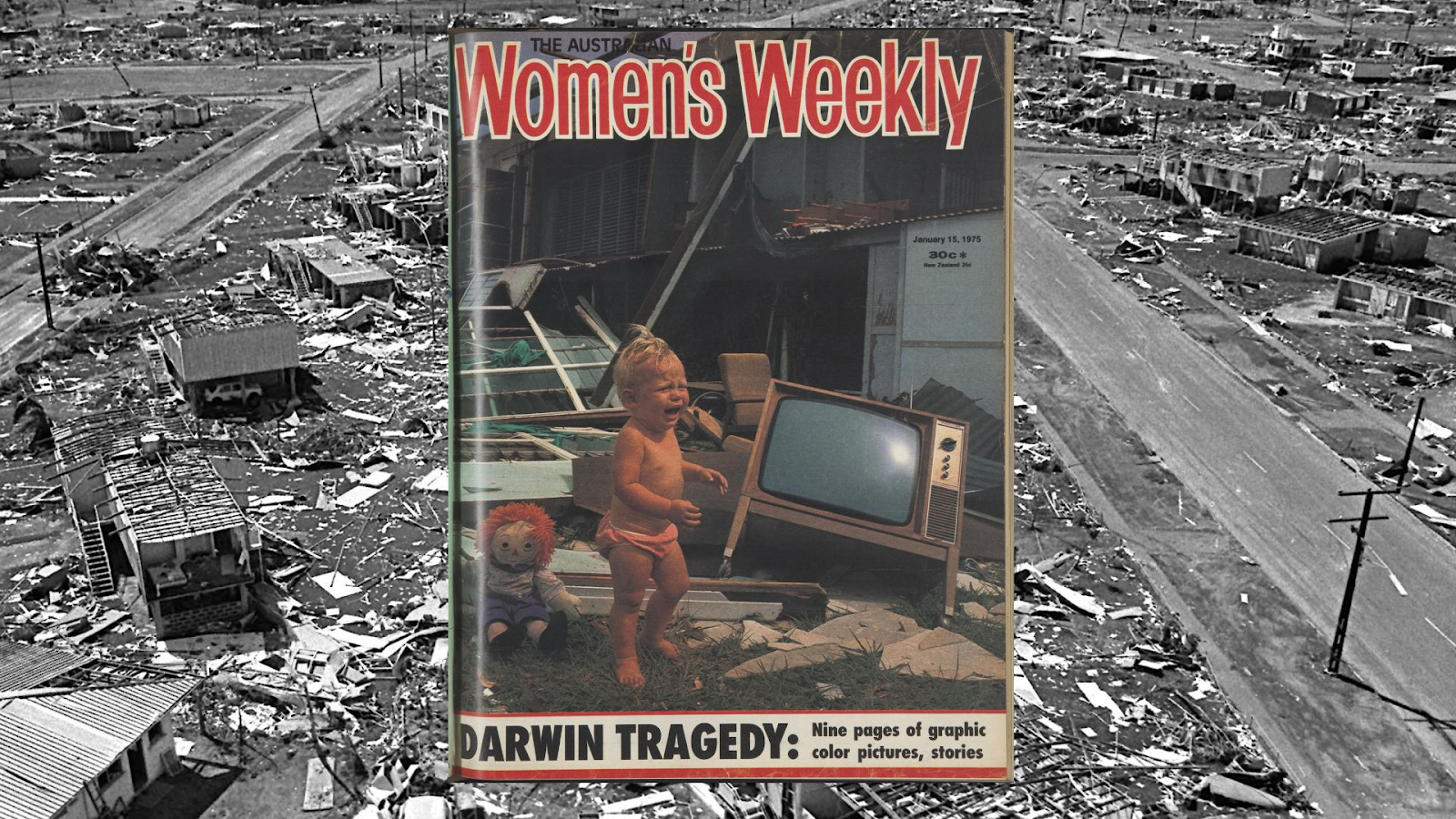
More than 30,000 of the city’s then 43,000 people were evacuated to cities and towns all over Australia immediately after the devastation of Tracy. But for many Darwin was a hard place to stay away from and people returned to resume their lives in the capital city of the Northern Territory. After the cyclone, the Darwin Reconstruction Commission (DRC), made up of Federal, Territory, and Local Government representatives, was involved with the running and rebuilding of the city which gradually turned Darwin into the most modern capital city in the nation.
The estimated usual resident population of Greater Darwin in 2021 was 139,902. This makes Darwin Australia’s smallest capital city. The city has nearly 53% of the Northern Territory’s population.
 Jo-AnneRamplings