It is the day before New Years Eve and I was thinking about it and wondered how many countries see in the new year with fireworks, the answer is somewhere between 100 and 120, that’s more than I thought.
Some of the biggest firework displays take place in Sydney, London, Las Vegas and Ras Al Khaimah. Some sources say the biggest display is in Ras Al Khaimah.
The cost of the firework display in Sydney is around $6 million, I have no idea how much is spent in other places, but I expect it is a bloody lot.
Here people start finding their spot to watch them fireworks from early on in the day as many of the prime free vantage points officially open around 9am–10am, and people begin queueing before opening time. These spots often hit capacity by lunchtime. A couple of free places are Hickson Road Reserve opened at 9am and reached capacity just after 12:30pm another is Bennelong Lawn, Tarpeian Lawn, Campbells Cove, and Circular Quay also open around 9–9:30am and fill quickly.
Most areas with clear views of the Harbour Bridge or Opera House are already packed or close to it by 12pm–2pm.
If you arrive after 4pm, your chances of getting into a top-tier free spot (Opera House surrounds, Mrs Macquaries Point, Circular Quay) drop dramatically. Many will already be closed due to capacity.
Some vantage points (e.g., Opera House forecourt) are ticketed and sell out well in advance. These guarantee entry but still require arriving early for a good position.
You may be thinking why so early?
Sydney draws over one million people to the harbour foreshore each NYE. With limited space and strict entry controls (no re-entry, bag checks, alcohol restrictions), people settle in for the whole day.
So, what do people do while waiting, well some read, some play board games or listen to podcasts and some take a nap. Of course, people need to make sure they have food, water and sunscreen and some kind of shade gear.
Three countries that do not celebrate NYE are Iran as there New Year is in March, Afghanistan, Saudi Arabia, Yemen and Somala to name a few.
This week we are looking at the town of Melbourne. Greater Melbourne’s area of approximately 9900 km² of suburbs spread more than 40 km to the south, 30 km to the east, 20 km to the north and sprawl across vast, flat basalt plains to the west.
Melbourne is the coastal capital of the southeastern Australian state of Victoria. At the city’s centre is the modern Federation Square development, with plazas, bars, and restaurants by the Yarra River. In the Southbank area, the Melbourne Arts Precinct is the site of Arts Centre Melbourne – a performing arts complex – and the National Gallery of Victoria, with Australian and indigenous art.
Melbourne’s population is estimated to be around 5.39 million people.
Melbourne is situated on the traditional lands of the Wurundjeri Woi-wurrung and Bunurong Boon Wurrung peoples, part of the Eastern Kulin Nation. These First Nations peoples have a strong connection to the land, water, and community, and their history and culture are integral to Melbourne’s identity.
Melbourne has always been an important meeting place for events of social, educational, sporting, and cultural significance for the Wurundjeri Woi-wurrung and their Eastern Kulin neighbours.
The Wurundjeri and Bunurong peoples continue to have a strong connection to their land, water, and community, and they are actively involved in cultural preservation and community engagement.
Melbourne offers opportunities for visitors to learn about and experience Aboriginal culture through organizations like the Koorie Heritage Trust, Museums Victoria (Bunjilaka), and other cultural initiatives.
Melbourne has a temperate oceanic climate, also known as a mild temperate climate. This means it experiences warm summers, cool winters, and relatively consistent rainfall throughout the year. It’s also known for its unpredictable weather, with locals often saying they can experience four seasons in a single day.
The town’s location on the coast and its proximity to the Southern Ocean contribute to its changeable weather. It’s also located on the boundary of hot inland areas and the cool Southern Ocean, which further contributes to its unpredictable conditions.
Melbourne is widely known for its vibrant street art, bustling laneways, world-class coffee culture, diverse culinary scene, and thriving arts and culture scene. It’s also renowned as a major sporting city, hosting major events like the Australian Open and Australian Grand Prix. Additionally, Melbourne is recognized for its liveability and multiculturalism, making it a popular destination for both residents and visitors.
Melbourne’s history begins with its founding in 1835 by settlers from Tasmania who established a settlement on the Yarra River. The city was named in honour of the British Prime Minister, William Lamb, 2nd Viscount Melbourne. Melbourne experienced significant growth due to the 1850s Gold Rush, which brought in a large influx of people and fuelled economic prosperity.
In the 1850’s the discovery of gold in the region led to the Gold Rush, dramatically transforming Melbourne into a bustling metropolis. The city’s population quadrupled, reaching 80,000 within three years.
In 1851 Victoria separated from New South Wales and became a separate colony, with Melbourne as its capital.
Between 1850 and 1880 Melbourne became a major trading and industrial centre, with the development of infrastructure like railways and the Melbourne Harbour Trust. During 1901 and 1927 Melbourne served as the seat of government for the Commonwealth of Australia.
Melbourne hosted the Summer Olympics in 1956, becoming the first city outside of Europe and North America to do so.
During the 1990’s and 2000’s Melbourne continued to evolve, with the development of major infrastructure projects like CityLink and the construction of Federation Square.
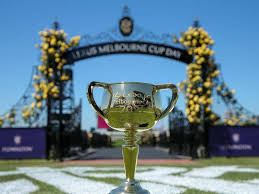
Melbourne is also famous for The Melbourne Cup which is a horse race held on the first Tuesday in November. It is an annual race held at the Flemington Racecourse. It is the richest two-mile handicup in the world and one of the richest turf races. The event starts at 3:00 pm on the first Tuesday of November and is known locally as “the race that stops the nation”.
The Melbourne Cup has cemented itself as a part of Melbourne and Australian culture, having been run every year since 1861 except for an intermission during both World Wars.
The day of the race has been a public holiday for much of Victoria since 1876.
This week we are looking at Sydney, which is the capital of New South Wales and one of Australia’s largest cities, is best known for its harbourfront Sydney Opera House, with a distinctive sail-like design. Massive Darling Harbour and the smaller Circular Quay port are hubs of waterside life, with the arched Harbour Bridge and esteemed Royal Botanic Garden nearby. Sydney Tower’s outdoor platform, the Skywalk, offers 360-degree views of the city and suburbs.
The estimated population of the Sydney metropolitan area in 2025 is around 5.248 million.
Greater Sydney covers 12,368.7 sq km and is made up of 34 local councils. Over 650 suburbs make up the Greater Sydney region.
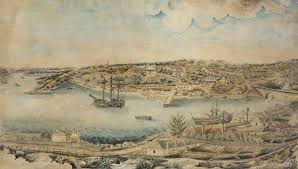
Sydney was founded 237yrs ago when in 1788, the First Fleet of convicts, led by Arthur Phillip, founded Sydney as a British penal colony, making it the first European settlement in Australia.
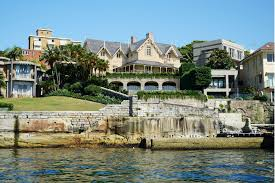
Sydney is also where Kirribilli House is, this is the secondary official residence of the prime minister of Australia. Located in the Northern Sydney suburb of Kirribilli, New South Wales, the cottage and its associated grounds are located at the far eastern end of Kirribilli Avenue.
It commands impressive views across to the Sydney Harbour Bridge, Circular Quay and the Sydney Opera House and has been visited over the years by many important international dignitaries. Kirribilli House is open to the public on one day a year, courtesy of The Australiana Fund.
This year it will be open to the public for an open day on Saturday, June 3rd, 2025, from 10:00 am to 2:00 pm, along with Admiralty House, allowing visitors to explore the grounds and gardens.
There will be tours of both houses, and then lunch on the lawns. You can bring a packed lunch, or there will be food available to purchase. Entry is $15.
Sydney has relatively low crime rates compared to many other major cities globally. Violent crime is uncommon, and the city is known for its safe streets.
Sydney’s public transportation system, including buses, trains, and ferries, is generally safe and mostly reliable all the services are well-monitored and have security measures in place. We also have transit officers that can tell people to leave stations and trains, demand full name and residential address when they suspect, on reasonable grounds that a person has committed a railway offence, Issue infringement notices (‘on-the-spot’ fines) for railway offences.
This week we are having a look at Canberra the capital of Australia located in the Australian Capital Territory or ACT.
Canberra’s history begins with Aboriginal Australians, followed by European settlement in the 19th century, and its designation as Australia’s capital in 1908, with construction beginning in 1911 and the capital moving from Melbourne in 1927.
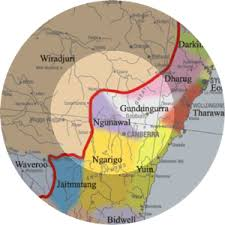
The area was inhabited by Aboriginal Australians, including the Ngunnawal and Ngambri peoples, for thousands of years, possibly as long as 21,000 years.
The Ngunnawal and Ngambri people, continue to live and travel through the area, preserving their culture through land connections and artistic expression, although there have been ongoing disputes and court cases regarding their recognition.
European settlement began in the first half of the 19th century, with landmarks like St John’s Anglican Church and Blundells Cottage remaining from this period.
In 1908, the Australian government decided to establish a new capital, choosing the Canberra-Yass district as the location, which was about 100 miles from Sydney.
Construction of the city began in 1911, and the first Parliament House was completed in 1927, marking the official move of the capital from Melbourne.
The name “Canberra” is believed to have come from the Aboriginal word “Canberry” or “Canbury”, meaning “a place of meeting”.
Canberra has three sister cities: Nara in Japan, Beijing in China, and Wellington in New Zealand.
As of the end of June 2024, Canberra’s estimated resident population was 474,132.
Canberra’s police are the AFP they have a community policing arm called ACT Policing, which responds to incidents in the Australian Capital Territory.
The territory measures 85 kilometers or 53 miles north to south and 53 kilometers or 33 miles east to west. It covers an area of 2,358 square kilometers, or 910 square miles.
Several rivers flow through the Australian Capital Territory.
Its most famous lake is Lake Burley Griffin which is an artificial lake in the centre of Canberra. It was created in 1963 by the damming of the Molonglo River, which formerly ran between the city centre and Parliamentary Triangle.
Hi everyone before starting this year’s countries to learn about I thought we would star with some basic information most people may know but many will not.
Like there are seven continents on this planet, a continent is one of Earth’s seven main divisions of land. The continents are, from largest to smallest: Asia, Africa, North America, South America, Antarctica, Europe, and Australia.
According to the United Nations, there are 195 countries in the world, with 193 being part of the United Nations and two not being members, those two are the Holy See (Vatican City) and the State of Palestine.
However, other organizations may list a different number of countries. For example, the CIA lists 237 countries. Many other nations also consider themselves to be fully-fledged nations.
There are 54 countries in Africa, 44 in Europe, 48 in Asia, 23 in North America, 12 in South America, 14 in Oceania including Australia which is also considered a continent on its own and then there is Antarctica which of course has no countries.
Now you may be like me and think Oceania what the hell I wasn’t taught about this continent, I thought Australia was the sixth continent.
Well for some reason, those wise folks in geography academia decided we needed another way to identify them. And now we have Oceania. Oceania covers the whole area: All of Australia, all of New Zealand, PLUS the myriad of islands in the region that were orphaned without a continent home.
Also, Oceania is not considered a continent if you are using a geographical definition of continent. However, when dividing the world into 7 regions the islands of the Pacific are usually grouped with Australia and called Oceania, and sometimes these regions are called continents even though this is not technically correct.
When you think about it that makes sense since generally most people would say there is only one country in the continent of Australia. However, some say differently listing the following countries as part of the continent, Fiji, Kiribati, Marshall Islands, Micronesia, Nauru, New Zealand, Palau, Papua and New Guinea, Samoa, Solomons, Tonga, Tuvalu, Vanuatu. Australia is one country. There are no other sovereign nations in the Australian mainland.
I find all that confusing and now have a headache.










 Jo-AnneRamplings