

This week we are looking at an old condition, called Phossy jaw, also known as phosphorus necrosis of the jaw, was a fatal occupational disease that affected workers in match factories. It was caused by exposure to white phosphorus fumes. The disease affected the poor the most.

I heard about this in the book I just read called Factory Girl which was about a young girl working in a match factory in London in 1888.
This condition, clinically known as osteonecrosis of the jaw, vanished until it recently reappeared in the 21st century. More about that later.
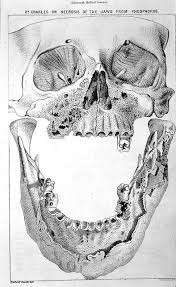
Back in the 19th century these were the Symptoms:
- Pain, swelling, and debilitation
- Dental decay
- Periostitis
- Osteomyelitis
- Unbearable abscesses in the mouth
- Facial disfigurement
- Brain damage
The condition was so bad that it was an epidemic from 1858 to 1906, with around 11% of those exposed to phosphorus developing the disease. The average period from first exposure to diagnosis was five years. It was fatal in about 20% of cases.
The prevention and treatment at the time consisted of the following:
- Regulations were put in place in Germany, Norway, and Sweden to reduce exposure
- In the UK, manufacturers were required to inform the Medical Officer of Health of any jaw swelling or necrosis
- Antibiotics, oral analgesics, and mouthwashes are often effective treatments
Other names: phosphorus necrosis of the jaw, an epidemic of osteonecrosis, and a gangrenous condition of the lower jawbone.
Phossy jaw in the 21st century is now known as bisphosphonate-induced osteonecrosis of the jaw, or “bis-phossy jaw”. It’s a condition that causes jawbone necrosis, similar to the 19th century disease of the same name.
It’s now caused by exposure to Bisphosphonates which are a class of drugs used to treat osteoporosis and some cancers. Bisphosphonates inhibit bone resorption. Intravenous bisphosphonates are associated with a much higher risk of bis-phossy jaw than oral bisphosphonates.
Symptoms exposed bone in the mouth, pain, purulence, sequestration, and osteomyelitis.
When it comes to prevention, patients taking bisphosphonates should inform their dental provider before receiving any dental care.
 Jo-AnneRamplings