
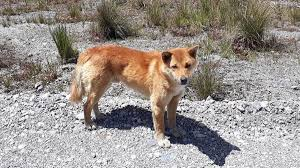
This week are looking at the New Guinea Singing Dog, not an animal I have heard of before, how about of you?
The New Guinea singing dog or New Guinea Highland dog is an ancient lineage of dog found in the New Guinea Highlands, on the island of New Guinea. Once considered to be a separate species in its own right, under the name Canis hallstromi, it is closely related to the Australian dingo.
They are thought to be one of the oldest breeds of canine, with some evidence suggesting that they may have been present on the island of New Guinea for over 5,000 years. It was thought that they went extinct in the wild in the 1970s, but in 2018, DNA evidence confirmed the presence of a wild group in New Guinea.
Does it really sing? Well, when it comes to sounds, they really have their own voice! Most of the singing dog’s vocalizations are like that of the wolf, dingo, and domestic dog, but their howl is incredibly unique. By using Sonograms, it is believed that their howl is like the song of the humpback whale.
They are a small to medium size dog species. They have a wedge-shaped head and triangular, upright ears. These dogs have a soft, thick coat and a bushy tail. The eyes of the singing dog are reflective and glow bright green in low light conditions.

They have a distinctive appearance, which includes a dense, long coat that ranges in colour from red to black and brown. These dogs have a small, compact body and a wedge-shaped head with pointed ears. They have a high metabolism and require a diet rich in protein to maintain their energy levels. Their legs, joints, and spine are highly flexible making them skilled climbers.
They are known to live up to 15 years in captivity, but it is unknown how long they live in the wild.
They prey on small mammals, small reptiles, and birds; they even try to hunt 3.5-foot-tall (1-meter-tall) dwarf cassowaries! New Guinea singing dogs have a strong hunting drive and fearless nature, and they are highly curious.

They are not pack animals but are solitary animals but may forage in pairs. They are known to be shy and elusive and live in mountains and thick forests of New Guinea and Indonesia. They are also excellent climbers and can jump high like cats.
You can have a New Guinea Singing Dog as a pet, but they can be challenging to fully domesticate and may not be the best fit for most families.
They are intelligent, lively, and affectionate, but they can be difficult to housetrain and are not very socially active. They can also be fearful and unreliable off-leash. They do best with experienced pet parents who are familiar with the breed.
It is estimated that only 200-300 of these animals are in existence today.

 Jo-AnneRamplings