Island Fox

This will be the last post about foxes we are ending with the Island Fox.

The Island fox is native to six of the eight Channel Islands in California it is considered critically endangered by the IUCN, it is threaten by golden eagles, disease, and habitat destruction.

The Catalina Island Conservancy and Institute for Wildlife Studies have established a fox recovery program for the island fox. This program includes vaccination, relocation, and captive breeding. 
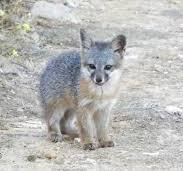
The island fox is a small fox species that is endemic to six of the eight Channel Islands of California. There are six subspecies, each unique to the island it lives on, reflecting its evolutionary history. They are generally docile, show little fear of humans, and are easily tamed.

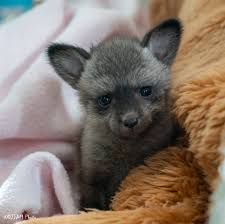
The island fox has similar markings to the gray fox. They have gray colouring on the back, rust colouring on the sides, and white underneath. The face has a distinctive black, white, and rufous-coloured patterns.

In March 2004, four subspecies of the island fox were classified as a federally protected endangered species: the Santa Cruz Island fox, Santa Rosa Island fox, San Miguel Island fox and the Santa Catalina Island fox.

Island foxes reach sexual maturity at 10 months, and females usually breed within the first year. These foxes can live for up to 10 years in the wild, but four to six years is more typical.

They are generally docile, show little fear of humans, and are easily tamed. Island foxes played an important role in the spiritual lives of native Channel Islanders. They have been likely semi-domesticated as pets, used as pelts, or for other functions, like pest control.

They are omnivorous, eating both plants and other animals. They eat a large amount of insects, some island deer mice, reptiles, and fruit from native plants. New evidence is showing marine resources may be important for island foxes. Their diet also changes with the seasons.

 The primary threat to the island fox is predation by invasive golden eagles. The species is also very vulnerable to canine distemper transmitted by domestic dogs, habitat fragmentation due to development, and habitat loss to introduced livestock and game species.

Week 10 of 2025

I slept well woke only once to pee, a cool morning we are in for another hot day, with a top of 29C, it is currently 6am and 23C.

Tim took the car in for its first service, I noticed after he left that he forgot his phone, that would be annoying as who doesn’t scroll through Facebook while waiting. Those who left their phone at home that’s who.

I changed the sheets and by the time I was done I was dripping sweat and felt exhausted. So I turned the air con on.

I have answered 6 letters today.

Tim went and cashed in cans and bottles.

Steps:11,150s

It was midnight before I fully settle last night, at 5am I got up and took my meds then went back to bed for an hour.

Around 10am Tim and I went to Sue’s so he could change her flat tyre, however, he wasn’t able to get the lug nuts off as the tool he had was too big as was the one Sue had. Although the one Sue had, come with the car so you would have thought it would fit.

We called into the shops so I could get the scrips and some bread before coming home.

I have been tired on and off all day and it has been stinking hot.

Steps: 6,085

I had a much better night, last night, felt a little heavy headed when I first got up, but I am doing better now.

I made myself an egg and cheese roll for breakie but only managed to eat half of it.

Tim went to Sue’s after his morning school run to change her tyre, but he wasn’t able to do it as he couldn’t get the lug nuts off as they were on too tight.

This afternoon Dawson called in to see me and make sure I knew had another car.

Been raining this afternoon.

Steps: 9,822

Another good night, I can’t have my morning egg flip as we have no milk till the groceries are delivered and I have no bread, but I did have a stale bread roll which I have used to make a grilled cheese.

So, I managed to only eat half of the bread roll, nothing wrong with it just no appetite.

I had a wagon wheel hot cross bun for lunch, but it was too rich for me, in future I will only have half at a time.

It started out cool but warmed up by 11am.

By 5.45pm I was falling asleep, I will stay up till 7.30pm.

Steps:7,947

Another good night, I slept straight through waking only when my alarm went off.

I have both front and back sliding doors opened and it is nice just a slight breeze.

It started raining while I was wait for Sam this afternoon.

Tasha drove Blain’s girlfriend’s car to Tafe and on her way home the car stopped, and she couldn’t get it going and was in a state. Tim was able to go and help her turned out it was a flat battery.

Kathy rang Tim via Facebook as she does every Wednesday just to see him and have a short chat.

Steps:9,999

Another good night, I slept straight through waking only when my alarm went off.

I had a shower after Tim left for work, then I vacuumed before making breakie.

Sue rang the mobile tyre place, she had to buy a new tyre as they wouldn’t put the spare on in place of the flat one, well the guy turned up he was a friend of Ed and Les, she got the number of the mobile tyre mob from Sandy. Anyway, he told her for only $20 more she could have got two tyres as they would waive the call out fee.

It started to rain here around 1.45pm it didn’t last long maybe 10-minutes. It then started raining again at 3.30pm.

Steps:12,201

Had a reasonable night’s sleep, although when the alarm went off, I didn’t want to get up.

This morning I was sitting here reading blogs when I heard a loud squark and I jumped, when I turned round there was a cockatoo standing a foot away from me, I said what do you want, it walked over to bird seed and looked at me, so I feed it and all the others out the front.

It has been a nice day, haven’t done much not much motivation today. I started to feel real tied by 6pm.

It is 8.30pm and I am off to bed.

Steps: 5,945               

I had a good night, woke at 5am with the alarm but after taking my meds I went back to bed for another 40-minutes.

It is raining this morning; it looks like it will be a wet day.

I have been feel blah all day.

Bat-Eared Fox

This week we are look at the bat-eared fox, another fox I hadn’t heard of.

The bat-eared fox is a species of fox found on the African savanna. It is the only extant species of the genus Otocyon and a basal species of canid. Fossil records indicate this canid first appeared during the middle Pleistocene.

As the name indicates, this fox has unusually enormous ears in proportion to its head, like those of many bats. Their bodies are generally yellow-brown with a pale throat and under parts. The outsides of the ears, the racoon-like “face-mask,” lower legs, feet, and tail tip are all black. 

They can be found living in groups of mating pairs and their young. They are a very social species and spend lots of time grooming each other, as well as playing and sleeping together.

Their hearing is remarkable, but bat-eared foxes are also known for their social nature. They often live in family groups of up to 15 animals. They do not mark or defend territories aggressively against other packs.

They seldom drink water as they obtain most of the moisture they need from their food; 3. Unlike other canids, the male undertakes most parental care duties, while the female forages for food that maintains her milk production

Termites and dung beetles make up about 80 percent of their diets. In addition to termites and dung beetles, they also eat other insects and arthropods, small rodents, lizards, the eggs and chicks of other birds, and plant matter. They obtain much of their water from the body fluid of the insects they consume.

Predators include cheetahs, jackals, spotted hyenas, rock pythons, African wild dogs, and leopards. Bat-eared foxes are named for their large ears, which are also used for thermoregulation. To escape from predators, bat-eared foxes rely on speed and their incredible dodging ability.

They typically live for 6 years in the wild but can be up to 13 years in captivity. 

They reach sexual maturity at 8–9 months old, both male and female. They usually leave their family groups at 5–6 months old. 

They breed annually, producing litters of 3–6 pups, with a gestation period of 60–75 days. 

Kuwait

This week we are looking at Kuwait, a country I have heard of but know bugga all about.

Kuwait, officially the State of Kuwait, is a country in West Asia and the geopolitical region known as the Middle East. It is situated in the northern edge of the Arabian Peninsula at the head of the Persian Gulf, bordering Iraq to the north and Saudi Arabia to the south.

The capital is Kuwait City it’s located on the Persian Gulf, and is the country’s political, cultural, and economic centre. The city has a modern skyline with skyscrapers, mosques, malls, and hotels 

The city features a mix of Western-style architecture and traditional Islamic architecture. It is home to Kuwait’s Seif Palace.

The city’s name comes from the Arabic word kūt, which means “fort”, it underwent a transformation after the discovery of oil in the 1930s. 

As of January 2024, Kuwait’s population was 4.91 million people. This includes 1.545 million Kuwaiti citizens and 3.36 million expatriates. 

The official language is Arabic.

The official currency is the Kuwaiti Dinar.

Their flag was adopted on 7 September 1961, and officially hoisted 24 November 1961. Before 1961, the flag was red and white, like those of other Arabian Gulf states at the time. Now the flag is a tricolour of green, white, and red with a black trapezium on the hoist side. It is the only flag in the world featuring an acute trapezium.

Kuwait is an emirate. The Emir of Kuwait, a hereditary monarch from the Al Sabah ruling family appoints the prime minister (who is always a royal) and other members of government, as well as members of judicial, police and financial institutions.

An emirate is a political territory ruled by an emir, a title used by monarchs or high officeholders in the Muslim world. The term “emirate” is similar to “kingdom” or “principality”. 

The Cabinet of Kuwait is the chief executive body of the State of Kuwait. The 46th cabinet in the history of Kuwait was appointed on 12 May 2024. On 15 April 2024, Amir of Kuwait His Highness Sheikh Mishal Al-Ahmad Al-Jaber Al-Sabah assigned His Highness Sheikh Ahmad Abdullah Al-Ahmad as Prime Minister.

There has been some progress in women’s rights but there is still discrimination in many aspects of life. They have access to education, economic and political rights, and can serve in the military, police, and as judges.

Kuwait’s personal status laws discriminate against women in matters of marriage, divorce, and child custody, including by requiring women to have male guardian permission to marry and by stripping them of spousal maintenance from their husband if they refuse to live with their husbands “without justification.”

In Kuwait, women should dress modestly and conservatively, covering their arms, shoulders, and legs. Tight-fitting clothing is not recommended.

Traditional dress consists of the abaya, along, black cloak that covers the body except for the hands, feet, and face and the daraa a traditional Kuwaiti dress that is long-sleeved, loose, and floor length.The hijab and the niqab are worn by some women, especially during religious occasions.

There’s an increased risk of terrorism in Kuwait, including threats against military bases. Maintain a high level of security awareness and be aware of your surroundings.

It’s illegal to buy, sell, import, carry and consume alcohol. Penalties range from fines to imprisonment and deportation.

Newcastle’s Role in World War 2

Well, here we are at another Wednesday and this week we will step back to World War 2 for a little more about Newcastle, New South Wales role in Australia’s war effort.

The Japanese knew damn well how important Newcastle’s steel industry and coalmines would be for this small nation to be able to fight and defend itself, as without steel for ships, planes, tanks and weapons any country would struggle to survive a major conflict.  

When the BHP opened its steelworks in 1915 the city became a cornerstone of the country’s defence as well as a target for attack by an enemy.

It seems that in the 1920’s Japan studied Newcastle and its surrounds with intense interest. They believed it was important to seize the Hunter’s coalfields and cutting them off from Australia’s defence force.

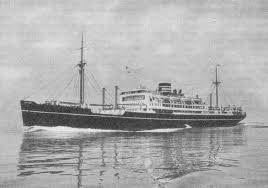
They also conducted a sustained and intensive investigation of the topography and economic installations of the Newcastle area.  Most of this information was gathered by officers on Japanese merchant ships that visited Newcastle for coal. On almost every visit to Newcastle the Japanese officers would spend most of their time ashore, driving around the area in chauffeur-driven hired cars. They made maps and took an innumerable amount of photos, it was the shipping companies who paid for these trips and presumably were reimbursed by their government.

Australia’s intelligence people noted that almost all the Japanese officers visited a Japanese owned milliner’s shop, the shop closed up when questions were asked but soon after a Japanese owned fruit shop opened. It was owned by a well known Japanese agent who had a reputation of wealth and leisure and the dingy understocked fruit shop didn’t seem to go with the man.

Between 1924 and 1926 many Japanese ships went out of their way to pass as close as possible to Newcastle paying special attention to the beaches.

In the 1930’s well before the war many of our leading politicians and industrialist believed a conflict was inevitable. When BHP chief Essington Lewis visited Japan in the 1930’s and saw how the Japanese were putting a lot of energy and resources into arming itself for war, he was alarmed and on returning home set about preparing the BHP for a major munitions manufacturing company.

This man was hugely influential, and the federal government appointed him director of munitions meaning he managed a large part od the country’s industrial war efforts.

Newcastle’s steelworks and associated factories were destined to play a massive part in the nations defence, a huge array of weapons, parts and tools were produced in Newcastle with thousands of people being employed.

The challenges the city’s factories faced as they tried to replaced previously imported items were huge, but they managed to produce and churn out items that required the most demanding accuracy. It was a tribute to the hard work and dedication that a relatively novice workforce was able to turn its hand to this new industry with such success.

BHP learned to make the special steels needed for armour and armour-piercing weapons, other firms made steel helmets and other items. The firm of Lysaght made parts for tanks used by Australian forces, they also mass produced the Wollongong designed Owen sub-machine gun, as well as floating pontoons, portable aircraft hangers, army machetes and the precision-made “spinners” for the propellers of Mosquito aircraft.

Newcastle was one of the few locations to be attacked by  the Japanese.

Week 3 of 2025

Another good night and nice morning it’s 20 degrees, my BGL is 5.3

Tim and I went over to Lake Fair, he wanted to cash in empty bottles, and I wanted to go to the dollar store to see what cheap Christmas things they had.

I only found a couple of things but that’s ok.

By the time we got home it was stinking hot.

Steps:6,499

I had a decent enough sleep, up at 5, showered and dressed, I have to see the neurologist is Sydney at 12.40pm so we will leave here around 9.30am

It is currently 18 degrees, but it is expected to reach 30 degrees today. My BGL was 5.1

When I saw the neurologist, she was pleased with how I am doing and isn’t making any change to my medication. The only thing that annoyed me was that she was running 70 minutes late.

We arrived home around 5pm, to a stinking hot house, we should have asked one of the girls to come and turn the air con around 4.30, that was the first thing I did after walking into the house.

LIARNA’S BIRTHDAY SHE IS 15 TODAY

I had a good night didn’t wake at all, it is 21 degrees this morning and my BGL was 5.1, we are headed for a top temp of 29 degrees.

Kathy will be dropping Summer off for the day, Summer would rather stay home alone like she did yesterday, but her mum said no.

Ok in the last how the temp has dropped to 19 degrees.

Thankfully I remember this morning that the water will be cut off from 8am to 3pm and made sure the kettle was filled as well as a jug of water.

As it turned out we didn’t have the water cut off.

There was an incident out the front, Tim was walking over to Jess’s place and the woman in unit 14 was driving out and Tim said she made like she was going to run him over. I watched the video caught on the door-bell camera, but I didn’t notice anything. I am not saying she didn’t do something just that I couldn’t see it. Anyway, he rang the cops to report it, and they came out to talk to him at 10.30pm.

Another mostly good night.

The temp is 25 degrees and my GL is 5.1. We are in for another hot day it reached a top of 33 degrees.

So, I went and had my care plan reviewed and then I went and had an Xray of my elbow done as well as the CT scan done of my left knee. Sue drove me.

I was glad that Tim turned the air con on before he went to work, as that meant I came home to a cool house.

Tim is working today; he should be home around 3pm. 

I managed to walk up and check the mail without my cane or my walker, I felt exhausted by the time I got back inside the house.

I am having a very restless night; I just can’t settle.

Steps:8,346

After a restless start to the night, I ended up sleeping good enough, I got up at 5am, showered and dressed for the day.

It is a nice 20 degrees, only looking at a top of 22 degrees today.

Around 11am it started raining and has been raining on and off all day. It has also been very windy and cold.

Steps:6,502

Another good night woke twice to pee.

It is a coldish 18 degrees and have long pants on, so I can have the sliding doors open. My BGL was 5.1

Damn it is a cold day feels more like winter then summer today. In fact, after Tim left for work, I turned the heater on for about an hour to warm the room up.

This afternoon I started to feel off, headache and aching chest and back area and just not feeling right.

Steps:4,510

Another good night woke only once to pee, it is another cool and wet morning raining as I write this. I still don’t feel great but I’m ok. It is only 19 degrees and my BGL was 4.8

It stopped raining around 12.45pm and warmed up some, but around 5pm it started raining.

I went to bed at 8.30pm but woke at 10.22, tossing and turning so I got up for an hour and half.

Tim is working he left before I got up, I think he left around 4.15am.

Steps:10, 509

Arctic Fox

This week we are looking at the Artic Fox, which is also known as the white fox, polar fox, or snow fox, is a small species of fox native to the Arctic regions of the Northern Hemisphere and common throughout the Arctic tundra biome.  

The Arctic tundra biome is a vast, dry, and rocky region that stretches from the Arctic Circle to the polar ice cap, and includes parts of Canada, Russia, Greenland, and northern Europe. 

It is well adapted to living in cold environments, and is best known for its thick, warm fur that is also used as camouflage. It has a large and very fluffy tail.  Its body length ranges from 46 to 68 cm (18 to 27 in), with a generally rounded body shape to minimize the escape of body heat.

In the wild some do not live past their first year, but others live for 3 or 4 years in the wild and up to 14 years in captivity.

They prey on many small creatures such as lemmings, voles, ringed seal pups, fish, waterfowl, and seabirds.  It also eats carrion, berries, seaweed, and insects and such.

 They form monogamous pairs usually mate for life and during the breeding season and they stay together to raise their young in complex underground dens. Occasionally, other family members may assist in raising their young.

Their natural predators are golden eagles, artic wolves, polar bears, wolverines, red foxes and grizzly bears.

They must endure great temperature differences between the external environment and their internal core temperature. To prevent heat loss, they curl up tightly tucking its legs and head under its body and behind its furry tail. This position gives the fox the smallest surface area to volume ratio and protects the least insulated areas. Arctic foxes also stay warm by getting out of the wind and residing in their dens. Although the Arctic foxes are active year-round and do not hibernate, they attempt to preserve fat by reducing their locomotor activity. They build up their fat reserves in the autumn, sometimes increasing their body weight by more than 50%. This provides greater insulation during the winter and a source of energy when food is scarce.

The Arctic is home to more than 630,000 Arctic foxes and they are not currently at risk from extinction, but populations are declining. Arctic foxes are well adapted to winter temperatures of -34C. They are born with thick fur and their snout, ears and legs are short to conserve heat.