Indonesian National Anthem

Hi, everyone well Friday is here again and today so here is some information about the national anthem of Indonesia. The anthem is called Indonesia Raya it has been the national anthem since the Proclamation of Indonesian Independence on 17 August 1945.

The first stanza of “Indonesia Raya” was chosen as the national anthem when Indonesia proclaimed its independence on 17 August 1945.

The song is played in flag raising ceremonies in schools across Indonesia every Monday. The flag is raised in a solemn and timed motion so that it reaches the top of the flagpole as the anthem ends. The main flag raising ceremony is held annually on 17 August to commemorate Independence Day. The ceremony is led by the President and is usually held in Merdeka Palace.

In 1951, ownership of the copyright to “Indonesia Raya” came into question. President Sukarno ordered a search for the rightful heir to Soepratman.  By law, Supratman was the copyright holder of “Indonesia Raya” as its composer. After Soepratman’s death in 1938, ownership of the rights to his works fell upon the designated heirs, his four surviving sisters. However, because “Indonesia Raya” was officially adopted as the national anthem of Indonesia on 17 August 1945, the work became the property of the state. In addition, the name of “Wage Rudolf Supratman” must be listed as its creator.

As a national anthem, copies of “Indonesia Raya” cannot be circulated as merchandise to be sold. Consequently, the government had the obligation to obtain all the rights to distribute the song, including the original recording, from Yo Kim Tjan. In 1958, the government obtained the sole right to “Indonesia Raya” from Soepratman’s family.  The following year, Yo handed the original record of the song to the Indonesian government. With the recommendation of the Department of Education, the government also rewarded Soepratman’s sisters with 250,000 Indonesian rupiah each on 31 May 1960.

Here is the English translation

Indonesia, our native country,

Our birthplace,

Where we all arise to stand guard

Over this our Motherland:

Indonesia our nationality,

Our people and our country.

Come then, let us all exclaim

Indonesia united.

Long live our land,

Long live our state,

Our nation, our people, and all

Arise then, its spirit,

Arise, its bodies

For Great Indonesia.


CHORUS

Indonesia the Great, independent and free,

Our beloved country.

Indonesia the Great, independent and free,

Long live Indonesia the Great!


Indonesia, an eminent country,

Our wealthy country,

There we shall be forever.

Indonesia, the country of our ancestors,

A relic of all of us.

Let us pray

For Indonesia’s prosperity:

May her soil be fertile

And spirited her soul,

The nation and all the people.

Conscious be her heart

And her mind

For Indonesia the Great.


CHORUS


Indonesia, a sacred country,

Our victorious country:

There we stand

Guarding our true Mother.

Indonesia, a beaming Country,

A country we love with all our heart,

Let’s make a vow

That Indonesia be there forever.

Blessed be her people

And her sons,

All her islands, and her seas.

Fast be the country’s progress

And the progress of her youth

For Indonesia the Great.


Afghanistan’s National Anthem

Ok well since I wrote about Afghanistan on Monday I will post about their national anthem.

The country has had a number of different national anthems throughout its history as the country has changed governments numerous times mostly resulting from political instability.

In 2004, the new Afghan constitution stated that a new national anthem for the country, requested by the post-Taliban government to signal a new era for Afghanistan, must be written in Pashto and contain the phrase “Allahu Akbar” (God is Great), and mention the names of the ethnic groups in Afghanistan. The winning composition was created by two Afghans living outside the country due to the war.

There has been some criticism of the anthem due to the above stated conditions of composition, that the Pashto requirement places less importance on the other languages spoken in the country; that the phrase “Allahu Akbar” should not be used in the anthem, as it is a sacred phrase in Islam and should not be set to music; and the ethnic groups mentioned in the anthem still do not represent the entire spectrum of nationalities in the country.

On August 15, 2021, the Afghan government fell to the extremist Islamic forces of the Taliban, who effectively controlled the country following that date. The government and its supporters continue to use this anthem in exile.

Here is the English translation

1. This land is Afghanistan
It is pride of every Afghan
The land of peace, the land of sword
Its sons are all braves

2. This is the country of every tribe
Land of Baloochs, and Uzbeks
Pashtoons, and Hazaras
Turkman and Tajiks

3. With them, Arabs and Gojars
Pamirian, Nooristanian
Barahawi, and Qizilbash
Also Aimaq, and Pashaye

4. This Land will shine for ever
Like the sun in the blue sky
In the chest of Asia
It will remain as heart for ever

5. We will follow the one God
We all say, Allah is great,
we all say, Allah is great,
we all say, Allah is great

Afghanistan

This week we are looking at the country of Afghanistan, this is a country that for some reason I didn’t think of as being part of Asia, but it is.

It is a landlocked country at the crossroads of Central, South, and Western Asia. It has a rich and complex history as a hub of diverse cultures and civilizations, but its recent history has been defined by decades of conflict and instability.  

Since the Taliban regained control of Afghanistan in August 2021, the country has faced a severe humanitarian and economic crisis. The de facto Taliban government has not been formally recognised by most of the international community.  

The situation remains volatile and dangerous. The Taliban government is led by Mawlawi Hibatullah Akhundzada. The Islamic State Khorasan Province (ISKP) is also active and continues to conduct violent attacks. The country is considered extremely dangerous for travel due to the high threat of terrorist attacks and kidnapping.

The country is experiencing one of the world’s largest humanitarian crises. Factors contributing to this include economic mismanagement, a significant reduction in international aid, and the departure of many skilled professionals. The country’s GDP has seen a decline since 2021, and poverty and food insecurity are pressing challenges.  

The Taliban has reimposed a strict interpretation of Sharia law, leading to severe human rights abuses. These are particularly acute for women and girls, who have been banned from secondary and university education, are largely excluded from public and economic life, and face restrictions on their movement and dress.  

The current government is the “interim government” declared by the Taliban. It is a highly centralized system, and many of the human rights gains made over the previous two decades have been reversed.

The Afghan economy has been pushed into a crisis but has shown some signs of a slow recovery driven primarily by agriculture, mining, construction, and commerce. However, challenges remain due to a fragile banking sector, persistent unemployment, and limitations on women’s economic participation. Afghanistan’s economy relies heavily on foreign aid, although this has been significantly reduced since the Taliban’s takeover.

The country has substantial untapped mineral deposits, including lithium, iron, and copper. Traditional exports include dried fruits, nuts, and carpets.  

Afghanistan is often referred to as the “graveyard of empires” due to its history of resisting foreign occupation. It has been a crossroads of civilizations for thousands of years, with influences from Persian, Greek, Buddhist, and Islamic empires. The modern state was founded in the 18th century. Since the late 1970s, the country has been mired in continuous warfare, including the Soviet invasion in 1979 and the US-led coalition’s presence from 2001 to 2021.  

Afghan culture is a rich tapestry of tribal and ethnic traditions, with a strong emphasis on family, honour, and hospitality. Islam is the official religion and a dominant force in daily life and social customs. The main languages are Dari (Afghan Persian) and Pashto, with many people being fluent in both. Poetry is a highly valued cultural tradition.  

The country has numerous historical and archaeological sites, though many have been damaged or destroyed by decades of conflict. The Buddhas of Bamiyan, destroyed by the Taliban in 2001, are one of the most iconic examples of this loss. Efforts are underway by various organizations to preserve Afghanistan’s remaining cultural heritage.  

More to come next week

China’s Government

Now days China is ruled as a unitary one-party state by the Chinese Communist Party (CCP). The CCP holds a monopoly on political power and its authority is embedded in all aspects of government and society.

The constitution of the People’s Republic of China explicitly states that the country is under the leadership of the CCP. The party’s institutions overlap with government bodies at every level, from the national government to local villages.  

The General Secretary of the CCP, currently Xi Jinping, holds the ultimate power and authority over the state and the military. While he also holds the titles of President of China and Chairman of the Central Military Commission, his power is primarily derived from his position as head of the party.  

The State Council is the chief administrative authority of the government. Led by the Premier, it is responsible for implementing the policies and directives set forth by the CCP. While it is the highest organ of state administration, it is subservient to the party’s leadership.  

The National People’s Congress (NPC) is constitutionally the “highest organ of state power.” However, in practice, it functions as a rubber-stamp legislature that approves decisions already made by the CCP leadership. The CCP controls a two-thirds majority of the seats, and all elections are tightly controlled by the party.  

Unlike many Western democracies, China’s political system does not have a separation of powers. The party’s authority is integrated into all state organs, including the government, military, and judicial system. The judiciary is not independent and serves to enforce the party’s will.  

Or to put it simply, the Chinese Communist Party is the central and all-encompassing force that governs China, with all other state institutions operating under its control and direction. Like anyone didn’t already know this.

Asia

Time to move into another part of the world, we are now in Asia, which is the worlds largest and most diverse continent, it has both the highest and lowest points on Earth as well as the longest coastline of any continent.

It is subject overall to the world’s widest climatic extremes, and, consequently, produces the most varied forms of vegetation and animal life on Earth.

The name Asia is ancient, and its origin has been variously explained. The Greeks used it to designate the lands situated to the east of their homeland. It is believed that the name may be derived from the Assyrian word asu, meaning “east.” Another possible explanation is that it was originally a local name given to the plains of Ephesus.

Asia has the Arctic Ocean to its north, the Pacific Ocean to the east, the Indian Ocean to the south.

Asia is separated from North America to the northeast by the Bering Strait and from Australia to the southeast by the seas and straits connecting the Indian and Pacific oceans. The Isthmus of Suez unites Asia with Africa.

Asia is the birthplace of all the world’s major religions—Buddhism, Christianity, Hinduism, Islam and Judaism. Of those, only Christianity developed primarily outside of Asia and has little influence on the continent, though many Asian countries have Christian minorities. Buddhism has had a greater impact outside its birthplace in India and is prevalent in various forms in China, South Korea, Japan, the Southeast Asian countries, and Sri Lanka.

There are 48 countries in Asia, this number does not include dependent territories or areas of special sovereignty. 

Over 2,300 languages are thought to be spoken in Asia, sssthis linguistic diversity is due to the continent’s vast size and diverse geography, which has allowed languages to develop in relative isolation. Asia is home to a wide array of language families, including Indo-European, Sino-Tibetan, Dravidian, and many others.

Haiti National Things

This week we are looking at some of the national things connected with Haiti the national animal of Haiti is also the national bird. It is the Hispaniolan trogon. It is a colourful bird with a rich assortment of bright feathers along its wings and breast, and a unique pattern on its tail. It’s found only on the island of Hispaniola, which is shared by Haiti and the Dominican Republic. It is becoming increasingly rare there due to ongoing habitat loss.

Their national flower is the Hibiscus. Specifically, the Hibiscus rosa-sinensis, also known as the pink hibiscus or rose mallow, is the flower often associated with Haiti. In Haitian Creole, it’s called “choublak” or “rose kayenn”. 

The hibiscus is a vibrant and resilient flower that symbolizes the Haitian spirit. It is used in various ways, from traditional herbal teas to being a decorative element and a symbol for political parties, like the Fusion of Haitian Social Democrats. The national tree is the Royal Palm.

Haiti’s national dish is soupe joumou (pumpkin soup). It’s a tradition to eat this soup on New Year’s Day to celebrate Haiti’s independence. The soup is made with squash (joumou), beef, and vegetables, and is known for its symbolism of freedom and hope.

The national sport of Haiti is football (soccer) and huge crowds will come out to cheer at games. Children can be seen playing football all over Haiti’s city streets and rural roads.

Haiti’s national drink is Clairin, a rum made from pure sugar cane. It’s produced by small, artisanal distilleries throughout the island. Clairin is known for its rustic, pure flavour, often expressing herbaceous, vegetal, earthy, and grassy notes. 

In Haiti, the age of consent for sexual activity is 18 years old. The legal age for marriage is also 18 for males and 15 for females but can be lower with parental or presidential authorization. 

The traditional dress for Haitian women is know as a karabela. The dress is made of blue cotton or linen with red lace to symbolize the colors of the Haitian flag. Orange, yellow, and green lace are also used to accent the dress. It is full-length, normally worn off the shoulders.

Haiti

I  have written about some countries in the Caribbean area but will do a few more, the Caribbean is comprised of 13 independent island nations: Antigua and Barbuda, Bahamas, Barbados, Cuba, Dominica, Dominican Republic, Grenada, Haiti, Jamaica, Saint Kitts and Nevis, Saint Lucia, Saint Vincent and the Grenadines, and Trinidad and Tobago, These nations are recognized for their shared cultural heritage and location within the Caribbean region. There are 12 dependencies and 7 overseas territories as well various disputed territories.

This week we will look at Haiti which is a country located in the Caribbean. It shares the island of Hispaniola with the Dominican Republic, located to its east. While it was once a plantation colony of France based upon slavery of Africans, Haiti gained its independence in the year 1804.

The population is 11.77millon, Haiti has two official languages, Haitian Creole and French, everyone in Haiti speaks Haitian Creole. Some scholars estimate that approximately 90-95% of the population is monolingual, speaking Haitian Creole.

The Haitian Gourde (HTG) is the official currency of Haiti, a nation located on the western part of the island of Hispaniola in the Caribbean.

Haiti’s capital city is Port-au-Prince, it sits on the Gulf of Gonâve. The Musée du Panthéon National Haïtien honours the nation’s history and founding fathers. The Iron Market, a large 1891 covered bazaar, has produce and handicraft vendors. Nearby is the immense Notre Dame de l’Assomption Cathedral, reduced to a ruin by a 2010 earthquake. Colourful gingerbread-style houses from the turn of the 19th century dot the city.

The Haitian flag is a bicolour flag with two equal horizontal bands of blue (top) and red (bottom). In the centre, there is a white rectangle containing the Haitian coat of arms. The coat of arms includes a palm tree topped with the liberty cap, surrounded by cannons, flags, and other weaponry. The motto “L’Union Fait La Force” (“Unity Makes Strength”) is displayed on a banner below the coat of arms. 

Russia Today

Hi everyone, this week I thought I would wrap the posts about Russia with a bit about what it’s like now days.

So, the country is experiencing a period of significant transformation and challenges. While its economy has shown resilience, particularly in the face of Western sanctions, it remains heavily reliant on energy exports and faces persistent issues with corruption and human rights abuses. The ongoing war in Ukraine has also led to intensified repression of dissent and a decline in international relations. 

Power is concentrated in the hands of President Vladimir Putin, with a system that suppresses genuine opposition and controls the media. 

Life expectancy is lower than the OECD average, and there are issues with poverty and inequality. Life expectancy for women is 78 years, compared with 68 for men.

The war with the Ukraine has had a profound impact on Russia, leading to a decline in international relations and increased repression within the country. While overall confidence in the military remains high, there are signs that the war has eroded some support, particularly in comparison to pre-war levels. 

The war is a significant factor in Russian life, with many citizens living in a “twilight zone” where the war is both ubiquitous and a backdrop to everyday life. 

The Russian government has been using propaganda to portray the war as a struggle against the West, and this has been effective in uniting some segments of the population. 

The war has led to a transfer of wealth from the government to the military and regions impacted by the conflict, creating a temporary consumer boom. 

Russia’s international standing has been severely damaged by the war, and it faces increased isolation. 

Many countries advise against all travel to Russia due to the ongoing war and associated risks. Also, there’s a high threat of terrorism. Terrorist groups, including al-Qaeda and Daesh-aligned groups, continue to call for attacks in Russia. Attacks can be indiscriminate and may occur on or around seasonal, festive, or religious events in public places, including popular tourist sites.

Next week we will move on to somewhere else as yet undecided 

20th Century Russia

This week we will have a look at Russia during the twentieth century, this was a period of immense political, social, and economic upheaval, marked by revolution, civil war, and the rise of communism.

The century began with the Tsarist empire, ended with the collapse of the Soviet Union, and saw the country transform into a communist state. Key events include the Russian Revolution, World War I, the rise of Joseph Stalin, the Cold War, and the eventual disintegration of the Soviet Union. 

                  St Petersburg early 20th Century

Russia’s participation in the war contributed to the social and political unrest that led to the February Revolution in 1917. This is when the monarchy was overthrown, and the Bolsheviks, led by Vladimir Lenin, seized power, establishing the world’s first communist society. This marked a shift from autocratic rule to a communist regime. This was known as the Russian Revolution’.

The country found themselves with a civil war which lasted between 1918-1922, this saw the Bolsheviks fighting against various anti-communist forces, ultimately solidifying their control over the country. 

After the civil war Russia united with other republics to form the Union of Soviet Socialist Republics (USSR). 

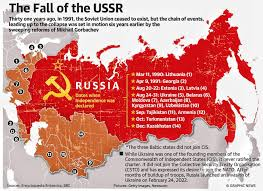
The Soviet Union was composed of 15 Soviet Socialist Republics (SSRs). These republics were: Russia, Ukraine, Belarus, Moldova, Lithuania, Latvia, Estonia, Georgia, Armenia, Azerbaijan, Kazakhstan, Uzbekistan, Kyrgyzstan, Tajikistan, and Turkmenistan. 

It was at this time that Joseph Stalin became the dominant leader, implementing policies of industrialization, collectivization of agriculture, and widespread repression.

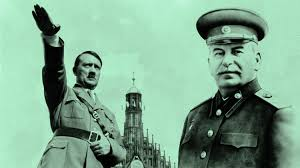
During the second world war The Soviet Union fought against Nazi Germany and the Axis powers, suffering immense casualties but ultimately contributing to the Allied victory.

At first The Soviet Union officially maintained neutrality during WW2 but cooperated with and assisted Germany. However, after Nazi Germany attacked the USSR on June 22, 1941, the country allied with the United Kingdom and then the United States after the latter joined the war in December 1941. 

On 22 June 1941, Adolf Hitler launched Operation Barbarossa, an invasion of the Soviet Union with the largest invasion force in history.

Hitler had always wanted to see Germany expand eastwards to gain Lebensraum or ‘living space’ for its people. After the fall of France Hitler ordered plans to be drawn up for an invasion of the Soviet Union. He intended to destroy what he saw as Stalin’s ‘Jewish Bolshevist’ regime and establish Nazi dominance.

Soviet forces launched a counteroffensive against the Germans arrayed at Stalingrad in mid-November 1942. They quickly encircled an entire German army, more than 220,000 soldiers. In February 1943, after months of fierce fighting and heavy casualties, the surviving German forces—only about 91,000 soldiers—surrendered.

After the second world war the country known as East Germany, officially the German Democratic Republic (GDR), was formed in October 1949 within the Soviet occupation zone of Germany following World War II. The Socialist Unity Party of Germany (SED), led by Walter Ulbricht, played a key role in its establishment and subsequent governance. The GDR was established as a communist state within the Soviet zone, marking the beginning of the Cold War division of Germany. 

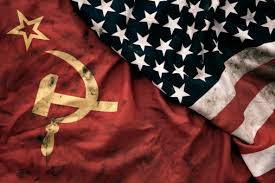
Between 1947-1991 saw what was known as the Cold War, this was the ideological and political rivalry between the Soviet Union and the United States shaped global politics and led to an arms race.

The Cold War was a period of geopolitical tension between the United States and the Soviet Union. It was characterized by an ideological struggle between capitalism and communism, a nuclear arms race, and proxy wars, but no direct military conflict between the two superpowers.

The Soviet Union collapsed in 1991 due to a combination of internal factors like economic stagnation, overextension of the military, and rising ethnic tensions, along with the influence of the Cold War and US policy of containment. 

Mikhail Gorbachev’s reforms, including perestroika (economic restructuring) and glasnost (openness), while intended to revitalize the Soviet system, inadvertently accelerated its demise. 

The Soviet economy was struggling with low productivity, inefficient planning, and a lack of innovation. They were heavily invested in a large military, especially during the Cold War, which strained its economy. 

As the USSR was a vast empire with numerous ethnic groups, it was natural that many would feel oppressed and sought greater autonomy or independence. 

Gorbachev’s reforms, while intended to address the economic problems, also opened the door for more political and cultural freedom. This led to increased criticism of the government, rising nationalist sentiments, and the weakening of the Communist Party’s grip on power. 

In 1991, hardliners attempted to overthrow Gorbachev, but the coup failed due to a lack of support from the military. 

After the failed coup, the Soviet Union’s republics began declaring their independence, and Gorbachev resigned as president. The Soviet Union was formally dissolved on December 26, 1991. 

The collapse of the Soviet Union had a profound impact on the world, leading to the end of the Cold War, the emergence of new nations in Eastern Europe and Central Asia, and a shift in global power dynamics. 

That will do it for this post more about Russia next Monday.

History of Russia Part 1

This week we are having a look at Russia’s history which can be divided into four parts the pre- Slavic era/ Kievan Rus’ period, the time of the Russian Empire and the time of the Soviet Union followed by the post-Soviet era.

The first East Slavic state, Kievan Rus’, emerged in the 9th century, adopting Orthodox Christianity from the Byzantine Empire in 988.

Over time, the Grand Duchy of Moscow unified Russian lands, leading to the proclamation of the Tsardom of Russia in 1547.

The Russian Empire expanded through conquest and exploration, becoming the world’s largest country by the early 18th century. 

The Russian Revolution in 1917 led to the abolition of the monarchy and the establishment of the Soviet Union. The Soviet Union dissolved in 1991, leading to Russia becoming an independent country.

Russia started more or less with Mongol invasions, through to ages of enlightenment and industrialization to revolutions and wars, Russia is known not just for its political rises of world power and upheaval, but for its cultural contributions like ballet, Tolstoy, Tchaikovsky, caviar and vodka.

The first czar of Russia was Ivan IV aka Ivan the Terrible he ruled from 1547 to 1584, he was the grandson of Ivan the Great he expands the Muscovite territory into Siberia while instituting a reign of terror against nobility using military rule. He died of a stroke in 1584.

Now for a little about the Romanov Dynasty, which rule for around three hundred years. In 1613 after several years of unrest, famine, civil war and invasions, Mikhail Romanov is coronated as czar at age 16, ending a long period of instability.

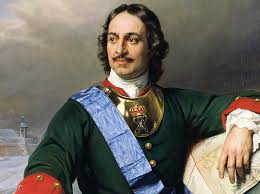
Between 1689-1725 Russia was ruled by Peter the Great it was under his rein that saw the building a new capital in St. Petersburg, modernizing the military (and founding the Russian navy) and reorganizing the government. With his introduction of Western European culture, Russia becomes a world power.

In 1762 Russia’s longest-ruling female leader, Catherine II, aka Catherine the Great, takes power in a bloodless coup and her reign marks Russia’s era of enlightenment. A champion of the arts, her 30-plus-year rule also extends Russia’s borders.

When Czar Alexander III came to power in 1861 he issues his Emancipation Reform, abolishing serfdom and allowing peasants to purchase land. His other notable reforms include universal military service, strengthening Russia’s borders and promoting self-government. In 1867, he sells Alaska and the Aleutian Islands to the United States, gilding the St. Isaac Cathedral domes in St. Petersburg with the proceeds. He was assassinated in 1881.