This week we are looking at Russia’s national anthem.
The “State Anthem of the Russian Federation” is the national anthem of Russia. It uses the same melody as the “State Anthem of the Union of Soviet Socialist Republics”, composed by Alexander Alexandrov, and new lyrics by Sergey Mikhalkov, who had collaborated with Gabriel El-Registan on the original anthem.
In 1944, that earliest version replaced ” The Internationale” as a new, more Soviet-centric and Russia-centric Soviet anthem. The same melody, but without any lyrics, was used after 1956. A second version of the lyrics was written by Mikhalkov in 1970 and adopted in 1977, placing less emphasis on WWII and more on the victory of communism, and without mentioning Joseph Stalin by name.
Glinka’s anthem was replaced soon after Yeltsin’s successor, Vladimir Putin, first took office on 7 May 2000. The federal legislature established and approved the music of the national anthem of the Soviet Union, with newly written lyrics, in December 2000, and it became the second anthem used by Russia after the dissolution of the Soviet Union.
The government sponsored a contest to find lyrics, eventually settling upon a new composition by Mikhalkov; according to the government, the lyrics were selected to evoke and eulogize the history and traditions of Russia. Yeltsin criticized Putin for supporting the reintroduction of the Soviet-era national anthem even though opinion polls showed that many Russians favoured this decision.
Public perception of the anthem is positive among Russians. A 2009 poll showed that 56% of respondents felt proud when hearing the national anthem, and that 25% liked it.
Below are then lyrics in English.
Russia is our sacred state, Russia is our beloved country. A mighty will, great glory – Your dignity for all time!
Be glorified, our free Fatherland, The age-old union of fraternal peoples, Ancestor-given wisdom of the people! Be glorified, country! We are proud of you!
From the southern seas to the polar edge Our forests and fields are spread out. You are the only one in the world! You are the only one – the native land so kept by God!
Be glorified, our free Fatherland, The age-old union of fraternal peoples, Ancestor-given wisdom of the people! Be glorified, country! We are proud of you!
A wide scope for dreams and for life The coming years open to us. We are given strength by our fidelity to the Fatherland. So it was, so it is and it will always be so!
Be glorified, our free Fatherland, The age-old union of fraternal peoples, Ancestor-given wisdom of the people! Be glorified, country! We are proud of you!
So here we are at the start of another week, this week’s country is Northern Ireland.
Northern Ireland is a part of the United Kingdom in the north-east of the island of Ireland that is variously described as a country, province or region. Northern Ireland shares an open border to the south and west with the Republic of Ireland.
The official currency is the pound sterling, Bank of England notes are the only banknotes that are legal tender in England and Wales. Scottish, Northern Ireland, Jersey, Guernsey and Manx banknotes are not legal tender in England and Wales. However, they are not illegal under English law and creditors and traders may accept them if they so choose.
Northern Ireland remains separate from the Republic of Ireland because after the Irish War of Independence and the signing of the Anglo-Irish Treaty in 1921, the Government of Ireland Act 1920 partitioned the island, with the six northeastern counties (predominantly Protestant and Unionist) remaining part of the United Kingdom, while the rest became the Irish Free State (later the Republic of Ireland).
The main difference between Ireland and Northern Ireland is that Ireland is a sovereign, independent country, while Northern Ireland is a constituent country within the United Kingdom.
Citizens of Northern Ireland can choose to be either British or Irish citizens.
The population is 1.9 million, the capital is Belfast and the official language is English. Although since 2022 Irish has also be recognised as an official language.
Their only official flag is the Union Jack, the flag of the United Kingdom.
Christianity is the largest religion, with Catholics and Protestants (including those from other Christian backgrounds) comprising the majority of the population. While the Catholic share of the population has overtaken the Protestant share, neither group constitutes a majority.
Belfast has a long history of riots between Catholics and Protestants. Beginning in 1835 there have been at least 15 major riots in Belfast, the most violent ones taking place in 1864, 1886 and 1921.
A series of riots known as “The Troubles,” stemmed from deep-seated sectarian tensions between Catholics (nationalists) and Protestants (unionists) over Northern Ireland’s status and treatment of the Catholic minority, erupting into violence from the late 1960s to the Good Friday Agreement in 1998.
In the 21st century, Northern Ireland has seen a resurgence of violence and riots, particularly in 2021, stemming from issues like Brexit and the COVID-19 pandemic, with loyalist groups engaging in protests that escalated into civil unrest.
Northern Ireland is generally a very safe place to visit, with a low crime rate and a welcoming atmosphere, making it a safe destination for tourists.
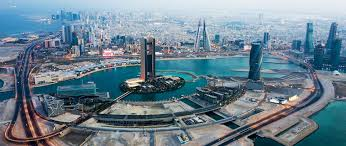
This week we are looking at Bahrain, officially the Kingdom of Bahrain, which is an island country of the Middle East, in West Asia. It is situated on the Persian Gulf, and comprises a small archipelago made up of 50 natural islands and an additional 33 artificial islands, centred on Bahrain Island which makes up around 83 percent of the country’s landmass.
The country has a population of only 1.6 million
The modern capital of the gulf island nation of Bahrain, is Manama it has been at the centre of major trade routes since antiquity. Its acclaimed Bahrain National Museum showcases artifacts from the ancient Dilmun civilization that flourished in the region for millennia.
The city’s thriving Bab el-Bahrain Souq offers wares from colourful handwoven fabrics and spices to pearls.
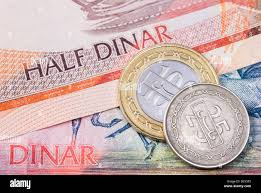
Their currency is the Bahraini dinar, the name is derived from the Roman denarius.
The Bahraini dinar was introduced in 1965, replacing the Gulf Rupee.
Arabic is the official language of Bahrain, although English is widely used.
Their flag consists of a white band on the left, separated from a red area on the right by five triangles that serve as a serrated line.
Alcohol is legal in Bahrain. However, drunken public behaviour is against the law. You could be fined, imprisoned or deported. Security officers and airline staff will not tolerate passengers believed to be drunk at the airport, including those who are in transit. The legal drinking age is 21.
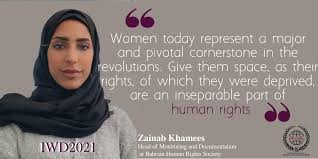
The country recognises women’s equality in political, social, cultural, and economic spheres, granting them the right to vote and stand for office, and has taken steps to protect their rights through legislation and initiatives.
The Bahraini Constitution ensures women are afforded public rights and freedoms, including the right to participate in public affairs, vote, and stand for office.
Bahrain is a member of the Convention on the Elimination of All Forms of Discrimination against Women (CEDAW).
In 2017, Bahrain adopted the unified Personal Status Law (PSL), a step towards protecting both Sunni and Shi’ite women under an inclusive legal framework.
The Kingdom of Bahrain emphasizes that its legislation does not include discriminatory provisions against women.
Achieving gender balance and prohibiting gender discrimination in all areas of life are fundamental principles enshrined in the Constitution of the Kingdom of Bahrain for both men and women.
Women have the right to vote and stand in national elections, a right granted in 2002.
Women are represented in the Legislative Authority, with 19% of participation in 2020, including 15% elected to the parliament and 23% appointed to the Shura Council.
Women also participate in the Municipal Council, with 23% representation.
While there’s no strict dress code, it’s generally recommended that women dress modestly in public, covering shoulders and wearing skirts or trousers that fall below the knee.
Very tight or transparent clothing is considered inappropriate for both genders.
While there is a majority of people that remain narrow-minded, there’s a larger number of people who accept that people are allowed to be different from each other.
The youth of Bahrain and their parents are allowing room for more diversity.
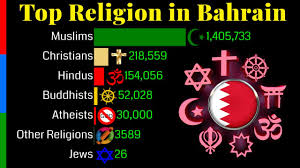
Bahrain’s official religion is Islam, with Sharia serving as a principal source for legislation, and the majority of Bahraini citizens are Muslims, including both Sunni and Shia sects, with the latter being in the majority.
Besides Islam, Bahrain also has a small population of other religions, including Christians, Jews, Hindus, Baha’is, Buddhists, and Sikhs, among others.
The country has an association that promotes religious coexistence and tolerance, aiming to foster respect for different faiths and advocate for peaceful coexistence.
I was going to write about another middle east country but since today is St. Patrick’s Day I changed my mind and now writing about Ireland.
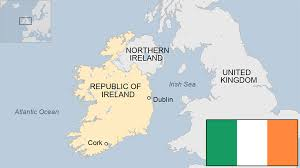
The Republic of Ireland occupies most of the island of Ireland, off the coast of England and Wales. Its capital, Dublin, is the birthplace of writers like Oscar Wilde, and home of Guinness beer. The 9th-century Book of Kells and other illustrated manuscripts are on show in Dublin’s Trinity College Library. Dubbed the “Emerald Isle” for its lush landscape, the country is dotted with castles like medieval Cahir Castle.
The island of Ireland comprises the Republic of Ireland, which is a sovereign country, and Northern Ireland, which is part of the United Kingdom. I will write about Northern Ireland at a later date.
The population is around 5.4 million, there are two official languages, English and Irish.
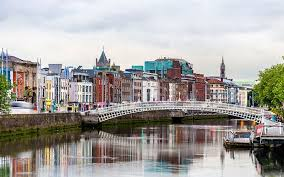
Dublin, capital of the Republic of Ireland, is on Ireland’s east coast at the mouth of the River Liffey. Its historic buildings include Dublin Castle, dating to the 13th century, and imposing St Patrick’s Cathedral, founded in 1191. City parks include landscaped St Stephen’s Green and huge Phoenix Park, containing Dublin Zoo. The National Museum of Ireland explores Irish heritage and culture.
The city expanded rapidly from the 17th century and was briefly the second largest in the British Empire and sixth largest in Western Europe after the Acts of Union in 1800. Following independence in 1922, Dublin became the capital of the Irish Free State, renamed Ireland in 1937.
The national flag of Ireland, often called “the tricolour,” is a vertical tricolour of green, white, and orange, with green at the hoist (pole side).
Green: Represents Irish nationalism and the Gaelic tradition.
White: Symbolizes peace and a lasting truce between different groups.
Orange: Represents the supporters of William of Orange.
This flag was first introduced by Thomas Francis Meagher in 1848 and became the national flag after the Easter Rising of 1916.
The flag was given constitutional status in 1937.
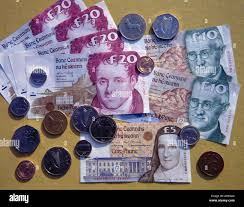
Their currency is the Euro since 1999 before that it was the Irish Pound
When it comes to religion, Christianity, particularly Catholicism, holds a significant place. The Catholic Church has a long history and cultural influence in Ireland, and many Irish people identify with the Catholic faith.
While Catholicism is the largest religion, other Christian denominations, such as the Church of Ireland (Anglican), and other religions like Islam and Eastern Orthodoxy, are also present.
A significant portion of the population, 14.5%, identified as having no religion in the 2022 census.
The Irish Constitution guarantees freedom of religion and does not endorse any particular religion.
There has been a decline in the number of people who identify as Catholic, as well as a rise in the number of people who identify as having no religion.
In Ireland, significant strides have been made in advancing women’s rights, including equal voting rights, legal protections against discrimination, and a focus on eliminating violence against women, but challenges remain, particularly in achieving true gender equality and addressing data gaps.
The 1937 Constitution of Ireland guaranteed women the right to vote and to nationality and citizenship on an equal basis with men.
Ireland is generally considered a safe and welcoming place to travel, with low crime rates and a friendly population. However, like any destination, it’s important to be aware of potential risks and take necessary precautions, especially in larger cities.
Ireland has a relatively low crime rate compared to many other European countries
The Irish people are known for their hospitality and welcoming nature.
Ireland is considered a great destination for solo travellers, both male and female.
Ok this week we are looking at Saudi Arabia, officially the Kingdom of Saudi Arabia, is a country in West Asia. Located in the centre of the Middle East, it covers the bulk of the Arabian Peninsula and has a land area of about.
The country was established in 1932 by King Abdulaziz Al-Saud, its transformation has been astonishing. In a few short decades, the Kingdom has turned itself from a desert nation to a modern, sophisticated state and a major player on the international stage.
In 1932, the two kingdoms of the Hejaz and Najd were united as the “Kingdom of Saudi Arabia”. Boundaries with Transjordan, Mandatory Iraq, and Kuwait were established by a series of treaties negotiated in the 1920s, with two “neutral zones” created, one with Iraq and the other with Kuwait.
The capital is Riyadh and is the main financial hub, it is on a desert plateau in the country’s centre. The business district landmarks include the 302m-high Kingdom Centre, with a sky bridge connecting 2 towers, and 267m-high Al Faisaliah Centre, with a glass-globe summit.
The currency is the Saudi Riyal and has been since the country was first established.
The flag is green with a white Arabic inscription and a sword. The inscription is the Islamic creed, or shahada, which translates to “There is no deity but God; Muhammad is the Messenger of God”. The current design has been used since 1973.
The colour of Islam is green, the sword represents the strictness in applying justice and the shahada is the central symbolic design of the flag. The flag must always be represented so that the inscription reads correctly on both sides. The flag is never to be flown vertically or at half-mast due to its religious symbolism.
The inscription is the Islamic creed, or shahada: “There is no deity but God; Muhammad is the Messenger of God”. The current design has been used by the government of Saudi Arabia since 15 March 1973.
As of February 2025, the population of Saudi Arabia is 37.47 million.
The official language is Arabic. The three main regional variants spoken by Saudis are: Najdi Arabic – about 14.6 million speakers. Hejazi Arabic – also known as Hijazi Arabic & West Arabian Arabic – about 10.3 million speakers.
The official religion of Saudi Arabia is Islam, and the country is considered an Islamic state. The majority of Saudi citizens are Sunni Muslim, with a Shia minority.
When it comes to religious freedom there isn’t any, the Saudi government does not provide for freedom of religion under the law. However, the government generally permits Shia religious gatherings and non-Muslim private religious practices.
The country’s constitution is the Quran and Sunna, which are traditions and practices based on the life of the Prophet Muhammad.
The legal system is based on sharia, which is Islamic law.
The government does not allow public worship of any religion other than Islam.
The government does not allow public display of non-Islamic religious symbols.
The government criminalizes proselytizing by non-Muslims.
Shia Muslims make up about 10–12% of the citizen population.
The majority of remaining Shia are Sulaimani Ismailis, also known as “Seveners”.
Pockets of Zaydis, another branch of Shia Islam, live in the provinces of Jizan and Najran.
Saudi Arabia has made progress in improving women’s rights, but discrimination still exists.
Recent improvements are the following, women can apply for passports, travel abroad, and register marriages and divorces without a male guardian’s permission.
Women can register as co-heads of households and live independently from their husbands
Women can join the senior ranks of the military
Women can change their personal data without a guardian’s permission
Women can register to perform the Hajj without being accompanied by a mahram
Women can vote and run in municipal elections
Female athletes can participate in the Olympics
There are still other challenges to overcome such as.
Women still face discrimination in law and practice, including in matters of marriage, divorce, child custody, and inheritance
The Personal Status Law (PSL) codifies male guardianship, which can prevent women from fully consenting to marriage
Many Saudi women still cover their faces or hair in public even though they are not required to wear a hijab or abaya in public. However, the government does encourage modest dress for both men and women.
When it comes to visiting the country both Australia and The States advise reconsidering travel to Saudi Arabia due to the threat of missile and drone attacks. Also, the country is a target for radical Islamic terror groups. There are also human rights abuses, cultural sensitivities, and government surveillance concerns.
This week we are looking at Iraq’ national anthem it is titled Mawtini which in English mean My Homeland, it is a poem written by the Palestinian poet Ibrahim Tugan and is a popular patriotic song amongst the Arab people as well as being the official national anthem of Iraq.
It was adopted as the country’s anthem in 2004, the song formerly served as an unofficial anthem of Palestinians and other people of the Middle East during much of the 20th century. In 1996, Palestine formally adopted it as their official anthem. Even though it has since been superseded by something else, many Palestinians still identify strongly with it and consider it the unofficial national anthem of their country.
It has been described as a reflection of the shared experiences and struggles of Arab peoples, evoking strong emotions tied to national pride, hardship, and the aspiration for freedom. It is regarded as a symbol of resistance and a representation of the collective longing for liberation during periods of occupation and oppression. The anthem conveys emotions such as sorrow, anger, and hope, fostering a sense of renewal and solidarity among those who have endured similar adversities. Its lyrics express a deep love for the homeland, a commitment to its liberation, and a vision of a united and free nation. This message resonates widely across the Arab world, reflecting the shared struggles for independence, identity, and sovereignty.
The national anthem of Iraq between 2003 and 2004 was “Mawtini”, an instrumental composition composed by Iraqi Assyrian musician Louis Zanbaka.
Also, the “Arḍu l-Furātayni”, also known as the “Land of The Two Rivers”, was the national anthem of Iraq from 1981 to 2003, during the Ba’athist regime of Saddam Hussein.
My homeland, my homeland, Glory and beauty, sublimity and splendour Are in your hills, are in your hills. Life and deliverance, pleasure and hope Are in your air, are in your air. Will I see you, will I see you? Safely comforted and victoriously honoured. Safely comforted and victoriously honoured. Will I see you on your eminence? Reaching to the stars, reaching to the stars My homeland, my homeland.
My homeland, my homeland, The youth will not tire Their goal is your independence. Or they die, or they die. We will drink from death, and this will not be our enemies. Like slaves, like slaves. We do not want, we do not want An eternal humiliation, or a miserable life. An eternal humiliation, or a miserable life. We do not want to, but we will take it back. Our storied glory, our storied glory. My homeland, my homeland.
My homeland, my homeland, The sword and the pen, not talk nor the quarrel Are our symbols, are our symbols. Our glory and our covenant, and a faithful duty Moves us, moves us. Our glory, our glory, It is an honourable cause and a waving flag. It is an honourable cause and a waving flag. O, behold you, on your eminence, Victorious over your enemies, victorious over your enemies. My homeland, my homeland!
This week we have moved onto Iraq, officially known as the Republic of Iraq, is a country in West Asia, bordered by Saudi Arabia to the south, Turkey to the north, Iran to the east, the Persian Gulf and Kuwait to the southeast, Jordan to the southwest, and Syria to the west.
The country is dominated by two famous rivers: the Tigris and the Euphrates. They flow southeast from the highlands in the north across the plains toward the Persian Gulf. The fertile region between these rivers has had many names throughout history, including Al-Jazirah, or “the island,” in Arabic and Mesopotamia in Greek.
Many parts of Iraq are harsh places to live. Rocky deserts cover about 40 percent of the land. Another 30 percent is mountainous with bitterly cold winters. Much of the south is marshy and damp. Most Iraqis live along the fertile plains of the Tigris and Euphrates.
Baghdad is the capital and largest city of Iraq, located along the Tigris in the central part of the country. With a population exceeding 7 million, it ranks among the most populous cities in the Middle East and Arab World and forms.
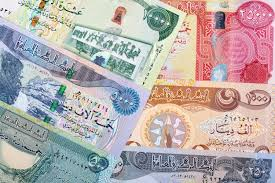
The Iraqi dinar is the currency of Iraq. The Iraqi dinar is issued by the Central Bank of Iraq. On 7 February 2023, the exchange rate with the US Dollar was US$1 = 1300 dinars.
The Iraqi flag has four horizontal stripes of red, white, green, and black. The colours are inspired by a poem by Safi al-Din al-Hilli. The flag also has an Arabic inscription that means “Allah is the Greatest”.
The current version of the Iraqi flag has been in use since 2008.
The flag was modified in 1991 by President Saddam Hussein.
In 2004, the Iraqi Governing Council proposed a new flag, but it was almost universally rejected by Iraqis.
The colours of the Iraqi flag are inspired by a poem by Safi al-Din al-Hilli.
The poem refers to red as willingness to shed blood, green for Arab fields, black for battles, and white for purity of motives and deeds.
The three green stars on the flag represent a desire to unite with Egypt and Syria.
It is one of the most culturally diverse nations in the Middle East. Arabs, Kurds, Turkmen, Assyrians, Mandaeans, and Armenians, among others, speak their own languages and retain their cultural and religious identities.
Iraqis once had some of the best schools and colleges in the Arab world. That changed after the Gulf War in 1991 and the United Nations sanctions that followed. Today only about 40 percent of Iraqis can read or write.
The country is a federal constitutional democracy. The Head of State is the President. The Head of Government is the Prime Minister, who appoints the Council of Ministers (Cabinet). The Council of Representatives (CoR) is the unicameral legislature. The Iraqi people elect the 329 members of the CoR through an open-list, proportional representation electoral process. Nine seats are set aside for representation of Iraqi minorities. The Constitution sets a quota of 25 per cent of CoR seats to be held by women. Members serve four-year terms. The Prime Minister and Cabinet Ministers do not have to be elected members of the CoR but the CoR must approve their nominations. Ministers must forgo their CoR seats to serve in Cabinet.
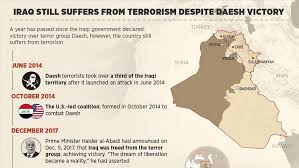
During late 2013 and 2014, the terrorist organisation Da’esh seized territory in west and northwest Iraq, including the city of Mosul. Da’esh systematically persecuted ethnic and religious minorities and committed abuses against vulnerable groups including women and children. On 9 December 2017, then-Prime Minister Haider al-Abadi announced the defeat of Da’esh in Iraq.
Despite the territorial defeat of Da’esh in Iraq and Syria (announced by the Syrian Democratic Forces in March 2019), Da’esh remains a very real threat to the region. At the request of the Government of Iraq, the Global Coalition to Defeat Da’esh continues to support the Iraqi Security Forces to combat the threat posed by remnants of Da’esh.
Iraqi women today suffer from insufficient educational opportunities and healthcare and limited access to the labor market, as well as high levels of violence and inequality.
The status of women has been affected by wars, Islamic law and the Constitution of Iraq as well as Cultural traditions. Abusive practices such as honour killings and forced marriages still persist.
The security situation in Iraq is volatile and could deteriorate with little warning. There’s a risk of violence, armed conflict, kidnapping and terrorist attacks.
This week we are looking at Jordan an Arab nation on the east bank of the Jordan River, is defined by ancient monuments, nature reserves and seaside resorts. It’s home to the famed archaeological site of Petra, the Nabatean capital dating to around 300 B.C. Set in a narrow valley with tombs, temples and monuments carved into the surrounding pink sandstone cliffs, Petra earns its nickname, the “Rose City.”
The population is around 12 million.
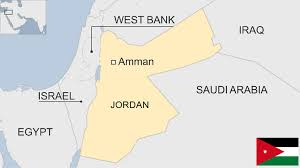
The capital is Amman, which is a modern city with numerous ancient ruins. It is one of the region’s principal commercial and transportation centers as well as one of the Arab world’s major cultural capitals.
The Jordanian dinar has been the currency of Jordan since 1950. The dinar is divided into 100 qirsh or 1000 fulus. It is pegged to the US dollar. The Central Bank of Jordan commenced operations in 1964 and became the sole issuer of Jordanian currency, in place of the Jordan Currency Board.
The country’s official language is Arabic, everyone in the country, including the minority communities, speak Arabic in their day-to-day dealings.
In addition to the Arabic language, English has become a significant component in the school curriculum. While Arabic remains the official language in Jordan, English has been taught in Jordan’s schools and universities since the independence of Transjordan as a Kingdom.
The flag of Jordan is made up of three horizontal bands of black, white, and green, with a red chevron and a white seven-pointed star in the middle of the white band. The flag was adopted on April 16, 1928.
The colours and the star represent the following
Black: Represents the Abbasid Caliphate
White: Represents the Umayyad Caliphate
Green: Represents the Fatimid Caliphate
Red: Represents the Hashemite dynasty and the Arab Revolt
Star: The seven points of the star represent the seven verses of the opening chapter of the Quran, the Al-Fatiha. It also represents the unity of the Arab people, faith in one God, humility, national spirit, virtue, social justice, and aspiration.
More than 92% of the population are Muslims and approximately 8% are Christians. Most Christians belong to the Greek Orthodox Church; but there are also Greek Catholics, Roman Catholics, Syrian Orthodox, Coptic Orthodox, Armenian Orthodox, and a few Protestant denominations.
Jordan is a constitutional monarchy with a bicameral National Assembly. The king is the head of state and commander-in-chief of the armed forces. The prime minister is the head of government and is responsible for carrying out the day-to-day tasks of the executive branch. The judicial branch is independent of the other two branches. Which are the executive branch and the legislative branch.
The government operates comprehensive health facilities, including a national health insurance program. The government supervises and coordinates social and charitable organizations.
The government has the power to block and censor websites.
Although the constitution provides for the freedom to practise one’s religion in accordance with the customs that are observed in the Kingdom, unless they violate public order or morality.
However, such things as wanting to convert from Islam to another religion isn’t allowed and are not recognised as anything other than Islam and are still considered legally Muslims and face immense societal pressure.
There are many restrictions against religious minorities such as.
Jordan’s government may deny recognition to a religion.
Baháʼís are not permitted to establish schools, places of worship or cemeteries.
Aside from Christians, all other non-Muslim minorities do not have their own courts to adjudicate personal status and family matters.
Muslim women may not marry non-Muslim men, such as Christians, unless the men legally convert to Islam.
Since Muslims are prohibited from converting to other religions according to the Sharia law, converts from Islam cannot change their religion on governmental records. However, converts to Islam are required to change their religious identification to “Muslim” on governmental records and civil documents.
When it come to women’s rights, they suck, females over the age of 15 need a male guardian’s permission to marry for the first time. A marriage to a non-Muslim is not recognised.
They cannot travel abroad with their children without the consent of a male guardian or having judicial consent. They are subject to restrictions when it comes to employment and general prohibited from night work.
This week we are looking at the national anthem of the country Israel.
The anthem is a song called Hatikvah (The Hope, it was written in 1878 by Naftali Herz Imber, a Jewish poet. The theme of the song reflects the 2,000-year-old desire of the Jewish people to return to the Land of Israel which is not the country but refers to the traditional Jewish name for an area of the Southern Levant. As in a biblical reference, to the Land of Canaan, or the Promised Land also known as the Holy Land.
When the State of Israel was established in 1948, “Hatikvah” was unofficially proclaimed the national anthem. It did not officially become the national anthem until November 2004, when an abbreviated and edited version was sanctioned by the Knesset in an amendment to the Flag and Coat-of-Arms Law (now renamed the Flag, Coat-of-Arms, and National Anthem Law).
In its modern rendering, the official text of the anthem incorporates only the first stanza and refrain of the original poem. The predominant theme in the remaining stanzas is the establishment of a sovereign and free nation in the Land of Israel, a hope largely seen as fulfilled with the founding of the State of Israel.
Hi everyone, Debby from My Shasta Home, she can be found here: https://myshastahome.blogspot.com/ asked to know more about the apology for the stolen generation.
On 13 February 2008, Prime Minister Kevin Rudd offered a formal apology to Australia’s Indigenous peoples, particularly the Stolen Generations, on behalf of the nation at Australian Parliament House.
The Apology was presented as a motion for voting to the Chamber. It acknowledged that ‘the laws and policies of successive Parliaments and governments had resulted in the forcible removal of Aboriginal and Torres Strait Islander children from their families and ‘inflicted profound grief, suffering and loss on these our fellow Australians’.
Between 1910 and 1970 thousands of Aboriginal and Torres Strait Islander children were forcibly removed from their families and communities by churches, welfare organisations and governments. The exact number is not known. However, is estimated that, anywhere from 1 in 10 to 1 in 3 Indigenous children were forcibly removed from their families and fostered or adopted by non-Indigenous families or raised in institutions. These children are known as the Stolen Generations. Many experienced neglect, physical and sexual abuse and exploitative labour, and were denied contact with their families.
Below are a couple of the statements given to the inquiry.
Lots of white kids do get taken away, but that’s for a reason – not like us. We just got taken away because we was black kids, I suppose – half-caste kids. If they wouldn’t like it, they shouldn’t do it to Aboriginal families.
Confidential evidence 357, South Australia Bringing Them Home, 1997
The Government has to explain why it happened. What was the intention? I have to know why I was taken. I have to know why I was given the life I was given and why I’m scarred today. Why was my Mum meant to suffer? Why was I made to suffer with no Aboriginality and no identity, no culture? Why did they think that the life they gave me was better than the one my Mum would give me? And an apology is important because I’ve never been apologised to. My mother’s never been apologised to, not once, and I would like to be apologised to.
Confidential evidence 139, Victoria: woman removed at 12 months in 1967 Bringing Them Home, 1997
On 26th May 1997 the Inquiry’s Bringing Them Home report was tabled in Parliament. The Report documented the grief and loss caused by the breaking of cultural, spiritual, and family ties, and the intergenerational impact on the lives and wellbeing of Aboriginal and Torres Strait Islander peoples, as well as their resilience and dignity:
For individuals, their removal as children and the abuse they experienced at the hands of the authorities, or their delegates, have permanently scarred their lives. The harm continues in later generations, affecting their children and grandchildren.
Bringing Them Home, 1997
A key recommendation of the report was the need for an official acknowledgement of and apology for the forcible removal of Aboriginal and Torres Strait Islander children.
Below is what the apology says.
I move:
That today we honour the Indigenous peoples of this land, the oldest continuing cultures in human history.
We reflect on their past mistreatment.
We reflect in particular on the mistreatment of those who were Stolen Generations—this blemished chapter in our nation’s history.
The time has now come for the nation to turn a new page in Australia’s history by righting the wrongs of the past and so moving forward with confidence to the future.
We apologise for the laws and policies of successive Parliaments and governments that have inflicted profound grief, suffering and loss on these our fellow Australians.
We apologise especially for the removal of Aboriginal and Torres Strait Islander children from their families, their communities and their country.
For the pain, suffering and hurt of these Stolen Generations, their descendants and for their families left behind, we say sorry.
To the mothers and the fathers, the brothers and the sisters, for the breaking up of families and communities, we say sorry.
And for the indignity and degradation thus inflicted on a proud people and a proud culture, we say sorry.
The Hon Kevin Rudd 13 February 2008
The National Apology is considered a milestone step toward reconciliation between Indigenous and non-Indigenous Australians.
The Prime Minister’s speech was met with applause, tears, and relief from many Aboriginal and Torres Strait Islander peoples, including members of the Stolen Generations, present in the House of Representatives. Thousands of people gathered throughout the country to watch a broadcast of the Apology, including hundreds watching from the Great Hall and thousands on the lawns outside Parliament House.
Following the speeches, Lorraine Peeters (Weilwun and Gamilaroi peoples), acting on behalf of the Stolen Generations present in the Parliament, presented a glass coolamon to the Prime Minister Kevin Rudd and the Leader of the Opposition, Brendan Nelson. The coolamon – made by Bai Bai Napangardi, an artist from the Balgo community in Western Australia – contained a message that said:
On behalf of our people, thank you for saying sorry.In return we give you this gift on behalf of us affected by being taken away from our families. This is our way of saying thank you. The gift is a glass coolamon, fragile yet strong. Coolamons have carried our children. The gift is a symbol of the hope we place in the new relationship you wish to forge with our people. A relationship that itself is fragile yet strong. We have a new covenant between our peoples, that we will do all we can to make sure our children are carried forward, loved and nurtured and able to live a full life.’
The Prime Minister and Leader of the Opposition then jointly presented the coolamon to the Speaker of the House of Representatives, who accepted it saying:
I gratefully receive this gift on behalf of the House. It will represent a very important point in the history of not only this chamber but our nation.
At the conclusion of the formal proceedings in the Chamber, an event was held in Members Hall, attended by many representatives of the Stolen Generations, Indigenous leaders, Indigenous and other organisations, and current and former parliamentarians. There, Tom Calma, then Aboriginal and Torres Strait Islander Social Justice Commissioner, responded to the Apology. Nominated by the National Stolen Generations Alliance and the National Sorry Day Committee, the two national bodies representing the Stolen Generations and their families, he declared that it was an ‘historic day’, one
… on which ‘our leaders – across the political spectrum – have chosen dignity, hope and respect as the guiding principles for the relationship with our first nations’ peoples’.
The National Apology and the Coolamon are on display at Parliament House.
















 Jo-AnneRamplings