Australia’s Anthem

This is the first post about a country’s national anthem and of course the country is Australia, our national anthem is Advance Australia Fair it was written and composed by Peter Dodds McCormick in 1878.

It has been our national anthem since 19 April 1984.

Before then it was God Save the Queen.

Advance Australia Fair” was chosen as Australia’s national anthem after a series of polls and a plebiscite:

In 1974, The Australian Bureau of Statistics conducted a poll of 60,000 people, with 51.4% of respondents choosing “Advance Australia Fair” as their preferred anthem. So, it was adopted as the Australian National Anthem, but in 1976 ‘God Save The Queen’ was reinstated.

Then in 1977, The Australian Electoral Office conducted a poll as part of a referendum on various issues. Over 7 million people voted, with 43.29% choosing “Advance Australia Fair”, over three other contenders, including “Waltzing Matilda.”

In 1984 The Governor-General proclaimed “Advance Australia Fair” as the national anthem, along with the verses written by the National Australia Day Council.

Some of the original words, however, have been altered for the official version—including the first line, changed from “Australia’s sons, let us rejoice”, to “Australians all let us rejoice.”

In 2021 the second line was changed from “For we are young and free” to “For we are one and free” to acknowledge Aboriginal and Torres Strait Islanders and their history.

The song is about Australia’s strength and beauty and references the migration of European settlers. The word “fair” has been the subject of controversy, with some arguing it means beautiful, while others suggest it has links to being white.

The song originally had four verses but only the first two are used in the anthem.

Australians all let us rejoice,
For we are one and free;
We’ve golden soil and wealth for toil,
Our home is girt by sea.
Our land abounds in Nature’s gifts
Of beauty rich and rare;
In history’s page, let every stage
Advance Australia fair.
In joyful strains then let us sing,
“Advance Australia Fair.”


Beneath our radiant Southern Cross
We’ll toil with hearts and hands;
To make this Commonwealth of ours
Renowned of all the lands;
For those who’ve come across the seas
We’ve boundless plains to share;
With courage let us all combine
To Advance Australia fair.
In joyful strains then let us sing,
“Advance Australia Fair.”
Burundi

Ok let’s move onto central and southern Africa and area that includes Burundi, Chad, Central African Republic, South Africa, the Republic of Congo, Rwanda, Zimbabwe and Namibia.

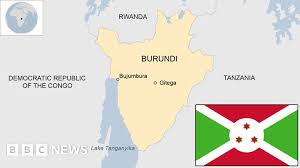
Let’s start with Burundi, officially the Republic of Burundi, it is a landlocked country in the Great Rift Valley at the junction between the African Great Lakes region and Southeast Africa, with population of over 14 million people.

It is considered by some to be the poorest country in the world and is one of the least developed countries. Over 1 million of its people are facing crisis levels of hunger today. This is due to poverty, climate shocks, soaring inflation and fuel shortages.

The town of Gitega, located in the central part of Burundi as the Political Capital, while Bujumbura, which is in the southwestern of the country, adjacent to the Lake Tanganyika is the Economic Capital.

Prior to 2019 Bujumbura served as Burundi’s national capital, but legislation passed that year designated Gitega as the country’s political capital and Bujumbura as the economic capital. The transfer of government functions to Gitega proceeded in the following years.

The original flag was adopted after the country’s independence from Belgium on 1 July 1962. It went through several revisions and now consists of a white saltire which divides the field into alternating red and green areas. The centre of the saltire merges into a white disk, on which there are three red solid six-pointed stars outlined in green. The current ratio is 3:5, which was changed from 2:3 on 27 September 1982.

The franc is the currency of Burundi. It is nominally subdivided into 100 centimes, although coins have never been issued in centimes since Burundi began issuing its own currency.

Burundi’s political system is that of a presidential representative democratic republic based upon a multi-party state. The president of Burundi is the head of state and head of government. The president is elected by absolute majority vote through a two round system. The supreme court is the highest court of the land. Judges are nominated by the judicial service commission and then appointed by the president with the approval of the senate.

Burundi has a diverse religious population, with the majority identifying as Christian and a minority identifying as Muslim: 

Christianity is the most common religion in Burundi, with about three-fifths of the population identifying as Roman Catholic and more than one-eighth identifying as Protestant. 

Islam is a minority religion in Burundi, with Muslims making up less than one-twentieth of the population. The majority of Muslims in Burundi are Sunni, but there are also Shia and Ismaili communities. 

A large minority of the population, including some Roman Catholics, practice traditional religions. 

The government of Burundi has granted tax waivers to religious groups for the purchase of materials for development projects and for imported religious items. The government has also provided opportunities for religious leaders to preach about scriptures and moral issues. 

This is another country that is not considered a safe destination for tourists due to a number of risks, such as a threat of terrorism, political violence, violent crime, including mugging, purse snatching, pickpocketing, assault, carjacking, home invasion, grenade attacks, and armed robbery and there is a risk of kidnapping for ransom, and criminals have targeted foreigners in the past.

Not somewhere I would go.

Sudan

Well let’s move from Egypt to Sudan, officially the Republic of the Sudan, it’s a country in Northeast Africa. It borders the Central African Republic to the southwest, Chad to the west, Libya to the northwest, Egypt to the north, the Red Sea to the east, Eritrea and Ethiopia to the southeast, and South Sudan to the south.

Sudan is both an African and Arab country, with Arabic being the most widely spoken language. Over 97% of the population are Sunni Muslims with a small Christian minority.

The Sudanese pound is the currency of the Republic of the Sudan. The pound is divided into 100 piastres. It is issued by the Central Bank of Sudan.

Khartoum or Khartum is the capital of Sudan. With a population of 6,344,348, the metropolitan area is the largest in Sudan. It is located in the centre of the country, at the point where the Blue Nile and White Nile rivers meet.

The population of Sudan is estimated to be 50,467,278 in 2024, with a population density of 21.3 people per square kilometre.

The flag of Sudan was adopted on 20 May 1970 and consists of a horizontal red-white-black tricolour with a green triangle at the hoist

The national flower of Sudan is the hibiscus. The hibiscus flower is also known as the Sudan rose or Hibiscus sabdariffa. The flower’s dried petals are steeped in water to make an herbal tea called karkade, which is popular in Sudan, South Sudan, and Egypt. 

I searched for Sudan’s coat of arms what I found was their national symbol which follows the rules of heraldry (whatever that is) it could be considered a national coat of arms instead of a national emblem.

It shows a secretary bird bearing a shield from the time of Muhammad Almad, the self-proclaimed Mahdi who briefly ruled Sudan in the 19th century.

Two scrolls are placed on the arms; the upper one displays the national motto, the English translation is “Victory is ours”, and the lower one displays the title of the state, which is Republic of the Sudan.

The coat of arms is also the Presidential seal.

It is not a safe country to visit due to A civil war between two major rival factions of the military government of Sudan, the Sudanese Armed Forces under Abdel Fattah al-Burhan and the paramilitary Rapid Support Forces and its allies under the Janjaweed leader Hemedti, began during Ramadan on 15 April 2023.