Countries with the best chocolate

Today I thought I would write a bit about what countries are considered to have the best chocolate.

Switzerland is the country most widely associated with the world’s best chocolate, thanks to its long tradition of ultra‑creamy milk chocolate and its reputation for exceptional quality. Many chocolate lovers point to the richness of Alpine milk and the refinement of Swiss techniques as the reason their chocolate stands out.

However, “best” depends on what you like personally most of us have a favourite brand or flavour. Different countries excel in different ways, and the global chocolate scene is far more diverse than most people realise.

Other then Switzerland other countries with what is considered top notch chocolate are Belgian, France and Ecuador.

Switzerland is known for their brands like Lindt which I really like and Toblerone. It is often ranked at the top by chocolate enthusiasts. However, Toblerone is owned by a U S company.

Belgium is famous for pralines, truffles, and artisanal techniques. Belgian chocolatiers are known for precision and high‑quality cocoa blends. It frequently appears in global “best chocolate” rankings.

French chocolatiers focus on purity, cacao origin, and elegant flavour profiles, with Paris often considered a global centre for luxury chocolate.

Ecuador has some of the world’s finest cacao and produces highly prized Arriba Nacional cacao. It is increasingly recognised for “tree‑to‑bar” craft chocolate.

What might come as a surprise is that the United States is a leader in modern craft chocolate, with it ranking number 1 in some craft‑chocolate lists due to its huge number of small‑batch makers, known for innovation and experimental flavours.

Then there is Peru, which is a rising star with sustainable, high‑quality cacao and renowned for fine‑flavour cacao and ethical production. Growing global recognition in premium chocolate competitions.

History of Chocolate in Australia

Well, here we are at another Monday and today we are looking at the history of chocolate in Australia.

Chocolate arrival in Australia sometime between late 1700s to Early 1800s, it came with European colonists, but it was rare and expensive. Which is why it was considered a luxury item for the wealthy, imported in small quantities.

By the mid–late 1800s with improved shipping, trade routes, and advances in manufacturing made chocolate more widely available. Confectionery shops began appearing in major cities, such as Sydney and Melbourne.

Australia’s own chocolate industry began to take shape in the early 20th century, with several brands that still exist today. Those companies establish our chocolate identity by blending European techniques with local tastes.The turning point came in the 1920’s with the establishment of a major Cadbury factory in Claremont, Tasmania in 1922.

This dramatically increased local production and made chocolate affordable nationwide. Cadburys has shaped Australian chocolate culture. It is the go-to chocolate brand in most if not all of the country.

By the 1950s through to the 1980s, chocolate was to become deeply woven into Australian life. At Easter there was mass‑produced eggs became a national tradition. Cadbury began making Easter eggs in 1875, producing their very first chocolate egg from dark chocolate with a smooth, plain surface. Helping to transform Easter into the chocolate‑filled celebration we know today.

At Christmas boxed chocolates and novelty treats became common gifts.

Local flavours emerged, such as honeycomb, mint, and fruit and nut combinations.

In the 1970s and onward, boutique chocolatiers began experimenting with native ingredients such as wattleseed, lemon myrtle and macadamia.

Around this time Artisan producers focused on premium ingredients and craftsmanship, mirroring global trends.

Nowadays there is a thriving, diverse chocolate scene consisting of global giants Cadbury, Nestlé and Lindt. As well as historic local brands Haigh’s, Darrell Lea and Ernest Hillier.

Australia’s chocolate industry is now vibrant, competitive, and culturally significant, with strong consumer interest in sustainability, ethical sourcing, and premium quality.

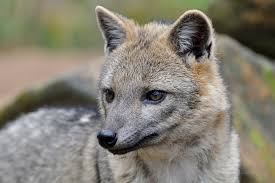
Crab-eating fox

This is week we are looking at the crab-eat fox, also known as the forest dog, wood fox, bushfox or maikong, is an extant species of medium-sized canid endemic to the central part of South America since at least the Pleistocene epoch. Like South American foxes, which are in the genus Lycalopex, it is not closely related to true foxes. 

They can be found in the ranges in savannas; woodlands; subtropical forests; prickly, shrubby thickets; and tropical savannas such as the caatinga, plains, and campo, from Colombia and southern Venezuela in the north to Paraguay, Uruguay and northern Argentina at the southernmost reaches of its range.

They can be solitary but can also form couples or even families of up to disturbed by human activities. The species gets its name because during the wet season it searches for crabs on muddy floodplains.

Crab-eating foxes are omnivorous; their diet includes many fruits, vertebrates, insects, amphibians, crabs and other crustaceans, birds and carrion.

The crab-eating fox is predominantly greyish-brown, with areas of red on the face and legs, and black-tipped ears and tail. It has short, strong legs and its tail is long and bushy. The head and body length averages 64.3 centimetres (25.3 in), and the average tail length is 28.5 centimetres (11.2 in).

They reach sexual maturity within 9–10 months. Adult females give birth to one or two litters per year, depending on the climate and the availability of food. The reproductive period most often begins in November or December, and again in July.

The birth of offspring follows after an approximately 56-day gestation, typically in January, February or sometimes March then again from September to October. If giving birth to one litter, they typically give birth in the early spring. The parents are monogamous and raises the pups together, which are weaned at around three months old and become independent of their parents around 5–8 months old.