How old is China

Hi everyone, I am going to share a little more information about China, like how old the country is.

The age of China as a continuous civilization is often measured in different ways, leading to various figures.

China is widely considered one of the world’s oldest continuous civilizations, with a history spanning over 4,000 years. This is based on archaeological and historical records of early dynasties like the Shang.

The first unified Chinese state was established by the Qin Dynasty in 221BCE. This marked the beginning of imperial China, which lasted for over two millennia. This period of centralized rule is a key factor in the formation of the modern nation-state.  

The country has had many dynasties, however the number of dynasties China has had is a bit complicated, as it depends on how you define a “dynasty.” Some periods saw multiple competing dynasties at the same time, while others were short-lived.  

However, historians generally recognise 13 major dynastic periods in a long, continuous line of succession that ruled over a unified or semi-unified China:  Here are what those 13 dynasties are.

Xia Dynasty (c. 2070–1600 BCE): The first dynasty in traditional Chinese history, though its existence is considered quasi-mythical by some scholars.  

Shang Dynasty (c. 1600–1046 BCE): The first dynasty with solid archaeological evidence.  

Zhou Dynasty (c. 1046–256 BCE): The longest-ruling dynasty, which developed the concept of the “Mandate of Heaven.”  

Qin Dynasty (221–206 BCE): The first to unify China and establish a centralized, imperial system.  

Han Dynasty (206 BCE–220 CE): A golden age for Chinese culture and technology.  

Sui Dynasty (581–618): Briefly unified China after a long period of disunity.  

Tang Dynasty (618–907): Another “golden age,” known for its flourishing arts and culture.  

Song Dynasty (960–1279): A period of great economic and technological advancement.  

Yuan Dynasty (1271–1368): Established by the Mongols under Kublai Khan.  

Ming Dynasty (1368–1644): Known for its ambitious public works and extensive maritime exploration.  

Qing Dynasty (1644–1912): China’s last imperial dynasty, ruled by the Manchu people.  

In addition to these, there were many other smaller or regional dynasties and periods of fragmentation, such as the Three Kingdoms, the Sixteen Kingdoms, and the Five Dynasties and Ten Kingdoms periods. If you were to count every single one of these, the total number of Chinese dynasties could be as high as over 80.  

China

This week we are looking at China which is in East Asia and is the largest of all the Asian countries, making up nearly the entire East Asian landmass. It’s also nearly as large as Europe.

There are 33 administrative units under the central government, these consist of 22 provinces, 5 autonomous regions, 4 municipalities and 2 special administrative regions.

It has a population of around 1,416,096,094 which is around 17.2% or the total world population, it is the second largest populated country.

The capital of China is Beijing and has been for around 8 centuries, it has a population of over 22 million.

The official language is Standard Mandarin which is mainly based on the Beijing dialect.

The flag is red with five golden stars, it has one large star and four smaller stars in a arc, it has been the national flag since the foundation of the People’s Republic of China on the 1 October 1949. It was designed by Zeng Liansong. The red represents the Communist Revolution, and the stars represent the unity of the four social classes of the Chinese people.

When we think of the Chinese currency, we think of the currency we think of the Yuan which is the basic unit however, the currency is the renminbi.

The People’s Bank of China has the exclusive authority to issue currency. Banknotes range in denomination from 1 fen to 100 renminbi. The obverse side of some banknotes contain images of communist leaders, such as Mao Zedong. The reverse side of most coins contains images of historic buildings and the country’s diverse landscape.

                    Buddhist Statues

China is a centre for world religious thought and practices. Although about half the population identifies as nonreligious or atheist, many belief systems have shaped Chinese society for centuries. The government officially recognizes five religions: Buddhism, Taoism, Protestantism, Catholicism, and Islam, though it keeps these under tight control.

                       Confucianism Temple

Also popular is Confucianism which is a worldview, social ethic, political ideology, and way of life that entails ancestor reverence and profound human-centered religiousness. It emphasizes the duty of the individual in society and government.

There is also Daoism, which is a, indigenous religious-philosophical tradition, Daoism emphasizes mystical experience and the individual’s harmony with nature.

Buddhism came to China possibly as early as the 3rd century BCE. China became an incubator for many of the great present-day Buddhist sects, including Zen and Pure Land, and, by its extension into Tibet, the source of Tibetan Buddhism.

                   Folk Religion Temples

Many Chinese embrace aspects and rituals of indigenous folk religions, which comprise the largest group of those professing a belief. Deities of the popular pantheon are intimately involved in everyday life as givers of blessings or bringers of calamities.

Christians are a small but significant and growing minority, many of them converts to Evangelical Protestant denominations.

Islam Members of non-Han minorities constitute the bulk of those following Islam.

That will do for this post, more next week.

Bahrain

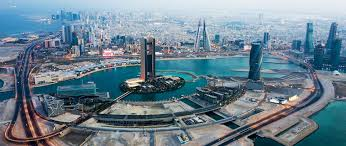
This week we are looking at Bahrain, officially the Kingdom of Bahrain, which is an island country of the Middle East, in West Asia. It is situated on the Persian Gulf, and comprises a small archipelago made up of 50 natural islands and an additional 33 artificial islands, centred on Bahrain Island which makes up around 83 percent of the country’s landmass.

The country has a population of only 1.6 million

The modern capital of the gulf island nation of Bahrain, is Manama it has been at the centre of major trade routes since antiquity. Its acclaimed Bahrain National Museum showcases artifacts from the ancient Dilmun civilization that flourished in the region for millennia.

The city’s thriving Bab el-Bahrain Souq offers wares from colourful handwoven fabrics and spices to pearls. 

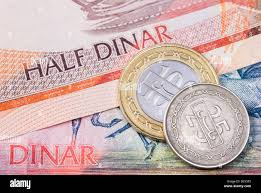
Their currency is the Bahraini dinar, the name is derived from the Roman denarius.

The Bahraini dinar was introduced in 1965, replacing the Gulf Rupee.

Arabic is the official language of Bahrain, although English is widely used.

Their flag consists of a white band on the left, separated from a red area on the right by five triangles that serve as a serrated line.

Alcohol is legal in Bahrain. However, drunken public behaviour is against the law. You could be fined, imprisoned or deported. Security officers and airline staff will not tolerate passengers believed to be drunk at the airport, including those who are in transit. The legal drinking age is 21.

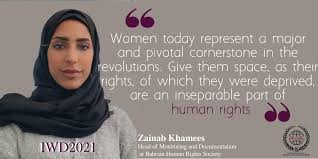
The country recognises women’s equality in political, social, cultural, and economic spheres, granting them the right to vote and stand for office, and has taken steps to protect their rights through legislation and initiatives. 

The Bahraini Constitution ensures women are afforded public rights and freedoms, including the right to participate in public affairs, vote, and stand for office. 

Bahrain is a member of the Convention on the Elimination of All Forms of Discrimination against Women (CEDAW). 

In 2017, Bahrain adopted the unified Personal Status Law (PSL), a step towards protecting both Sunni and Shi’ite women under an inclusive legal framework. 

The Kingdom of Bahrain emphasizes that its legislation does not include discriminatory provisions against women. 

Achieving gender balance and prohibiting gender discrimination in all areas of life are fundamental principles enshrined in the Constitution of the Kingdom of Bahrain for both men and women. 

Women have the right to vote and stand in national elections, a right granted in 2002. 

Women are represented in the Legislative Authority, with 19% of participation in 2020, including 15% elected to the parliament and 23% appointed to the Shura Council.

Women also participate in the Municipal Council, with 23% representation. 

While there’s no strict dress code, it’s generally recommended that women dress modestly in public, covering shoulders and wearing skirts or trousers that fall below the knee.

Very tight or transparent clothing is considered inappropriate for both genders. 

While there is a majority of people that remain narrow-minded, there’s a larger number of people who accept that people are allowed to be different from each other. 

The youth of Bahrain and their parents are allowing room for more diversity. 

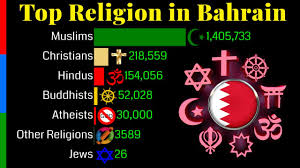
Bahrain’s official religion is Islam, with Sharia serving as a principal source for legislation, and the majority of Bahraini citizens are Muslims, including both Sunni and Shia sects, with the latter being in the majority. 

Besides Islam, Bahrain also has a small population of other religions, including Christians, Jews, Hindus, Baha’is, Buddhists, and Sikhs, among others. 

The country has an association that promotes religious coexistence and tolerance, aiming to foster respect for different faiths and advocate for peaceful coexistence. 

Saudi Arabia

Ok this week we are looking at Saudi Arabia, officially the Kingdom of Saudi Arabia, is a country in West Asia. Located in the centre of the Middle East, it covers the bulk of the Arabian Peninsula and has a land area of about.

The country was established in 1932 by King Abdulaziz Al-Saud, its transformation has been astonishing. In a few short decades, the Kingdom has turned itself from a desert nation to a modern, sophisticated state and a major player on the international stage.

In 1932, the two kingdoms of the Hejaz and Najd were united as the “Kingdom of Saudi Arabia”. Boundaries with Transjordan, Mandatory Iraq, and Kuwait were established by a series of treaties negotiated in the 1920s, with two “neutral zones” created, one with Iraq and the other with Kuwait.

The capital is Riyadh and is the main financial hub, it is on a desert plateau in the country’s centre. The business district landmarks include the 302m-high Kingdom Centre, with a sky bridge connecting 2 towers, and 267m-high Al Faisaliah Centre, with a glass-globe summit.

The currency is the Saudi Riyal and has been since the country was first established.

The flag is green with a white Arabic inscription and a sword. The inscription is the Islamic creed, or shahada, which translates to “There is no deity but God; Muhammad is the Messenger of God”. The current design has been used since 1973.

The colour of Islam is green, the sword represents the strictness in applying justice and the shahada is the central symbolic design of the flag. The flag must always be represented so that the inscription reads correctly on both sides. The flag is never to be flown vertically or at half-mast due to its religious symbolism.

The inscription is the Islamic creed, or shahada: “There is no deity but God; Muhammad is the Messenger of God”. The current design has been used by the government of Saudi Arabia since 15 March 1973.

As of February 2025, the population of Saudi Arabia is 37.47 million.

The official language is Arabic. The three main regional variants spoken by Saudis are: Najdi Arabic – about 14.6 million speakers. Hejazi Arabic – also known as Hijazi Arabic & West Arabian Arabic – about 10.3 million speakers.

The official religion of Saudi Arabia is Islam, and the country is considered an Islamic state. The majority of Saudi citizens are Sunni Muslim, with a Shia minority. 

When it comes to religious freedom there isn’t any, the Saudi government does not provide for freedom of religion under the law. However, the government generally permits Shia religious gatherings and non-Muslim private religious practices. 

The country’s constitution is the Quran and Sunna, which are traditions and practices based on the life of the Prophet Muhammad. 

The legal system is based on sharia, which is Islamic law. 

The government does not allow public worship of any religion other than Islam. 

The government does not allow public display of non-Islamic religious symbols. 

The government criminalizes proselytizing by non-Muslims. 

Shia Muslims make up about 10–12% of the citizen population. 

The majority of remaining Shia are Sulaimani Ismailis, also known as “Seveners”. 

Pockets of Zaydis, another branch of Shia Islam, live in the provinces of Jizan and Najran. 

Saudi Arabia has made progress in improving women’s rights, but discrimination still exists. 

Recent improvements are the following, women can apply for passports, travel abroad, and register marriages and divorces without a male guardian’s permission. 

Women can register as co-heads of households and live independently from their husbands 

Women can join the senior ranks of the military 

Women can change their personal data without a guardian’s permission 

Women can register to perform the Hajj without being accompanied by a mahram 

Women can vote and run in municipal elections 

Female athletes can participate in the Olympics 

There are still other challenges to overcome such as.

Women still face discrimination in law and practice, including in matters of marriage, divorce, child custody, and inheritance 

The Personal Status Law (PSL) codifies male guardianship, which can prevent women from fully consenting to marriage 

Many Saudi women still cover their faces or hair in public even though they are not required to wear a hijab or abaya in public. However, the government does encourage modest dress for both men and women.

When it comes to visiting the country both Australia and The States advise reconsidering travel to Saudi Arabia due to the threat of missile and drone attacks. Also, the country is a target for radical Islamic terror groups. There are also human rights abuses, cultural sensitivities, and government surveillance concerns. 

Jordan

This week we are looking at Jordan an Arab nation on the east bank of the Jordan River, is defined by ancient monuments, nature reserves and seaside resorts. It’s home to the famed archaeological site of Petra, the Nabatean capital dating to around 300 B.C. Set in a narrow valley with tombs, temples and monuments carved into the surrounding pink sandstone cliffs, Petra earns its nickname, the “Rose City.”

The population is around 12 million.

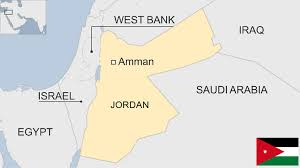
The capital is Amman, which is a modern city with numerous ancient ruins. It is one of the region’s principal commercial and transportation centers as well as one of the Arab world’s major cultural capitals.

The Jordanian dinar has been the currency of Jordan since 1950. The dinar is divided into 100 qirsh or 1000 fulus. It is pegged to the US dollar. The Central Bank of Jordan commenced operations in 1964 and became the sole issuer of Jordanian currency, in place of the Jordan Currency Board.

The country’s official language is Arabic, everyone in the country, including the minority communities, speak Arabic in their day-to-day dealings.

In addition to the Arabic language, English has become a significant component in the school curriculum. While Arabic remains the official language in Jordan, English has been taught in Jordan’s schools and universities since the independence of Transjordan as a Kingdom.

The flag of Jordan is made up of three horizontal bands of black, white, and green, with a red chevron and a white seven-pointed star in the middle of the white band. The flag was adopted on April 16, 1928.

The colours and the star represent the following 

  • Black: Represents the Abbasid Caliphate
  • White: Represents the Umayyad Caliphate
  • Green: Represents the Fatimid Caliphate
  • Red: Represents the Hashemite dynasty and the Arab Revolt
  • Star: The seven points of the star represent the seven verses of the opening chapter of the Quran, the Al-Fatiha. It also represents the unity of the Arab people, faith in one God, humility, national spirit, virtue, social justice, and aspiration.

More than 92% of the population are Muslims and approximately 8% are Christians. Most Christians belong to the Greek Orthodox Church; but there are also Greek Catholics, Roman Catholics, Syrian Orthodox, Coptic Orthodox, Armenian Orthodox, and a few Protestant denominations.

Jordan is a constitutional monarchy with a bicameral National Assembly. The king is the head of state and commander-in-chief of the armed forces. The prime minister is the head of government and is responsible for carrying out the day-to-day tasks of the executive branch. The judicial branch is independent of the other two branches. Which are the executive branch and the legislative branch.

The government operates comprehensive health facilities, including a national health insurance program. The government supervises and coordinates social and charitable organizations. 

The government has the power to block and censor websites. 

Although the constitution provides for the freedom to practise one’s religion in accordance with the customs that are observed in the Kingdom, unless they violate public order or morality.

However, such things as wanting to convert from Islam to another religion isn’t allowed and are not recognised as anything other than Islam and are still considered legally Muslims and face immense societal pressure.

There are many restrictions against religious minorities such as.

  • Jordan’s government may deny recognition to a religion.
  • Baháʼís are not permitted to establish schools, places of worship or cemeteries.
  • Aside from Christians, all other non-Muslim minorities do not have their own courts to adjudicate personal status and family matters.
  • Muslim women may not marry non-Muslim men, such as Christians, unless the men legally convert to Islam.
  • Since Muslims are prohibited from converting to other religions according to the Sharia law, converts from Islam cannot change their religion on governmental records. However, converts to Islam are required to change their religious identification to “Muslim” on governmental records and civil documents.

When it come to women’s rights, they suck, females over the age of 15 need a male guardian’s permission to marry for the first time. A marriage to a non-Muslim is not recognised.

They cannot travel abroad with their children without the consent of a male guardian or having judicial consent. They are subject to restrictions when it comes to employment and general prohibited from night work.